Tag Archives: February

Loading
loading..

Industrial electroheating and electromagnetic processing

The global standards for heat tracing systems are developed by IEC Technical Committee 27.  The scope of work for this committee is reproduced below:

Standardization in the field of industrial equipment and installations intended for electroheating, electromagnetic processing of materials and electroheat based treatment technologies Note: The scope of interest covers industrial installations with the use of the following equipment: – equipment for direct and indirect resistance heating; – equipment for electric resistance trace heating; – equipment for induction heating; – equipment using the effect of EM forces on materials; – equipment for arc heating, including submerged arc heating; – equipment for electroslag remelting; – equipment for plasma heating; – equipment for microwave heating; – equipment for dielectric heating; – equipment for electron beam heating; – equipment for laser heating; – equipment for infrared radiation heating. The list presents typical examples of equipment and its applications and is not exhaustive.

CLICK HERE for the link to the TC 27 Strategic Business Plan

Titles in this committee’s bibliography appears to be stable.   As with all IEC titles, they are relatively narrow in scope compared with the titles promulgated by most US standards developing organizations.  Our interest lies primarily in the application of this technology within and around education community buildings.

While heat tracing generally goes un-noticed it is an essential part of cold weather safety.  It is wise to keep pace with its evolution with innovation in materials and controls with the lead.

We maintain this committee’s work on the standing agenda of our seasonal Snow & Ice colloquia; along with US standards developed by UL, IEEE, NEMA, NFPA, ICC, ASHRAE and a few others.  We also collaborate with the IEEE Education & Healthcare Facilities Committee on this topic.  See our CALENDAR for the next online meeting; open to everyone.

"A ship in harbor is safe, but that is not what ships are built for." -- John A. Shedd


Issue [18-332]

Category: Electrical

Colleagues: Mike Anthony, Lorne Clark, Jim Harvey


Textiles

List of Technical Committees

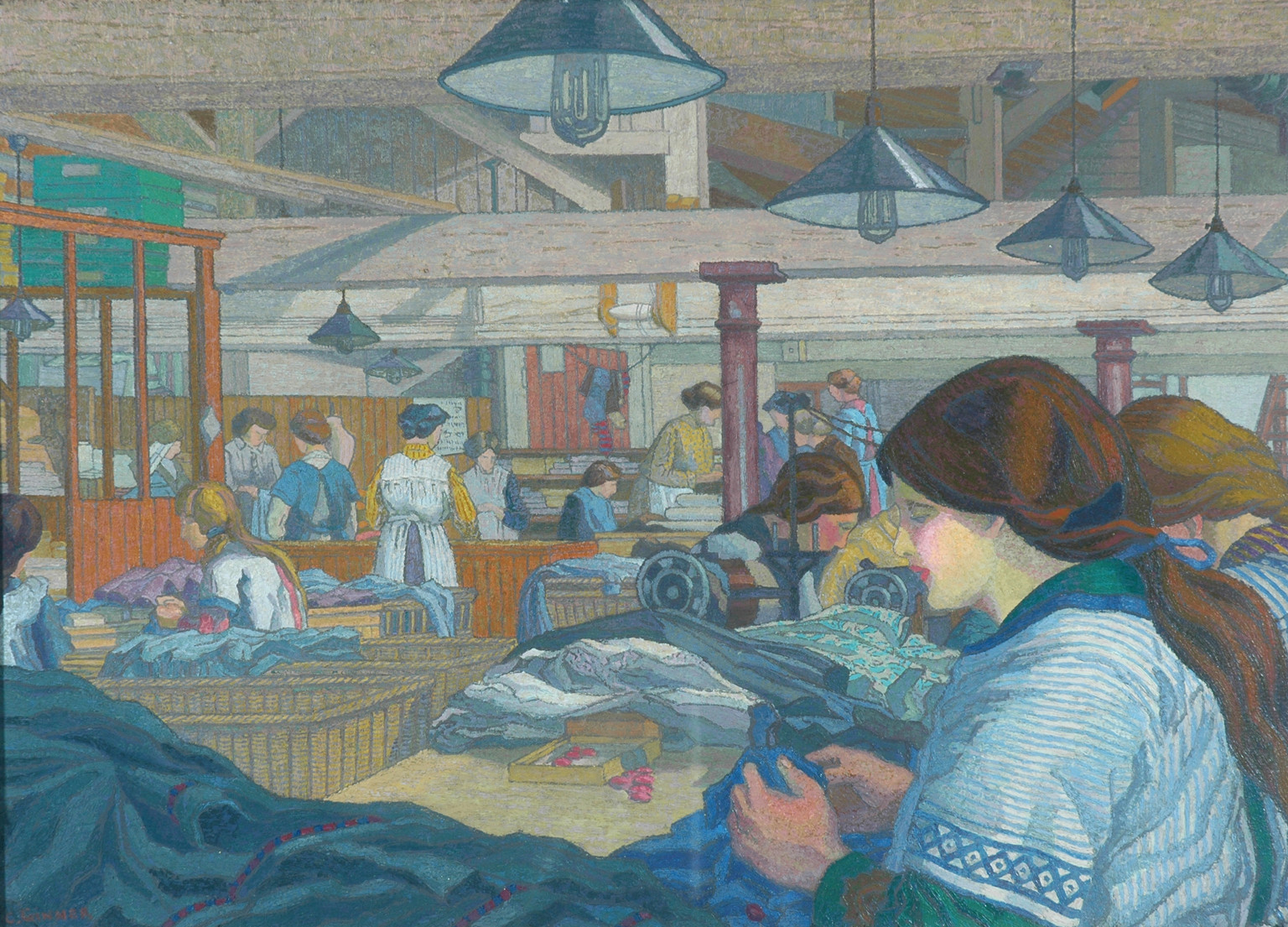
“The Dressmaking Factory” 1881 Charles Ginnar

“Dwell on the beauty of life.

Watch the stars, and see yourself running with them.”

― Marcus Aurelius, Meditations

The consumer discretionary sector is among the largest economic sectors in every nation.   Consumer Discretionary is the term given to goods and services that are considered non-essential by consumers, but desirable if their available income is sufficient to purchase them.  Consumer discretionary goods include durable goods, apparel, entertainment and leisure, and automobiles.  The International Organization for Standardization administers leading practice discovery and promulgation of the standards in a core component of durable goods industry — textiles – through its Technical Committee 38.

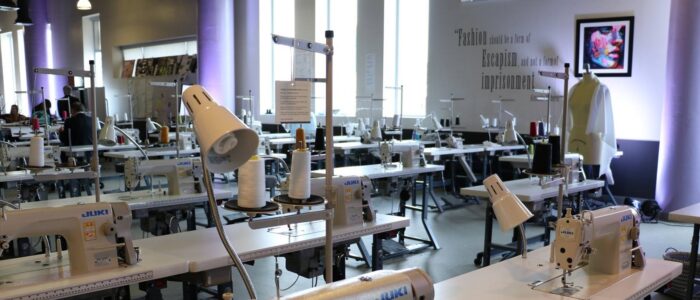
We find continued student interest in these technologies so attention to the elevated hazards in research, instructional and display spaces require attention.   We recognize that not every student is interested in cleaning neural network data sets or learning Tensor Flow but wants to devote their energy to making the world a better place by making the world a more beautiful place.

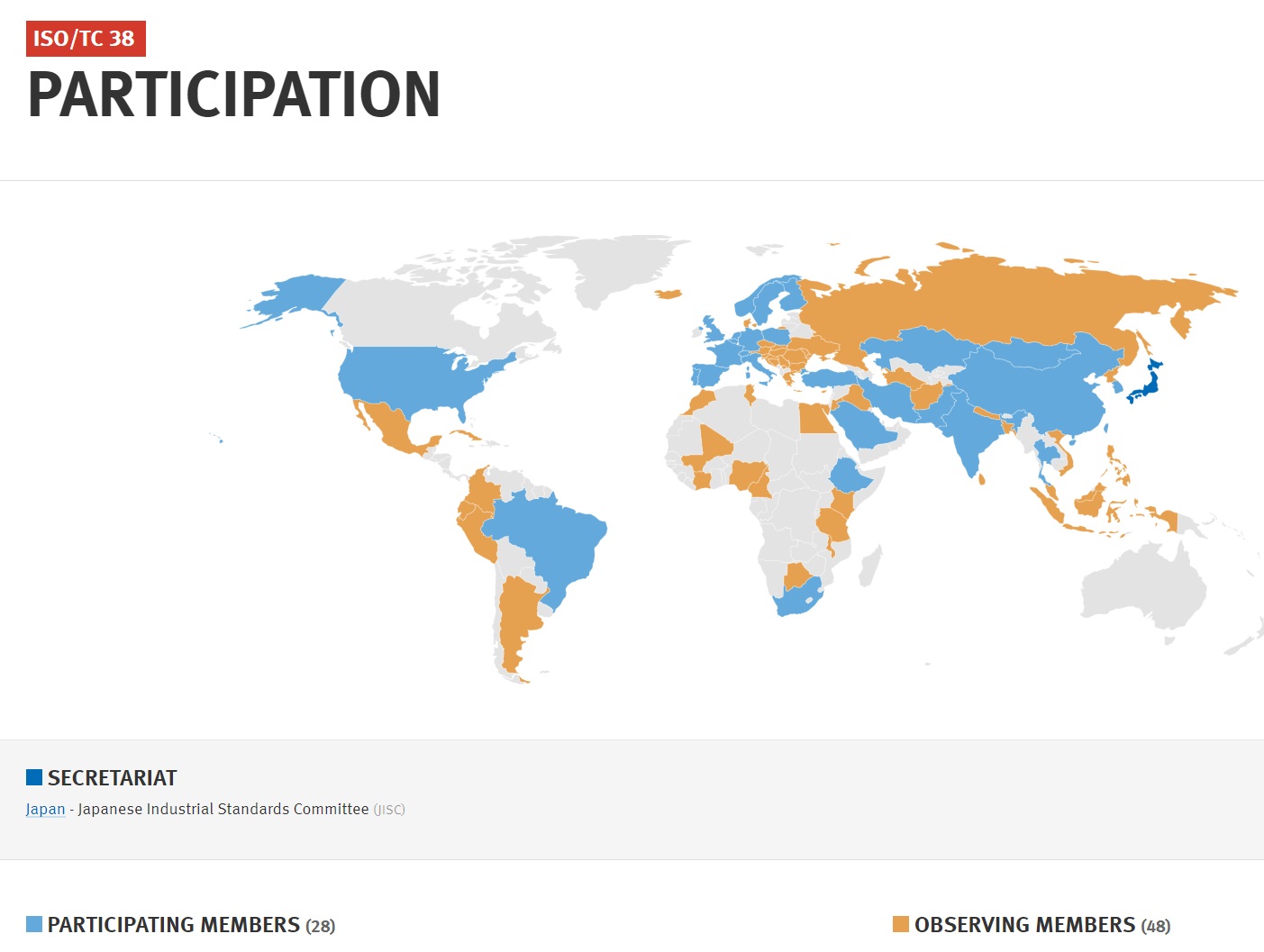
From the ISO/TC 38 prospectus:

STRATEGIC BUSINESS PLAN ISO/TC 38 Textiles

“…Textiles are one of the most important and versatile commodities in the global economy. The textile industries involve provision of raw materials, preparation of fiber production, manufacture of yarns and fibres, manufacture of fabric formation, finishing processing including bleaching, dyeing, printing, coating, special chemical treatments, transformation of the fabric into clothing, upholstery, or industrial/technical textiles, and rope and netting formation. Therefore, the textile industry concerns a variety of entities such as suppliers of raw materials, processors, manufacturers, traders,  distributors, retailers, associated industries such as the laundry industry, government and educational establishments as well as consumers….

…One new field of innovation in the textiles is emerging as the smart textiles which cover either smart textile materials or smart textile systems, including some of them combining technologies with electronic textiles and wearable devices. The uses expected of the smart textiles extend over medical device, general product safety, textile labelling, etc. Our technical committee liaises for cooperation with other technical fields and be responsible for standardization of the textile field of smart textiles….”

Japanese Industrial Standards Committee is the Global Secretariat.   ASTM International is ANSI’s US Technical Advisory Group Administrator

Educators and students in the United States interested in participating in the development of this product should communicate directly with Jen Rodgers at ASTM International, Jen Rodgers (jrodgers@astm.org).  We maintain all ISO consensus products on the standing agenda of our monthly International Standards teleconference; open to everyone.   See our CALENDAR for the next online meeting.

Standard Specification for 100 % Cotton Denim Fabrics

Wool Throw Project

Sheep and Wool

How to Grow Wool in Your Backyard

At the barbershop, it’s OK not to be OK

This content is accessible to paid subscribers. To view it please enter your password below or send mike@standardsmichigan.com a request for subscription details.

Edge Case: Leap Year

Date & Time: Representations For Information Interchange

Programming languages face several challenges when dealing with leap years, primarily because leap years don’t follow a simple pattern and can vary depending on the calendar system being used.  Some of the challenges include:

Algorithm Complexity: Writing algorithms to accurately determine leap years can be complex due to the various rules governing leap years in different calendar systems. For instance, the Gregorian calendar, which is the most widely used calendar system, has different rules than other systems like the Julian calendar.

Handling Calendar Systems: Some programming languages have built-in libraries or functions to handle leap years, but they may not support all calendar systems. Developers need to ensure that the language’s built-in functions or libraries accurately handle leap years according to the desired calendar system.

Cross-Platform Consistency: Different platforms and programming languages may implement leap year calculations differently, leading to inconsistencies when working with date and time data across different systems.

Localization: Some calendar systems used in various regions have different rules for leap years. Programming languages may need to support localization to handle these differences accurately.

Performance: Implementing leap year calculations efficiently can be challenging, especially when dealing with large datasets or frequent date/time manipulations. Optimizing leap year calculations for performance without sacrificing accuracy is important in high-performance applications.

To address these challenges, programmers often rely on built-in date and time libraries provided by programming languages or use third-party libraries specifically designed to handle calendar-related calculations accurately and efficiently. Additionally, thorough testing and validation of date-related logic are essential to ensure correctness, especially in critical applications.


In Python, leap years can be accounted for using the calendar module or by writing custom logic. The calendar module provides a function called isleap() to check if a given year is a leap year.

Here’s an example of how you can use the calendar module to check if a year is a leap year:

python

import calendar

year = 2024

if calendar.isleap(year):
print(f”{year} is a leap year.”)
else:
print(f”{year} is not a leap year.”)

Alternatively, you can write custom logic to determine if a year is a leap year. The logic for determining leap years is as follows:

    1. If a year is evenly divisible by 4, it is a leap year.
    2. However, if the year is evenly divisible by 100, it is not a leap year, unless:
    3. The year is also evenly divisible by 400, in which case it is a leap year.

Here’s an example of how you can implement this logic in Python without using the calendar module:

python
def is_leap_year(year):
if year % 4 == 0:
if year % 100 == 0:
if year % 400 == 0:
return True
else:
return False
else:
return True
else:
return False
year = 2024if is_leap_year(year):
print(f”{year} is a leap year.”)
else:
print(f”{year} is not a leap year.”)
Both approaches will correctly determine whether a given year is a leap year or not.


Evensong “A Boy and A Girl”

The University Academic Choir was founded in 1948 and has a wide-ranging repertoire that includes classical, folk, and sacred music.  The choir is also involved in promoting the cultural heritage of Poland and building cultural connections with other countries around the world.

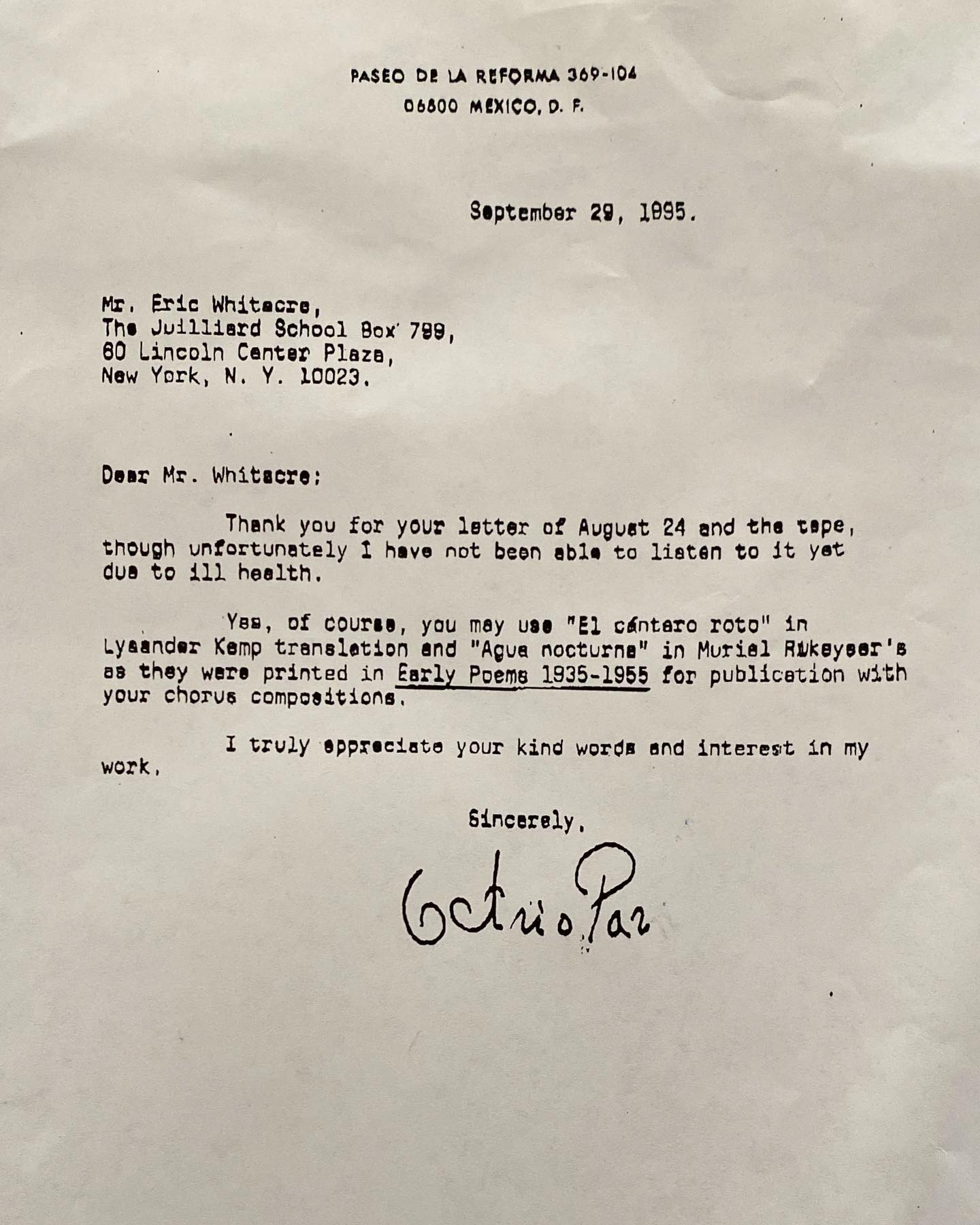
Eric Whitacre: Original poem Octavio Paz

History of Western Civilization Told Through the Acoustics of its Worship Spaces

Polska

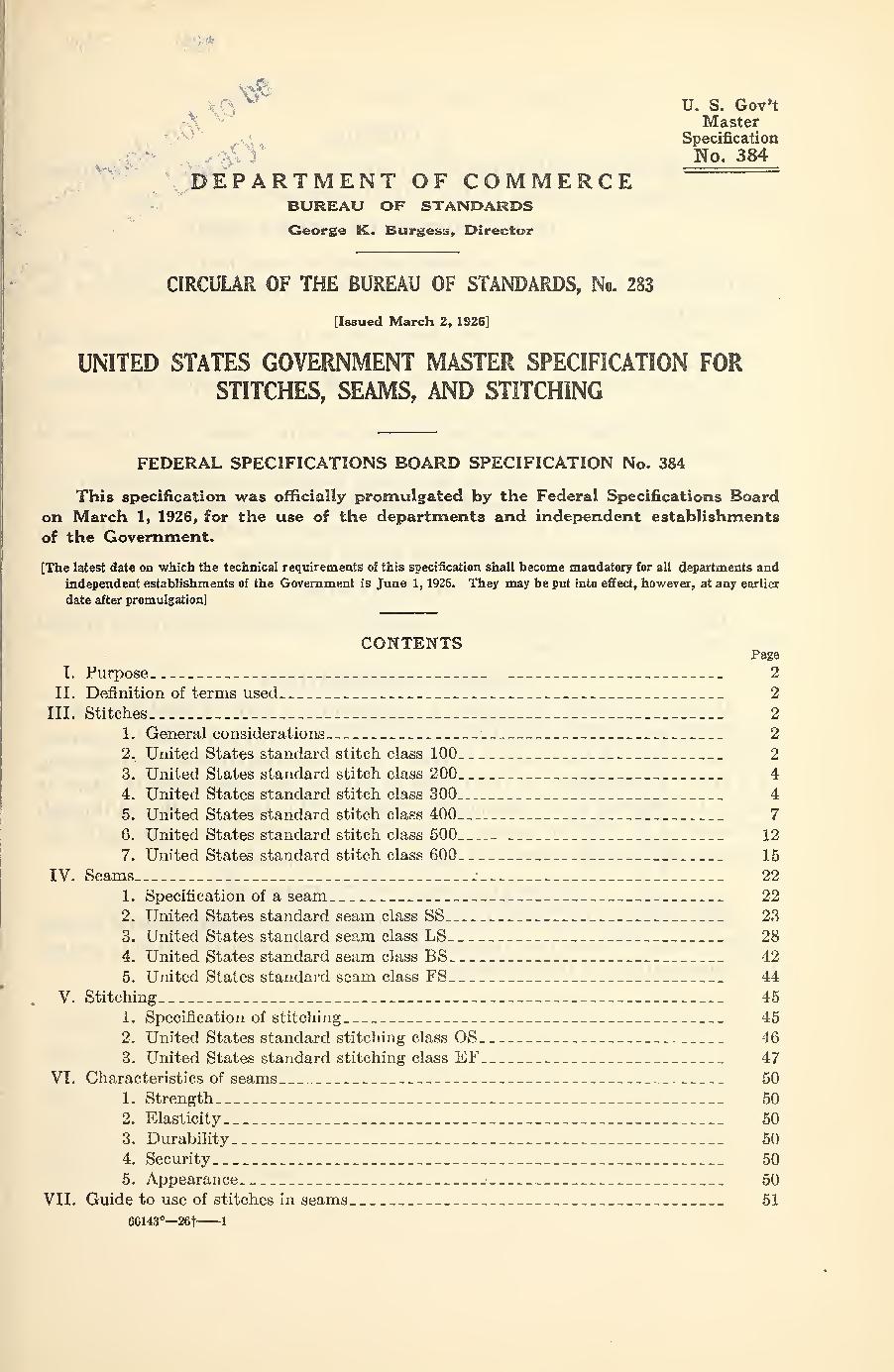
Stitches, Seams & Stitching

The Intersection of Design and Engineering

Heat Tracing

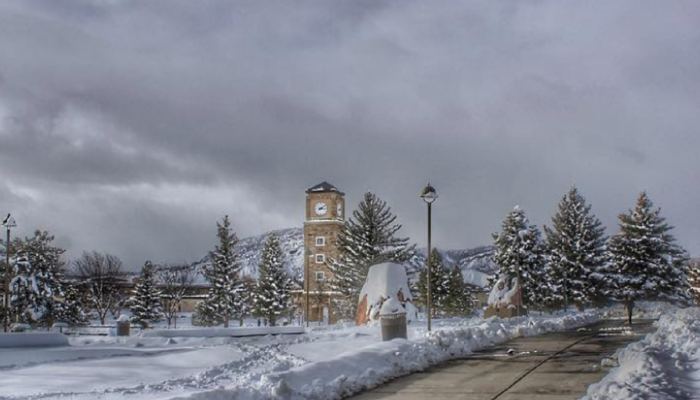
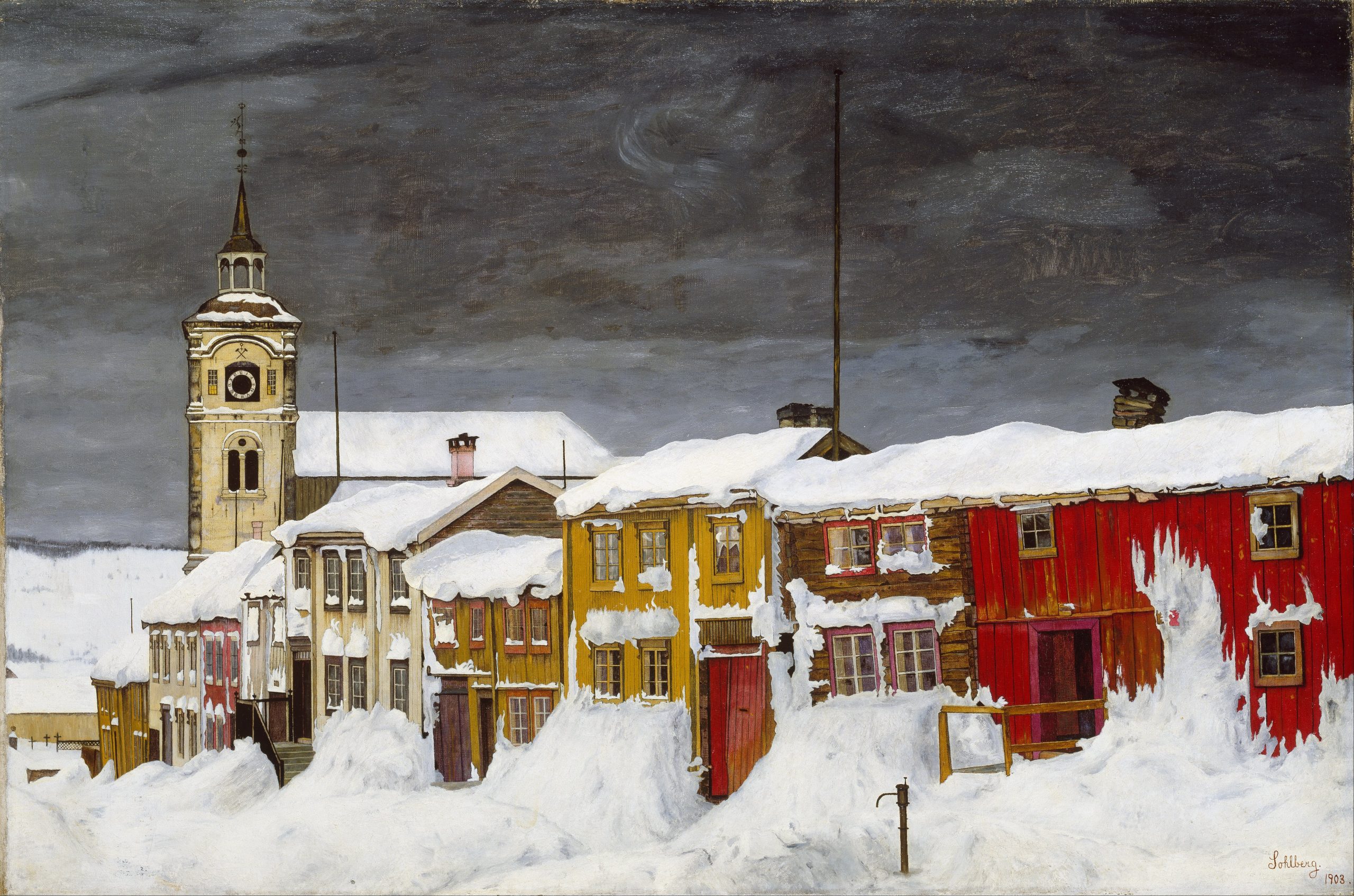
“Street in Røros in Winter” 1903 Harald Sohlberg

The National Electrical Contractors Association best practice catalog features a suite of titles (National Electrical Installation Standards to meet the intent of the National Electrical Code (NEC); particularly where the NEC asserts that an installation be constructed in a “neat and workmanlike manner”.   As anyone who has had to reckon with the subjectivity of the local electrical inspector knows, the determination of “neat and workmanlike” can be mighty subjective.   The NECA documents are used by construction owners, specifiers, contractors and electricians to clearly illustrate the performance and workmanship standards essential for different types of electrical construction.  Because the NEC is intended to be primarily a wiring safety standard, the NEIS suite is referenced throughout the National Electrical Code.  Electrical shop foremen and front line electricians take note.

NECA Standards and Publication Development Home Page

One of the NECA products that may be of interest to facility managers and risk management units in the education industry this time of year is NECA 202-2013 Standard for Installing and Maintaining Industrial Heat Tracing Systems.   About half of the United States deals with snow and ice half the year.

NECA 202 details procedures for the installation, testing, and documentation of electrical freeze protection and process heat tracing systems. Heat tracing cable types covered by this publication include: self-regulating, constant wattage, and zone heating cables and mineral insulated heating cables. 2 is approved as an American National Standard.   The 2013 edition is the current edition and will likely need revisiting/revision/reaffirmation as an American national standard soon.

The technical literature that keeps pipes breaking and roofs failing is complicated space. A common conundrum in the construction industry is which discipline (architectural, mechanical or electrical) should specify application of this technology; especially in value-engineering negotiations when each discipline is trying to reduce its unit costs. Control and communication system add another layer of complexity.  Several consensus standards occupy this technology; cross referencing one another and leaving gaps

ASCE 7-10 Snow Load Provisions

IEEE 515 Standard for the Testing, Design, Installation, and Maintenance of Electrical Resistance Trace Heating for Industrial Applications

UL 515 Standard for Electrical Resistance Trace Heating for Commercial Applications

IEC 62395 Electrical resistance trace heating systems for industrial and commercial applications

National Electrical Code Article 427

There are codes and standards developed by ASTM International, the International Code Council and ASHRAE International that set the standard of care for pipe insulation for energy conservation purposes but we will deal with the interdependence of standard of care set by those documents in a separate post.   Organizations such as FM Global typically derive their customer recommendations from consensus standards developers.

https://websites.umich.edu/~jensenl/visuals/album/lawquad/https://standardsmichigan.com/indiana/

Because heat tracing is a cross-disciplinary technology we maintain it on the standing agenda of several colloquia: Power, Water, Bucolia, Snow & Ice and Mechanical   See our CALENDAR for the next meeting; open to everyone.  You may obtain an electronic copy of this standard from neis@necanet.org.  Communicate directly with Aga Golriz, (301) 215-4549, Aga.golriz@necanet.org.

Participation by the public in reviewing other titles in the NEIS bibliography is welcomed and begins at the page linked below:

Call for Public Review

Issue: [19-24]

Category: Architectural, Electrical, Facility Management, Mechanical, Risk Management,

Colleagues: Eric Albert, Mike Anthony, Jack Janveja, Richard Robben, Larry Spielvogel


More

RESEARCHGATE: HEAT-TRACING OF PIPING SYSTEMS TYPES OF HEAT-TRACING SYSTEMS

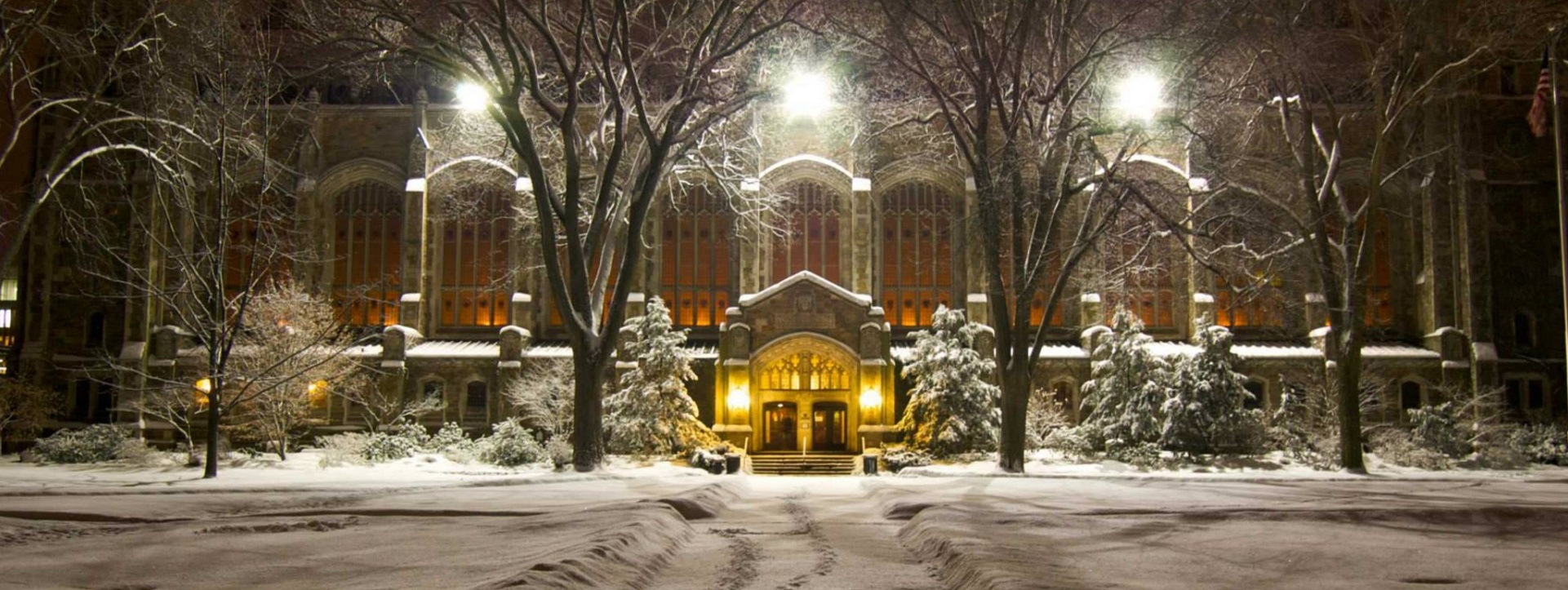
With some 36 million square feet under management — and one of the largest campuses in the United States exposed to extreme low temperatures — building industry professionals at the University of Michigan have some experience managing the competing requirements of safety and economy in heat tracing technology.

“What’s Going On”


“Others, again, shall hammer out bronze more delicately, and bring living faces from marble;

plead causes better; measure the movement of the heavens with a wand, and name the rising stars:

Remember, Roman, these will be your arts, to impose the ways of peace, to spare the defeated,

and to crush the proud”  — Virgil (Aeneid, VI.847-853).


Marvin Gaye wrote “What’s Going On” while he was at Motown, although the song initially faced resistance from Berry Gordy and other label executives. Motown had been known for producing mostly love songs and upbeat pop hits, and Gaye’s introspective and socially conscious lyrics were considered risky for the label’s commercial success.  The song became an instant hit, and it went on to become one of Gaye’s most famous and enduring works.

What’s Going On | Marvin Gaye

Mother, mother
There’s too many of you crying
Brother, brother, brother
There’s far too many of you dying
You know we’ve got to find a way
To bring some lovin’ here today, yea
Father, father
We don’t need to escalate
You see, war is not the answer
For only love can conquer hate
You know we’ve got to find a way
To bring some lovin’ here today
Picket lines and picket signs
Don’t punish me with brutality
Talk to me, so you can see
Oh, what’s going on
What’s going on
Ya, what’s going on
Ah, what’s going on
In the mean time
Right on, baby
Right on
Right on
Father, father, everybody thinks we’re wrong
Oh, but who are they to judge us
Simply because our hair is long
Oh, you know we’ve got to find a way
To bring some understanding here today
Oh
Picket lines and picket signs
Don’t punish me with brutality
Talk to me
So you can see
What’s going on
Ya, what’s going on
Tell me what’s going on
I’ll tell you what’s going on – Uh
Right on baby
Right on baby

Layout mode
Predefined Skins
Custom Colors
Choose your skin color
Patterns Background
Images Background
Standards Michigan
error: Content is protected !!
Skip to content