
Accreditation 100

2024-01-29 11:00 - 12:00

Today we examine standards-setting activity of non-profit trade associations that set academic standards; with specific interest in how these organizations reference other organizations that set standards for the built environment.

The criteria for an organization to be recognized as a “college” or “university” is dependent on the jurisdiction. There are common characteristics and criteria that many institutions must meet to be officially designated as a college. Keep in mind that these criteria can differ between countries and regions. Here are some general considerations:

Legal Recognition: The institution must be legally recognized by the relevant educational authorities in its jurisdiction. This recognition often involves meeting specific standards related to academic programs, faculty qualifications, facilities, and governance.

  • Accreditation: Many countries have accreditation processes that evaluate the quality of education provided by institutions. Accreditation is often granted by independent accrediting bodies that assess factors such as curriculum, faculty credentials, facilities, and student outcomes.
  • Degree-Granting Authority: Colleges are typically authorized to confer academic degrees, such as associate degrees, bachelor’s degrees, or higher. The authority to award degrees may be granted by government education agencies or other relevant authorities.
  • Faculty Qualifications: Colleges are expected to have qualified faculty members with appropriate academic credentials and expertise in the subjects they teach. Faculty qualifications often include advanced degrees in their respective fields.
  • Facilities and Resources: Colleges should have adequate facilities and resources to support the delivery of quality education. This includes classrooms, laboratories, libraries, and other infrastructure necessary for academic activities.
  • Adherence to Educational Standards: Colleges are expected to adhere to established educational standards and guidelines. These standards may cover curriculum development, assessment methods, student support services, and other aspects of academic operations.
  • Governance and Administration: The institution should have a transparent and effective governance structure and administrative processes. This ensures accountability and the ability to manage the institution in accordance with educational regulations and standards.
  • Mission and Purpose: Colleges typically have a clearly defined mission and purpose related to higher education. This may involve a commitment to academic excellence, research, community engagement, or other educational goals.

It’s important to note that the specific requirements and criteria can vary widely depending on the country and its educational system. In some regions, the term “college” may be used differently, and there may be variations in the types of degrees or programs offered by institutions with this designation. As such, it’s advisable to refer to the specific regulations and guidelines established by the educational authorities in a given jurisdiction.


Excellence in Facilities Management

Accreditation 300

Related upcoming events

  • 2026-06-11 11:00 - 2026-06-11 12:00

    https://youtu.be/zisnPchVYKs

    https://standardsmichigan.com/rain-2/

  • 2026-06-16 11:00 - 2026-06-16 12:00

    The zeitgeist surrounding data centers in higher education embodies a fervent fusion of technological ambition, sustainability imperatives, and workforce evolution, driven by AI's insatiable hunger for compute power.  Today at the usual hour we examine three projects on US campuses with special attention to the safety and sustainability boundaries set by electrotechnical strandards.
  • 2026-06-17 11:00 - 2026-06-17 12:00

    “Own only what you can always carry with you: know languages, know countries, know people.

    Let your memory be your travel bag.”

    -- Aleksandr Solzhenitsyn (From "The Gulag Archipelago")

    Today we explain our collaboration with other education settlements in the US and other nations.  We conform to participation requirements set by ANSI US Technical Advisory Groups to the International Organization for Standardization but we also have liaison with other universities in the European Union who conform to the participation requirements of their own national standards bodies.

    Use the login credentials at the upper right of our home page.  Because a great deal of content is copyright protected by the International Electrotechnical Commission, International Organization for Standardization and International Telecommunications Union.


    https://standardsmichigan.com/international-standards-teleconference-today-11-am-eastern/

    https://standardsmichigan.com/iso-tc-309/


    https://standardsmichigan.com/itu-academia/

    d

    https://standardsmichigan.com/time-frequency-services/

    d

    https://standardsmichigan.com/readability-of-design-standards/

    v

  • 2026-06-18 11:00 - 2026-06-18 12:00

    https://standardsmichigan.com/water-300/

    https://standardsmichigan.com/water-management-monthly/

    https://standardsmichigan.com/watersport/

    https://youtu.be/fj1aSyzM8oA

  • 2026-06-19 11:00 - 2026-06-19 12:00

    Review of development in safety and sustainability best practice catalogs for education community outdoor environment.

    "Do Not Go Gentle into That Good Night"

    https://twitter.com/gmkov/status/1691080398200053762?s=20

    https://twitter.com/gmkov/status/1691080398200053762?s=20

  • 2026-06-22 11:00 - 2026-06-22 12:00

    Periodic review of best practice literature that sets the standard of care for interior furnishing specification, installation and maintenance.

    https://standardsmichigan.com/salutariness/

  • 2026-06-23 All day

    Lorem

  • 2026-06-29 11:00 - 2026-06-29 12:00


    With emphasis on OB-GYN because educational settlements are where families begin and grow among the young.

    Many research universities have large medical research and clinical delivery enterprises that provide significant revenue.   We periodically scan public consultations for literature that sets the standard of care for the facilities and technologies in these enterprises in education communities.

  • 2026-07-08 11:00 - 2026-07-08 12:00

    https://youtu.be/zisnPchVYKs

    https://standardsmichigan.com/rain-2/

  • 2027-01-11 11:00 - 2027-01-11 12:00

    "I'm sick of not having the courage to be an absolute nobody."
    -- Franny and Zooey" (J.D. Salinger)

    Periodic walk-through of Human Resource best practice catalog for labor markets generally; and units within the education facility industry specifically.   We inform our discussion based upon periodic release on the Employment Situation Summary from the US Bureau of Labor Statistics.

    University of Michigan Facilities & Operations Organization Chart

    Recommended Reading:

    "The Human Side of Enterprise" 1960 Douglas McGregor

    University of Chicago Press: Readings in Managerial Psychology

    The tradition of naming terms after religious feasts is rooted in medieval ecclesiastical calendars. The use of "Hilary" for this period originated in the English legal system during the Middle Ages, where the courts divided the year into four sittings: Hilary, Easter, Trinity, and Michaelmas. Universities like Oxford adopted similar naming conventions, reflecting their historical ties to the church and legal professions.
    §
    This naming has persisted as a tradition, even as modern calendars have standardized dates. At other UK universities (e.g., Cambridge), the equivalent January-starting term is called Lent term instead.

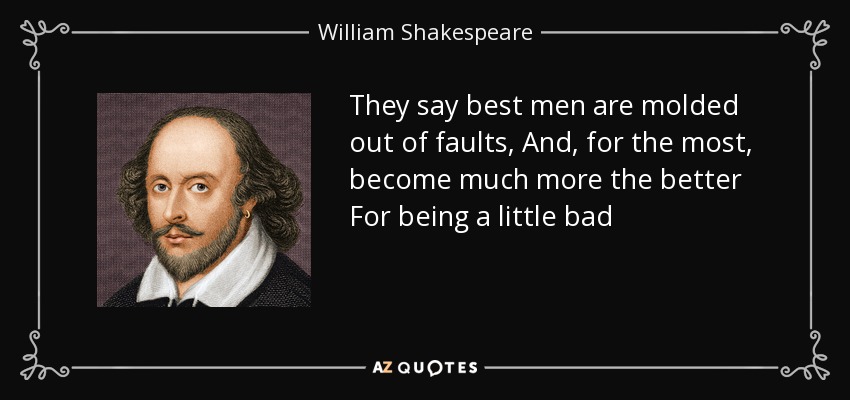
    They say best men are molded out of faults, And, for the most, become much more the better For being a little bad - William Shakespeare

Layout mode
Predefined Skins
Custom Colors
Choose your skin color
Patterns Background
Images Background
Standards Michigan
error: Content is protected !!
Skip to content