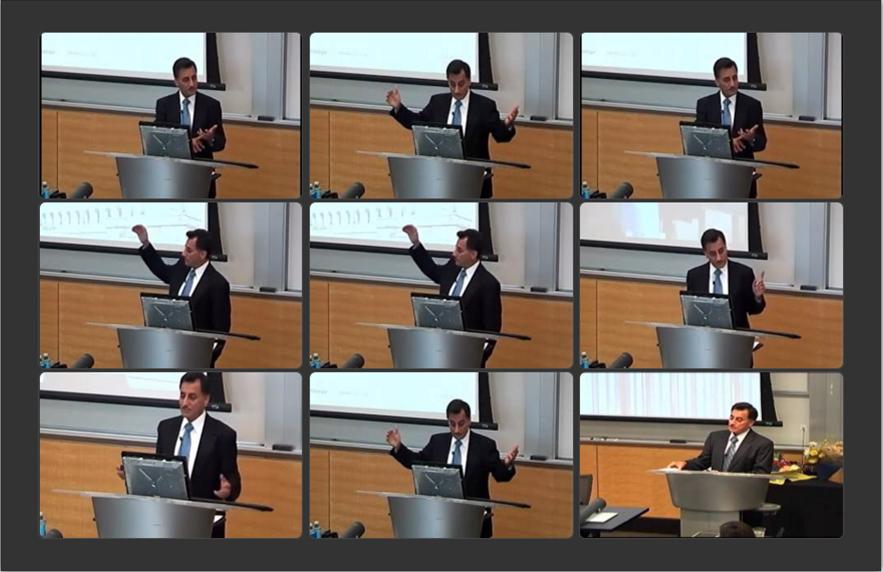
S. Joe Bhatia at the University of Michigan Ross School of Business | ANSI Company Member Forum, May 2016


S. Joe Bhatia at the University of Michigan Ross School of Business | ANSI Company Member Forum, May 2016

“Own only what you can always carry with you: know languages, know countries, know people.
Let your memory be your travel bag.”
-- Aleksandr Solzhenitsyn (From "The Gulag Archipelago")


Today we explain our collaboration with other education settlements in the US and other nations. We conform to participation requirements set by ANSI US Technical Advisory Groups to the International Organization for Standardization but we also have liaison with other universities in the European Union who conform to the participation requirements of their own national standards bodies.
Use the login credentials at the upper right of our home page. Because a great deal of content is copyright protected by the International Electrotechnical Commission, International Organization for Standardization and International Telecommunications Union.
Around the world - André Henri Dargelas, 1860 pic.twitter.com/u9SgXbEHsU
— Muse (@xmuse_) March 7, 2026
Don’t say ‘right-wing’, say ‘pattern recognizer’ https://t.co/0s5FNnlCOB pic.twitter.com/s0YuVy4jw6
— 𝒩𝒶𝓉𝒶𝓁𝒾𝒶 (@classicspilled) November 3, 2025
Happy #WorldStandardsDay! 🎉
Standards connect people, systems and nations — building trust through quality.
This year we focus on SDG 17: Partnerships for the Goals 🤝🌎
Together, we raise standards for a better world.#BSJ #WorldStandardsDay2025 #StandardsInAction #SDG17 pic.twitter.com/vWKHGW75p4
— Bureau of Standards (@StandardsJa) October 14, 2025
New Modern Methods of Construction Toolkit from the NSAI!
For helpful guides, practical resources and free tools, access NSAI’s #MMC toolkit for the Irish construction industry at https://t.co/X8zPrOoSaw
In support of the government’s Housing for All strategy, the goal of… pic.twitter.com/Oyyt3LOq6z
— NSAI (@NSAI_Standards) June 26, 2025
https://standardsmichigan.com/international-standards-teleconference-today-11-am-eastern/
17 equations that changed the world pic.twitter.com/69jV97p8mM
— Massimo (@Rainmaker1973) December 21, 2024
https://standardsmichigan.com/iso-tc-309/
https://standardsmichigan.com/itu-academia/
d
https://standardsmichigan.com/time-frequency-services/
d
https://standardsmichigan.com/readability-of-design-standards/
v
What Is Money and Why Do We Trust It?
Imagine that every country has its own money, measurements, electrical systems and technical rules, and that none of them work easily together. Buying goods, building machines or trading across borders becomes difficult and expensive. In 1944, while World War II was still being fought, representatives of 44 nations met at Bretton Woods, New Hampshire, to establish common rules for the international monetary system. They created the foundations of the International Monetary Fund and World Bank and made international trade more predictable.
Bretton Woods demonstrated a larger idea: nations could cooperate by agreeing upon common rules rather than solving every problem separately. That same postwar spirit of international cooperation helped produce the International Organization for Standardization (ISO) a few years later.
Standards affect things students encounter every day. Electrical plugs and voltages must be understood so equipment can be used safely. Measurements need common definitions so a meter means the same thing everywhere. Computers communicate because engineers agree upon common technical rules. Buildings depend upon shared principles for structural, electrical and fire safety.
Bretton Woods therefore offers a useful lesson beyond economics: modern civilization works because people agree on rules that allow complicated systems—and nations—to work together.
§
July 22, 1944 → American standard
22 July 1944 → International standard
1944-07-22 → ISO standard
https://t.co/Uv44fSYbgK https://t.co/H4WhRSxd8g
— Standards Michigan (@StandardsMich) October 6, 2026