


OCTOBER 21
1 | Adelphi University | Roof Failure → Solar Infrastructure
A prematurely failed roof at the Center for Recreation and Sports became the occasion for a new 295-kW rooftop solar installation, expected to generate about 370,000 kWh annually. An excellent lifecycle-capital case study for today.
Adelphi University → Roof Challenge Into a Solar Opportunity
2 | Tulane University | Charity Hospital Resilience
Tulane’s transformation of the former Charity Hospital anchors a $700 million downtown commitment. Critical energy infrastructure is being located higher in the building for protection from severe conditions, with stormwater infrastructure beneath the courtyard.
Tulane University → Historic Renovation and High Performance
3 | UCSF | Tertiary Fire-Water Supply
Waterproofing is complete on the new Parnassus fire-water tank, designed to provide a third source of emergency fire water for the Bakar Research and Academic Building and future development. Testing and commissioning come next.
UCSF → Parnassus Heights October Construction Update
4 | Marietta College | $55 Million Gift for Buildings + Health Sciences
Joe and Linda Chlapaty have made the largest gift in the college’s history. It funds a new graduate health-sciences building plus comprehensive renovations of three aging residence halls — an unusually clear intersection of philanthropy and capital renewal.
Marietta College → $55 Million Investment in Marietta’s Future
5 | CUNY | $555 Million Capital Program
CUNY reports $555 million invested in capital projects, up from $346 million the prior year, with 42 projects completed and continuing modernization of classrooms, laboratories and critical infrastructure. It also reports record philanthropic support.
CUNY → 2026 State of the University
6 | University of Rochester | Philanthropy Meets Hospital Infrastructure
A $10 million Davitt family gift directs $9 million toward a new pediatric emergency department within the Strong Memorial Hospital expansion and another $1 million toward an integrated-care center.
University of Rochester → Davitt Family Gift
7 | UT Southwestern | A Half-Century Philanthropic Capital Model
The O’Donnell Foundation’s final transfer brings its cumulative support for UT Southwestern to nearly $400 million, including biomedical research, education, patient care and hospital construction. Particularly interesting is the foundation’s longstanding preference for quiet philanthropy.
UT Southwestern → O’Donnell Foundation Legacy
8 | Harris-Stowe State University | $62.3 Million STEM Building
Construction is advancing on a four-story STEM center with 12 research laboratories, maker spaces and eight flexible classrooms, described as the largest capital campaign initiative in the university’s history.
Harris-Stowe → New STEM Academic Center
9 | UNC Greensboro | Aging Steam Infrastructure
UNCG is replacing critical portions of a steam distribution system whose piping is more than 50 years old and experiencing increasingly frequent failures. Phase 2 is scheduled to begin this winter. Pure Essential Works.
UNC Greensboro → Steam & Condensate Infrastructure Improvements
10 | Yale | Storm Utilities Beneath the Capital Project
Construction of Yale’s Dramatic Arts Building has reached the decidedly unglamorous but essential stage: storm-utility connections beneath York Street. A useful reminder of what sits underneath celebrated new architecture.
Yale → Dramatic Arts Building Storm Utility Work

Title and Artist Unknown
OCTOBER 21
1 Canada | Digital Sovereignty in Universities.
CAUBO is holding a webinar today, October 21, on universities’ dependence on global providers for cloud infrastructure, email, research platforms, student systems and AI.
CAUBO →
2 Australia | University Governance Becomes a Standards Question.
Australia has amended its national Higher Education Standards Framework, strengthening requirements for institutional governance, accountability and campus safety. The new governance provisions begin taking effect in 2027.
Australian Department of Education →
3 United States | Yale Moves Campus Construction to LEED v5.
Yale University has updated requirements for major capital projects to align with LEED v5 and describes itself as an early institutional adopter.
Yale →
4 United States | Alaska Microgrids.
The University of Alaska Fairbanks is highlighting Alaska’s Microgrid Innovators and the communities developing isolated-energy systems — a useful university, electrical infrastructure and resilience connection.
University of Alaska Fairbanks →
5 United States | Marietta College Capital Investment.
Marietta College has announced a $55 million investment tied to its strategic plan and campus future.
Marietta College →
6 Sweden | University Board Sets the 2027 Budget.
Karolinska Institutet’s board has approved its 2027 government-funding framework: just over SEK 3 billion, including funding for education, research and doctoral education and shared purposes including premises and housing.
Karolinska Institutet →
7 Netherlands | Grid Congestion Becomes a University Problem.
Delft University of Technology recently convened Unlocking the Grid, connecting electrification of industry, mobility and buildings with grid congestion, flexibility and resilient energy systems.
TU Delft →
8 Germany | AI Data Center on a University Campus.
Karlsruhe Institute of Technology is planning an AI data center at Campus North — another example of computational load becoming physical university infrastructure.
Report →
9 Germany | Robots on Construction Sites.
University of Stuttgart has won two EIC Pathfinder projects for autonomous multi-robot construction systems. The work connects labor shortages, productivity and resource-efficient construction.
University of Stuttgart →
10 European University Estates | Physical Plant Moves Up the Agenda.
The European Universities Estates Congress takes place October 20–21 in Manchester, focusing on university real estate and facilities management alongside the broader Education Estates gathering.
European Universities Estates Congress →

“New Moon” | 1943 Maxfield Parrish
OCTOBER 20
1 England — school estate management.
DfE’s new service now includes an annual school estate management standards return and condition data. This is squarely in our lane.
Department for Education
2 Sydney — $5 meals.
University of Sydney’s subsidized student canteen remains a useful food-security operating-practice example.
University of Sydney
3 Florida International — 2030 build-out.
Multiple buildings are under construction to accommodate enrollment and research growth.
Florida International University
4 Guelph — 1,250 beds.
Initial construction funding has been approved for a major first-year residence.
University of Guelph
5 Marietta College — $55M gift.
The institution’s largest-ever commitment will fund a graduate health-sciences building plus renovation of historic halls.
Marietta College
6 Sioux Falls — $105M facilities bond.
A 30-person community task force toured schools, studied enrollment and funding and developed priorities for the next decade.
Sioux Falls School District
7 Stanford — Energy Nexus begins today.
Stanford University is running its inaugural Energy Nexus, October 20–22. The program is much closer to our work than the usual university sustainability conference: Powering AI: Infrastructure, Energy & Sovereignty, data-center growth and “social license,” cooling-water reuse, fuels and electricity, critical-material supply chains and grid questions. More than 300 industry, academic and policy participants are expected.
Energy Nexus
8 Dunwoody High School — facilities become pedagogy.
Failed air conditioning plus discolored water forced the Georgia school into remote instruction. A beautiful example of why Essential Works aren’t peripheral to education.
9 University of Michigan — 20.7% investment return.
U-M’s long-term investment portfolio returned 20.7% in FY ’26.
U-M’s long-term investment portfolio returns 20.7% in FY ’26 | The University Record
10 Michigan — Sports Medicine Institute approved.
University of Michigan Regents have authorized a 100,000-square-foot Nathan and Catherine Forbes Sports Medicine Institute on the former Wolverine Tower site at State and Eisenhower. It deliberately connects Michigan Medicine with the Ross Athletic Campus and the university’s statewide sports-medicine network. This is almost a textbook example of why adding Sport to E&H was appropriate: healthcare, athletics and capital facilities literally converge in one project.
Michigan Medicine — Forbes Sports Medicine Institute

“The Consummation of Empire” 1836 Thomas Cole
OCTOBER 19
1 | NIST — The website itself is being linguistically rebuilt
NIST now carries notices explaining that it is replacing AI terminology with SI in response to the Executive Order. A fascinating real-time terminology migration.
NIST →
2 | NIST/NSA/CISA — Incident readiness for SI
An October 16 publication gives ten practices for incidents during SI training and evaluation. Very fresh and shows the new vocabulary entering technical guidance.
NIST →
3 | European Union — Still “Artificial Intelligence”
The EU’s harmonized-standards machinery continues under the legally defined Artificial Intelligence Act. The transatlantic terminology split is now quite visible.
European Commission →
4 | Nature — Scientists push back on the vocabulary
An October 7 explainer asks whether superintelligence describes systems that actually exist; most researchers have traditionally used it for systems exceeding human intellectual capability. An excellent counterweight to #1.
Nature →
5 | ISO/IEC 22989 — The international vocabulary still says “Artificial Intelligence”
The foundational concepts-and-terminology standard. Its collision with the new U.S. vocabulary is almost tailor-made for STDMi.
ISO →
6 | ISO/TC 37 — Language and Terminology
The mother lode for today’s Language session: terminology, translation, interpreting and language-based activity in a multilingual information society.
ISO/TC 37 →
7 | IEEE P3123 — AI/ML Terminology
A new 2026 project expressly intended to define terminology used in artificial intelligence and machine learning. Does IEEE eventually encounter the SI question?
IEEE Standards Association →
8 | Python — From computer-science course toward literacy
Iowa State’s computer-science project now offers teachers and learners a full introductory Python sequence—19 sections and 73 modules—alongside AI courses, including Building AI Apps with Python. Its teacher side explicitly assumes no previous coding experience.
The AI Program →
9 | University at Buffalo — “Buffalo Statement” on AI
An October 16 statement argues universities should help shape AI infrastructure around the public good. Nearly 200 university, government and industry leaders contributed through the summit.
University at Buffalo →
10 | United States — The language of maps is changing too
A September 2026 Congressional Research Service update records three federal naming changes: Gulf of Mexico → Gulf of America; Denali → Mount McKinley; and, as of August 2026, Lake Ontario → Lake America for federal usage. The Geographic Names Information System has been updated accordingly.
Congressional Research Service →

“The Morning Ride” 1907 | Erik Henningsen
OCTOBER 18

“Roman Offering” 1891 | John William Waterhouse
OCTOBER 17

“At the Water’s Edge” George Henry Smillie
OCTOBER 16
1. International Education | “Big Four” — Traditional Anglosphere destinations increasingly face competition from a much wider group of countries for globally mobile students.
2. Australia | Migration / University Finance — UTas VC Rufus Black argues cuts to foreign enrollment would damage both research funding and Australia’s standing in Asia.
3. UK | University Finance — Government contribution to teaching and support costs continues shifting toward graduates; Universities UK says government now effectively funds only about 16p of each £1 spent teaching and supporting undergraduates.
4. U.S. | College Closures — Closures and mergers reached a pace equivalent to roughly one institution every three weeks last year. Hampshire College provides the physical-campus illustration.
5. College Administration | Cost Reduction — Evidence suggests decades of growth in university administrative employment may finally be reversing as institutions redirect resources toward teaching and research.
6. Massachusetts | Closure Risk — The state is tightening requirements for private colleges to warn students when institutions may become unable to meet their financial obligations.
7. UC San Diego | Data-Center Power — The San Diego Supercomputer Center is preparing to test a solid-state transformer intended to reduce AI data-center losses and equipment footprint.
8. Oregon State | Homecoming + Family Weekend — Oregon State combines Homecoming and Family Weekend, October 15–18. A Parent and Family Social, football, alumni events and college tailgates bring students, parents and alumni into the settlement simultaneously.
9. Duke | Family Weekend — Duke’s October 16–18 Family Weekend coincides with a home football weekend. Faculty events, performances, museums, athletics and campus activities are intended to give families a deeper understanding of university life.
10. University of Tennessee | Health Infrastructure — Ground has been broken on a $350 million College of Medicine interdisciplinary building in Memphis, described as Tennessee’s largest state capital investment in a higher-education institution.

“The Biglin Brothers” 1872 Thomas Eakins
OCTOBER 15
1. Roger Williams University — October 16–18. Autumn Festival, Casino Night and family gatherings in Bristol, Rhode Island.
2. West Virginia University — October 12–18. Homecoming brings together generations of students and alumni in Morgantown.
3. England | Student Finance — New student-finance arrangements permit approved universities and colleges to offer shorter, modular courses beginning in September 2026.
4. United Kingdom Universities — Survey finds widespread consideration of mergers, federations and shared procurement arrangements.
5. U.S. Research Universities — October 2. Association of American Universities reports concerns about federal grantmaking changes and OMB Uniform Guidance.
6. University of Minnesota — September 24. Announced $225 million in spending reductions across five campuses over two years.
7. University of Utah — October 6 reporting. Planned workforce reductions of 285–855 positions amid financial restructuring.
8. Michigan Technological University — October 9. Capital campaign exceeded its $350 million goal by $24 million, two years ahead of schedule.
9. Pittsburg State University — October 14. Construction-management students will build a permanent outdoor performance stage on the historic Oval.
10. University of Chicago — October 13. Progress on Ida Noyes Hall revitalization following a $50 million gift, combining preservation with mechanical modernization of the 1916 building.

“The Birth of Venus (c. 1484–1486) | Sandro Botticelli
OCTOBER 14
1 Ulster University, Northern Ireland —
Parenting rooms across campuses —
Family formation, infant care and the university as a domestic settlement.
2 Cardiff University, Wales —
University Hall changes ownership —
Two universities exchange student accommodation, moving students closer to their classrooms. October 2.
3 University of Newcastle, Australia —
New multisport facility opens —
Sports turf, synthetic surfaces, philanthropy and community use. October 2.
4 Birmingham Newman University, England —
Campus orchard becomes apple juice —
Students and staff harvest the campus orchard for an autumn foodways story. October 6.
5 University of Hamburg, Germany —
€217 million physics laboratory —
A major new research building for Science City Hamburg Bahrenfeld, designed by C. F. Møller.
6 University of Copenhagen, Denmark —
Reorganizing six faculties —
A substantial restructuring of one of Europe’s oldest universities, with implementation planned for 2028–2029.
7 Florida International University —
New campus buildings —
Capital investment supporting academic and research growth.
8 San José State University, California —
Community-college housing partnership —
Shared institutional capacity for student housing.
9 George Mason University, Virginia —
Quantum education and arts philanthropy —
Teacher preparation and a $400,000 arts scholarship fundraiser.
10 Purdue University, Indiana —
$42 million business-school building gift —
Roland Parrish philanthropy and naming rights.

“Boy Writing with Sister” 1875 Albert Anker
OCTOBER 13
1. Purdue University — $42 Million Gift for Business School Building — Roland Parrish’s commitment names a new flagship facility.
2. Marian University — $1 Million Gift for Catholic Teacher Education — Scholarships honoring Daniel and Beth Elsener.
3. Ohio State University — Power Electronics for AI Data Centers — New APEX-DC consortium; power conversion, electrical distribution and data-center infrastructure.
4. Johns Hopkins University — Edge AI Engineering Symposium — Electronics, sensors, semiconductors and distributed computing.
5. Shenandoah University — Athletics Center Expansion — New football, cross-country and track facilities supported by philanthropy.
6. Texas A&M University–Central Texas — CORE Building Opens — New Centralized Operational Reliability and Efficiency facility.
7. Northampton Community College — $2 Million Childcare Grant — Four-year federal support for childcare serving student parents.
8. St. John Fisher University — Artificial Intelligence Literacy Minor — New interdisciplinary undergraduate curriculum.
9. Georgetown University — New University President Inaugurated — Eduardo Peñalver becomes Georgetown’s 49th president.
10. University of California, Merced — Mobile Greenhouse and Agricultural Technology — Research facilities brought into surrounding communities.
“Railroad Sunset” | Edward Hopper
OCTOBER 12
1. University of Saskatchewan — Thanksgiving and Veterinary Education
— Thanksgiving begins a longer fall break for veterinary students.
2. Freed-Hardeman University — Maroon & Gold Day
— Maroon & Gold Day on Columbus Day, October 12, 2026.
3. University of Michigan — FY2026 Innovation Performance
— $60.5 million in licensing revenue, 339 license and option agreements,
197 issued U.S. patents and 40 startups.
4. Stanford — Lycia Therapeutics $100 Million IPO Filing
— University-licensed biotechnology entering public capital markets.
Announced October 5.
5. Northwestern — Intellectual Property and Licensing Events
— October 21 seminar on startup capitalization and dilution.
6. Boise State — Steam Tunnel Reconstruction
— October 9 update covering steam distribution repairs, building heating
interruptions and phased infrastructure renewal.
7. SIUE — $17 Million Biorefining Research Expansion
— October 9 funding announcement supporting research facilities and commercialization.
8. Stanford, Caltech and University Visa Investigations
— October 8. Federal scrutiny of university exchange-visitor programs.
9. Central Michigan University — Enrollment Decline
— Fall 2026 enrollment of 13,524 raises concerns about the institution’s
regional economic role.
10. Wells College — Campus Back on Market
— October 9. Historic New York campus offered for sale after an earlier
transaction collapsed.

The Veteran in a New Field | 1865 Winslow Homer
OCTOBER 11

“Harvest at Rest” Geroge Cole 1865
OCTOBER 10

“Repos dans les champs” | Édouard Debat-Ponsan (1847-1913)
OCTOBER 9
1.
University of North Carolina:
Michael Jordan gives $10 million to the School of Social Work
in honor of his mother.
2.
Ashland University, Ohio:
$20 million gift from Dwight and Martha Schar supports
residence hall improvements.
3.
NACUBO:
October 5 policy briefing covers Title IX, visa rules,
campus security and federal appropriations.
4.
University of Utah:
Modernization initiative could result in substantial
administrative staff reductions.
5.
Indiana:
Public school superintendent develops a statewide microschool
network to compete for enrollment. October 8.
6.
Florida:
Why established universities are opening campuses and
programs in the state.
7.
Roger Williams University — 50 Years of WQRI:
The student-run station celebrated its 50th anniversary
on October 2. The university published a story with
campus photographs.
8.
Oakland University — Data Infrastructure Project:
The university’s proposed computing facility has entered
its due-diligence phase, including utilities, site,
environmental and financing investigations.
9.
University of Michigan — Los Alamos Computing Center:
Project FAQ and timeline for the proposed advanced
computing facility in Ypsilanti Township.
10.
Data Centers and Grid Flexibility:
A Duke University study estimates potential savings of
$40–150 billion over the coming decade
if large computing facilities can reduce or shift demand
during constrained periods.

La danse à Bougival | Pierre-Auguste Renoir 1883
OCTOBER 8
Western Michigan — utility data pays for capital work. APPA has a webinar today: Western reports a 2.1-year median payback, about 2.5 million kWh saved and nearly $250K in utility incentives. That is an obvious Michigan hit. APPA
Oswego SD 308, Illinois — $317M referendum. Twenty-two schools; HVAC, roofs, plumbing, electrical, fire protection and science laboratories. Almost tailor-made for us. District 308 bond information
Canada — TerraCanada Science and Innovation Hub. Roughly C$1.05B; more than 400 scientists and technical specialists on the NRC Ottawa campus. Government of Canada
Enrollment decline versus physical plant. AS&U finds nearly 60% of the 100 largest districts lost enrollment while buildings continue aging. This is one of the strongest strategic stories in the whole scan. American School & University
ASTM F3783-26 — school gym-equipment inspections. Basketball backstops, divider curtains, volleyball equipment and wrestling-mat lifts. Very Standards Michigan. American School & University
California — about $1.4B in local school bonds. This may be the best umbrella election item for our developing bond theme. LAist school-bond explainer
Houghton University — $83M campaign. More than $62M already committed; student experience, facilities and endowment. A useful smaller-institution philanthropy counterweight. Houghton University
Community-college endowments — October 28. NACUBO points out that community colleges educate more than four million students but their endowments receive little attention. That belongs in our community-college lane. NACUBO Online Learning
Endowments → physical plant. The 2025 NACUBO-Commonfund study says 7.6% of endowment spending went to operation and maintenance of campus facilities. That’s a useful Schenkingen/essential-works connection. NACUBO
College athletics is reshaping university governance. The current Trusteeship issue specifically worries that smaller sports—including Olympic-pipeline sports—may be crowded out by football/basketball economics. That fits our Sport Essential Works interest exceptionally well. Association of Governing Boards

“The School Walk” | Albert Anker 1872
OCTOBER 7
School Facilities | United States
GAO — School buildings are cancelling school
Chronic facility problems affected an estimated 47 percent of districts surveyed. Facility failures led to cancellations affecting two million students and about 3.5 million lost days of learning in 2024–25.
International Students | OECD
Education at a Glance 2026 — International student geography is shifting
International students now comprise 64 percent of master’s entrants in Australia and 58 percent in the United Kingdom. Canada remains distinctive for the large share of international students attending colleges rather than universities.
Student Housing | Canada
Trent University — Nearly 1,400 new student beds
Ontario is investing C$100 million through the Building Ontario Fund in Gidigaa Migizi College and the new Otonabee College residence, adding housing together with academic, social and administrative space.
Student Housing | Syracuse University
Syracuse — Three new residence halls approach 1,900 beds
New residences on Ostrom, Waverly and Comstock avenues will include a dining center, convenience store, lounges and study rooms.
Sport | Australia
University of Newcastle — New multisport infrastructure
The Mark and Kirralee Hughes Sports Common combines turf fields with synthetic and acrylic surfaces for netball, pickleball, tennis, hockey and futsal while serving as a classroom for sport science and physical education.
Architecture | MIT
MIT — Met Warehouse reborn
MIT has formally dedicated its transformed historic warehouse as a major design hub and cornerstone of the developing West Campus district for art and design.
Special Education | Northern Territory
Palmerston — A$90-million special-education school
The planned campus includes classrooms, therapy and sensory rooms, science, arts, technology and horticulture spaces, a swimming pool, multipurpose hall and on-site farm.
Science Facilities | San Diego State University
SDSU — $20 million gift for Duran Sciences
Jessica Duran Sarowitz has committed $20 million to support Duran Sciences, a new College of Sciences building intended to expand student research opportunities.
Technical Education | New Zealand
New Zealand Maritime School — 100 years
The school traces its history to the JW Keane Nautical School established in Auckland in 1926 and today combines maritime education with advanced simulation and practical training.
Foodways | University of Wisconsin–Madison
UW–Madison — Cheese Curds & Local Produce
Campus Dining’s October calendar includes National Cheese Curd Day and a Local Produce Dinner at Rheta’s Market — two particularly Wisconsin expressions of campus foodways.

The Birthplace of Herbert Hoover, West Branch, Iowa | Grant Wood 1931
OCTOBER 6
- Wisconsin — the 1.3-GW AI-campus/grid problem.
Fresh reporting October 5 says Oracle’s huge Wisconsin AI campus faces substantial power-delivery risk after the transmission review was restarted. Full 1.3-GW service may not arrive until 2029. The electrical infrastructure is becoming the limiting factor. - UCLA — childcare economics break down.
October 4 reporting puts the projected accumulated deficit of UCLA’s campus childcare operation at about $9.1 million, ahead of its planned June 2027 closure. A useful development for the Domestic University catalog. - University of Kansas — campus childcare closure.
More than 100 families face the closing of KU’s Hilltop Child Development Center this month after more than 50 years of operation. Paired with UCLA, this begins to look like a pattern worth watching. - Vancouver — underground substation beneath a school property.
BC Hydro is preparing to replace the roughly 70-year-old Dal Grauer substation with a new underground West End Substation beneath Vancouver School Board’s Lord Roberts Annex property. The project will ultimately serve roughly 50,000 customers: school land, underground HV infrastructure, urban load growth and seismic resilience. - TU Delft — Data Centre 1 power-supply replacement underway.
From October 4–11, Delft is taking Data Centre 1 offline to replace its power-supply infrastructure for reliability and continuity. HPC/DAIC resources are affected and impacts on some campus security systems are being assessed.
TU Delft - University of Amsterdam — selling its old university library.
On October 2 UvA formally began selling its former Singel University Library following occupation of the new library. Sale proceeds will be reinvested in the university real-estate portfolio — capital recycling rather than simply disposing of surplus property.
University of Amsterdam - University of Milan — MIND campus gets dedicated senior oversight.
The university’s October 1 governance appointments retain a specific pro-rector responsible for realization of the new MIND university campus, alongside separate leadership for university buildings and architectural heritage — evidence of the capital project’s institutional scale. - Newcastle/Durham — £25M Energy Central Institute breaks ground.
On October 5 construction formally began at Blyth. Newcastle and Durham will provide degree and PhD education and research centered on clean and offshore energy. Newcastle’s academic lead is its Director for Electrification.
Newcastle University - Michigan State — $10M for Spartan Stadium.
Joe and Julie Serra announced a $10 million commitment October 1 supporting MSU football and Spartan Stadium improvements, part of the university’s $1 billion FOR SPARTA campaign. A Michigan example of philanthropy flowing directly into the physical plant. - Michigan Tech — $55M student-wellness center breaks ground.
On October 2 Michigan Tech broke ground on the 78,400-square-foot Chang K. Park Center for Student Wellness. The project is fully funded by a $55 million gift from alumnus Chang K. Park, the largest individual gift in Michigan Tech history, and will consolidate services now scattered among more than 30 campus locations.
Michigan Tech
“Master Bedroom” | Andrew Wyeth
OCTOBER 5
1 | Wayne State | Who actually has a school library? — Researchers are launching a Michigan school-library census to identify which public schools have libraries and where the gaps are.
Michigan school-library census
2 | Stephen F. Austin | Childcare for student parents — Nearly $2 million in federal support will expand affordable childcare for low-income parenting students.
SFA childcare program
3 | Florence-Darlington Tech | Childcare at community-college scale — Another nearly $2 million award expands childcare assistance specifically to student parents.
FDTC student-parent childcare
4 | ABET | Facilities are an accreditation issue — The 2026–27 engineering criteria explicitly require adequate, maintained and upgraded classrooms, laboratories, equipment, computing infrastructure and libraries.
ABET 2026–27 Engineering Criteria
5 | Washington-area universities | International enrollment falling — Georgetown, George Mason and other institutions are confronting declines tied to visa and policy changes.
D.C.-area enrollment report
6 | Nebraska | A farm appears on campus — UNL’s new East Campus produce farm seeks student participation while linking food production, research and the surrounding community.
UNL East Campus farm
7 | Karlsruhe Institute of Technology | AI data center on campus — KIT is planning an AI data center at Campus North, a direct international analogue to the U.S. campus-computing buildout.
KIT data-center report
8 | University of Helsinki | Preserve, renovate, reuse — The university has completed a four-year renovation of its historic Main Building rather than abandoning the legacy asset.
University of Helsinki renovation
9 | Waterloo | Responsible research assessment — Waterloo has issued updated guidance on how research itself should be assessed, alongside campus sustainability material.
University of Waterloo Daily Bulletin
10 | International Space University | “Campus” becomes a network — ISU is launching a Global Campus Initiative built around regional hubs and affiliates rather than simply expanding one physical campus.
ISU Global Campus Initiative
“The Voyeur (Little Girl Observing Lovers on a Train)” by Norman Rockwell (1944)
OCTOBER 2
COLLEGE RADIO DAY
The 16th annual World College Radio Day brings together hundreds of student stations worldwide under the 2026 theme, “HOPE — Always In The Air!”
College Radio Foundation →
WSUC 90.5 FM | SUNY CORTLAND
WSUC celebrates its 50th anniversary today from a new studio installed as part of the $27 million renovation of Cornish-Van Hoesen Hall.
SUNY Cortland →
WMSC 90.3 FM | MONTCLAIR STATE
WMSC marks World College Radio Day with 24 consecutive hours of student-produced broadcasting, including specialty programs, alumni and graduating seniors.
WMSC →
RENSSELAER POLYTECHNIC INSTITUTE | CHILDCARE
RPI advances development of a campus childcare center planned for 116 full-time places for children under five, with priority enrollment for the university community.
RPI →
UC SANTA CRUZ | FAMILY STUDENT HOUSING
A new Early Education Center beside Family Student Housing combines nine classrooms, infant care and eventual capacity for 140 children.
UC Santa Cruz →
INDIANA | EDUCATIONAL CONSTRUCTION
The joint campus for the Indiana School for the Deaf and Indiana School for the Blind and Visually Impaired reaches a major construction milestone. The principal education building is 267,000 square feet.
Indiana Public Radio →
LEHIGH UNIVERSITY | CROSS COUNTRY
The 52nd Paul Short Run brings collegiate and high-school cross-country competition to Lehigh University’s Goodman Campus.
Lehigh Athletics →
NC STATE | BLUEGRASS
The Wide Open Music Festival opens at NC State’s Centennial Campus, bringing bluegrass, roots music and international performers into Raleigh.
ABC11 Raleigh →
COLLEGE OF THE SISKIYOUS | FACILITIES
Facilities director Veronica Rivera’s path runs from Marine Corps HVAC and generator work through the electrical trade and construction to higher-education facilities management.
FacilitiesNet →
RICE UNIVERSITY | RESIDENTIAL COLLEGES
Rice continues a major campus building program. The new Chao and Lovett residential colleges comprise about 269,000 square feet and provide housing for nearly 600 students.
Rice University →

“American Gothic” 1930 | Grant Wood
October 1
1. Cornell | Fall Harvest Week. Willard Straight Hall welcomes autumn with Fall Harvest Week through October 2, with dining events organized around the campus community. Cornell Student & Campus Life
2. K–12 Facilities | Chronic Building Problems. GAO estimates that 47 percent of school districts experienced chronic facility problems during 2024–25, with facility failures contributing to millions of lost instructional days. U.S. Government Accountability Office
3. Penn State | Shrinking the Physical Estate. Penn State will sell its closing Shenango and Wilkes-Barre campuses for a combined $6.25 million as the university reduces its Commonwealth Campus footprint. Penn State
4. Higher Education | Space Utilization. A recent survey reports that only 43 percent of institutions regularly use more than three-quarters of their physical space, raising questions about utilization, operating costs and continued campus expansion. Inside Higher Ed
5. Michigan | $1.3 Billion Capital Outlay. Michigan has authorized capital projects at 27 higher-education institutions, including engineering, computing, skilled-trades and energy-and-utility facilities. State of Michigan
6. Rhode Island | Career & Technical Education. Construction has begun on a 48,000-square-foot expansion of Davies Career & Technical High School, with completion scheduled for 2028. Construction Owners
7. Carnegie Mellon University | $3 Billion Gift. Ken Griffin’s $3 billion commitment — the largest individual gift announced to a university — will provide $2 billion for a new comprehensive CMU campus in Miami-Dade County and $1 billion for Pittsburgh. Standards Michigan
8. University of Maine | Naming & Signage. Trustees have voted to remove former U.S. Senator George Mitchell’s name from university programs and honors after a review under existing institutional naming policies. University of Maine System
9. NIST | Drafts Open for Comment. NIST has a current queue of draft cybersecurity and privacy publications open for public comment, including work involving AI, operational technology, cloud architecture, IoT and identity systems. NIST
10. Harvard | Pritzker Hall Tops Out. The future nine-story home of Harvard’s Department of Economics has reached its highest structural point as construction advances in Cambridge. Harvard University

“Landscape with a Calm” 1650 Nicolas Poussin
September 30
- Schenkingen at extraordinary scale — Carnegie Mellon. Ken Griffin’s announced $3 billion commitment is reportedly the largest single gift to a U.S. university. It combines a $1 billion Pittsburgh commitment with a planned Miami campus and includes renaming CMU’s School of Computer Science for Griffin. Financial Times
- The gift becomes an engineering school — Oregon. Phil and Penny Knight’s $1 billion University of Oregon gift will establish a new engineering school and further extend the donor imprint on the Knight Campus. The Guardian
- Naming & Signage — Maine removes George Mitchell. University of Maine System trustees accepted a recommendation to remove Mitchell’s name from institutional honors and naming, applying existing policies governing commemorative naming and physical facilities. University of Maine System
- Naming risk — Temple unwinds a $55 million gift. Temple is terminating a major gift after allegations concerning the donor; facilities and programs had already carried his name. The case puts donor due diligence, naming agreements and de-naming provisions squarely into institutional governance. Inside Higher Ed
- Naming two things with one gift — UBC. A C$40 million gift produces both the MacIsaac School of Nursing and MacIsaac Health Building — philanthropy moving simultaneously into academic nomenclature and the built environment. UBC News
- Naming an entire campus — Oklahoma. A $150 million Harold Hamm gift brings the name Harold Hamm Health Campus at the University of Oklahoma. Building → school → campus presents an interesting hierarchy of institutional naming. University of Oklahoma
- Harvard’s Science Center becomes Zimmer Hall. The Science Center, generically named since 1973, is being renamed for the Zimmer family following a $100 million gift — a descriptive institutional name displaced by a donor name. The Harvard Crimson
- British universities are cutting the physical plant. In a Universities UK survey, 54% reported cutting repairs and maintenance, 13% had closed campuses and 29% said they would consider campus closures. Universities UK
- Australia’s international-student model is changing. Student-visa approval rates have fallen sharply in several source markets while universities remain financially exposed to international enrollment, connecting enrollment policy directly to residence halls, capital planning and research cross-subsidies. Times Higher Education
- Who pays for the English university? Universities UK analysis says the expected government share of undergraduate teaching and support fell from 48% in 2012–13 to 16% in 2024–25, shifting substantially more of the burden toward students and graduates while helping explain pressures on the university estate. Universities UK

Boy and Girl in a Field With Sheep | Winslow Homer 1877
September 29
1 | Michaelmas → Cambridge
Michaelmas Day retains an institutional echo in the ancient universities. Cambridge begins its 2026–27 academic year on October 1 with Michaelmas Term; Full Term begins October 6. The old Christian feast remains embedded in the vocabulary and calendar of the university.
University of Cambridge | Term Dates
2 | The Little School Sector That Roared
Organized microschools have crossed the million-student threshold. Recent research distinguishes this growing sector from conventional homeschooling and parent-run co-ops — large enough now to regard as educational settlements in their own right.
Education Next
3 | Vanderbilt Divinity School
Vanderbilt has placed its Divinity School into receivership in response to longstanding financial difficulties. A theological school embedded within a wealthy research university raises questions about faith, finance and institutional durability.
Inside Higher Ed
4 | Michigan | Ages 18–24
New Kids Count in Michigan data examine the condition of Michigan’s young adults, including declines in measures of college readiness and educational participation. The findings bear directly on demographics, educational settlements and the future domestic university.
The 74 | Michigan Young Adults
5 | Extreme Weather Meets the Schoolhouse
Extreme weather increasingly interrupts attendance and learning. Behind the educational story lies a facilities problem: HVAC, electrical resilience, emergency power, building envelopes, closures and the standards governing school design.
Education Week
6 | Healthy Buildings | Georgetown
Today’s Healthy Building Policy Summit at Georgetown University brings indoor air quality, building performance, public health and technical standards into the same conversation. The summit runs today at Georgetown’s McCourt School of Public Policy in Washington.
FacilitiesNet | Healthy Building Policy Summit
7 | K–12 Storm Shelters
Storm shelters are moving from exceptional projects toward ordinary considerations in school design. The subject opens directly onto building codes, structural standards, emergency planning and the ICC/NFPA catalog.
School Construction News
8 | Austin ISD | Sustainable Schools
Austin Independent School District is treating sustainable design as part of ordinary school construction rather than as a showcase feature — placing energy, architecture and environmental performance inside the district’s normal facilities program.
School Construction News
9 | The Cafeteria Leaves the Cafeteria
Aramark’s mobile “Godega” serving lines are intended to reduce queues and increase school breakfast and lunch participation. The facilities question is equally interesting: does food service remain a room, or become distributed infrastructure throughout the educational settlement?
FoodService Director
10 | Universities Abroad | Translatio Studii
Purpose-built international education hubs increasingly gather foreign universities, infrastructure and institutional culture within new geographical settlements. The phenomenon raises a larger question: when a university exports its name, programs and marks, how much of the original educational settlement travels with them?
Times Higher Education | International University Hubs

September 28
AI / SI, compute & governance. Artificial intelligence has become simultaneously a national-security, economic, educational and institutional-governance problem. The White House’s 2026 Economic Report treats AI leadership as a major national priority, while universities are confronting the same technology at the level of research, teaching, authorship and administration.
White House | 2026 Economic Report of the President
United States–United Kingdom. President Donald Trump and Prime Minister Andy Burnham met at the United Nations on September 22. Their discussion included trade, reindustrialisation and the close U.S.–UK relationship, illustrating how policy practice develops through direct exchange among political leaders as well as through formal institutions.
10 Downing Street | U.S.–UK Leaders Meeting
Energy, housing & industrial capacity. Energy security, housing affordability, resilient supply chains and the defense industrial base now sit together in the American economic agenda. Each also has a settlement analogue: campus utilities, housing, procurement, construction, research and physical infrastructure.
Council of Economic Advisers | Energy, Housing, AI & Supply Chains
University of Michigan | State of AI & the Future of Institutions. Michigan convened scholars, students and institutional leaders September 23 to consider AI’s effects on knowledge, research, education, work, governance and society. The recurring forum asks a particularly useful question: as AI becomes central to the creation and application of knowledge, how should institutions respond?
University of Michigan | State of AI & the Future of Institutions
AGB | Governing Institutional Transformation. The Association of Governing Boards identifies demographic change, technological disruption, AI, changing learner expectations, financial pressure and public policy as forces requiring boards to reconsider institutional strategy and business models.
AGB | The Board’s Role in Governing Institutional Transformation
AGB | Governing in the Age of AI. The boardroom is already an AI workplace. AGB is asking practical questions about trustees using AI to summarize documents, prepare meetings and conduct research: What happens to confidential information? Who verifies machine-generated work? Do institutional AI policies cover trustees?
AGB | Governing in the Age of AI
AGB | Academic Freedom, Speech & Institutional Autonomy. AGB is also treating disputes involving academic freedom, free expression and institutional autonomy as matters of board education and governance.
AGB | Leading Through Disruptive Change
AGB | College Sports. Congress, courts, conferences and universities are simultaneously remaking the economics and governance of college athletics. AGB argues that the pace of change has made athletics a governing-board issue rather than merely an athletic-department issue.
AGB | College Sports & Board Oversight
AAUP | Academic Freedom. The AAUP argues that academic freedom, faculty authority and shared governance are under pressure from government, donors, administrators and other actors. It represents the AAUP’s institutional position in a contested national debate and provides a faculty-side counterpart to the governing-board material.
AAUP | Why Academic Freedom Matters Now
ACE | Washington Policy Outlook. The American Council on Education is tracking federal funding, student borrowing, accreditation, research support and international enrollment as Congress and federal agencies change the operating environment for universities.
ACE | Fall 2026 Federal Higher Education Policy Outlook
Johns Hopkins | Who Governs the Machine? Gillian Hadfield, Stuart Russell and Dean Ball recently considered the governance of increasingly capable AI systems. Hadfield identifies a central difficulty for standards and government alike: technological development can outrun rulemaking, leaving research universities with an important role in developing workable institutions and practices.
Johns Hopkins | How Should AI Be Regulated?
September 26
01 | University of Portland | Homecoming & Family Weekend
Community gardening, student music, women’s and men’s soccer, a family barbecue and golf-cart parade fill the weekend. Sunday follows with Homecoming Mass and family brunch.
University of Portland
02 | Calvin University | Homecoming & Family Weekend
A 5K run, walk and handcycle event joins a Youth Fun Run for children ages 3–9, alumni lacrosse and music. Homecoming becomes something families can actually do together.
Calvin University
03 | University of Northern Colorado | Homecoming
A morning 5K and breakfast lead into the Homecoming parade and women’s volleyball against Montana State. A family-and-friends brunch closes the weekend Sunday.
University of Northern Colorado
04 | Southern Illinois University Edwardsville | Homecoming & Family Weekend
A 10K, 5K and Fun Run, pancake breakfast, arts-and-crafts fair, family activities and women’s volleyball turn Homecoming into a broader autumn campus festival.
SIU Edwardsville
05 | Loyola University Chicago | Family Weekend
Women’s basketball opens practice to families while women’s volleyball, men’s soccer, an Art Institute excursion, campus dining and a Family Weekend concert provide the day’s gathering places. No football required.
Loyola University Chicago
06 | University of Nebraska–Lincoln | Homecoming
Nebraska begins Homecoming week with today’s 5K Fun Run. Family Weekend adds a family picnic and Sunday farewell brunch, mixing students, parents, alumni, faculty, staff and the surrounding community.
University of Nebraska–Lincoln
07 | University of Detroit Mercy | Homecoming & Fall Festival
Bike tours, kickball, campus tours, theater, arts and crafts, food trucks and men’s soccer connect Homecoming with the surrounding Six Mile community — a useful example of campus life crossing the institutional perimeter.
University of Detroit Mercy
08 | Utah State University | Homecoming Volleyball
Women’s volleyball against Gonzaga receives explicit Homecoming billing, bringing students, alumni, parents and the public together around a fall sport other than football.
Utah State University
09 | Columbia College | Family & Friends Weekend
Volleyball anchors the athletic program while families are encouraged to explore Columbia’s markets, gardens and cultural attractions — connecting the campus celebration with its surrounding settlement.
Columbia College
10 | University of Findlay | Homecoming & Family Weekend
Findlay deliberately combines Homecoming and Family Weekend into one autumn gathering. The language itself is noteworthy: alumni returning home and present-day student families are treated as parts of the same institutional continuity.
University of Findlay
Fashion, barbering, 5Ks, volleyball, soccer, music, worship, meals, markets, service projects and children at play: football may draw the largest Homecoming crowd, but much of the intergenerational work happens elsewhere.

“September Morn” | Paul Émile Chabas
September 25
01 | Michigan State University — Beal Botanical Garden
A new land-use plan for the historic garden joins landscape stewardship, donor-supported gardens and the preservation of a campus “living landscape.” Plants as “living memory keepers” is particularly apt during Homecoming.
MSU Today
02 | Central Michigan University — Forge the Future
CMU has publicly launched its Forge the Future campaign after raising more than $237 million during its quiet phase. Scholarships, research, student wellness, academic programs and facilities are among the priorities.
Midland Daily News
03 | Northwood University — Campus & Scholarships
Alumnus Jim Koons has committed up to $30 million toward residence halls, automotive education, scholarships and university growth — philanthropy visibly entering the physical campus.
Midland Daily News
04 | Andrews University — Homecoming Gala
Homecoming runs September 24–27. A new Homecoming Gala evolves the university’s traditional Philanthropy Dinner, gathering alumni, donors and friends during their return to campus.
Andrews University
05 | Bowling Green State University — Celebration of Philanthropy
Homecoming includes a Celebration of Philanthropy recognizing university benefactors — a direct example of the annual return to campus becoming an occasion for stewardship and giving.
Bowling Green State University
06 | Harvard University — Arnold Arboretum
Philanthropic support is advancing plans for the Explorers Garden and Bussey Hill summit experience, including accessibility, circulation and expanded plantings — an unusually direct intersection of Bucolia and philanthropy.
Arnold Arboretum
07 | Temple University — Ambler in Bloom
The Ambler Arboretum garden fundraiser supports public access to its educational landscape. This year’s theme — “Rooted in the Elements” — turns attention to roots, sun, water and soil.
Temple University
08 | Lincoln University — Homecoming Scholarships
Tonight’s Birthday Bash and Scholarship Soirée brings Homecoming celebration together with fundraising for student scholarships.
Lincoln University
09 | Belhaven University — Tartan Tuesday
The university is incorporating its annual giving campaign into Homecoming & Family Weekend — linking alumni return, institutional memory and support for the next generation.
Belhaven University
10 | University of California, Berkeley — Reunion Giving
Returning alumni are invited to mark their reunion years with gifts credited toward class totals: reunion, memory of place, class identity and philanthropy brought into one Homecoming tradition.
UC Berkeley
Hiatus September 22-24 for the 2029 National Electrical Code First Draft Meetings
September 21
01 | San Antonio ISD | Fewer Students, Another $600 Million Bond.
San Antonio ISD seeks another $600 million while enrollment continues to decline and trustees confront unfinished work from the district’s earlier $1.3 billion bond. The collision between demographic contraction and inherited physical plant is becoming an increasingly important K–12 capital question.
02 | New Jersey | Voters Divide on School Construction.
September school-bond elections produce mixed results across New Jersey, with voters approving some construction programs while rejecting others. The results provide an early autumn measure of taxpayer willingness to finance school renewal as construction costs, enrollment and aging buildings compete for attention.
03 | University of Salford | Its Largest Estate Investment.
Salford begins public consultation on plans for a new Business School described as the largest investment in the university’s estate. The proposal places another major, long-lived physical asset into an urban university settlement already undergoing substantial redevelopment.
04 | Michigan State University | When the Power Plant Stops.
A failure at a central electrical connection interrupts electricity and steam across campus, moving most Monday instruction online while facilities crews restore service. Academic continuity depends upon utility systems that ordinarily remain almost invisible to the people they serve.
05 | Missouri State University | The Weekly Construction Ledger.
Facilities staff document terrazzo polishing, site work, wood cladding, punch lists and other construction activity across the campus. The ordinary weekly ledger provides a useful view of Essential Works below the level of ribbon cuttings and architectural renderings.
06 | Broward County Schools | Capital Work Meets Enrollment Decline.
The Florida district manages hundreds of active capital projects representing more than $1 billion while confronting substantial long-term enrollment losses. Like San Antonio, Broward raises the asset-owner question of how much physical plant a shrinking school system should renew and retain.
07 | Minnesota | School Capital Goes to the Voters.
Minnesota districts prepare major autumn referenda addressing aging buildings, safety, capacity and career-technical facilities. The approaching votes offer another measure of how communities balance present enrollment, existing assets and long-term capital obligations.
08 | Morgan State University | Computing Without the Data Center.
Morgan State expands access to cloud-based high-performance computing and artificial-intelligence infrastructure through Google Public Sector. The arrangement provides a counterpoint to university-owned and P3 data centers: computational capacity can grow without placing the entire electrical load on the campus utility system.
09 | College Station | Water Beneath the Settlement.
College Station considers major wastewater improvements involving filtration, ultraviolet disinfection and pumping equipment. Beside Texas A&M, the project illustrates a recurring town-gown reality: universities ultimately depend upon municipal water, sewer, transportation and utility systems beyond their property lines.
10 | University of Illinois | Harvest Comes to Campus.
Crop Sciences prepares its September Harvest Open House, bringing agricultural research, fields, food and families together as summer gives way to autumn. The natural year remains infrastructure of another kind: planting, weather, harvest and the accumulated knowledge required to work with them.
WATCH: Enrollment is beginning to appear beside capital spending as a consequential asset-management variable. San Antonio, Broward, New Jersey and Minnesota put buildings before voters while Salford continues to expand its estate. Meanwhile power at Michigan State, water at College Station and harvest at Illinois remind us that settlements remain dependent upon systems larger than the buildings themselves.
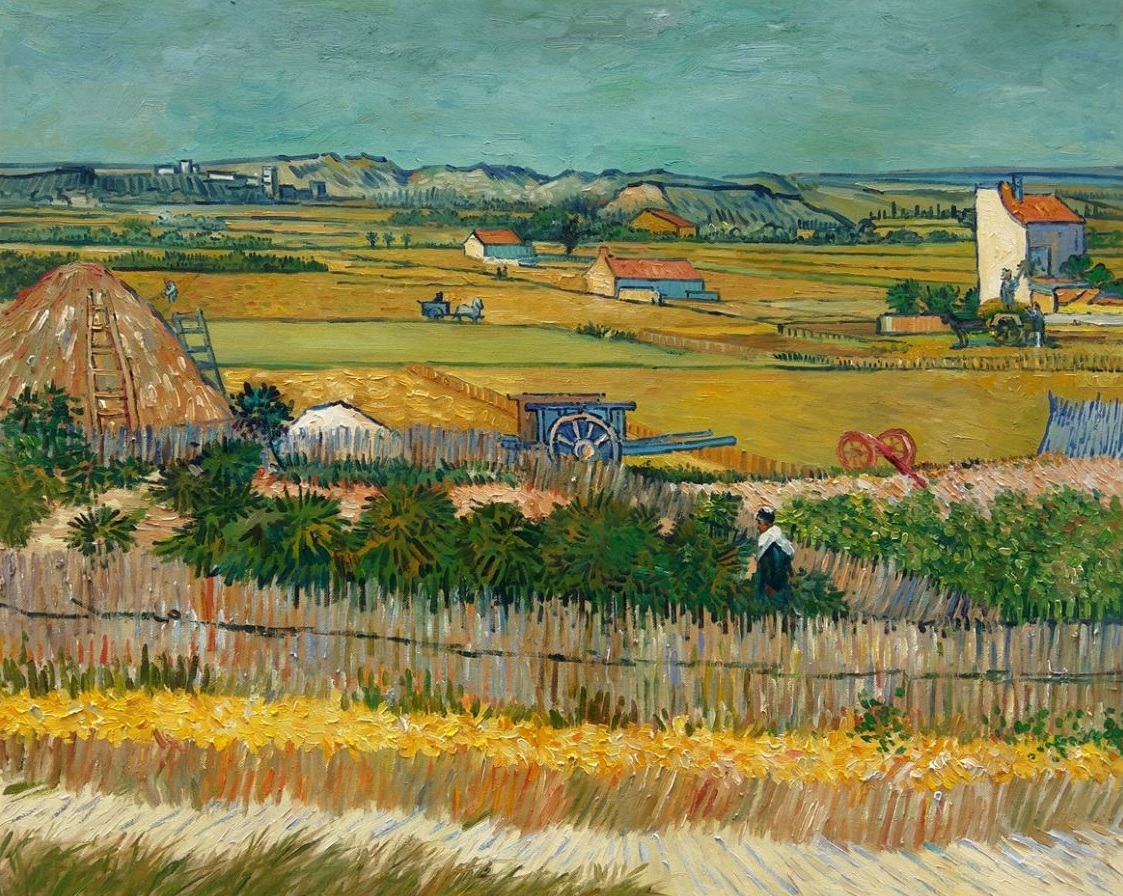
“Harvest at La Crau with Montmajour in the Background” Vincent van Gogh 1888
September 18, 2026
01 | Marquette University | 9,000 Donors Back the Playing Field.
Marquette Athletics reports $21.8 million in philanthropic support during FY2026 from more than 9,000 donors. Olympic-sport giving rose sharply, while men’s soccer recorded especially strong growth — a useful measure of philanthropy extending beyond the principal revenue sports.
Marquette University Athletics
02 | University of Tulsa | Football Builds an Endowment.
An anonymous alumnus and former football letterwinner commits $5 million to Tulsa Football. The gift combines resources for present program needs with permanent endowed support — moving athletic philanthropy from annual expenditure toward intergenerational institutional capital.
University of Tulsa
03 | University of Michigan | The New Athletics Patron.
A Wall Street Journal report examines the growing influence of Jolin Ellison and Larry Ellison in Michigan athletics, including roughly $10 million directed toward athlete compensation. The larger signal is structural: major donors increasingly participate not only in buildings and scholarships but in the economics surrounding the athletes themselves.
The Wall Street Journal
04 | College Athletics | Philanthropy Becomes the Backstop.
As revenue sharing and athlete compensation reshape athletic budgets, advocates are looking to endowed scholarships and designated gifts to protect women’s and Olympic sports. Philanthropy may increasingly determine which parts of the traditional collegiate athletics portfolio survive the new economics.
Associated Press
05 | University of Alabama | Students Clean the Stadium.
After Saturday’s football game, Alabama students participating in “Saving the Tides” will return to Bryant-Denny Stadium to help Facilities and Grounds staff collect waste from student seating. Sport becomes a doorway into Essential Works: students encounter the labor required after 100,000 spectators go home.
University of Alabama
06 | Texas A&M International University | The Next Generation Watches.
More than 200 young volleyball players recently filled the stands for TAMIU Volleyball Youth Day. Local collegiate players provide visible examples for younger athletes from the same community — university sport functioning as a bridge between children, schools, families and the regional institution.
Laredo Morning Times
07 | University of Minnesota Morris | Sport, Family & Giving.
Family & Supporters Weekend brings volleyball, football and soccer together with a student fundraising brunch. Proceeds support the Student Assistance Grant for Emergencies Fund — a small but instructive example of athletics, family presence and mutual aid occupying the same weekend.
University of Minnesota Morris
08 | Renaissance High School | Alumni Return Through Sport.
Detroit’s Renaissance High School holds its seventh annual golf outing Sunday, bringing students, families, alumni and community supporters together to raise money for student programs and enrichment. Sport here serves less as spectacle than as a durable mechanism for keeping former students attached to their school.
Renaissance High School
09 | Tiffin University | Homecoming Becomes Family Weekend.
Tiffin’s Homecoming & Family Weekend runs today through Sunday, explicitly bringing alumni, current students and families into the same institutional celebration. Saturday football remains central, but the deeper cultural function is intergenerational: one generation returns while another family encounters the campus its student now calls home.
Tiffin University
10 | Dominican University | Athletics Followed by the Harvest.
Dominican University’s Family Weekend combines a harvest dinner, men’s and women’s soccer, a family festival and Sunday apple picking. It is an unusually complete seasonal signal: sport, family, food and the autumn landscape gathered into one institutional weekend.
Dominican University
WATCH | Sport Is Becoming a Philanthropic System.
This morning’s signals run well beyond wins and losses. Major gifts are supporting athlete compensation, endowments and non-revenue sports, while smaller institutions use games to reconnect alumni, families and children with the settlement. Alabama supplies the useful corrective: when the crowd leaves, students join facilities workers to clean the stadium. Sport depends upon philanthropy, family, physical plant and Essential Works long after the scoreboard goes dark.

A Break from the Harvest | Julien Dupre
September 17, 2026
01 | University of New Haven | Philanthropy Builds the Front Door.
Martin Family Hall, the planned 50,000-square-foot home of the Pompea College of Business, will occupy a major campus entrance and is being funded entirely through philanthropy. Principal donors have committed more than $25 million, turning private gifts directly into campus architecture and a new institutional gateway.
University of New Haven
02 | Washington State University | 98 Donors Build an Engineering Hall.
Schweitzer Engineering Hall opens this week after a public-private capital effort combining $40 million from Washington State with $40 million contributed by 98 donors. The 66,288-square-foot building places advising, career development, capstone work, industry engagement and student organizations inside one engineering and architecture hub.
Washington State University
03 | Michigan State University | The Gift Becomes Structure.
MSU marks construction of the Leinweber Center for Engineering and Digital Innovation with a ceremonial beam signing. Inspired by the largest facility gift in university history, the building will bring laboratories, classrooms and collaborative spaces serving six colleges under one roof when it opens in 2028.
Michigan State University
04 | University of Minnesota | Saving the Oldest Building.
Eddy Hall, built in 1886 and the oldest surviving building on the Twin Cities campus, is being restored for a new Educational Opportunity Center. About two-thirds of the $33 million project will come from a university capital initiative, with philanthropy and collegiate resources supporting the balance — preservation becoming part of the contemporary capital program.
University of Minnesota
05 | Kansas State University | Architecture School Rebuilds Its Own Architecture.
K-State is preparing another transformation of historic Seaton Hall, home of its College of Architecture, Planning and Design. The Seaton Central project joins preservation with new studio and collaborative space while inviting alumni to help reshape the building in which generations of designers learned their craft.
Kansas State University Foundation
06 | Columbia University | Stewardship of McKim’s Campus.
Columbia completes the first comprehensive restoration of Low Plaza since its original construction around 1897. The work restores foundations, granite steps, brick patterns and lost architectural details while preserving Charles Follen McKim’s composition as heavily used contemporary campus infrastructure.
Columbia University
07 | University of Dayton | A Gift Starts the Building Campaign.
A $15 million anonymous gift — the largest single gift in university history — advances a planned 153,000-square-foot School of Business Administration building. Ten additional donors have committed gifts between $1 million and $10 million, demonstrating how a major academic building can emerge from an aggregation of philanthropic capital.
University of Dayton
08 | Trinity College, Toronto | Sustainability Becomes Architecture.
The Lawson Centre for Sustainability has formally opened, combining student residence, academic functions and environmental design in one building. Its arrival demonstrates how sustainability ambitions increasingly become visible architectural features of the campus rather than separate engineering programs.
Trinity College
09 | Rice University | Maintaining the Gift After It Is Built.
James Turrell’s Twilight Epiphany Skyspace reopens after a 28-month renovation associated with surrounding construction and upgrades to the installation. Originally enabled by philanthropy, the work illustrates the second half of donor-funded architecture: the continuing institutional obligation to maintain what benefactors place on the campus.
Houston Chronicle
10 | Providence St. Vincent | Philanthropy at Infrastructure Scale.
Phil and Penny Knight pledge $1.1 billion to Providence, including a new hospital tower devoted to women’s health at the St. Vincent campus. The extraordinary scale moves philanthropy beyond endowed programs and individual rooms into the financing of major healthcare architecture and infrastructure.
Oregon Public Broadcasting
Gifts are producing laboratories, engineering halls, business schools, healthcare towers and campus gateways while also helping institutions preserve nineteenth- and twentieth-century architectural inheritance. The consequential question for asset owners comes after the ribbon cutting: every philanthropic building eventually joins the institution’s permanent inventory of roofs, utilities, controls, accessibility obligations, maintenance and renewal.

“The Mill Pond” 1945 Maxfield Parrish
September 16, 2026
01
Stanford University | The Campus Boundary Becomes a Regional Question.
Stanford submits its long-range StanfordNext plan to Santa Clara County, combining future academic space with student and workforce housing, transportation, sustainability and infrastructure requirements on existing university lands.
Source
02
University of Iowa | Water Infrastructure in Plain Sight.
A new 138-foot standpipe near Kinnick Stadium and UI Health Care strengthens campus water pressure and system resilience — an unusually visible example of the utility infrastructure supporting a major university and medical center.
Source
03
University of California, Irvine | The Energy Never Used.
UC Irvine reports that efficiency improvements have held campus energy demand near 1994 levels despite substantial subsequent development — shifting attention from efficient new buildings toward the cumulative value of energy consumption avoided.
Source
04
Campus Energy District Cup | Students Enter the Utility System.
The National Laboratory of the Rockies invites university teams to work on real campus and district energy problems, bringing engineering education directly into the planning and operation of institutional energy systems.
Source
05
NIST | Identity Becomes Infrastructure.
NIST finalizes IR 8587 addressing protection of identity tokens and assertions from forgery, theft and misuse, including access tokens, single sign-on, zero-trust architecture, cryptographic keys, artificial intelligence and post-quantum migration.
Source
06
University of Texas at Austin | Wi-Fi as Campus Infrastructure.
UT begins a multi-year campuswide Wi-Fi optimization program — another indication that communications systems increasingly belong beside electrical, water and mechanical systems in the inventory of infrastructure essential to institutional operations.
Source
07
University of Mississippi | 170 Projects Underway.
Ole Miss advances approximately $1.3 billion across roughly 170 construction projects, including housing, data-center renovation, mechanical plant work, parking and utility relocation — illustrating the scale and variety of contemporary institutional capital programs.
Source
08
Trinity College | Steam Beneath the Settlement.
Campus improvements include replacement of steam distribution piping serving building systems. Buried thermal infrastructure rarely attracts attention until interrupted, making renewal work of this kind a useful Essential Works indicator.
Source
09
Brown University | The Campus Meets the Neighborhood.
Brown substantially revises the location and configuration of a proposed economics building following consultation with neighboring Providence residents, increasing separation from residences and adding publicly accessible green space.
Source
10
Workforce Pell | Essential Works Workforce.
The new Workforce Pell framework begins moving from legislation into institutional operations as community colleges receive approval for qualifying short-term programs — potentially consequential for technical education and the workforce supporting Essential Works.
Source
WATCH: The institutional boundary is becoming increasingly important. Water, energy, communications, transportation and buildings connect campuses to larger public systems while Stanford and Brown demonstrate that land use inevitably connects institutional planning with neighboring communities. At the same time, Iowa’s standpipe, Trinity’s steam piping and Irvine’s avoided energy consumption remind asset owners that consequential infrastructure is often the infrastructure least noticed.

Old Royal Naval College
15 SEPTEMBER 2026
01 | Vanderbilt University | Facilities Leadership
Vanderbilt is searching for an Associate Vice Chancellor and Chief Facilities Officer, another indication that stewardship of the physical enterprise is increasingly treated as an executive leadership function.
Source
02 | U.S. Education Industry | Construction Spending
Educational construction remains above $136 billion at a seasonally adjusted annual rate, though recent data suggest some moderation in the pace of capital spending. We cover this in our AEDficare sessions. See our CALENDAR.
Source
03 | Campus Infrastructure | Electric Capacity
Grid capacity, equipment costs and skilled labor are increasingly affecting nonresidential construction schedules. Electrical capacity should therefore become an early programming question rather than a late design problem.
Source
04 | University of Maryland | Central Energy Plant
Maryland begins the academic year with a new central energy plant among its major infrastructure projects, demonstrating the continuing importance of district energy even as campus energy strategies change.
Source
05 | UC San Francisco | Utility Shutdowns
Major work at Parnassus Heights includes chilled-water testing, electrical shutdowns, fire-water work and new utility connections—the difficult essential work of connecting new capital projects without interrupting an operating institution.
Source
06 | Rice University | Deferred Maintenance
Rice’s campus framework integrates future growth with infrastructure and deferred maintenance, placing renewal of existing assets alongside the more visible work of campus expansion.
Source
07 | Stanford University | Housing & Infrastructure
Stanford’s new long-range campus plan places student and workforce housing alongside transportation, sustainability and infrastructure—recognizing housing as part of the operating environment needed to sustain the institution.
Source
08 | FERC / NERC | Large Computational Loads
Rapid growth of data centers and other large computational loads is pushing electric reliability planning into new territory, with implications for university research computing and campus utility planning.
Source
09 | FERC / NERC | Winter Reliability
The September review of the 2026 Arctic cold period found improved electric and natural-gas system performance. Campus leaders should test those lessons against fuel assurance, emergency generation, CHP and freeze protection before winter.
Source
10 | FERC / NERC | Physical Security
CIP-014-4 strengthens physical-security requirements for critical transmission facilities. Universities should understand which substations, utility interfaces and external transmission assets their own essential operations depend upon.
Source
WATCH: The physical enterprise is moving closer to the executive table. Power availability, district energy, deferred maintenance, housing, utility shutdowns, computational loads and grid security increasingly intersect. The common problem is not simply construction—it is maintaining continuity of essential works while institutions grow and infrastructure changes.

“Fall Plowing” 1931 | Grant Wood
01
Michigan State University | Essential Works Capital.
Trustees authorize construction of a new Campus Transportation Services Building, consolidating administrative, maintenance and garage operations in the campus service district. The board also advances the second phase of the Packaging Building, including approximately 16,000 square feet reserved for future research needs.
Source
02
UCSF | Utilities Beneath the Building Boom.
At Parnassus Heights, major utility connections serving the west campus are complete, including new fire and domestic water infrastructure and chilled-water connections. Work continues simultaneously on the Helen Diller Hospital, Bakar Research and Academic Building and Parnassus Commons.
Source
03
Case Western Reserve University | Philanthropy Meets the Century Bond.
The Kelvin & Eleanor Smith Foundation commits $15 million to the new 189,000-square-foot Interdisciplinary Science and Engineering Building. Through Case Western Reserve’s century-bond program, the commitment will be matched for a total project impact of $30 million.
Source
04
UMass Amherst | $125 Million Computer Science Laboratories.
The university formally opens its new Computer Science Laboratories building, adding research, teaching and collaboration capacity intended to support computing research and workforce development across Massachusetts.
Source
05
Stanford University | The Campus Boundary Becomes a Regional Question.
Stanford submits its long-range StanfordNext plan to Santa Clara County, combining future academic space with student and workforce housing, transportation, sustainability and infrastructure requirements on existing university lands.
Source
06
Eastern Illinois University | Steam-Tunnel Infrastructure.
Work continues on the university’s utility-tunnel project, with Ninth Street scheduled to close as crews install another section of piping toward the Renewable Energy Center. The largely invisible distribution infrastructure beneath the settlement becomes a surface construction issue.
Source
07
University of Chicago | $300 Million Rural America Initiative.
A $100 million gift from Byron and Tina Trott anchors a $300 million initiative aimed at students from rural communities and small towns, combining philanthropy, additional fundraising and university resources for access, support and career pathways.
Source
08
Illinois Institute of Technology | $76 Million in Philanthropic Commitments.
Illinois Tech reports $76 million in recent commitments from alumni, trustees, foundations and corporations, led by a $25 million commitment from Janet and Craig Duchossois. The funding supports scholarships, research, experiential learning and an academic reorganization into three colleges.
Source
09
Temple University | When a Gift Becomes a Liability.
Temple moves to terminate a $55 million gift that had been intended for public-health programs, a dean’s position and a new 26,000-square-foot student basic-needs center after allegations involving the donor. Philanthropic capital carries reputational and governance risk as well as purchasing power.
Source
10
Oregon State University | Wave Energy Becomes Grid Infrastructure.
PacWave South opens off the Oregon coast as the nation’s first grid-connected, pre-permitted open-ocean wave-energy test facility. Oregon State, the U.S. Department of Energy and public partners have created research infrastructure that physically connects experimental marine generation with the terrestrial electric system.
Source

“The Empire of Light” | René Magritte 1954
September 11, 2026
01
Higher Education | Financial Viability Moves to the Foreground.
More than 300 senior higher-education leaders surveyed by ACE identify long-term financial viability and public perceptions of value among their foremost concerns as the fall term begins.
Source
02
College Workforce | Essential Works Under Retrenchment.
Institutional layoffs continue across higher education as colleges adjust staffing to enrollment, revenue and operating pressures — raising the consequential question of what happens to physical-plant and other essential functions as headcount contracts.
Source
03
Wake County Public Schools | $800 Million Deferred Maintenance.
The North Carolina district considers a fundamental change in facilities management while confronting roughly $800 million in deferred maintenance, about one-quarter associated with HVAC systems.
Source
04
Enfield Public Schools | $511 Million Facilities Referendum.
Connecticut voters will consider a $511 million renovation and expansion program covering four elementary schools and conversion of another school, with substantial state participation in project costs.
Source
05
Hamden Public Schools | The Capital-Renewal Gap.
Hamden has less than $500,000 available for building repairs while officials estimate $5–6 million is needed to improve HVAC conditions in aging schools — illustrating the widening gap between annual maintenance funding and accumulated capital renewal.
Source
06
Kenton County Schools | Four-Year Facilities Program.
Six of the Kentucky district’s ten elementary schools are under construction, with three projects approaching completion, as part of a 2023–2027 program touching all 17 district schools.
Source
07
Australian Universities | Research Infrastructure as a Security Asset.
Australian universities face stronger national-security scrutiny involving cyberespionage, sensitive research infrastructure, international collaboration and dual-use technologies as government and universities debate the appropriate regulatory mechanism.
Source
08
Onekama Consolidated Schools | Infrastructure Beyond the Property Line.
The Michigan district, village and Michigan State University pursue up to $1 million through Safe Routes to School for sidewalks and crossings connecting students and community members with school facilities.
Source
09
Campus Space | Using What Institutions Already Own.
New evidence indicates colleges have improved utilization of classrooms and offices since the pandemic — a reminder that better use of existing space can itself be a consequential capital strategy.
Source
10
School Safety Capital | Where Maintenance Ends and Construction Begins.
Current U.S. Department of Education guidance distinguishes security-related minor remodeling — including access controls, cameras, emergency communications and limited wiring work — from roofs, HVAC and building-wide electrical replacement.
Source
The opening-of-term story is becoming a balance-sheet story. Existing buildings, deferred maintenance, staffing, space utilization and security infrastructure are competing with new construction for increasingly constrained institutional capital.
“Peace And Plenty” | 1865 George Inness
September 10, 2026
01
Stanford University | Long-Range Campus Plan.
Stanford submits StanfordNext to Santa Clara County, setting out long-term academic, housing, transportation, sustainability and infrastructure development on existing university lands.
Source
02
University of Chicago | $300 Million Rural America Initiative.
A $100 million Trott family gift anchors a $300 million university initiative expanding college access, student support and career pathways for students from rural communities and small towns.
Source
03
University of South Florida | Nearly $500 Million Mixed-Use Development.
USF breaks ground on Uptown Landing, a major campus-edge development combining residential, retail, hospitality, gathering and community functions around the Tampa campus.
Source
04
University of California, Irvine | 1,065 New Student Beds.
UC Irvine prepares its densest housing project yet: approximately 1,065 beds on 3.2 acres, using underutilized office and parking sites to expand campus housing without outward expansion.
Source
05
Golden Gate University | Campus Exit and Debt Reduction.
Golden Gate University vacates its longtime San Francisco campus after a $31.6 million sale, using part of the proceeds to retire approximately $21.9 million in debt while relocating instruction to partner campuses.
Source
06
American Bar Association | Accreditation Rule Repealed.
The ABA eliminates its diversity requirement for accredited law schools as the U.S. Department of Education considers whether the organization should retain federal recognition as the accreditor for American legal education.
Source
07
University of Iowa | Campuswide Artificial Intelligence Strategy.
Iowa establishes an institution-wide AI framework spanning teaching, research and public engagement, accompanied by central policies, guidance and a new undergraduate certificate.
Source
08
Prairie View A&M University | Defense AI Research Capacity.
Prairie View receives nearly $10 million for a five-year artificial-intelligence research initiative tied to national defense, interdisciplinary research growth and the university’s longer-term effort to reach R1 status.
Source
09
School Technology | 1.08 Million Users Exposed.
Mathspace reports that attackers exploited an unpatched reporting-system vulnerability and obtained data associated with 1,079,819 students, parents and school staff in Australia and New Zealand — a reminder that institutional exposure increasingly extends through instructional vendors.
Source
10
Midland Public Schools | Long-Term Facilities Funding.
The Michigan district advances a 1.5-mill, ten-year sinking-fund proposal aimed at school security, aging infrastructure, transportation and technology replacement — an example of districts separating recurring capital renewal from episodic bond campaigns.
Source
WATCH:
Land and housing are again becoming strategic balance-sheet questions. AI is moving from experimentation into governance, research infrastructure and institutional identity. At the same time, accreditation pressure, third-party cyber risk and aging physical assets are forcing leadership to think well beyond the classroom.
“At school doors” | Nikolay Bogdanov-Belsky 1897
September 8-9, 2026
01
UCSF | $500 Million Gift.
The Helen Diller Foundation makes the largest gift in UCSF history: $400 million for endowed faculty and student support and $100 million for a discretionary Chancellor’s Innovation Fund.
Source
02
University of Bristol | £500 Million Second Campus.
Temple Quarter Enterprise Campus opens beside Bristol Temple Meads for approximately 4,500 students and 650 staff, with emphasis on AI, digital engineering, cybersecurity, telecommunications and quantum technology.
Source
03
Cornell University | $6.8 Billion Campaign.
Cornell closes its To Do the Greatest Good campaign well beyond its $5 billion target, including a record $1.1 billion final fundraising year and more than 1,000 endowed funds created or strengthened.
Source
04
University of Missouri | Engineering, Energy & Athletics.
Mizzou receives a $50 million engineering gift, breaks ground on the Payne Energy Innovation Center and opens its approximately $250–260 million Memorial Stadium Centennial Project.
Source
05
Ohio State University | Residence Portfolio Rationalization.
Trustees advance major work at Baker Hall, Drackett Tower and Taylor Tower while planning the retirement of Jones Tower — a consequential reinvest-or-retire decision for aging residential inventory.
Source
06
Denison University | AI Enters the Liberal-Arts Settlement.
Knobel Hall and the King Center for Data & Innovation open with an institutional objective of integrating data and AI literacy throughout the undergraduate experience.
Source
07
University of Arizona | $3 Billion Campaign Threshold.
Arizona surpasses its Fuel Wonder campaign goal following a record $425 million fundraising year, accompanied by new support for integrated business and engineering education.
Source
08
University of Dayton | New Business School Building.
A $15 million gift — the university’s largest single gift — launches the public fundraising phase for a planned four-story, 153,000-square-foot School of Business Administration building.
Source
09
Baylor University | Moody School of Education.
Baylor unveils the newly named Moody School of Education following a $30 million Moody Foundation gift — the largest gift in the school’s 107-year history.
Source
10
University of Cincinnati | Adaptive Reuse.
UC begins an approximately $30 million renovation of its historic YMCA building, converting 17,000 square feet into a new student hub known as The Why.
Source
Permanent capital, selective renewal of aging assets, interdisciplinary technology programs and the growing use of philanthropy to create institutional flexibility.
“The Country School” 1871 Winslow Homer