Hello World!

2026-11-18 11:00 - 12:00

“Own only what you can always carry with you: know languages, know countries, know people.

Let your memory be your travel bag.”

— Aleksandr Solzhenitsyn (From “The Gulag Archipelago”)

Today we explain our collaboration with other education settlements in the US and other nations.  We conform to participation requirements set by ANSI US Technical Advisory Groups to the International Organization for Standardization but we also have liaison with other universities in the European Union who conform to the participation requirements of their own national standards bodies.

Use the login credentials at the upper right of our home page.  Because a great deal of content is copyright protected by the International Electrotechnical Commission, International Organization for Standardization and International Telecommunications Union.


print (“Hello World!”)

Governance & Accountability of Organizations


Academia

d

Time & Frequency Services

d

Design Standard Readability

v

Related upcoming events

  • 2026-11-03 11:00 - 2026-11-03 12:00

    Periodic review of the best practice catalogs that set the standard of care for security of education communities.   Send bella@standardsmichigan.com an email for an advance agenda.

  • 2026-11-17 11:00 - 2026-11-17 12:00

    Status check on open source consensus products -- and practical applications --  evolving around distributed ledger technologies for financing, planning, design, operation & maintenance of the #WiseCampus.

  • 2026-12-08 All day


  • 2027-01-11 11:00 - 2027-01-11 12:00

    "I'm sick of not having the courage to be an absolute nobody."
    -- Franny and Zooey" (J.D. Salinger)

    Periodic walk-through of Human Resource best practice catalog for labor markets generally; and units within the education facility industry specifically.   We inform our discussion based upon periodic release on the Employment Situation Summary from the US Bureau of Labor Statistics.

    University of Michigan Facilities & Operations Organization Chart

    Recommended Reading:

    "The Human Side of Enterprise" 1960 Douglas McGregor

    University of Chicago Press: Readings in Managerial Psychology

    The tradition of naming terms after religious feasts is rooted in medieval ecclesiastical calendars. The use of "Hilary" for this period originated in the English legal system during the Middle Ages, where the courts divided the year into four sittings: Hilary, Easter, Trinity, and Michaelmas. Universities like Oxford adopted similar naming conventions, reflecting their historical ties to the church and legal professions.
    §
    This naming has persisted as a tradition, even as modern calendars have standardized dates. At other UK universities (e.g., Cambridge), the equivalent January-starting term is called Lent term instead.

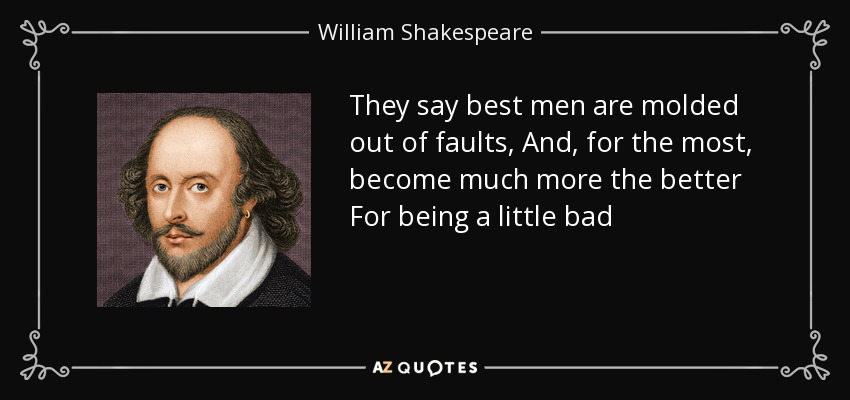
    They say best men are molded out of faults, And, for the most, become much more the better For being a little bad - William Shakespeare

  • 2027-02-08 11:00 - 2027-02-08 12:00

    "I'm sick of not having the courage to be an absolute nobody."
    -- Franny and Zooey" (J.D. Salinger)

    Periodic walk-through of Human Resource best practice catalog for labor markets generally; and units within the education facility industry specifically.   We inform our discussion based upon today's release on the Employment Situation Summary from the US Bureau of Labor Statistics.

    Recommended Reading:

    "The Human Side of Enterprise" 1960 Douglas McGregor

    University of Chicago Press: Readings in Managerial Psychology

    For an advance agenda send a request to bella@stanardsmichigan.com.   Use the credentials at the upper right of our home page to log in.

    They say best men are molded out of faults, And, for the most, become much more the better For being a little bad - William Shakespeare

  • 2027-07-21 All day

    What Is Money and Why Do We Trust It?

    Imagine that every country has its own money, measurements, electrical systems and technical rules, and that none of them work easily together. Buying goods, building machines or trading across borders becomes difficult and expensive. In 1944, while World War II was still being fought, representatives of 44 nations met at Bretton Woods, New Hampshire, to establish common rules for the international monetary system. They created the foundations of the International Monetary Fund and World Bank and made international trade more predictable.

    Bretton Woods demonstrated a larger idea: nations could cooperate by agreeing upon common rules rather than solving every problem separately. That same postwar spirit of international cooperation helped produce the International Organization for Standardization (ISO) a few years later.

    Standards affect things students encounter every day. Electrical plugs and voltages must be understood so equipment can be used safely. Measurements need common definitions so a meter means the same thing everywhere. Computers communicate because engineers agree upon common technical rules. Buildings depend upon shared principles for structural, electrical and fire safety.

    Bretton Woods therefore offers a useful lesson beyond economics: modern civilization works because people agree on rules that allow complicated systems—and nations—to work together.

    §

    July 22, 1944 → American standard
    22 July 1944 → International standard
    1944-07-22 → ISO standard

  • 2027-08-12 11:00 - 2027-08-12 12:00

    https://standardsmichigan.com/water-300/

    https://standardsmichigan.com/water-management-monthly/

    https://standardsmichigan.com/watersport/

    https://youtu.be/fj1aSyzM8oA


    August 15, 1914. The United States assumed and completed the Panama Canal after France’s 1880s attempt collapsed amid bankruptcy, disease, and engineering failure. President Theodore Roosevelt secured the route by supporting Panama’s 1903 independence from Colombia and negotiating the Hay–Bunau-Varilla Treaty, which granted the U.S. control of a 10-mile Canal Zone. America purchased French assets for $40 million and paid Panama $10 million plus an annuity.

    U.S. Army engineers, led first by John Stevens and then Colonel George Goethals, abandoned a sea-level design for a lock-and-lake system. They created Gatun Lake—the world’s largest artificial lake at the time—and excavated nearly 240 million cubic yards of earth. Physician William Gorgas’s sanitation campaign virtually eliminated yellow fever and malaria, slashing the death toll that had doomed the French. At a cost of about $375 million—the most expensive U.S. construction project to that date—the canal opened on 15 August 1914, linking the Atlantic and Pacific and transforming global trade and naval strategy.

    The American Engineers that Built the Panama Canal


Layout mode
Predefined Skins
Custom Colors
Choose your skin color
Patterns Background
Images Background
Standards Michigan
error: Content is protected !!
Skip to content