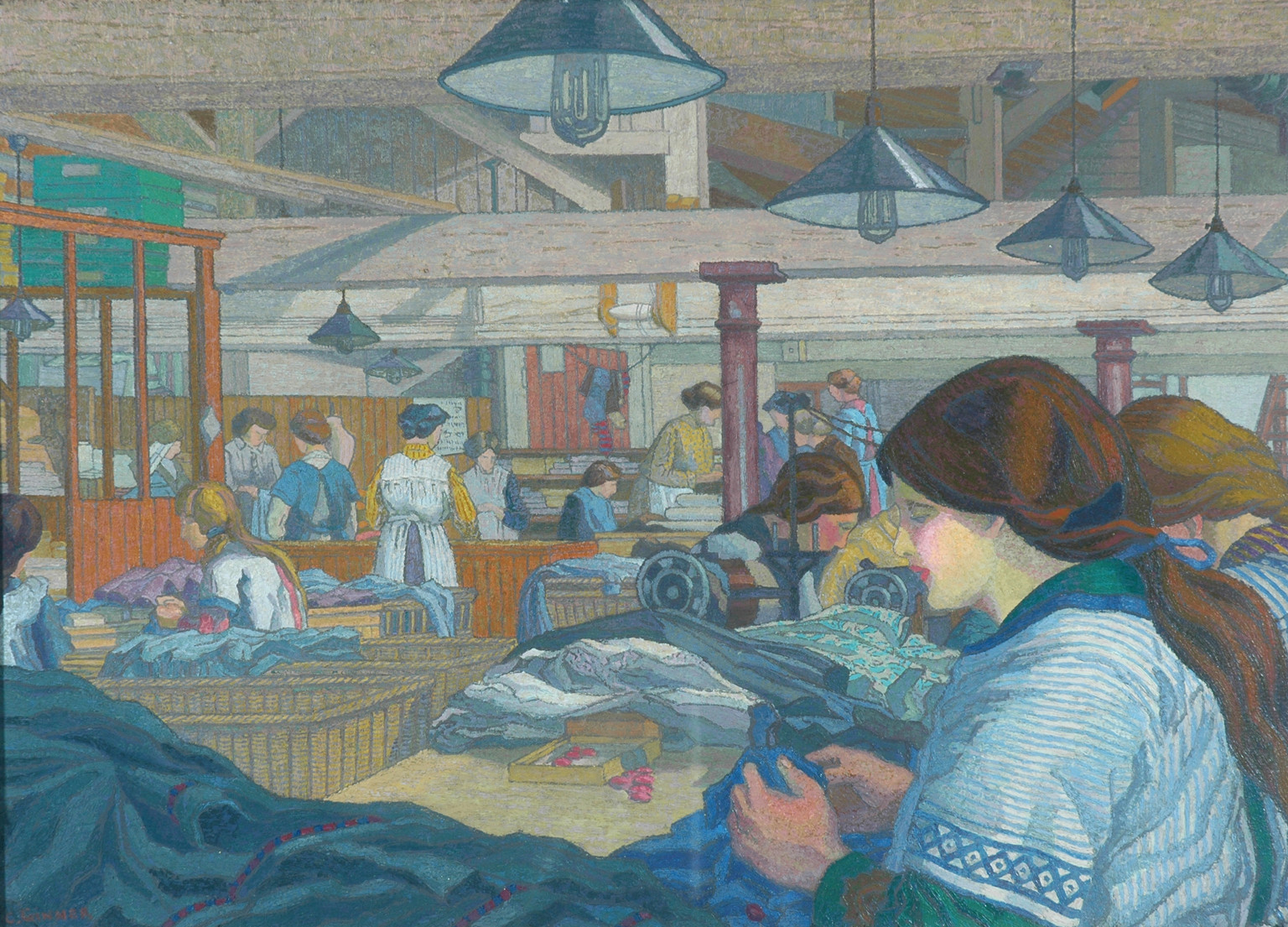
“The Dressmaking Factory” 1881 Charles Ginnar
“Dwell on the beauty of life.
Watch the stars, and see yourself running with them.”
The consumer discretionary sector is among the largest economic sectors in every nation. Consumer Discretionary is the term given to goods and services that are considered non-essential by consumers, but desirable if their available income is sufficient to purchase them. Consumer discretionary goods include durable goods, apparel, entertainment and leisure, and automobiles. The International Organization for Standardization administers leading practice discovery and promulgation of the standards in a core component of durable goods industry — textiles – through its Technical Committee 38.
We find continued student interest in these technologies so attention to the elevated hazards in research, instructional and display spaces require attention. We recognize that not every student is interested in cleaning neural network data sets or learning Tensor Flow but wants to devote their energy to making the world a better place by making the world a more beautiful place.
From the ISO/TC 38 prospectus:
STRATEGIC BUSINESS PLAN ISO/TC 38 Textiles
“…Textiles are one of the most important and versatile commodities in the global economy. The textile industries involve provision of raw materials, preparation of fiber production, manufacture of yarns and fibres, manufacture of fabric formation, finishing processing including bleaching, dyeing, printing, coating, special chemical treatments, transformation of the fabric into clothing, upholstery, or industrial/technical textiles, and rope and netting formation. Therefore, the textile industry concerns a variety of entities such as suppliers of raw materials, processors, manufacturers, traders, distributors, retailers, associated industries such as the laundry industry, government and educational establishments as well as consumers….
…One new field of innovation in the textiles is emerging as the smart textiles which cover either smart textile materials or smart textile systems, including some of them combining technologies with electronic textiles and wearable devices. The uses expected of the smart textiles extend over medical device, general product safety, textile labelling, etc. Our technical committee liaises for cooperation with other technical fields and be responsible for standardization of the textile field of smart textiles….”
Japanese Industrial Standards Committee is the Global Secretariat. ASTM International is ANSI’s US Technical Advisory Group Administrator
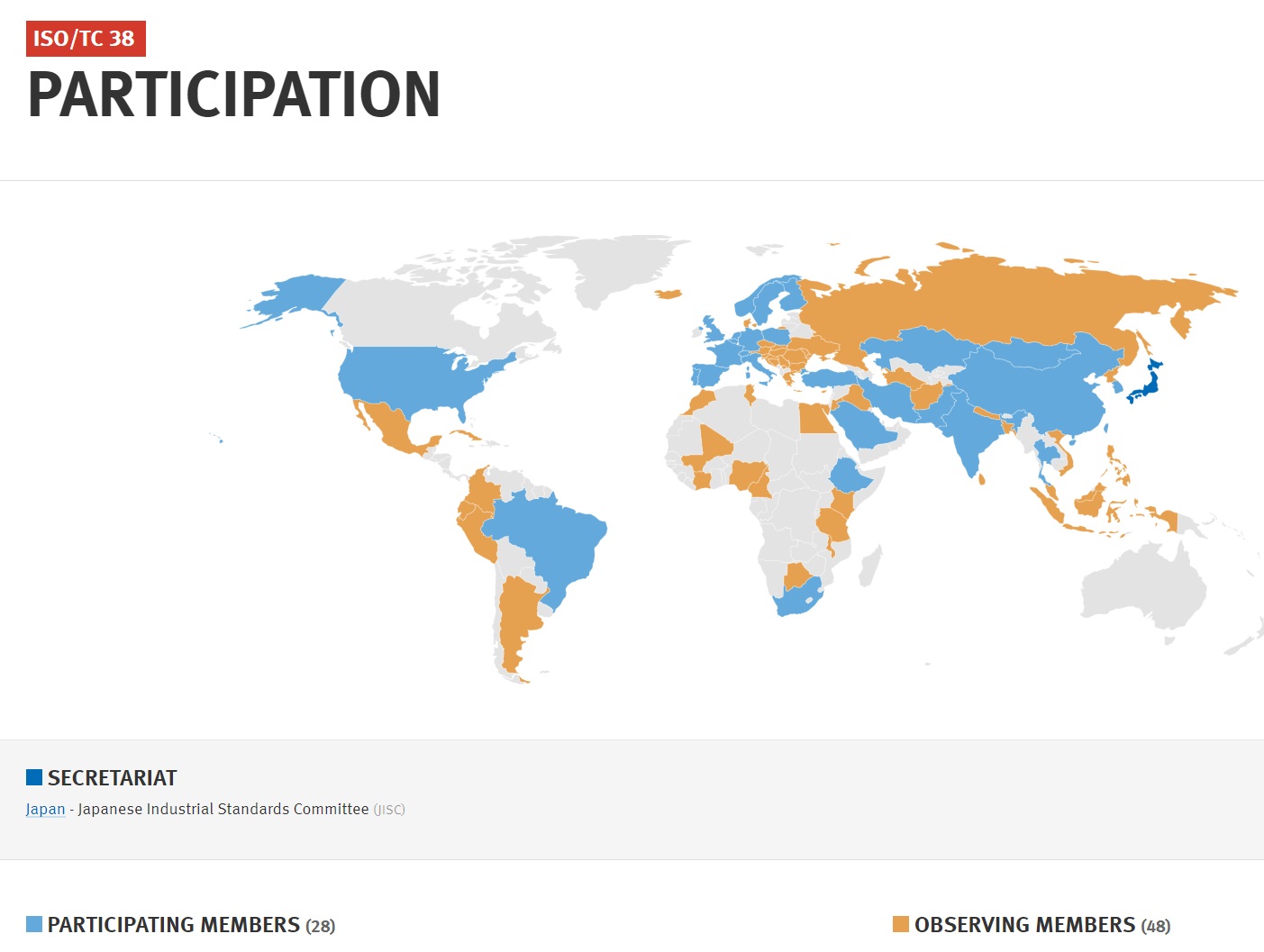

Educators and students in the United States interested in participating in the development of this product should communicate directly with Jen Rodgers at ASTM International, Jen Rodgers (jrodgers@astm.org). We maintain all ISO consensus products on the standing agenda of our monthly International Standards teleconference; open to everyone. See our CALENDAR for the next online meeting.