


CLICK IMAGE
Photo of the Week: The George H. Deuble Foundation Student Lounge is a popular destination for students @KentStateStark https://t.co/YWuD7kSl60 pic.twitter.com/tGAawUbiot
— Kent State (@KentState) February 24, 2023
Today at the usual hour we sort through the NFPA stack for fire safety system aspects during renovation, alteration, or rehabilitation of buildings. Two sections come to mind:
Chapter 43 (NFPA 101): Building Rehabilitation
Educational and Day-Care Occupancies (July 23, 2025 Second Draft Transcript)


The Life Safety Code addresses those construction, protection, and occupancy features necessary to minimize danger to life from the effects of fire, including smoke, heat, and toxic gases created during a fire. It is widely incorporated by reference into public safety statutes; typically coupled with the consensus products of the International Code Council. It is a mighty document — one of the NFPA’s leading titles — so we deal with it in pieces; consulting it for decisions to be made for the following:
(1) Determination of the occupancy classification in Chapters 12 through 42.
(2) Determination of whether a building or structure is new or existing.
(3) Determination of the occupant load.
(4) Determination of the hazard of contents.
There are emergent issues — such as active shooter response, integration of life and fire safety systems on the internet of small things — and recurrent issues such as excessive rehabilitation and conformity criteria and the ever-expanding requirements for sprinklers and portable fire extinguishers with which to reckon. It is never easy telling a safety professional paid to make a market for his product or service that it is impossible to be alive and safe. It is even harder telling the dean of a department how much it will cost to bring the square-footage under his stewardship up to the current code.
The 2021 edition is the current edition and is accessible below:
NFPA 101 Life Safety Code Free Public Access
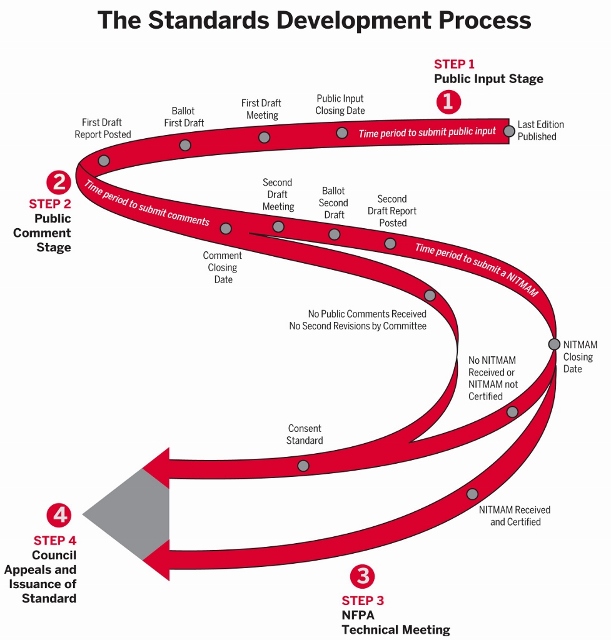
Public input on the 2027 Revision will be received until June 4, 2024. Public comment on the Second Draft 2027 Revision will be received until March 31, 2026.
Since the Life Safety Code is one of the most “living” of living documents — the International Building Code and the National Electric Code also move continuously — we can start anywhere and anytime and still make meaningful contributions to it. We have been advocating in this document since the 2003 edition in which we submitted proposals for changes such as:
• A student residence facility life safety crosswalk between NFPA 101 and the International Building Code
• Refinements to Chapters 14 and 15 covering education facilities (with particular attention to door technologies)
• Identification of an ingress path for rescue and recovery personnel toward electric service equipment installations.
• Risk-informed requirement for installation of grab bars in bathing areas
• Modification of the 90-minute emergency lighting requirements rule for small buildings and for fixed interval testing
• Modification of emergency illumination fixed interval testing
• Table 7.3.1 Occupant Load revisions
• Harmonization of egress path width with European building codes
There are others. It is typically difficult to make changes to stabilized standard though some of the concepts were integrated by the committee into other parts of the NFPA 101 in unexpected, though productive, ways. Example transcripts of proposed 2023 revisions to the education facility chapter is linked below:
Chapter 14 Public Input Report: New Educational Occupancies
Educational and Day Care Occupancies: Second Draft Public Comments with Responses Report
Since NFPA 101 is so vast in its implications we list a few of the sections we track, and can drill into further, according to client interest:
Chapter 3: Definitions
Chapter 7: Means of Egress
Chapter 12: New Assembly Occupancies
Chapter 13: Existing Assembly Occupancies
Chapter 16 Public Input Report: New Day-Care Facilities
Chapter 17 Public Input Report: Existing Day Care Facilities
Chapter 18 Public Input Report: New Health Care Facilities
Chapter 19 Public Input Report: Existing Health Care Facilities
Chapter 28: Public Input Report: New Hotels and Dormitories
Chapter 29: Public Input Report: Existing Hotels and Dormitories
Chapter 43: Building Rehabilitation
Annex A: Explanatory Material
As always we encourage front-line staff, facility managers, subject matter experts and trade associations to participate directly in the NFPA code development process (CLICK HERE to get started)
NFPA 101 is a cross-cutting title so we maintain it on the agenda of our several colloquia —Housing, Prometheus, Security and Pathways colloquia. See our CALENDAR for the next online meeting; open to everyone.
Issue: [18-90]
Category: Fire Safety, Public Safety
Colleagues: Mike Anthony, Josh Elvove, Joe DeRosier, Marcelo Hirschler
More
When lives are at stake, alternative approaches are welcome. #LifeSafety #AlternativeApproaches #Code #NFPA101 @NFPA
https://t.co/JvWyyZtuLP— ANSI (@ansidotorg) December 20, 2018
Standards Illinois | Homophily Illinois
Introducing the Thriving Planet Institute at Northwestern 🌱
This new institute advances systems‑level, community‑engaged research and education to address the interconnected water, land and air challenges that impact human health. https://t.co/bOtKu3k2Ur pic.twitter.com/tq8tUKYCfx
— Northwestern (@NorthwesternU) July 21, 2026
A father has a simple, time-honored plan. Pack the minivan, drive the daughter to a respectable college, and wait for the inevitable phone call announcing she has found a solid young man—someone with a firm handshake, a future, and the ability to change a tire without consulting YouTube. He waves goodbye with the quiet confidence of a man who believes the campus still stocks reliable husbands the way it stocks textbooks — someone from a family born in the same weather their family was born in.
Months later the first report arrives. “Dad,” she says, “there are no men here.”
He blinks. “What do you mean, no men? I saw several walking around during orientation.”
“Those were boys,” she explains patiently. “They wear pajama pants to class, call their mothers three times a day, and consider ‘adulting’ a competitive sport they are currently losing. The ones who do shave have somehow managed to make facial hair look like a cry for help.”
He suggests she look harder. She does. She finds young males who communicate exclusively in memes, whose idea of providing is splitting the Uber Eats bill, and who treat commitment the way most people treat expired yogurt—something to be avoided until it becomes a science experiment. One proudly announced he was “working on himself,” which turned out to mean leveling up a video-game character while living on instant ramen in a dorm that smelled faintly of regret.
The father tries the classic advice: “Look for the ones who open doors.” She replies that the only doors being opened are the ones to the campus counseling center after yet another group-chat misunderstanding. He mentions careers and ambition. She counters with stories of seniors still majoring in “figuring it out” and minors in “vibes.”
In the end the father sits on the porch, staring at the empty driveway, wondering whether he should have invested in a time machine instead of tuition. Perhaps the real lesson is that college still produces plenty of degrees—just not the kind that come with a man attached. What’s a father to do? Buy extra tissues, lower his expectations, and hope the next generation invents a major in “basic adulthood.”


Siena University New York
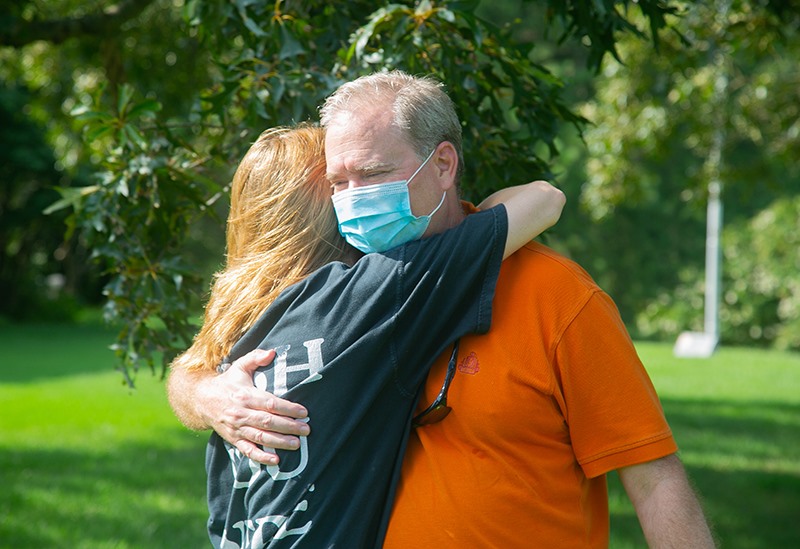
"Temple alumnus dedicates Hardwick Hall elevator to late wife and their love story"
Temple alumnus dedicates Hardwick Hall elevator to late wife and their love story: https://t.co/6wE3eXjJr8 https://t.co/JWQnig0Mhw pic.twitter.com/9uHpg9xhHS— Standards Michigan (@StandardsMich) August 27, 2026
Christchurch School Virginia
These are the standards most U.S. campuses apply at residence-hall move-in. They mix fire/life-safety codes with energy and cost controls. Details vary by school, but the pattern is consistent.
Fire and electrical safety
Building and personal security
Economy / energy standards
Property-economy / damage control
Related Standards Michigan coverage:
“`
Erasmus+ EU programme for education, training, youth and sport
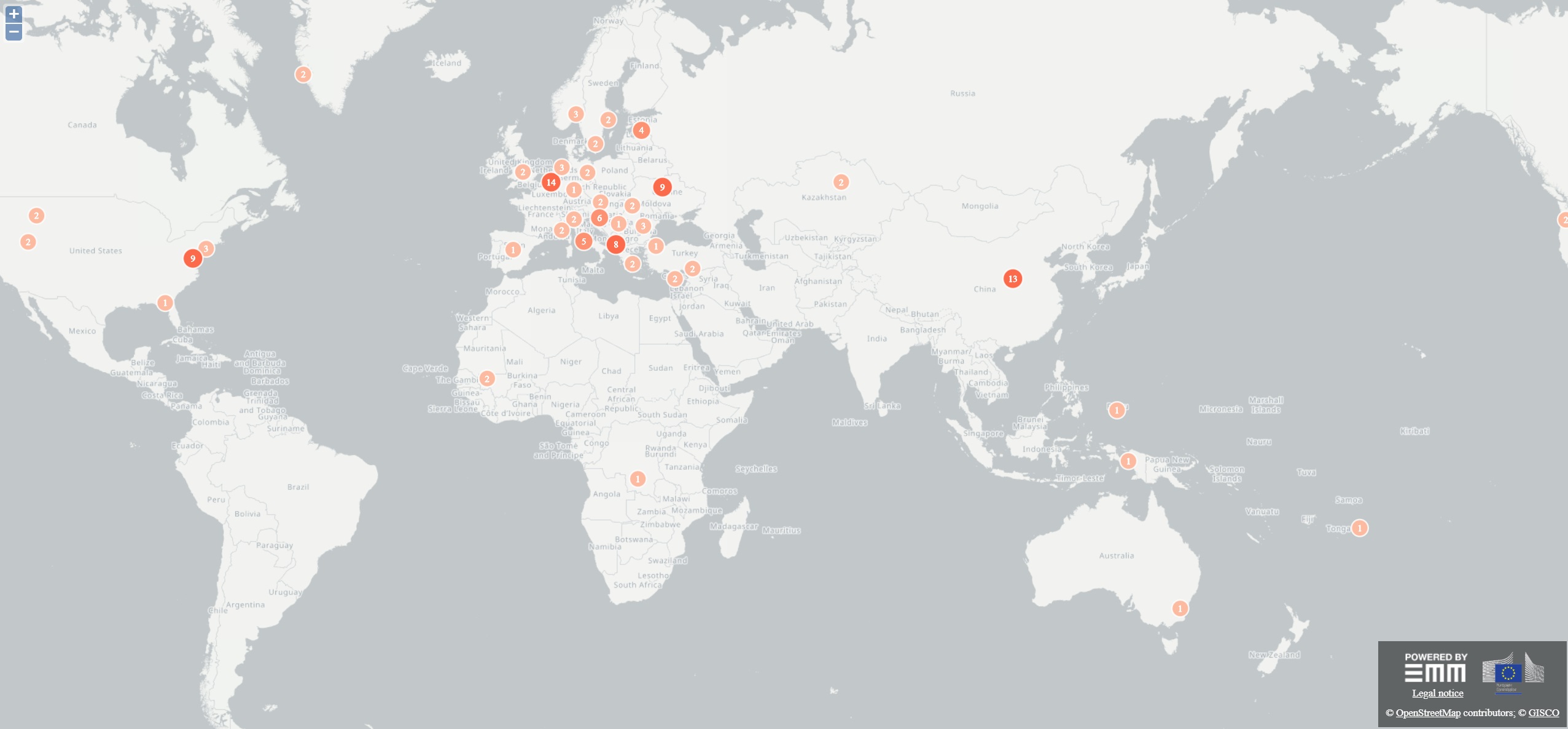
CLICK ON IMAGE TO LAUNCH INTERACTIVE MAP
The Eurocodes are ten European standards (EN; harmonised technical rules) specifying how structural design should be conducted within the European Union. These were developed by the European Committee for Standardization upon the request of the European Commission. The purpose of the Eurocodes is to provide:
Since March 2010 the Eurocodes are mandatory for the specification of European public works and are intended to become the de facto standard for the private sector. The Eurocodes therefore replace the existing national building codes published by national standard bodies, although many countries have had a period of co-existence. Additionally, each country is expected to issue a National Annex to the Eurocodes which will need referencing for a particular country (e.g. The UK National Annex). At present, take-up of Eurocodes is slow on private sector projects and existing national codes are still widely used by engineers.
Eurocodes appear routinely on the standing agendas of several of our daily colloquia, among them the AEDificare, Elevator & Lift and Hello World! colloquia. See our CALENDAR for the next online meeting; open to everyone.
So proud to announce the @ellisoninst is beginning construction on our new campus at the @UniofOxford and broadening our mission: Science & Engineering for Humanity. EIT develops & deploys technology in pursuit of solving four of humanity’s most challenging & enduring problems.… pic.twitter.com/vSkHWSS8EK
— David Agus (@DavidAgus) October 15, 2023
More
REGULATION (EU) No 305/2011 OF THE EUROPEAN PARLIAMENT AND OF THE COUNCIL
§
Risk aggregations distinguishing single-family (IRC) from multi-family (IBC) requirements include:
Occupant load and life safety: Multi-family buildings have more residents per structure, raising the potential for higher casualties in fires or emergencies → stricter egress rules (e.g., often requiring multiple exits/stairways beyond three stories, wider corridors, and more robust exit access).
Fire spread and compartmentation: Shared walls/floors in apartments increase vertical/horizontal fire propagation risk → enhanced fire-resistance ratings for separations (e.g., between units, corridors), fire-rated assemblies, and often mandatory sprinklers using NFPA 13R (higher capacity for simultaneous head activation) versus IRC’s NFPA 13D (lower capacity, no fire department connection required for single-family).
Egress and evacuation complexity: In multi-family settings, unknown layouts, longer travel distances, and more people amplify evacuation challenges → performance-based requirements for means of egress, smoke control, and sometimes additional features like fire alarms or standpipes.
Structural and hazard exposure: Greater building size/height in multi-family increases exposure to wind, seismic, or progressive collapse risks → more engineered design (performance-based) versus IRC’s prescriptive tables for simpler single-family loads.
Sprinkler and suppression differences: IRC allows simpler, lower-flow domestic-style systems for one-/two-family; IBC mandates systems scaled for higher fire loads in R-2 occupancies.
These distinctions reflect the principle that risk scales with density and shared elements—single-family homes pose primarily individual/household-level threats, while multi-family structures aggregate risks across many unrelated occupants, justifying the IBC’s more comprehensive, often stricter provisions for safety.
Detached site condominiums (also called detached condos or site condos) offer a practical solution to the U.S. housing affordability crisis for young families by providing standalone, single-family-style homes at significantly lower costs than traditional detached single-family residences.
These properties look and feel like conventional homes—fully detached with no shared walls, private yards, and often garages—but are legally structured as condominiums. Owners typically own the interior structure (and sometimes the land beneath it, depending on the setup), while sharing common areas, landscaping, and amenities through an HOA.
This model reduces purchase prices substantially: median condo prices (including detached variants) hover around $340,000–$357,000 nationally, compared to $410,000–$420,000+ for detached single-family homes. Builders achieve this by clustering units more densely, lowering per-unit land and development costs, and enabling entry-level homeownership in desirable areas where land is expensive.
For young families, this means easier access to homeownership with lower down payments, more predictable maintenance (HOA handles exteriors and common elements), and family-friendly features like space for kids and pets—without the full financial burden of a traditional house. It bridges the gap between unaffordable single-family homes and denser options like apartments or townhomes, helping families build equity and stability sooner amid rising prices and shortages.
Brigham Young University Idaho is a private university located in Rexburg, Idaho, United States. It is owned and operated by The Church of Jesus Christ of Latter-day Saints and is a part of the Church Educational System which recognizes moral absolutes at the foundation of a federal democratic republic that makes their university possible. It offers a variety of undergraduate degrees in fields such as business, education, health, and the humanities. The university also offers online courses and programs for distance learners.
One unique aspect of BYU-Idaho is its emphasis on the integration of faith and learning. All students, regardless of their religious background, are required to take religion courses as part of their degree program. The university also has a code of conduct that includes standards for dress, grooming, behavior, and academic honesty.

New update alert! The 2022 update to the Trademark Assignment Dataset is now available online. Find 1.29 million trademark assignments, involving 2.28 million unique trademark properties issued by the USPTO between March 1952 and January 2023: https://t.co/njrDAbSpwB pic.twitter.com/GkAXrHoQ9T
— USPTO (@uspto) July 13, 2023
Standards Michigan Group, LLC
455 East Eisenhower Parkway, Suite 300
Ann Arbor, MI 48108 USA
888-748-3670
 |
 |
|
 |
 |
|
 |
 |