Language

2024-10-14 11:00 - 12:00

“He who does not speak foreign languages
knows nothing about his own.“

— Johann Wolfgang von Goethe
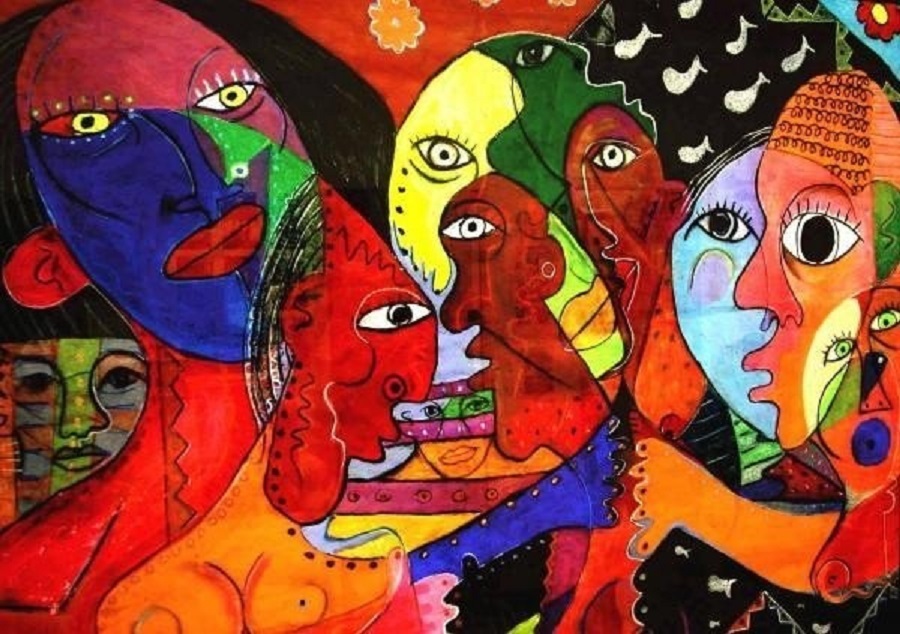
Here’s a rough breakdown of the top languages on the web:

English: 55.4% – Russian: 6.6% – Japanese: 5.4% – Spanish: 5.2% – Chinese: 4.6%


One of the most contentious aspects of best practice discovery and promulgation in any domain, and no less so in educational settlements, is an agreed-upon vocabulary and shared understanding.  As we explain elsewhere in this history, when a counter-party disagrees with you, he simply switches out the vocabulary — i.e. changes definitions or adds or subtracts from the traditional meanings of things.  So we approach this topic several times a year to confirm our bearing on the meaning of things.

We observe National Poetry Month in the United States and Canada every year with an inquiry into changes in the (meaning of) definitions at the foundation of best practice literature; frequently the subject of sporty debate among experts writing codes and standards for the built environment of education communities.

In the United Kingdom, National Poetry Month is celebrated in October, and it is known as “National Poetry Day” which has been observed since 1994. It is an initiative of the Forward Arts Foundation, which aims to encourage people to read, write and perform poetry.

Other countries also have their own poetry celebrations, such as World Poetry Day, which is observed annually on March 21 by UNESCO (United Nations Educational, Scientific and Cultural Organization) to promote the reading, writing, and teaching of poetry worldwide.

In past years we used a Tamil mnemonic because Tamil is the oldest surviving language and remains the spoken language of 80-odd million people of South Asia.  Alas, use of Tamil confounds our WordPress content management system so in 2024 we began coding this topic in American English

Lingua Franca

Related upcoming events

  • 2026-09-24 11:00 - 2026-09-24 12:00

    A locker is a young person's small private room inside a public institution—a place to keep possessions, secrets and the accumulated debris of becoming oneself. Today we will examine the product, installation, operation, maintenance and security standards of these essential fixtures.

    ICC — building installation and circulation. The 2024 IBC gives us the building interface rather than a locker product specification. The important starting point is IBC §1003.3, Protruding Objects: objects with leading edges 27–80 inches above the floor generally cannot project more than 4 inches into a circulation path, and projections cannot reduce the required accessible-route width. That's immediately relevant to corridor-mounted lockers, trim, handles and projecting hardware. We should also examine anchorage/nonstructural seismic requirements and the Chapter 11 accessibility references.


    AWI — the product/casework side. ANSI/AWI 0641-2019, Architectural Wood Casework is probably our better starting point for built-in wood/laminate school lockers. It covers base, wall and tall casework and establishes material and structural-performance requirements. ANSI/AWI 1235-2024, Specialty Casework is useful as a secondary reference, particularly for unusual built-in configurations; AWI itself characterizes 0641 as its institutional-duty application and 1235 as the higher specialty/laboratory duty level.


    ADA — individual locker accessibility. This one is exceptionally clean. §225.2.1 requires at least 5% but no fewer than one of each type of locker to comply with §811. Section 811 then requires clear floor space, accessible reach range and operable parts complying with §309. For our purposes, §309 is especially interesting because it takes us directly to the latch/lock/handle interface rather than merely locker dimensions.


    https://standardsmichigan.com/interior-furnishing-maintenance-monthly/

    https://standardsmichigan.com/interior-finishes-2/

  • 2026-09-28 11:00 - 2026-09-28 12:00

    "He who does not speak foreign languages
    knows nothing about his own.“

    — Johann Wolfgang von Goethe


    Daily Beast (August 22, 2025): Dems Ban These Words to Stop Sounding Like ‘Crazy People’


    Here's a rough breakdown of the top languages on the web:

    English: 55.4% - Russian: 6.6% - Japanese: 5.4% - Spanish: 5.2% - Chinese: 4.6%


    One of the most contentious aspects of best practice discovery and promulgation in any domain, and no less so in educational settlements, is an agreed-upon vocabulary and shared understanding.  As we explain elsewhere in this history, when a counter-party disagrees with you, he simply switches out the vocabulary -- i.e. changes definitions or adds or subtracts from the traditional meanings of things.  So we approach this topic several times a year to confirm our bearing on the meaning of things.

    We observe National Poetry Month in the United States and Canada every year with an inquiry into changes in the (meaning of) definitions at the foundation of best practice literature; frequently the subject of sporty debate among experts writing codes and standards for the built environment of education communities.

    In the United Kingdom, National Poetry Month is celebrated in October, and it is known as "National Poetry Day" which has been observed since 1994. It is an initiative of the Forward Arts Foundation, which aims to encourage people to read, write and perform poetry.

    Other countries also have their own poetry celebrations, such as World Poetry Day, which is observed annually on March 21 by UNESCO (United Nations Educational, Scientific and Cultural Organization) to promote the reading, writing, and teaching of poetry worldwide.

    In past years we used a Tamil mnemonic because Tamil is the oldest surviving language and remains the spoken language of 80-odd million people of South Asia.  Alas, use of Tamil confounds our Wordpress content management system so in 2024 we began coding this topic in American English

    "The language of Europe is translation"

    -- Umberto Eco


    https://standardsmichigan.com/%e0%ae%ae%e0%af%8a%e0%ae%b4%e0%ae%bf-2/

  • 2026-10-06 11:00 - 2026-10-06 12:00

    Illumination technologies have had a pattern of consuming about 35 percent of building electrical energy use.  That number has been pressed downward with the expanded application of LED luminaires and occupant responsive controls; much of the transformation hastened by the IEEE, IES and ASHRAE best practice catalogs.

    Today we run through the development status of these products with specific interest in exterior illumination best practice.  This topic also is covered in the 4 time monthly meetings of the IEEE Education & Healthcare Facilities Committee.

    https://standardsmichigan.com/illumination-400/


  • 2027-01-11 11:00 - 2027-01-11 12:00

    "I'm sick of not having the courage to be an absolute nobody."
    -- Franny and Zooey" (J.D. Salinger)

    Periodic walk-through of Human Resource best practice catalog for labor markets generally; and units within the education facility industry specifically.   We inform our discussion based upon periodic release on the Employment Situation Summary from the US Bureau of Labor Statistics.

    University of Michigan Facilities & Operations Organization Chart

    Recommended Reading:

    "The Human Side of Enterprise" 1960 Douglas McGregor

    University of Chicago Press: Readings in Managerial Psychology

    The tradition of naming terms after religious feasts is rooted in medieval ecclesiastical calendars. The use of "Hilary" for this period originated in the English legal system during the Middle Ages, where the courts divided the year into four sittings: Hilary, Easter, Trinity, and Michaelmas. Universities like Oxford adopted similar naming conventions, reflecting their historical ties to the church and legal professions.
    §
    This naming has persisted as a tradition, even as modern calendars have standardized dates. At other UK universities (e.g., Cambridge), the equivalent January-starting term is called Lent term instead.

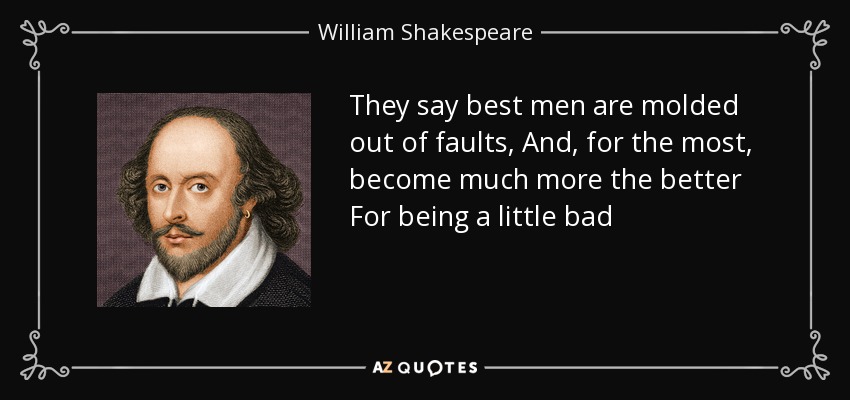
    They say best men are molded out of faults, And, for the most, become much more the better For being a little bad - William Shakespeare

  • 2027-02-08 11:00 - 2027-02-08 12:00

    "I'm sick of not having the courage to be an absolute nobody."
    -- Franny and Zooey" (J.D. Salinger)

    Periodic walk-through of Human Resource best practice catalog for labor markets generally; and units within the education facility industry specifically.   We inform our discussion based upon today's release on the Employment Situation Summary from the US Bureau of Labor Statistics.

    Recommended Reading:

    "The Human Side of Enterprise" 1960 Douglas McGregor

    University of Chicago Press: Readings in Managerial Psychology

    For an advance agenda send a request to bella@stanardsmichigan.com.   Use the credentials at the upper right of our home page to log in.

    They say best men are molded out of faults, And, for the most, become much more the better For being a little bad - William Shakespeare

  • 2027-08-12 11:00 - 2027-08-12 12:00

    https://standardsmichigan.com/water-300/

    https://standardsmichigan.com/water-management-monthly/

    https://standardsmichigan.com/watersport/

    https://youtu.be/fj1aSyzM8oA


    August 15, 1914. The United States assumed and completed the Panama Canal after France’s 1880s attempt collapsed amid bankruptcy, disease, and engineering failure. President Theodore Roosevelt secured the route by supporting Panama’s 1903 independence from Colombia and negotiating the Hay–Bunau-Varilla Treaty, which granted the U.S. control of a 10-mile Canal Zone. America purchased French assets for $40 million and paid Panama $10 million plus an annuity.

    U.S. Army engineers, led first by John Stevens and then Colonel George Goethals, abandoned a sea-level design for a lock-and-lake system. They created Gatun Lake—the world’s largest artificial lake at the time—and excavated nearly 240 million cubic yards of earth. Physician William Gorgas’s sanitation campaign virtually eliminated yellow fever and malaria, slashing the death toll that had doomed the French. At a cost of about $375 million—the most expensive U.S. construction project to that date—the canal opened on 15 August 1914, linking the Atlantic and Pacific and transforming global trade and naval strategy.

    The American Engineers that Built the Panama Canal


Layout mode
Predefined Skins
Custom Colors
Choose your skin color
Patterns Background
Images Background
Standards Michigan
error: Content is protected !!
Skip to content