
Intellectual Property

2025-04-09 11:00 - 12:00

Università Cattolica del Sacro Cuore Student Art

Innovation – Standardization – Commoditization run along a continuum.  Today we unpack some of the ideas that hasten (and prohibit) leading practice discovery; how quickly goods and services become a “human right”; why all of this is relevant to education communities and why some believe that commoditization is a myth.

From the Wikipedia

In business literature, commoditization is defined as the process by which goods that have economic value and are distinguishable in terms of attributes (uniqueness or brand) end up becoming simple commodities in the eyes of the market or consumers. It is the movement of a market from differentiated to undifferentiated price competition and from monopolistic competition to perfect competition. Hence, the key effect of commoditization is that the pricing power of the manufacturer or brand owner is weakened: when products become more similar from a buyer’s point of view, they will tend to buy the cheapest.


Related upcoming events

  • 2026-11-21 All day

    Standards Michigan: Animals

    https://standardsmichigan.com/working-dogs-farm-to-fork-wyoming/

  • 2027-01-11 11:00 - 2027-01-11 12:00

    "I'm sick of not having the courage to be an absolute nobody."
    -- Franny and Zooey" (J.D. Salinger)

    Periodic walk-through of Human Resource best practice catalog for labor markets generally; and units within the education facility industry specifically.   We inform our discussion based upon periodic release on the Employment Situation Summary from the US Bureau of Labor Statistics.

    University of Michigan Facilities & Operations Organization Chart

    Recommended Reading:

    "The Human Side of Enterprise" 1960 Douglas McGregor

    University of Chicago Press: Readings in Managerial Psychology

    The tradition of naming terms after religious feasts is rooted in medieval ecclesiastical calendars. The use of "Hilary" for this period originated in the English legal system during the Middle Ages, where the courts divided the year into four sittings: Hilary, Easter, Trinity, and Michaelmas. Universities like Oxford adopted similar naming conventions, reflecting their historical ties to the church and legal professions.
    §
    This naming has persisted as a tradition, even as modern calendars have standardized dates. At other UK universities (e.g., Cambridge), the equivalent January-starting term is called Lent term instead.

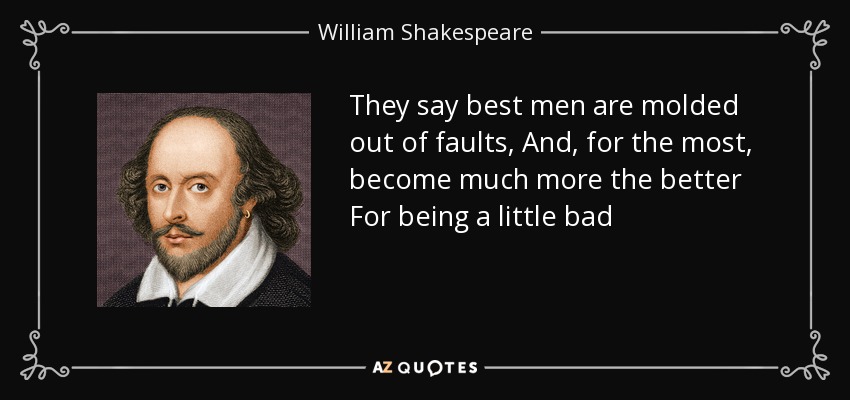
    They say best men are molded out of faults, And, for the most, become much more the better For being a little bad - William Shakespeare

  • 2027-02-08 11:00 - 2027-02-08 12:00

    "I'm sick of not having the courage to be an absolute nobody."
    -- Franny and Zooey" (J.D. Salinger)

    Periodic walk-through of Human Resource best practice catalog for labor markets generally; and units within the education facility industry specifically.   We inform our discussion based upon today's release on the Employment Situation Summary from the US Bureau of Labor Statistics.

    Recommended Reading:

    "The Human Side of Enterprise" 1960 Douglas McGregor

    University of Chicago Press: Readings in Managerial Psychology

    For an advance agenda send a request to bella@stanardsmichigan.com.   Use the credentials at the upper right of our home page to log in.

    They say best men are molded out of faults, And, for the most, become much more the better For being a little bad - William Shakespeare

  • 2027-08-12 11:00 - 2027-08-12 12:00

    https://standardsmichigan.com/water-300/

    https://standardsmichigan.com/water-management-monthly/

    https://standardsmichigan.com/watersport/

    https://youtu.be/fj1aSyzM8oA


    August 15, 1914. The United States assumed and completed the Panama Canal after France’s 1880s attempt collapsed amid bankruptcy, disease, and engineering failure. President Theodore Roosevelt secured the route by supporting Panama’s 1903 independence from Colombia and negotiating the Hay–Bunau-Varilla Treaty, which granted the U.S. control of a 10-mile Canal Zone. America purchased French assets for $40 million and paid Panama $10 million plus an annuity.

    U.S. Army engineers, led first by John Stevens and then Colonel George Goethals, abandoned a sea-level design for a lock-and-lake system. They created Gatun Lake—the world’s largest artificial lake at the time—and excavated nearly 240 million cubic yards of earth. Physician William Gorgas’s sanitation campaign virtually eliminated yellow fever and malaria, slashing the death toll that had doomed the French. At a cost of about $375 million—the most expensive U.S. construction project to that date—the canal opened on 15 August 1914, linking the Atlantic and Pacific and transforming global trade and naval strategy.

    The American Engineers that Built the Panama Canal


Layout mode
Predefined Skins
Custom Colors
Choose your skin color
Patterns Background
Images Background
Standards Michigan
error: Content is protected !!
Skip to content