Today at the usual hour we review the literature that sets the standard of care for prevention, response and resilience of the education facility industry to storms, floods, hurricanes, earthquakes and all other disasters. We will examine a selection of court filings that should inform how facility managers should prepare and respond to disasters, but also identify gaps in best practice literature and (possibly) key in proposals for how those gaps may be removed.
Use the login credentials at the upper right of our home page.
Today we explain our collaboration with other education settlements in the US and other nations. We conform to participation requirements set by ANSI US Technical Advisory Groups to the International Organization for Standardization but we also have liaison with other universities in the European Union who conform to the participation requirements of their own national standards bodies.
This content is accessible to paid subscribers. To view it please enter your password below or send mike@standardsmichigan.com a request for subscription details.
“Composition in red, yellow, blue and black” (1921) / Piet Mondrian
Status check on open source consensus products — and practical applications — evolving around distributed ledger technologies for financing, planning, design, operation & maintenance of the #WiseCampus.
This content is accessible to paid subscribers. To view it please enter your password below or send mike@standardsmichigan.com a request for subscription details.
This content is accessible to paid subscribers. To view it please enter your password below or send mike@standardsmichigan.com a request for subscription details.
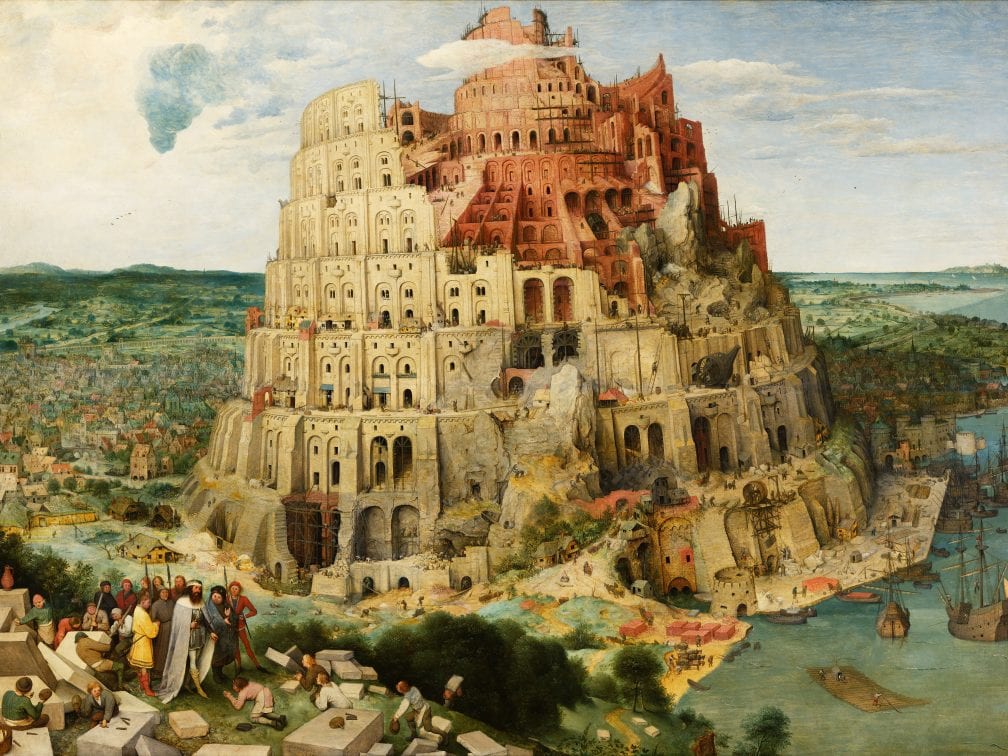
One of the most contentious aspects of best practice discovery and promulgation in any domain, and no less so in educational settlements, is an agreed-upon vocabulary and shared understanding. As we explain elsewhere in this history, when a counter-party disagrees with you, he simply switches out the vocabulary — i.e. changes definitions or adds or subtracts from the traditional meanings of things. So we approach this topic several times a year to confirm our bearing on the meaning of things.
We begin 2025 by breaking down this topic into four sections
Language 100: Survey of vocabulary in the standards catalogs relevant to building and managing education settlement real assets; including legal terms.
Language 200: Electrotechnology standard catalogs; including computer programming languages.
Language 300: The English as the language of science and innovation; the birthplace of computing and programming, the internet’s native tongue, standardization & open source development; etc.
Language 400: Reserved
Just learned that a group of flamingos is called a flamboyance and suddenly the world seems a little brighter. pic.twitter.com/REdU2lpF26
We observe National Poetry Month in the United States and Canada every year with an inquiry into changes in the (meaning of) definitions at the foundation of best practice literature; frequently the subject of sporty debate among experts writing codes and standards for the built environment of education communities.
In the United Kingdom, National Poetry Month is celebrated in October, and it is known as “National Poetry Day” which has been observed since 1994. It is an initiative of the Forward Arts Foundation, which aims to encourage people to read, write and perform poetry.
Other countries also have their own poetry celebrations, such as World Poetry Day, which is observed annually on March 21 by UNESCO (United Nations Educational, Scientific and Cultural Organization) to promote the reading, writing, and teaching of poetry worldwide.
In past years we used a Tamil mnemonic because Tamil is the oldest surviving language and remains the spoken language of 80-odd million people of South Asia. Alas, use of Tamil confounds our WordPress content management system so in 2024 we began coding this topic in American English
Once median household income is adjusted for cost of living, Utah emerges as the wealthiest state in the nation and Mississippi yet again ranks last. Source: https://t.co/AN3JZqtNnFpic.twitter.com/kv8U3LZlvh
November 2, 2025, marked the end of daylight saving time in the United States. Clocks were set back one hour (from 2:00 AM to 1:00 AM) on that Sunday, transitioning to standard time for the fall and winter. Daylight saving time will resume on March 8, 2026.
New update alert! The 2022 update to the Trademark Assignment Dataset is now available online. Find 1.29 million trademark assignments, involving 2.28 million unique trademark properties issued by the USPTO between March 1952 and January 2023: https://t.co/njrDAbSpwBpic.twitter.com/GkAXrHoQ9T