
Archives
- Home
- Event Page 176


Schenkingen

University endowments are comprised of money or other financial assets that are donated to academic institutions. Charitable donations are the primary source of funds for endowments. Endowment funds support the teaching, research, and public service missions of colleges and universities. In the case of endowment funds for academic institutions, the income generated is intended to finance a portion of the operating or capital requirements of the institution. Today we will pick through few reports where safety and sustainability claims are listed and described.

Acoustics
The AES welcomes new Executive Director, Colleen Harperhttps://t.co/r7DfPp6wfE#AESorg #proaudio #audioengineer pic.twitter.com/nTKBf8oHeR
— Audio Engineering Society (@AESorg) January 16, 2019


Du Froid

“Snow at Argenteuil” | Claude Monet (1875)

Status check of best practice titles covering the management of education communities during the coldest months.
Fine Arts

There are written fine arts standards that have been developed by various organizations and educational bodies. These standards provide a framework for what students should know and be able to do in the arts at different grade levels. Here are a few examples of fine arts standards:
National Core Arts Standards: The National Core Arts Standards were developed by the National Coalition for Core Arts Standards and outline what students should know and be able to do in dance, media arts, music, theater, and visual arts at different grade levels.
State Fine Arts Standards: Many states have their own fine arts standards that are aligned with the National Core Arts Standards but may be tailored to reflect the unique needs and priorities of the state; e.g., State of Ohio Fine Art Standards
International Baccalaureate Arts Standards: The International Baccalaureate (IB) program offers arts standards as part of their curriculum framework for the arts. These standards are designed to develop students’ creative and critical thinking skills in the arts.
Arts Education Partnership National Standards for Arts Education: The Arts Education Partnership has developed national standards for arts education that cover the four major artistic disciplines: dance, music, theater, and visual arts.

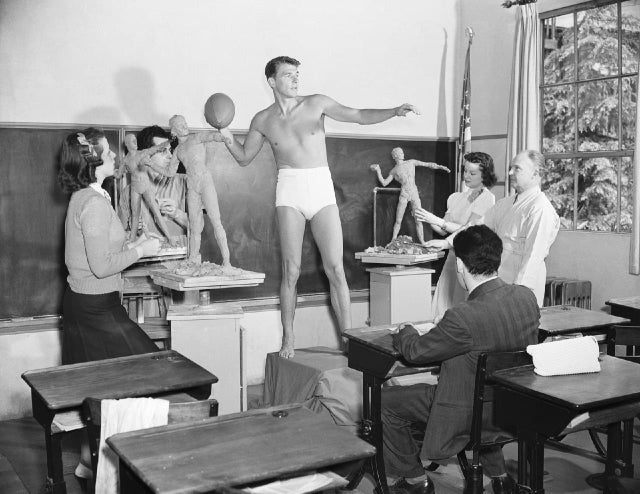
Today at 15:00 UTC we drill into the technical specifics that contribute to the safety and sustainability of spaces used for the teaching, practice and
display of the fine arts. These occupancies are typically at greater risk than classrooms because they usually contain volatile fluids for artistic painting
or biologic specimen preservation, kilns for pottery, fabrics and related machinery for teaching fashion design and practice.
Solar
This content is accessible to paid subscribers. To view it please enter your password below or send mike@standardsmichigan.com a request for subscription details.
New update alert! The 2022 update to the Trademark Assignment Dataset is now available online. Find 1.29 million trademark assignments, involving 2.28 million unique trademark properties issued by the USPTO between March 1952 and January 2023: https://t.co/njrDAbSpwB pic.twitter.com/GkAXrHoQ9T
— USPTO (@uspto) July 13, 2023
Standards Michigan Group, LLC
2723 South State Street | Suite 150
Ann Arbor, MI 48104 USA
888-746-3670
DIRECTIONS
 |
 |
|
 |
 |
|
 |
 |