
Tag Archives: D5

Loading
loading..

Landscape Lighting


Luminaires receive operating energy at voltage ranges from 120V to 600V AC.  For safety and aesthetic reasons — in gardens or inside stairway balustrades or bollards, for example — low voltage lighting is preferred.   The illumination of the pathway, for example, reduces risk to the community far more than the risk voltage presents.  These installations typically operate at 12 to 50 volts direct current.  Manufacturers bear much of the electrical safety burden; assuming the Owner installs and maintains the system correctly.

Faster than anyone will expect, interior building lighting will morph into low voltage systems because 1) the lower energy supply required by LED luminaires will make it possible to pipe that energy through low voltage cabling systems, 2) the pace of innovation we see in information and communication technologies will use those cabling systems for greater control of illumination systems.

We see these trends tracking in two sections of the 2020 National Electrical Code:

Article 300 Wiring Methods (Table 300.5)

Article 411 Low-Voltage Lighting

CLICK HERE for Free Access to the current 2023 Edition.

Comments on Public Input for the 2026 Revision will be received until 28 August 2024. Use workspace linked below:

2026 National Electrical Code Workspace

CMP-9 Article 300

CMP-9 Public Input with Committee Response

CMP-18 Article 411

CMP-18 Public Input with Committee Response

Apart from integrating a new definition of “extra low voltage” into the NEC, Article 411 is a relatively quiet part of the NEC.  Not so with Article 300 which is of great consequence to wiring manufacturers, among others.
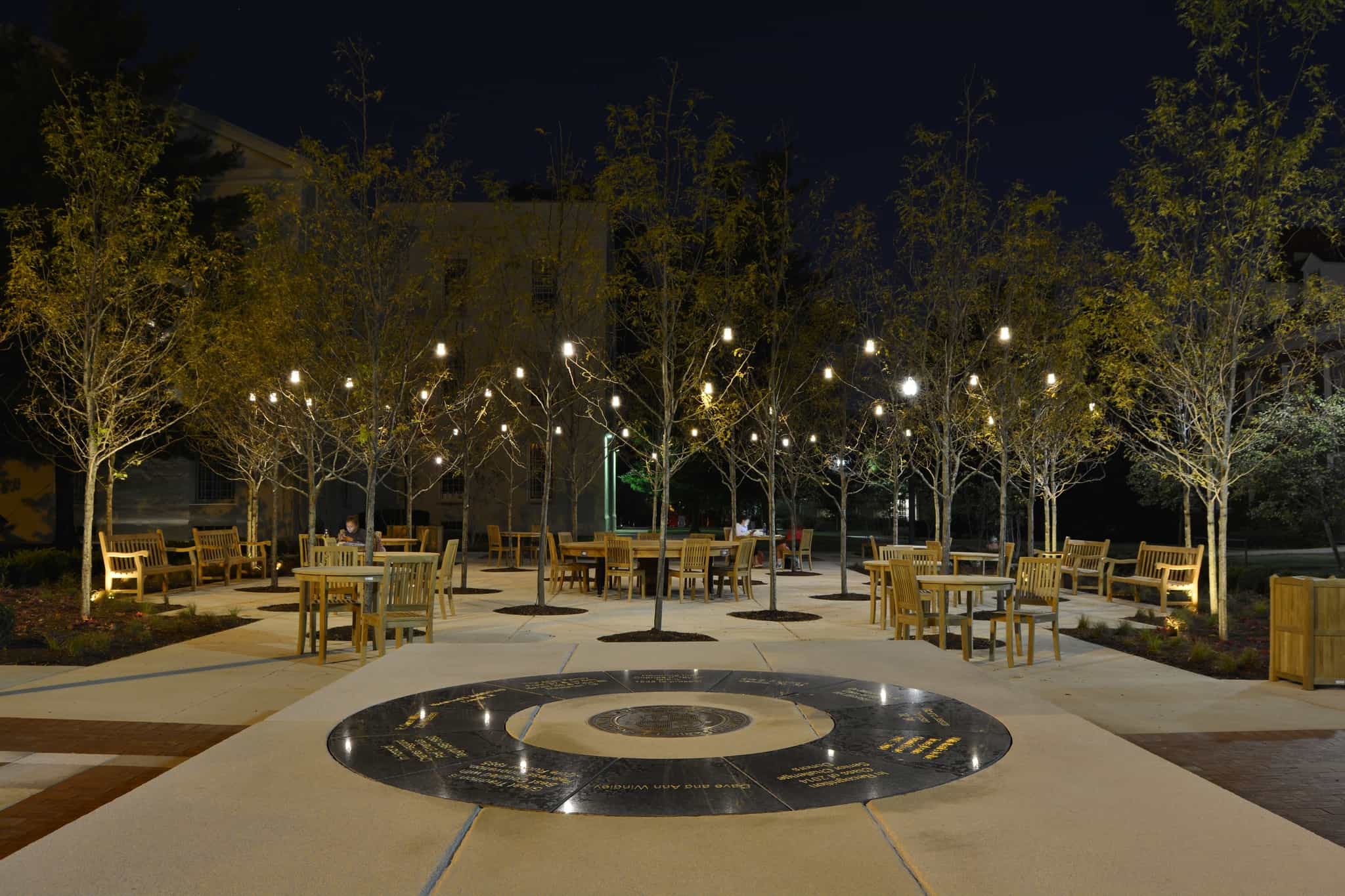
Transylvania University Kentucky

We coordinate our advocacy in all education community electrotechnologies with the IEEE Education & Healthcare Facilities Committee which meets online 4 times monthly in both European and American time zones.  We maintain low voltage lighting on the standing agenda of our Power and Bucolia colloquia.  See our CALENDAR for the next online meeting; open to everyone.

Issue: [NFPA Workspace]

Category: Power, Illumination, Bucolia

Colleages: Mike Anthony, Jim Harvey (University of Michigan), Kane Howard, Glenn Keates (Michigan State University), George Zsissis (University of Toulouse)

Public Broadcasting Act of 1967

This content is accessible to paid subscribers. To view it please enter your password below or send mike@standardsmichigan.com a request for subscription details.

Softball Playfield

This content is accessible to paid subscribers. To view it please enter your password below or send mike@standardsmichigan.com a request for subscription details.

Increasing energy efficiency in bakery ovens


Increasing energy efficiency of the gases production process in bakery ovens

Chelmenciuc Corina | Thermal Power Engineering and Energetics Management Department

Technical University of Moldova

Abstract.  The current work presents the solution of increasing energy efficiency of the processes of obtaining gases, used as heat carrier for baking processes in tunnel type ovens, by integration of cogeneration. A comparative energetic analysis was carried out between the processes of obtaining gases in bakery ovens and those with integrated cogeneration. The evaluation of energy efficiency, of the proposed technical solution, is based on drawing up the energy balance of processes, the one with gases production in the combustion chamber of classic bakery oven and that of the internal combustion engine. The evaluation of energy efficiency of the classical gas production process in the tunnel type oven is based on experimental data whereas the efficiency of method proposed in this work is based on theoretical data. The energetic analysis was performed in order to demonstrate that the integration of a cogeneration installation in bakery ovens contribute to reducing losses in the processes of obtaining gases, thus increasing the energy efficiency.

CLICK HERE to order complete paper


Brewing & Distilling

This content is accessible to paid subscribers. To view it please enter your password below or send mike@standardsmichigan.com a request for subscription details.

Rodeo

This content is accessible to paid subscribers. To view it please enter your password below or send mike@standardsmichigan.com a request for subscription details.

IoT Enabled Smart Gardening


IoT Enabled Smart Gardening

Nikhil Sukhdev – Naman Nahata

PES University, Bangalore, India

Sunil Sridhara – Gnana Swamy

CTAS Development


Abstract: Internet of Things (IoT) is the interconnection of physical objects and devices to the internet and in turn to each other to aid decision making. This paper deals with automation of gardening systems using IoT. With water resources becoming ever so scarce by the day, it has become imperative that we use water extremely judiciously in all walks of our daily life. We track the environmental conditions such as humidity of the soil, and temperature and take an appropriate route towards the problem. Based on the data collected, we run algorithms which help keep the garden in good condition and at the same time using resources optimally.

CLICK HERE to order complete paper

Layout mode
Predefined Skins
Custom Colors
Choose your skin color
Patterns Background
Images Background
Standards Michigan
error: Content is protected !!
Skip to content