“The Liberals are Coming, and They’re Bringing Fancy Coffee” https://t.co/XykfCFYZgVhttps://t.co/exHU6TR2h9
America is changed by flight from miserable Blue States to better Red States—only to import the policies that created the misery they fled from in the first place. pic.twitter.com/OaVVgrTxJr
This simple method preparing hot coffee evolved from open flame; out on the range. The result is a strong, robust cup that retains grittiness due to the coarse grind and the absence of a filter. Cowboy coffee is more about utility and simplicity rather than precision and refinement, which aligns with the rugged and practical nature of cowboy life. Here’s how it’s typically made:
A pot (often a simple metal or enamel coffee pot), a heat source (campfire or portable stove), and a way to separate the grounds from the liquid (like pouring or using a fine mesh strainer).
Process:
Add coarsely ground coffee to the pot. The amount can vary based on personal preference, but it’s generally a couple of tablespoons of coffee per cup of water.
Add water to the pot. Again, the ratio of coffee to water can be adjusted based on taste preferences.
Place the pot on the heat source and bring it to a near-boil. Watch it carefully to avoid boiling over.
Once it’s heated, let it steep for a few minutes. Some cowboys might toss in a crushed eggshell to help settle the grounds.
Remove the pot from the heat and let it sit for a moment to allow the coffee grounds to settle.
Pour the coffee carefully to avoid pouring the grounds into your cup.
Locals swear by it:
“Cowboy coffee ain’t as easy as it looks. It takes some know-how to make it right.” – Unknown
“You can’t compromise with a cup of weak coffee.” – Cowboy Proverb
“There are only two things that a cowboy can’t do without – his horse and his coffee.” – Unknown
“A cowboy’s day starts with coffee and ends with whiskey.” – Unknown
“Life is too short for bad coffee.” – Unknown
“Cowboy coffee: where the grounds are meant to be chewed, not sipped.” – Unknown
“The Liberals are Coming, and They’re Bringing Fancy Coffee” https://t.co/XykfCFYZgVhttps://t.co/exHU6TR2h9
America is changed by flight from miserable Blue States to better Red States—only to import the policies that created the misery they fled from in the first place. pic.twitter.com/OaVVgrTxJr
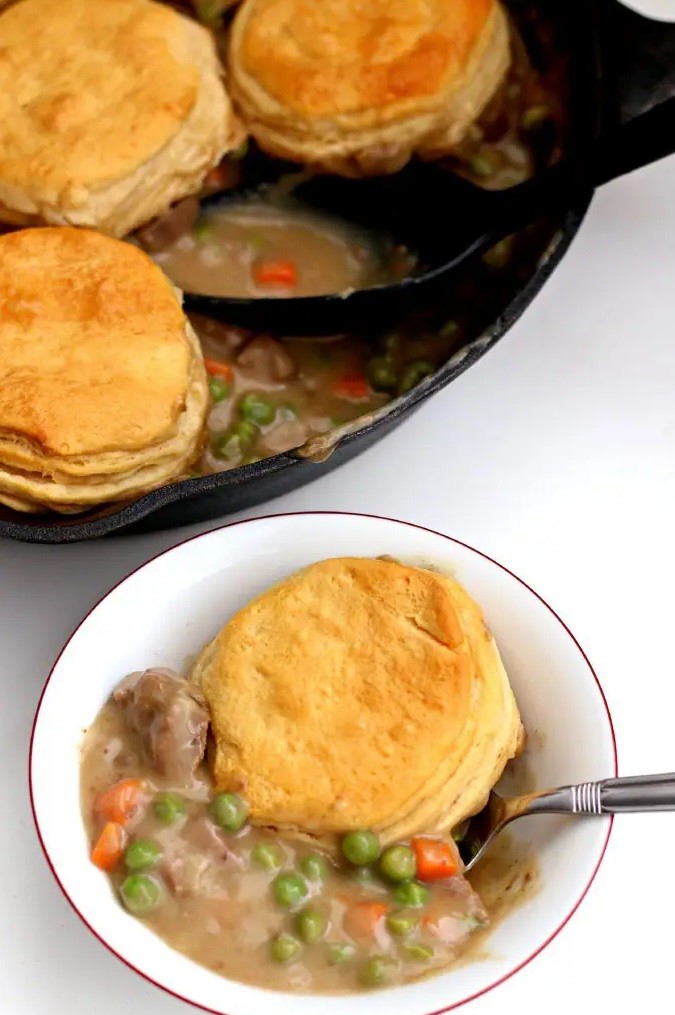
Combine the flour and pepper in a bowl, add the beef and toss to coat well. Heat 3 teaspoons of the oil in a large pot. Add the beef a few pieces at a time; do not overcrowd. Cook, turning the pieces until beef is browned on all sides, about 5 minutes per batch; add more oil as needed between batches.
Wash the counter and utensils that touched the raw meat. Wash hands with soap and water after handling raw meat.
Remove the beef from the pot and add the vinegar and wine. Cook over medium-high heat, scraping the pan with a wooden spoon to loosen any browned bits. Add the beef, beef broth, and bay leaf. Bring to a boil, then reduce to a slow simmer.
Cover the pot and cook, skimming broth from time to time, until the beef is tender, about 1 1/2 hours.
While the beef is cooking, scrub the onion, carrots, and potatoes with a clean vegetable brush under cold running water. Prepare vegetables as directed in the ingredients.
Add the onions and carrots to the pot and simmer, covered, for 10 minutes. Add the potatoes and simmer until vegetables are tender, about 30 minutes more. Add broth or water if the stew is dry. Season with salt and pepper to taste.
Vicki Hayman, University of Wyoming Extension Nutrition Educator, explains how to put together an English muffin, poached egg, Canadian bacon, and a homemade hollandaise sauce named after Lemuel Benedict, a Wall Street banker who, in 1894, ordered a hangover remedy at the Waldorf Hotel in New York. He requested buttered toast, poached eggs, crisp bacon, and hollandaise sauce.
The hotel’s maître d’hôtel, Oscar Tschirky, was impressed and adapted the dish for the menu, swapping bacon for ham and toast for an English muffin, naming it Eggs Benedict in his honor. Another claim links it to Commodore E.C. Benedict, but the Lemuel story is more widely accepted. The dish’s luxurious combination of poached eggs, ham, English muffin, and hollandaise sauce cemented its fame as a breakfast classic.
Anglosphere colleges have not always been settings for the Ideological Gatekeepers that persist in lording over higher education; despite recent federal legislation chipping away at their hegemony. Until the 1960’s far more colleges were conservative or traditionalist in their political and cultural leanings for much of their history; though exceptions were satirized in Jonathan Swift’s ‘Gulliver’s Travels’.
Historical Context in the UK
Oxford and Cambridge (founded in the Middle Ages) were long seen as bastions of tradition, Anglicanism, and Tory/conservative values. In the 19th century, Oxford undergraduates were predominantly Tory. They emphasized classical education, hierarchy, and continuity with British institutions.
They produced many Conservative leaders and maintained strong ties to the establishment.
United States
Early colonial colleges (Harvard 1636, Yale, Princeton, etc.) were founded with Protestant religious missions to train clergy and gentlemen, instilling traditional moral and classical values. They were socially and culturally conservative by design.
Into the early–mid 20th century, many elite universities maintained conservative social norms. Faculty surveys from the 1950s showed more balance (or moderate lean) compared to today.
The 1950s–early 1960s featured active conservative student groups even on liberal campuses. The broad institutional culture was more aligned with tradition before the 1960s “counterculture” (which doesn’t mean there wasn’t religious and racial discrimination).
Canada, Australia, and Broader Anglosphere
Canadian and Australian universities historically reflected British traditions and were not uniformly left-leaning. Overall, universities across the Anglosphere were shaped by religious foundations, elite reproduction, and classical education traditions that prioritized stability, hierarchy, and Western heritage.
Summa: Anglosphere colleges were frequently “conservative” (traditionalist, establishment-oriented) for centuries. The perception — and the fact of them — as inherently left-wing is largely a post-1960s phenomenon; elevated from the large central government aspirations of Democrat and 36th US President Lyndon B. Johnson, himself a school teacher, through his signature legislation (Higher Education Act of 1965). It has been an uphill battle ever since for families seeking to convey loyalty to traditions of personal responsibility, religious tolerance, limited government, and fiscal conservatism to the next generation.
This content is accessible to paid subscribers. To view it please enter your password below or send mike@standardsmichigan.com a request for subscription details.
New update alert! The 2022 update to the Trademark Assignment Dataset is now available online. Find 1.29 million trademark assignments, involving 2.28 million unique trademark properties issued by the USPTO between March 1952 and January 2023: https://t.co/njrDAbSpwBpic.twitter.com/GkAXrHoQ9T