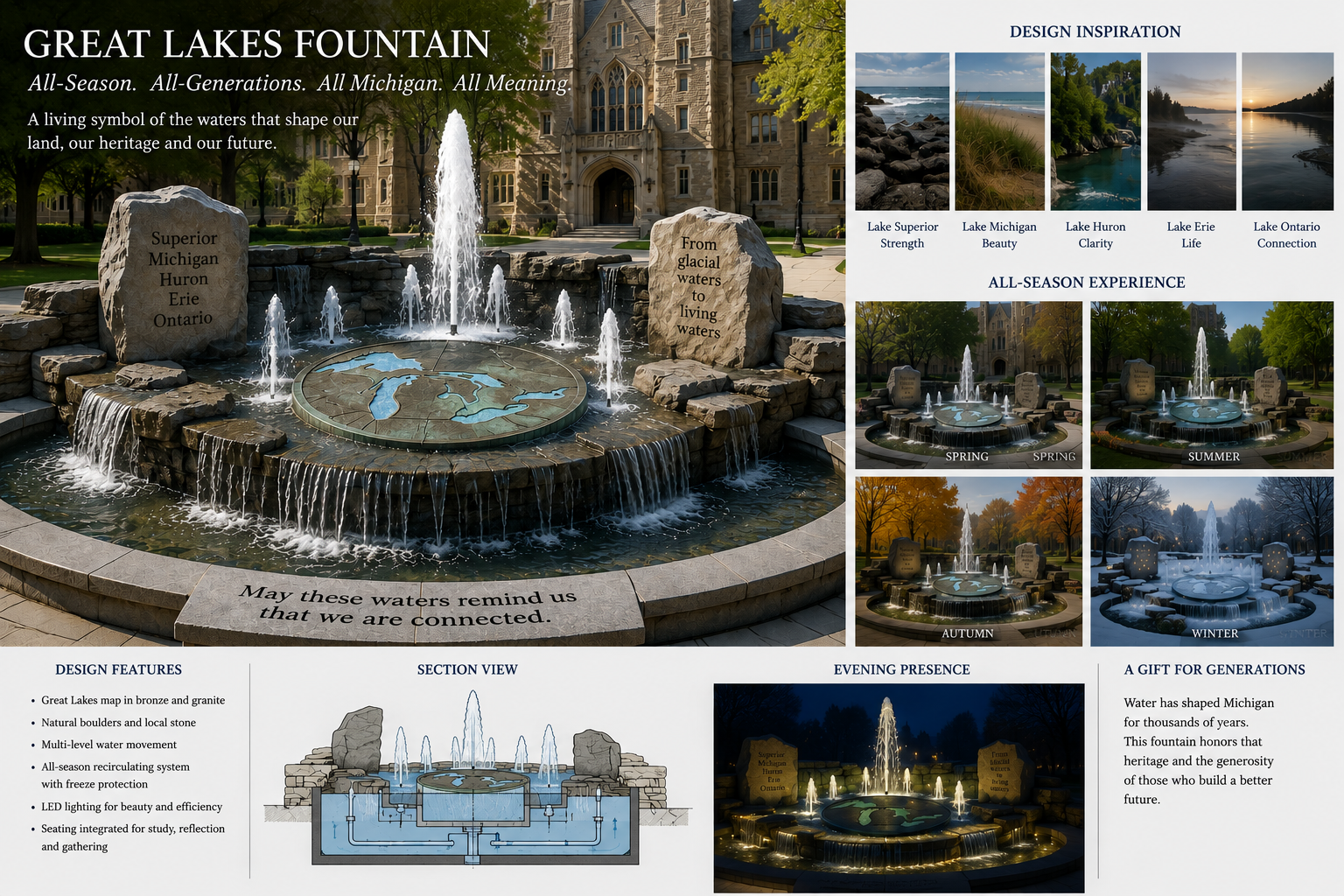
Williams College is a private liberal arts college located in Williamstown, Massachusetts, USA. Founded in 1793, it is one of the oldest institutions of higher education in the United States. The college was established through a bequest of Colonel Ephraim Williams Jr., a war hero who died in the Battle of Lake George during the French and Indian War. In his will, Colonel Williams left funds for the establishment of a free school on the condition that it be located in Williamstown.
TIA 26-1 | 680.21(C) — Swimming Pool Motors: Ground-Fault Protection TIA 26-2 | 690.12(C) — Photovoltaic Systems: Rapid Shutdown Initiation Devices TIA 26-3 | 430.132 (New) — Motors, Motor Circuits and Controllers TIA 26-4 | 500.30(A) — Hazardous (Classified) Locations: Bonding TIA 26-5 | 501.15(B)(2) — Class I, Division 2 Boundary Sealing TIA 26-6 | 505.30(A) — Zone 0, 1 and 2 Hazardous Locations: Bonding TIA 26-7 | 506.30(A) — Zone 20, 21 and 22 Hazardous Locations: Bonding TIA 26-8 | 270.50 — Grounding Electrode Systems Over 1000 Volts AC / 1500 Volts DC
Proposed Tentative Interim Amendments
Proposed TIA 1874 | 625.43(D) — Electric Vehicle Power Transfer Systems: Emergency Shutoff Proposed TIA 1892 | 625.54 — Electric Vehicle Power Transfer Systems: GFCI Protection for Personnel Proposed TIA 1896 | 225.31(B) — Outside Branch Circuits and Feeders: Location of Disconnecting Means Proposed TIA 1897 | Table 501.10(A)(1) — Class I, Division 1 Wiring Methods Proposed TIA 1903 | 700.6(C) — Emergency Systems: Bypass and Isolation of Transfer Equipment Proposed TIA 1912 | 624.44(A) — Electric Self-Propelled Vehicle Power Transfer Systems: Equipment Connection Proposed TIA 1915 | Tables 270.122(B)(1), (B)(2) and (B)(3) — Equipment Grounding Conductors
Tentative Interim Amendments become effective between regular editions of NFPA 70. Proposed TIAs remain subject to the NFPA standards-development process and should be distinguished from issued TIAs incorporated into the current Code.
Check with Jeff Sargent for more information: jsargeant@nfpa.org
NFPA 70 | Tentative Interim Amendments. Among the more consequential Tentative Interim Amendments for educational and healthcare settlements are proposals affecting emergency transfer equipment, electric vehicle charging and building disconnects.
700.6(C) — Emergency Transfer Equipment: Proposed revisions address bypass and isolation requirements for transfer equipment, with implications for maintaining emergency electrical systems without unnecessarily interrupting the loads those systems are intended to protect.
625.54 — Electric Vehicle Supply Equipment: Proposed revisions address GFCI protection and its interaction with EV charging equipment, an increasingly important issue for campus fleet, commuter and residential charging infrastructure.
225.31(B) — Building Disconnects: Proposed revisions address the location of disconnecting means for separately supplied buildings and structures, a practical concern for large educational settlements with distributed feeders, substations and multiple buildings under common management.
Nonnberg Abbey (Stift Nonnberg) in Salzburg, Austria.
In both the stage musical and the 1965 film The Sound of Music, the nuns of Nonnberg Abbey sing the traditional “Morning Hymn” (also known as “Rex Admirabilis,” part of the Preludium sequence with “Dixit Dominus” and “Alleluia”). This occurs early in the story as part of the abbey scenes involving Maria and the other nuns.
Nonnberg is a real Benedictine nunnery (founded around 712–715 and the oldest continuously existing nunnery in the German-speaking world). The real Maria von Trapp was a postulant/novice there before being sent to the von Trapp family, and exterior shots (courtyard, gates, etc.) were filmed on location. Interiors were recreated on a Hollywood set because filming inside was not permitted.
Water standards make up a large catalog and it will take most of 2023 to untangle the titles, the topics, proposals, rebuttals and resolutions. When you read our claim that since 1993 we have created a new academic discipline we would present the best practice literature of the world’s water standards as just one example.
The Water 100 session takes an aerial view of relevant standards developers, their catalogs and revision schedules.
The Water 200 session we examine the literature for best practice inside buildings; premise water supply for food preparation, sanitation and energy systems.
The Water 300 session reviews standards covering athletic facilities such as swimming pools, therapeutic tubs, ice rinks and the like.
The Water 400 session will run through best practice catalogs of water management outside buildings, including interaction with regional water management systems.
The Water 500 session is a study of case histories, disasters, legal action related to non-conformance. Innovation.
Water safety and sustainability standards have been on the Standards Michigan agenda since the early 2000’s. Some of the concepts we have tracked over the years; and contributed data, comments and proposals to technical committees, are listed below:
Send bella@standardsmichigan.com an email to request a more detailed advance agenda. To join the conversation use the login credentials at the upper right of our home page.
“Spring Night, Harlem River” | Ernest Lawson (1913)
Many school districts, colleges and universities are affected by the flooding in the Central United States this week; inspiration enough for revisiting the technical and management codes and standards to avoid and/or mitigate damages. The consensus documents developed by the American Society of Civil Engineers (ASCE) and its affiliate Structural Engineering institute (ASCE-SEI) — should appear in the design guidelines given to professional services firms retained by the facility construction, operations and maintenance workgroups.
The relevant standard in this space is ASCE 24 Flood Resistant Design which is developed jointly with the ASCE-SEI and technical committees of the International Code Council. Apparently the 2014 Edition is the latest edition so that means that during 2019 will be the beginning of another revision cycle (according to ANSI requirements for 5-year revisions/re-affirmations).
From the ASCE 24 prospectus:
Flood Resistant Design and Construction, ASCE/SEI 24-14, provides minimum requirements for design and construction of structures located in flood hazard areas and subject to building code requirements. Identification of flood prone structures is based on flood hazard maps, studies, and other public information. This standard applies to new structures, including subsequent work, and to work classified as substantial improvement of existing structures that are not historic. Standard ASCE/SEI 24-14 introduces a new concept, Flood Design Class, that bases requirements for a structure on the risk associated with unacceptable performance.
The standard includes requirements for the following: basic siting and design and construction requirements for structures in flood hazard areas; minimum elevations for the lowest floor, flood damage-resistant materials, and floodproofing measures, each tied to a structure’s Flood Design Class; structures in high risk flood hazard areas subject to flooding associated with alluvial fans, flash floods, mudslides, erosion, high velocity flow, coastal wave action, or ice jams and debris; structures in coastal high hazard areas (V Zones) and Coastal A Zones; flood damage-resistant materials; dry floodproofing and wet floodproofing; attendant utilities and equipment, including electrical service, plumbing systems, mechanical/HVAC systems, and elevators; building access; and miscellaneous construction, including decks and porches, concrete slabs, garages and carports, accessory storage structures, chimneys and fireplaces, pools, and tanks. A detailed commentary containing explanatory and supplementary information to assist users of the standard is included for each chapter.
Standard ASCE/SEI 24-14 updates and replaces the previous Standard, ASCE/SEI 24-05. It provides essential guidance on design and construction to structural engineers, design professionals, code officials, floodplain managers, and building owners. The standard is adopted by reference in model building codes.
Keep in mind that model building codes usually change on a 3-year cycle while this standard changes on a 5-year cycle (though intermediates changes can, and do, happen).
CLICK ON IMAGE
When a technical committee is ready for its proposed changes to receive public comment, those changes will be posted here:
We always encourage direct communication by user-interest technical experts that are either on the direct payroll of an educational institution or work for an outsourced expert agency such as an architectural engineering firm that has deep expertise in safety and economic trade-offs.
You will need to set up an access account. You may also communicate directly with the American Society of Civil Engineers, 1801 Alexander Bell Dr., Reston, VA 20191. Contact: James Neckel (jneckel@asce.org). Note that ASCE’s Annual Conference is hosted October 10-13 in Miami Florida. CLICK HERE for registration information. We encourage our colleagues in #StandardsFlorida to attend this conference for a front row seat on technical committee action.
We are open every day at 11 AM Eastern time to discuss technical specifics of these, and all other consensus documents affecting #TotalCostofOwnership of education facilities. We also devote one hour per month walking through water-related safety and sustainability codes and standards. See our CALENDAR for the next teleconference; open to everyone.
Anglosphere (United States, United Kingdom, Canada, Australia, New Zealand) ~ $36.7T (or ~33% of GGDP)
United States GDP $29.3T (or about 26% of GGDP)
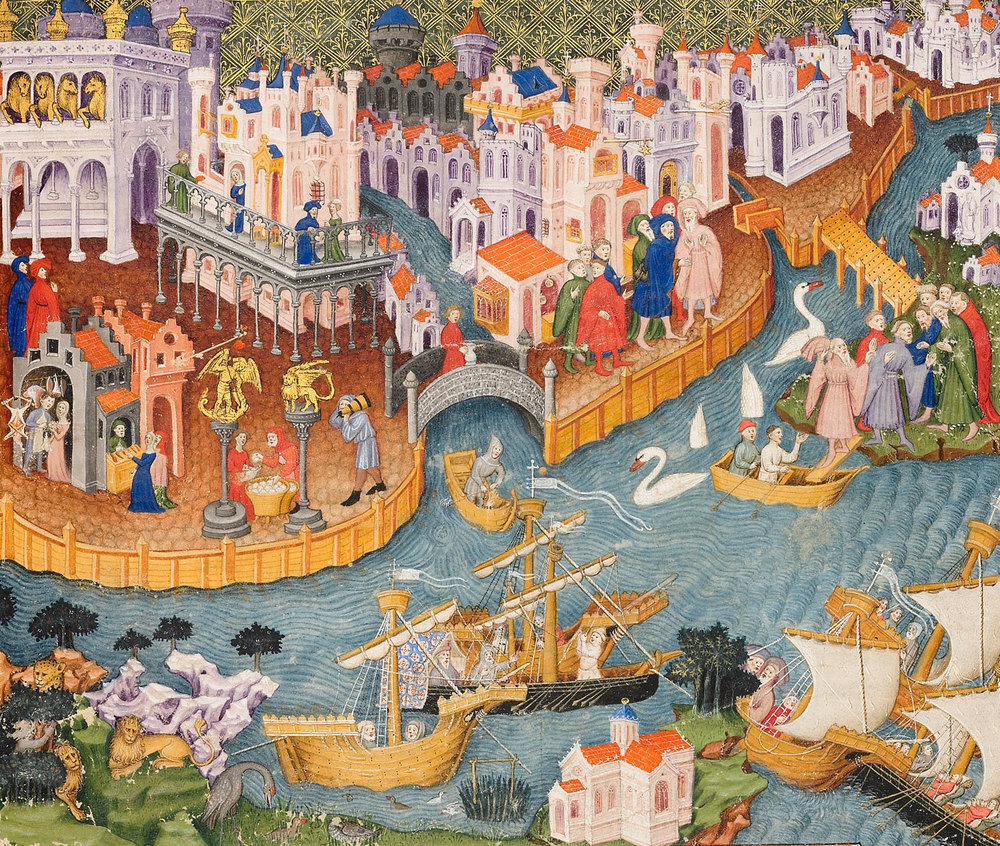
“Livres des Merveilles du Monde” 1300 | Marco Polo | Bodleian Libraries, University of Oxford
Today we break down consultations on titles relevant to the technology and management of the real assets of education communities in the United States specifically; but with sensitivity to the global education markets where thousands of like-minded organizations also provide credentialing, instruction, research, a home for local fine arts and sport.
“Even apart from the instability due to speculation, there is the instability due to the characteristic of human nature that a large proportion of our positive activities depend on spontaneous optimism rather than on a mathematical expectation, whether moral or hedonistic or economic. Most, probably, of our decisions to do something positive, the full consequences of which will be drawn out over many days to come, can only be taken as the result of animal spirits — a spontaneous urge to action rather than inaction, and not as the outcome of a weighted average of quantitative benefits multiplied by quantitative probabilities. Enterprise only pretends to itself to be mainly actuated by the statements in its own prospectus, however candid and sincere that prospectus may be. Only a little more than an expedition to the South Pole is it based on an exact calculation of benefits to come. Thus if the animal spirits are dimmed and the spontaneous optimism falters, leaving us to depend on nothing but a mathematical expectation, enterprise will fade and die; — though fears of loss may have a basis no more reasonable than hopes of profit had before.”
Extended Versions Certain standards are required to be read in tandem with another standard, which is known as a reference (or parent) document. The extended version (EXV) of an IEC Standard facilitates the user to be able to consult both IEC standards simultaneously in a single, easy-to-use document.
A partial list of projects with which we have been engaged as an active participant; starting with the original University of Michigan enterprise in the late 1990’s and related collaborations with IEEE and others: (In BOLD font we identify committees with open consultations requiring a response from US stakeholders before next month’s Hello World! colloquium)
IEC/TC 8, et al System aspects of electrical energy supply
We collaborate with the appropriate ANSI US TAG; or others elsewhere in academia. We have begun tracking ITU titles with special attention to ITU Radio Communication Sector.
main(){printf("hello, world\n");}
We have collaborations with Rijksuniversiteit Groningen, Sapienza – Università di Roma, Universität Zürich, Universität Potsdam, Université de Toulouse. Universidade Federal de Itajubá, University of Windsor, the University of Alberta, to name a few — most of whom collaborate with us on electrotechnology issues. Standards Michigan and its 50-state affiliates are (obviously) domiciled in the United States. However, and for most issues, we defer to the International Standards expertise at the American National Standards Institute
* A “Hello, World!” program generally is a computer program that outputs or displays the message “Hello, World!”. Such a program is very simple in most programming languages (such as Python and Javascript) and is often used to illustrate the basic syntax of a programming language. It is often the first program written by people learning to code. It can also be used as a sanity test to make sure that a computer language is correctly installed, and that the operator understands how to use it.
The ISO Research Grant is awarded annually to one postgraduate student (Masters, PhD or postdoc) to conduct a research study related to a theme proposed by ISO. The grant amount is 25,000 CHF. A different theme is proposed each year, but the broad focus is on evaluating the impacts of international standards. We have covered it since its inception in the early days of the original Standards Michigan enterprise. (See ABOUT). We see no information on the next revision cycle but can provide information about the 2026 grant cycle in the link below:
New update alert! The 2022 update to the Trademark Assignment Dataset is now available online. Find 1.29 million trademark assignments, involving 2.28 million unique trademark properties issued by the USPTO between March 1952 and January 2023: https://t.co/njrDAbSpwBpic.twitter.com/GkAXrHoQ9T