This content is accessible to paid subscribers. To view it please enter your password below or send mike@standardsmichigan.com a request for subscription details.
Public consultation on joint ISO standard 80000 that defines quantities and units for space, time, thermodynamics, light, radiation and even the characteristic numbers for each of the foregoing closes October 11th.
Electropedia is produced by the world’s peak electrotechnical standardization organization that oversees 214 technical committees that provide a neutral and independent platform where agreement can be found on electrotechnical solutions with global relevance and reach. The IEC operates close-coupled with the European Committee for Electrotechnical Standardization (CENELEC)
International Electrotechnical Commission | CDV Consultations
Hvis vi skal sikre den grønne omstilling, så skal vi sætte turbo på #power2x og skabe stabil energiforsyning. Derfor lancerer vi og @DTUtweet det nye pioneercenter CAPeX, der skal accelerere udviklingen af materialer til PtX-teknologi🟢Tak til @GrundforskFond! #dkpol #dkforsk pic.twitter.com/cB0RgFkO8U
— Aalborg Universitet (@aalborg_uni) December 20, 2022
BBC: The country where the left (not the far right) made hardline immigration laws
Annual Report and Financial Statement 2023: $8.258M
We are celebrating 180 years of Queen’s!
Since first opening our doors in 1845, we have been shaping a better world by driving innovation, strengthening communities and changing lives for the better.
Queen’s University is a special place where creativity is brought to life,… pic.twitter.com/w9nxOLtdJf
— Queen’s University Belfast 🎓 (@QUBelfast) June 4, 2025
Fancy being part of the QUB team? This could be your chance!
Check out our latest career opportunities ➡️ https://t.co/eruaQlcKXX#LoveQUB #JobsFairy #HEJobs #NIJobs #HigherEducation #NorthernIreland pic.twitter.com/0c2cQYYpeU
— Queen’s University Belfast 🎓 (@QUBelfast) October 14, 2024
This content is accessible to paid subscribers. To view it please enter your password below or send mike@standardsmichigan.com a request for subscription details.
Fire safety leadership usually finds itself involved in nearly every dimension of risk on the #WiseCampus; not just the built environment but security of interior spaces with combustibles but along the perimeter and within the footprint of the education community overall.
The Campus Fire Marshal, for example, usually signs the certificate of occupancy for a new building but may be drawn into meetings where decisions about cybersecurity are made. Fire protection systems coincide with evacuation systems when there is no risk and both may be at risk because of cyber-risk.
The job description of a campus fire safety official is linked below offers some insight into why fire safety technologies reach into every risk dimension:
University of California Santa Cruz Office of Emergency Services
The development of the highest level fire safety consensus product in the world is led by the British Standards Institute, under the administration of the International Standardization Organization, with Committee E05 on Fire Standards of ASTM International as the US Technical Advisory Group Administrator. The business plan and the map of global participants is linked below:
BUSINESS PLAN ISO/TC 92 Fire safety EXECUTIVE SUMMARY
The consensus products developed by TC 92 are intended to save lives, reduce fire losses, reduce technical barriers to trade, provide for international harmonization of tests and methods and bring substantial cost savings in design. ISO/TC 92 standards are expected to be of special value to developing countries, which are less likely to have national standards. As with all ISO standards, the TC 92 consensus product is a performance standard suitable for use in prescriptive regulations and provide for a proven route to increased fire safety.
We do not advocate in this standard at the moment; we only track it. The International Fire Code and the Fire Code have been our priorities since 2006. The fire safety space is well populated with knowledgeable facility professionals because conformity budgets in the fire safety world — i.e. the local or state fire marshal — usually has a budget. When you have a budget you usually have people keeping pace with best practice.
We encourage our colleagues in the United States on either the business or academic side of the education facility industry to communicate directly with ANSI’s ISO Team and/or the ASTM Contact: Tom O’Toole, 100 Barr Harbor Drive, West Conshohocken, PA 19428-2959 Phone: (610) 832-9739, Email: totoole@astm.org
We maintain this title on the agenda of our periodic Global and Prometheus colloquia. See our CALENDAR for the next online meeting; open to everyone.
Issue: [19-104]
Category: Fire Safety, Fire Protection, International
Contact: Mike Anthony, Joe DeRosier, Alan Sactor, Joshua Elvove, Casey Grant
More:
The Challenges of Storage and Not Enough Space, Alan Sactor
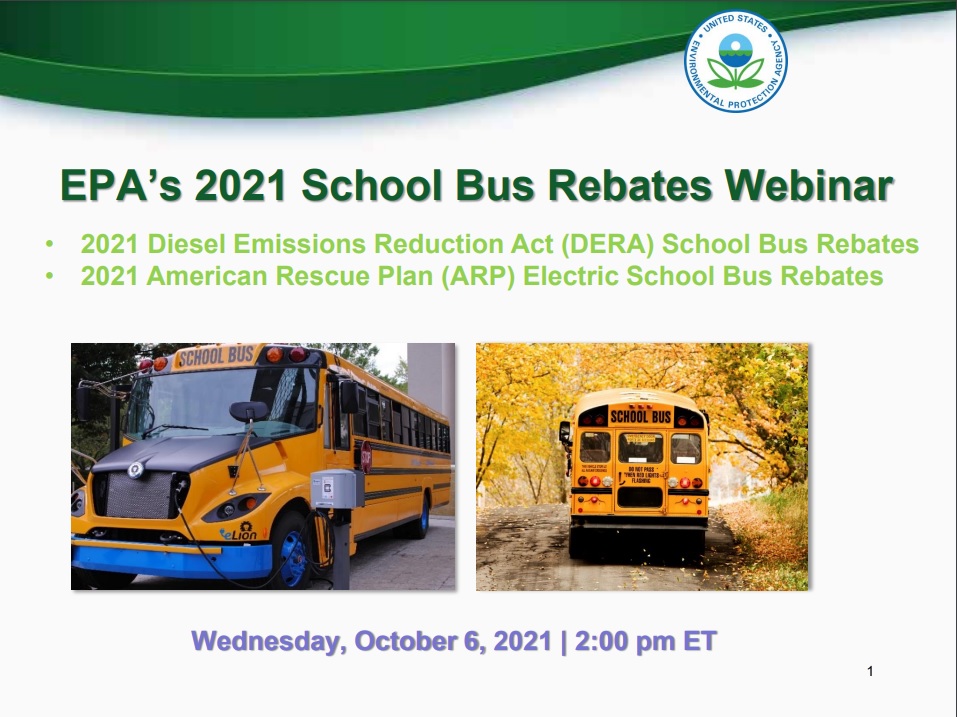
Widespread use of electric vehicles (EVs) on large university campuses offers significant possibilities but also presents challenges. Possibilities include reduced carbon emissions, aligning with sustainability goals, as EVs produce zero tailpipe emissions compared to gasoline-powered vehicles. Campuses could deploy electric shuttles, maintenance vehicles, or shared EV fleets, decreasing reliance on fossil fuels. EVs could integrate with campus microgrids, leveraging renewable energy sources like solar panels. They also promote quieter environments, reducing noise pollution in academic settings. Universities could foster innovation by integrating EV infrastructure into research, such as smart grid technology or battery development.
Pros include environmental benefits, lower operating costs (electricity is cheaper than fuel), and enhanced campus branding as eco-friendly. EVs require less maintenance, saving long-term costs. Students and staff benefit from cleaner air and modern transportation options.
Cons include high upfront costs for EVs and charging infrastructure, straining budgets. Limited range and charging times may disrupt campus operations, especially for time-sensitive tasks. Charging station availability could lead to congestion or inequitable access. Battery production raises ethical concerns about resource extraction. Retrofitting existing fleets and managing grid demand pose logistical hurdles.
Balancing these factors requires strategic planning, but EVs could transform campus mobility sustainably.
We have followed standards setting action in this domain since 1993. During todays colloquium at 15:00 UTC we will answer questions about our involvement, guided by our Safer-Simpler-Lower Cost – Longer Lasting advocacy in all relevant standards. Use the login credentials at the upper right of our home page.
National Electrical Manufacturers Association
EV Charging Stations Integration into Public Lighting Infrastructure
Drivers and Barriers to Implementation of Connected, Automated, Shared, and Electric Vehicles
Et al.
New update alert! The 2022 update to the Trademark Assignment Dataset is now available online. Find 1.29 million trademark assignments, involving 2.28 million unique trademark properties issued by the USPTO between March 1952 and January 2023: https://t.co/njrDAbSpwB pic.twitter.com/GkAXrHoQ9T
— USPTO (@uspto) July 13, 2023
Standards Michigan Group, LLC
2723 South State Street | Suite 150
Ann Arbor, MI 48104 USA
888-746-3670