“Radio is the perfect medium for communication.
It is instantaneous, and unlike television,
it allows you to use your imagination.”
-Guglielmo Marconi
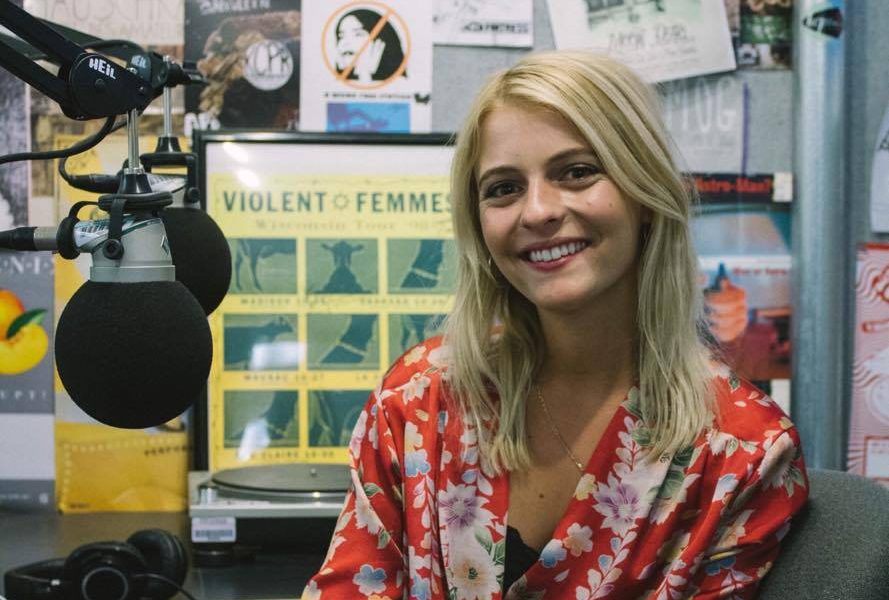
CLICK IMAGE TO START LIVESTREAM



“Radio is the perfect medium for communication.
It is instantaneous, and unlike television,
it allows you to use your imagination.”
-Guglielmo Marconi
CLICK IMAGE TO START LIVESTREAM
International Building Code: Group A Model Building Codes: 2024/2025/2026 Development Cycle

“One Hundred Children Playing in the Spring” | Su Hanchen 蘇漢臣

Safety and sustainability for any facility begins with an understanding of who shall occupy the built environment and how. University settings, with mixed-use phenomenon arising spontaneously and temporarily, often present challenges. Educational communities are a convergent settings for families; day care facilities among them. First principles regarding occupancy classifications for day care facilities appear in Section 308 of the International Building Code, Institutional Group I; linked below:
Section 308 | International Building Code
The ICC Institutional Group I-4 classification includes buildings and structures occupied by more than five persons of any age who received custodial care for fewer than 24 hours per day by persons other than parents or guardian, relatives by blood, marriage or adoption, and in a place other than the home of the person cared far. This group includes both adult and child day care.
We maintain focus on child day care. Many educational communities operate child day care enterprises for both academic study and/or as auxiliary (university employee benefit) enterprises.
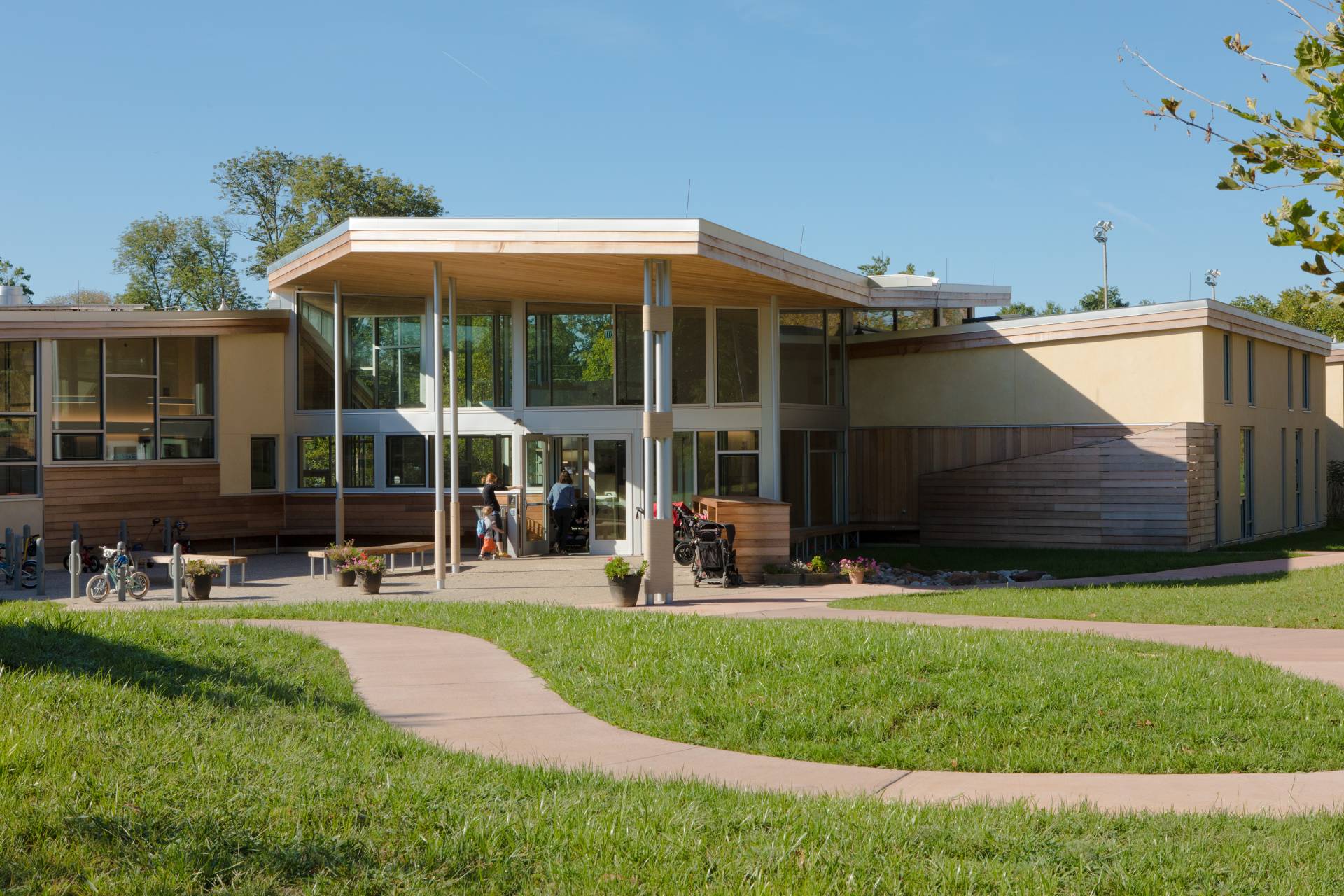
Princeton University Child Care Center
Each of the International Code Council code development groups fetch back to a shared understanding of the nature of the facility; character of its occupants and prospective usage patterns.
The Group B developmental cycle ended in December 2019. The 2021 revision of the International Building code is in production now, though likely slowed down because of the pandemic. Ahead of the formal, market release of the Group B tranche of titles, you can sample the safety concepts in play during this revision with an examination of the documents linked below:
2019 GROUP B PROPOSED CHANGES TO THE I-CODES ALBUQUERQUE COMMITTEE ACTION HEARINGS
2019 REPORT OF THE COMMITTEE ACTION HEARINGS ON THE 2018 EDITIONS OF THE GROUP B INTERNATIONAL CODES
Search on the terms “day care” and “daycare” to get a sample of the prevailing concepts; use of such facilities as storm shelters, for example.

“The Country School” | Winslow Homer
We encourage our safety and sustainability colleagues to participate directly in the ICC Code Development process. We slice horizontally through the disciplinary silos (“incumbent verticals”) created by hundreds of consensus product developers every week and we can say, upon considerable authority that the ICC consensus product development environment is one of the best in the world. Privately developed standards (for use by public agencies) is a far better way to discover and promulgate leading practice than originating technical specifics from legislative bodies. CLICK HERE to get started. Contact Kimberly Paarlberg (kpaarlberg@iccsafe.org) for more information.
There are competitor consensus products in this space — Chapter 18 Day-Care Occupancies in NFPA 5000 Building Construction and Safety Code, for example; a title we maintain the standing agenda of our Model Building Code teleconferences. It is developed from a different pool of expertise under a different due process regime. See our CALENDAR for the next online meeting; open to everyone.
Issue: [18-166]
Category: Architectural, Healthcare Facilities, Facility Asset Management
Colleagues: Mike Anthony, Jim Harvey, Richard Robben
Several names for this occupancy class:
This content is accessible to paid subscribers. To view it please enter your password below or send mike@standardsmichigan.com a request for subscription details.
This content is accessible to paid subscribers. To view it please enter your password below or send mike@standardsmichigan.com a request for subscription details.
This content is accessible to paid subscribers. To view it please enter your password below or send mike@standardsmichigan.com a request for subscription details.
This content is accessible to paid subscribers. To view it please enter your password below or send mike@standardsmichigan.com a request for subscription details.
Verse 1
Great is Thy faithfulness, O God my Father,
There is no shadow of turning with Thee;
Thou changest not, Thy compassions, they fail not;
As Thou hast been, Thou forever wilt be.
Chorus
Great is Thy faithfulness! Great is Thy faithfulness!
Morning by morning new mercies I see;
All I have needed Thy hand hath provided;
Great is Thy faithfulness, Lord, unto me!
Verse 2
Summer and winter, and springtime and harvest,
Sun, moon, and stars in their courses above,
Join with all nature in manifold witness
To Thy great faithfulness, mercy, and love.
Chorus
Great is Thy faithfulness! Great is Thy faithfulness!
Morning by morning new mercies I see;
All I have needed Thy hand hath provided;
Great is Thy faithfulness, Lord, unto me!
Verse 3
Pardon for sin and a peace that endureth,
Thine own dear presence to cheer and to guide;
Strength for today and bright hope for tomorrow,
Blessings all mine, with ten thousand beside!
Chorus
Great is Thy faithfulness! Great is Thy faithfulness!
Morning by morning new mercies I see;
All I have needed Thy hand hath provided
This content is accessible to paid subscribers. To view it please enter your password below or send mike@standardsmichigan.com a request for subscription details.
We observe academia’s summer hiatus until August 19th when we resume our daily 15:00 sessions on the topic of Data Center standards, regulations and codes. The front desk at our State Street Office will remain open but our daily colloquia will be replaced with “Evergreen” content dating back to 1993. See our CALENDAR.
Some jankiness in presentation will likely persist until early September as we upgrade PHP versions, widgets, and plug-ins to the latest versions of WordPress and Python. Content updates across all our platforms remains unresolved; described in the link below:
All that said, the content will not change but access and timeliness “may” be delayed by no more than 24 hours.
Essential Requirements
Your 2025 Guide to ANSI’s Community Resources
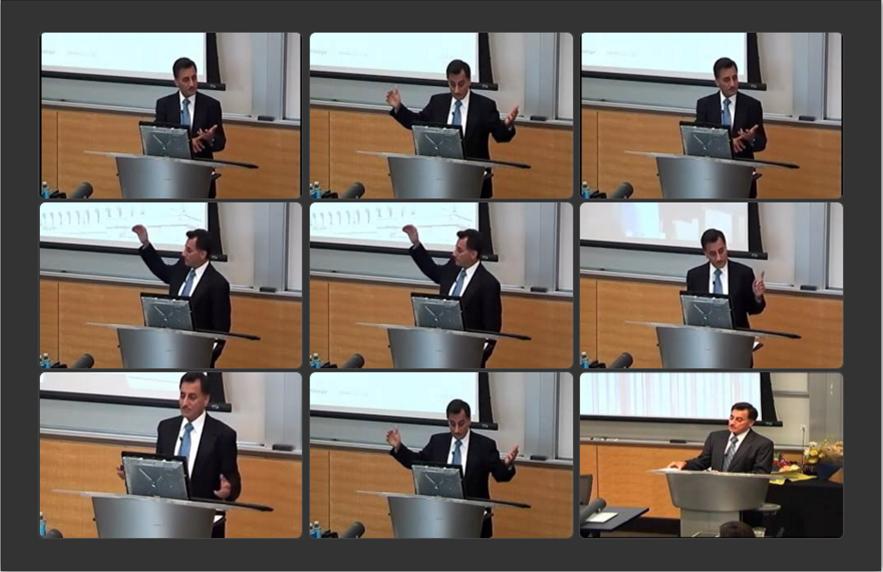
S. Joe Bhatia at the University of Michigan Ross School of Business | ANSI Company Member Forum, May 2016
Only Two Weeks to Go! Join ANSI at the 2024 U.S.- Korea Standards Forum in Washington, D.C. #quantum #greenenergy #artificialintelligence https://t.co/h3zhyxbh5S pic.twitter.com/rVxuUFOQJR
— ANSI (@ansidotorg) June 18, 2024
#ANSINews: ANSI Releases March 2024 Edition of Government Relations and Public Policy Update:https://t.co/a0TbgRP7sO pic.twitter.com/7EndBOJmfx
— ANSI (@ansidotorg) April 1, 2024
Calling all students! How do standards support safe and effective implementation of AI? Share your thoughts in ANSI’s Student Paper Competition: https://t.co/lP8tIIkKwv#ANSIpapercompetition #standards #AI #artificialintelligence #engineering #computerscience #scholarship pic.twitter.com/VL57XYVEUY
— ANSI (@ansidotorg) April 1, 2024
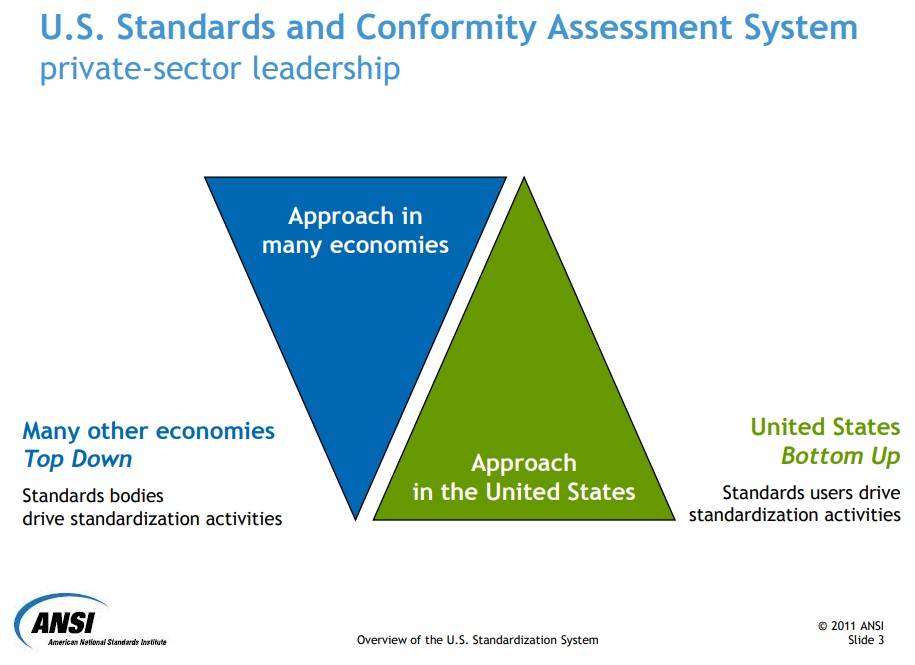
CLICK ON IMAGE FOR COMPLETE PRESENTATION
With many non-profit organizations also challenged by the pandemic we are likely to see fewer experts at technology, finance and management gatherings where leading practice is discovered and promulgated. That does not mean that many gatherings will not be offloaded onto the internet but, with fewer paid experts involved, one wonders whether there will be fewer unpaid experts — or will there be more unpaid experts? We shall see.
Since the United States federal government can print money it is likely that more decision-making will be drawn back to Washington D.C. — where the money is. The likelihood that we shall see greater federal control over education facility industry originating at the federal level inspires a revisit of the United States standards system. The National Institute of Standards and Technology is the oversight agency and the American National Standards Institute is the private non-profit organization that oversees the development of voluntary consensus standards for products, services, processes, systems, and personnel in the United States.
To understand ideal balance in the US standards system See § 2.3 ANSI Essential Requirements: Due process requirements for American National Standards
FROM OUR ARCHIVE:
New update alert! The 2022 update to the Trademark Assignment Dataset is now available online. Find 1.29 million trademark assignments, involving 2.28 million unique trademark properties issued by the USPTO between March 1952 and January 2023: https://t.co/njrDAbSpwB pic.twitter.com/GkAXrHoQ9T
— USPTO (@uspto) July 13, 2023
Standards Michigan Group, LLC
455 East Eisenhower Parkway, Suite 300
Ann Arbor, MI 48108 USA
888-748-3670
 |
 |
|
 |
 |
|
 |
 |