
Solar Photovoltaic Energy Systems

Loading
loading...

Solar Photovoltaic Energy Systems

July 8, 2025
mike@standardsmichigan.com
,
No Comments

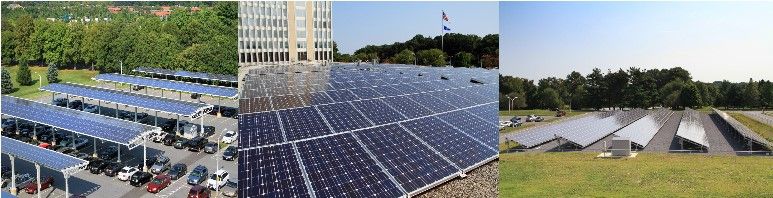
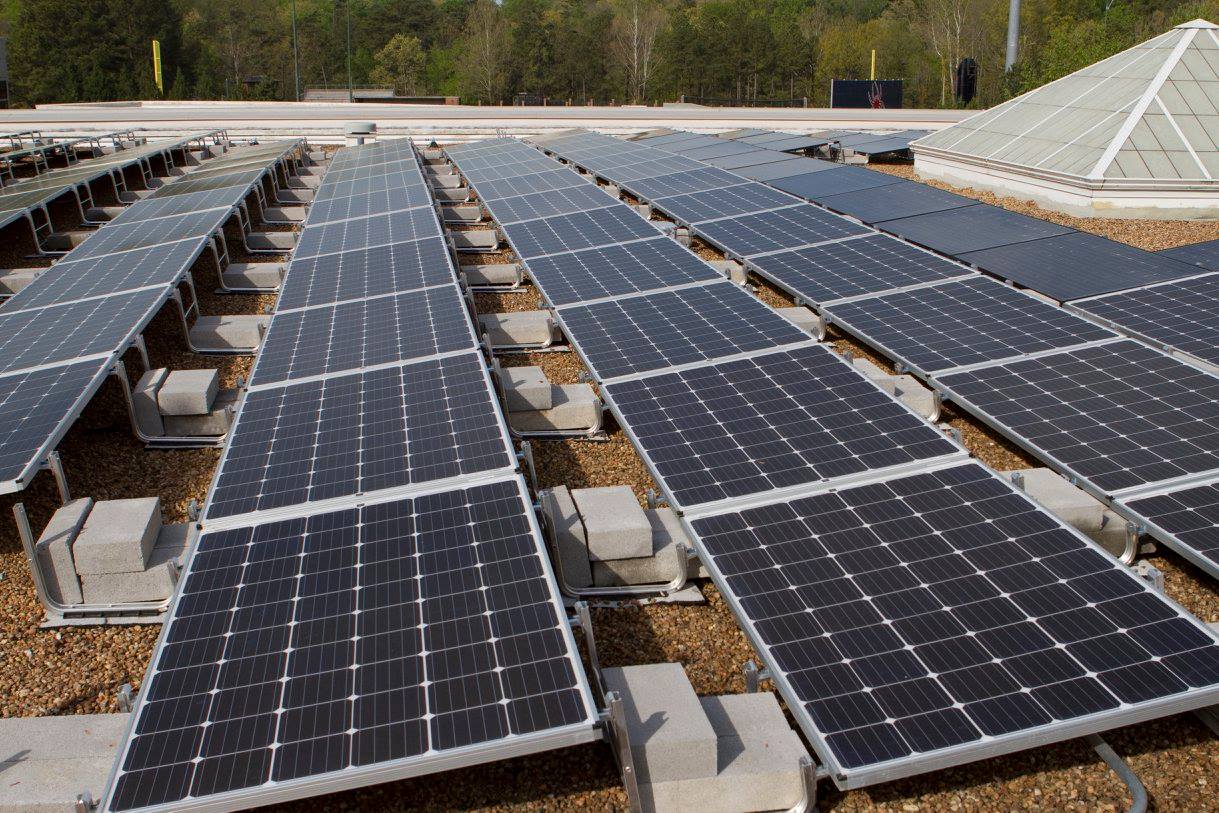
Technical Committee 82 of the International Electrotechnical Commission is charged with preparing international standards for the full length of the solar energy power chain  The span of the power chain includes the light input, the cell itself, and the fittings and accessories to the end use (utilization) equipment.

Strategic Business Plan of IEC Technical Committee 82

The United States is the Global Secretariat for TC 82 through the US National Committee of the International Electrotechnical Commission (USNA/IEC) administered by the American National Standards Institute(ANSI).  Standards Michigan is a long-standing member of ANSI since our “standards journey” began at the University of Michigan in 1993.

The USNA/IEC and participates in its standards development processes; typically collaborating with global research and application engineers in the IEEE Industrial Applications Society and the IEEE Power and Energy Society.   To advance its agenda for lower #TotalCostofOwnership for US real asset executives and facility managers Standards Michigan also collaborates closely with subject matter experts who contribute to, and draw from, the knowledge base in the IEEE Education and Healthcare Facilities Committee (E&H).

The IEC permits public commenting on its draft standards; though you will need to establish login credentials:

IEC Public Commenting

Your comments will be reviewed by the IEC National Committee of the country you live in, which can decide to propose them as national input for the final draft of the IEC International Standard.  This approach makes it easier for individual nations to participate in IEC standards development processes because the resources that national standards bodies need to administer participation resides in Geneva and is managed there.  

“The Eclipse of the Sun in Venice, July 6, 1842” | Ippolito Caffi

We collaborate with the IEEE Education & Healthcare Facilities Committee which has its own platform to tracking commenting opportunities:

IEEE E&H/USNC/IEC Workspace

As of this posting, no interoperability redlines have been released for public consultation.   In large measure, IEC titles contribute to a level playing field among multi-national electrical equipment manufacturers so we should not be surprised that there are no redlines to review.   When they are released we place them on the agenda of the IEEE E&H Committee which meets 4 times monthly in European and American time zones.

Log in to the E&H Committee meeting

Issue: [18-240]

Category: Electrical Power, Energy Conservation

Contact: Mike Anthony, Jim Harvey, Peter Sutherland

LEARN MORE:

[1] US Commenters must route their comments through the USNA/IEC.

[2] Many product and installation standards are developed by the Association of Electrical Equipment and Medical Imaging Manufacturers (NEMA): CLICK HERE

[3]  NEMA comparison of NEC and IEC electrical safety standards

Dutch Institute for Fundamental Energy Research


Solarvoltaic PV Systems

July 8, 2025
mike@standardsmichigan.com

No Comments

“Icarus” Joos de Momper

National Electrical Code Articles 690 and 691 provide electrical installation requirements for Owner solarvoltaic PV systems that fall under local electrical safety regulations.  Access to the 2023 Edition is linked below;

2023 National Electrical Code

2026 National Electrical Code Second Draft Transcript | CMP-4

Insight into the technical problems managed in the 2023 edition can be seen in the developmental transcripts linked below:

Panel 4  Public Input Report (869 pages)

Panel 4  Second Draft Comment Report (199 pages)

The IEEE Joint IAS/PES (Industrial Applications Society & Power and Energy Society) has one vote on this 21-member committee; the only pure “User-Interest” we describe in our ABOUT.  All other voting representatives on this committee represent market incumbents or are proxies for market incumbents; also described in our ABOUT.

The 2026 National Electrical Code has entered its revision cycle.  Public input is due September 7th.

We maintain these articles, and all other articles related to “renewable” energy, on the standing agenda of our Power and Solar colloquia which anyone may join with the login credentials at the upper right of our home page.   We work close coupled with the IEEE Education & Healthcare Facilities Committee which meets 4 times monthly in American and European time zones; also open to everyone.


How the Netherlands Prevents Flood Disasters

July 7, 2025
mike@standardsmichigan.com

No Comments


Federal Flood Risk Management Standard

Time & Frequency Services

July 4, 2025
mike@standardsmichigan.com
, , , , , , ,
No Comments

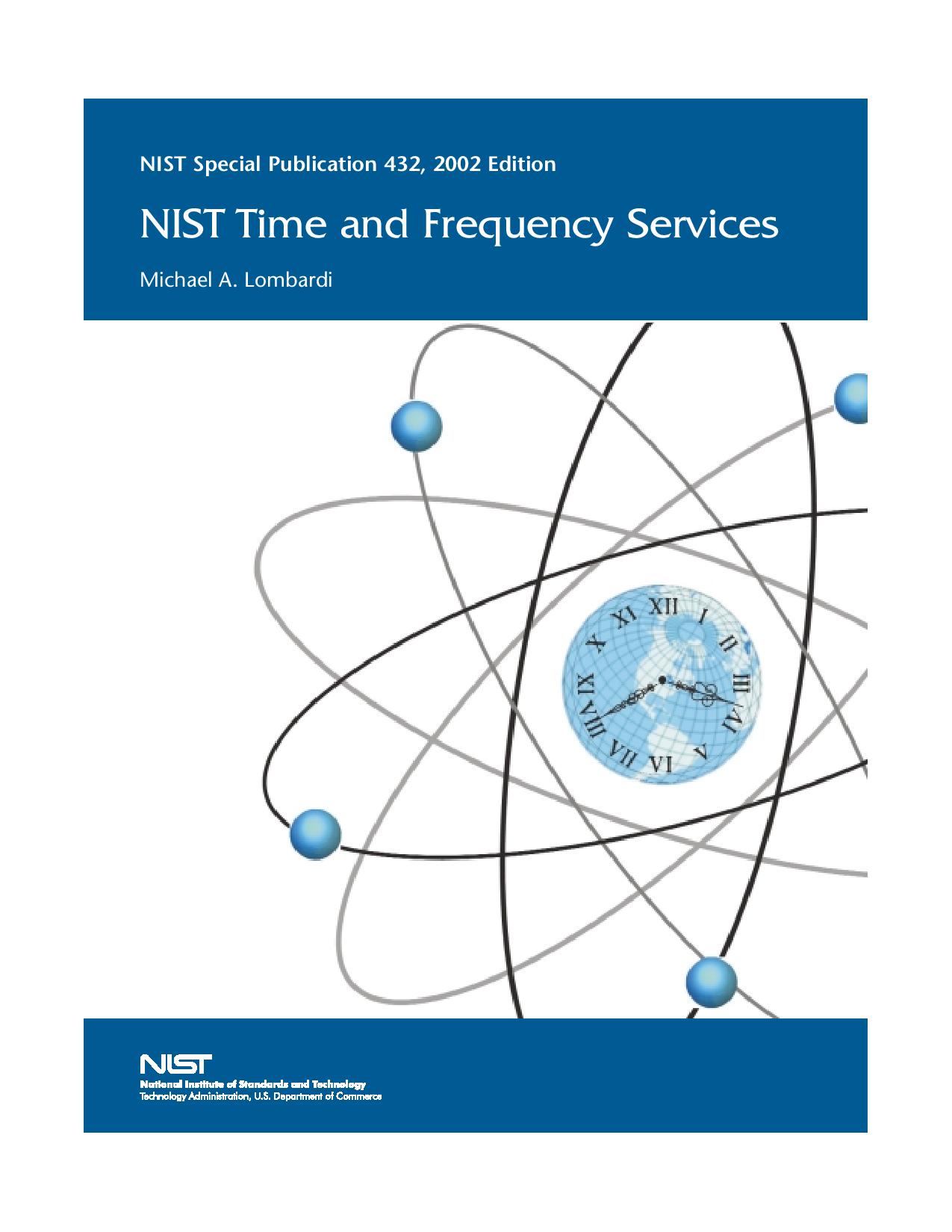
The National Institute of Standards and Technology is responsible for maintaining and disseminating official time in the United States. While NIST does not have a direct role in implementing clock changes for daylight saving time, it does play an important role in ensuring that timekeeping systems across the country are accurate and consistent.

Prior to the implementation of daylight saving time, NIST issues public announcements reminding individuals and organizations to adjust their clocks accordingly. NIST also provides resources to help people synchronize their clocks, such as the time.gov website and the NIST radio station WWV.

In addition, NIST is responsible for developing and maintaining the atomic clocks that are used to define Coordinated Universal Time (UTC), the international standard for timekeeping. UTC is used as the basis for all civil time in the United States, and it is the reference time used by many systems, including the Global Positioning System (GPS) and the internet.

Overall, while NIST does not have a direct role in implementing clock changes for daylight saving time, it plays an important role in ensuring that timekeeping systems across the country are accurate and consistent, which is essential for the smooth implementation of any changes to the system.

CLICK IMAGE to access complete document

More

Time Realization and Distribution

Horologiorum

Banana Oatmeal Pancakes

July 3, 2025
mike@standardsmichigan.com

No Comments

Standards IowaIowa Facilities Management“John Francis Rague– Pioneer Architect of Iowa”

Other Breakfast Recipes

American Sign Language Coffee Chat | Iowa College of Liberal Arts & Sciences


Library of Congress: Scandinavian Migration to “New Sweden, Iowa”

Book of Ruth

July 3, 2025
mike@standardsmichigan.com
,
No Comments

This content is accessible to paid subscribers. To view it please enter your password below or send mike@standardsmichigan.com a request for subscription details.

KJHK 90.7 FM

July 2, 2025
mike@standardsmichigan.com
, ,
No Comments

Standards Kansas

Click image to start livestream

Southern Methodist University: Real Estate Investment Trusts

July 2, 2025
mike@standardsmichigan.com
No Comments

Southern Methodist University | Dallas County

All the work we do intervening in technical standards setting to make educational settlements safer, simpler, lower-cost and longer-lasting does not keep pace with the growth rate of the largest non-residential building construction market in the United States which is presently challenged by international demand; but perhaps not for long.

Resource Guide


What do REITs actually build on campus?

  • Most university-linked REIT activity is in student housing.

  • Publicly traded REITs (e.g., American Campus Communities, EdR before acquisition) invest heavily in dormitories, apartments, and mixed-use retail.

  • They typically do not build core academic facilities (labs, classrooms) or administrative buildings.

Why do universities use REITs?

  • To outsource capital costs. Universities avoid debt on their balance sheets.

  • REITs finance, build, and sometimes operate student housing under long-term ground leases or Public-Private Partnerships (P3s).

  • Universities see this as a way to expand housing quickly without issuing bonds.

While REITs don’t “overbuild” in the academic sense, they can fuel:

  • Overcapacity in student housing if enrollment projections are wrong or decline.

  • Pressure to approve new beds even as demand flattens or drops.

  • Long-term financial obligations (e.g., guaranteed occupancy rates in P3 contracts) that burden universities if enrollment falls.

  • Some universities guaranteed minimum occupancy in REIT partnerships. If enrollment dipped, they had to subsidize empty rooms.

Most overbuilding in core facilities—labs, classrooms, administrative space—has been driven by:

  • Ambitious master plans

  • Competition for prestige

  • Donor-driven construction

  • Misaligned enrollment forecasts

We leave the topic of “Football Field Syndrome” for another day.

Redundant Square Footage

July 2, 2025
mike@standardsmichigan.com
No Comments

This Washington D.C. – based non-profit’s founding originated at the University of Michigan in the 1920’s and has long since expanded affiliates in several North American regions and states.  It maintains one of the most active bibliography on space utilization, curated here to support today’s colloquium.

How Understanding Campus Utilization Rates Can Reduce Your Institution’s Carbon Footprint

“The State of Facilities in Higher Education: Space, Spending, & Staff” (June 2024)
Discusses the tension between campus building stock and declining enrollment, examining the ratio of space-to-enrollment growth, and exploring how institutions are reducing footprint amid surplus space

“Changing the Facilities Backlog Conversation in Higher Education” (July/August 2021)
Covers how colleges manage over 6 billion sq ft of campus space, a deferred maintenance backlog of $112 billion, and strategies (“Catch Up” & “Keep Up”) for dealing with excess and aging space

“Gordian Partners with APPA to Estimate Higher Education Infrastructure Backlog Need” (July 2021)
Details the count of 6.2 billion sq ft in 210,000 buildings, average age nearing 50 years, and current replacement value exceeding $2 trillion—highlighting the need to reassess and reduce physical footprint

“Abstract: Space Planning and Administration” (Body of Knowledge, ~2019)
Describes how some universities manage 20 million+ sq ft on a single site, emphasizing processes to inventory, classify, and efficiently use space, noting underutilized spaces like athletic fields (“football field syndrome”)

“The State of Facilities in Higher Education: Facilities Manager Magazine” (March/April 2025)
While full access is member‑only, the issue’s focus (“Elevating Student Experiences”) includes featured articles on repurposing and rightsizing spaces in response to shifting enrollment.

“Institutional Success” (APPA Thought Leaders Series, circa 2014)
Outlines how reducing campus square footage—such as demolishing 120,000 sq ft of trailers and replacing with 175,000 sq ft centralized facility—can save ~$1.6 M annual maintenance


Standards Michigan About

English as the Standard Language of the Internet

July 1, 2025
mike@standardsmichigan.com
No Comments

This content is accessible to paid subscribers. To view it please enter your password below or send mike@standardsmichigan.com a request for subscription details.

Layout mode
Predefined Skins
Custom Colors
Choose your skin color
Patterns Background
Images Background
Standards Michigan
error: Content is protected !!
Skip to content