This content is accessible to paid subscribers. To view it please enter your password below or send mike@standardsmichigan.com a request for subscription details.
The NFPA 99 Healthcare Facilities Code committee develops a distinct consensus document (i.e. “regulatory product”) that is distinct from National Electrical Code Article 517; though there are overlaps and gaps that are the natural consequence of changing technology and regulations. It is worthwhile reviewing the scope of each committee:
NFPA 99 Scope: This Committee shall have primary responsibility for documents that contain criteria for safeguarding patients and health care personnel in the delivery of health care services within health care facilities: a) from fire, explosion, electrical, and related hazards resulting either from the use of anesthetic agents, medical gas equipment, electrical apparatus, and high frequency electricity, or from internal or external incidents that disrupt normal patient care; b) from fire and explosion hazards; c) in connection with the use of hyperbaric and hypobaric facilities for medical purposes; d) through performance, maintenance and testing criteria for electrical systems, both normal and essential; and e) through performance, maintenance and testing, and installation criteria: (1) for vacuum systems for medical or surgical purposes, and (2) for medical gas systems; and f) through performance, maintenance and testing of plumbing, heating, cooling , and ventilating in health care facilities.
NFPA 70 Article 517 Scope: The provisions of this article shall apply to electrical construction and installation criteria in healthcare facilities that provide services to human beings. The requirements in Parts II and III not only apply to single-function buildings but are also intended to be individually applied to their respective forms of occupancy within a multi-function building (e.g. a doctor’s examining room located within a limited care facility would be required to meet the provisions of 517.10) Informational Note: For information concerning performance, maintenance, and testing criteria, refer to the appropriate health care facilities documents.
In short, NFPA 70 Article 517 is intended to focus only on electrical safety issues though electrotechnology complexity and integration in healthcare settings (security, telecommunications, wireless medical devices, fire safety, environmental air control, etc.) usually results in conceptual overlap with other regulatory products such as NFPA 101 (Life Safety Code) and the International Building Code.


Several issues were recently debated by the Article 517 technical committee during the 2023 National Electrical Code Second Draft meetings
There are, of course, many others, not the least of which involves emergency management. For over 20 years our concern has been for the interdependency of water and electrical power supply to university hospitals given that many of them are part of district energy systems.
We need to “touch” this code at least once a month because of its interdependence on other consensus products by other standards developing organizations. To do this we refer NFPA 99 standards action to the IEEE Education & Healthcare Facilities Committee which meets online four times monthly in European and American time zones.
The transcript of NEC Article 517 Public Input for the 2023 revision of NFPA 70 is linked below. (You may have to register your interest by setting up a free-access account):
Code-Making Panel 15 (NEC-P15) Public Input Report
Code-Making Panel 15 (NEC-P15) Public Comment Report
Technical committees will meet in June to endorse the 2023 National Electrical Code.
Public consultation on the Second Draft closes May 31st. Landing page for selected sections of the 2024 revision of NFPA 99 are linked below:
Health Care Emergency Management and Security (HEA-HES)
Second Draft Comments are linked below:
Health Care Emergency Management and Security (HEA-HES)
NITMAM closing date: March 28, 2023
We break down NFPA 70 and NFPA 99 together and keep them on the standing agenda of both our Power and Health colloquia; open to everyone. See our CALENDAR for the next online meeting.
Issues: [12-18, [15-97] and [16-101]
Contact: Mike Anthony, Jim Harvey, Robert Arno, Josh Elvove, Joe DeRosier, Larry Spielvogel
NFPA Staff Liaison: Jonathan Hart
Guide for the Joint Use of Electric Power Transmission & Distribution Facilities and Equipment
Abstract: This guide identifies the mechanisms and an analytic approach for developing consistent rules, agreements, and/or methodologies for the evaluation and inter-entity cooperation managing pole attachments on utility infrastructure that can contain both electric supply as well as communications wireline and wireless facilities.
The common safety codes and accepted good industry practices for joint use are referenced, including items such as clearances and strength/loading requirements, appropriate work rules during installation, maintenance and restoration, and general guidelines. The considerations within this guide can be used to help perform a detailed assessment of attachment installations where communications antennas and related wireline and wireless equipment are to be co-located on joint use structures.
Scope: This guide provides recommendations for the development of consistent guides, agreements, and/or methodologies for the evaluation and inter-company cooperation on managing pole attachments on Electric Utility infrastructure.
April 16, 2026 Update
Key Highlights of the 2025 Edition
This marks a clear evolution toward decarbonization and resource efficiency, especially important for AI-driven hyperscale data centers.
Recent Developments (2025–2026)
Data centers are among the fastest-growing energy consumers globally due to AI, cloud computing, and digital infrastructure. ASHRAE 90.4 was created because traditional building codes do not adequately address their unique high-density, mission-critical nature.
The 2025 edition’s inclusion of emissions and water use reflects increasing industry and regulatory pressure on data center environmental footprints.
This title establishes minimum energy efficiency requirements for data centers; a permanent fixture in all education communities now undergoing a virtual +∞ asymptotic spike in generative intelligence transformation in ℝ³. At the moment this title is stable but can be revised in 30-90 day consultation cycles which will make it the dominant standard compared with IEEE and NFPA titles which move on a 3 to 5 year revision cadence.
2024 Update to ASHRAE Position Statements
List of Titles, Scopes and Purposes of the ASHRAE Catalog
The parent title of this standard is ASHRAE Standard 90.1: Energy Standard for Buildings Except Low-Rise Residential Buildings and is continually under revision; frequently appearing in electrical engineering design guidelines, construction specifications, commissioning and O&M titles in our industry and others.
ASHRAE 90.4 defines an alternate compliance path, specific to data centers, while the compliance requirements for “non-data center” components are contained in ASHRAE 90.1 . The 90.4 structure also streamlines the ongoing maintenance process as well ensures that Standards 90.1 and 90.4 stay in their respective lanes to avoid any overlap and redundancies relating to the technical and administrative boundaries. Updates to ASHRAE 90.1 will still include the alternate compliance path defined in ASHRAE 90.4. Conversely the 2022 Edition of 90.4-2022 refers to ASHRAE 90.1-2022; cross-referencing one another synchronously
Links to noteworthy coverage from expert agencies on the 2022 revisions:
HPC Data Center Cooling Design Considerations
ASHRAE standard 90.4 updates emphasize green energy
ASHRAE updated its standard for data centers
How to Design a Data Center Cooling System for ASHRAE 90.4
Designing a Data Center with Computer Software Modeling
This title resides on the standing agenda of our Infotech 400 colloquium; hosted several times per year and as close coupled with the annual meetings of ASHRAE International as possible. Technical committees generally meet during these meetings make decisions about the ASHRAE catalog. The next all committee conference will be hosted January 20-24, 2024 in Chicago. As always we encourage education industry facility managers, energy conservation workgroups and sustainability professionals to participate directly in the ASHRAE consensus standard development process. It is one of the better facilities out there.
Start at ASHRAE’s public commenting facility:
Online Standards Actions & Public Review Drafts
Update: May 30, 2023
Proposed Addendum g makes changes to definitions were modified in section 3 and mandatory language in Section 6 to support the regulation of process heat and process ventilation was moved in the section for clarity. Other changes are added based on comments from the first public review including changes to informative notes.
Consultation closes June 4th
Update: February 10, 2023
The most actively managed consensus standard for data center energy supply operating in education communities (and most others) is not published by the IEEE but rather by ASHRAE International — ASHRAE 90.4 Energy Standard for Data Centers (2019). It is not required to be a free access title although anyone may participate in its development. It is copyrighted and ready for purchase but, for our purpose here, we need only examine its scope and purpose. A superceded version of 90.4 is available in the link below:
Third ISC Public Review Draft (January 2016)
Noteworthy: The heavy dependence on IEEE power chain standards as seen in the Appendix and Chapter 8. Recent errata are linked below:
We provide the foregoing links for a deeper dive “into the weeds”. Another addendum has been released for consultation; largely administrative:
ASHRAE 90.4 | Pages 60-61 | Consultation closes January 15, 2023.
It is likely that the technical committee charged with updating this standard are already at work preparing an updated version that will supercede the 2019 Edition. CLICK HERE for a listing of Project Committee Interim Meetings.
We maintain many titles from the ASHRAE catalog on the standing agenda of our Mechanical, Energy 200/400, Data and Cloud teleconferences. See our CALENDAR for the next online meeting; open to everyone.
Originally posted Summer 2020.
ASHRAE International has released four new addenda to its energy conservation consensus document ASHRAE 90.4-2016 Energy Standard for Data Centers. This document establishes the minimum energy efficiency requirements of data centers for design and construction, for the creation of a plan for operation and maintenance and for utilization of on-site or off-site renewable energy resources.
It is a relatively new document more fully explained in an article published by ASHRAE in 2016 (Click here). The addenda described briefly:
Addendum a – clarifies existing requirements in Section 6.5 as well as introduce new provisions to encourage heat recovery within data centers.
Addendum b – clarifies existing requirements in Sections 6 and 11 and to provide guidance for taking credit for renewable energy systems.
Addendum d – a response to a Request for Interpretation on the 90.4 consideration of DieselRotary UPS Systems (DRUPS) and the corresponding accounting of these systems in the Electrical Loss Component (ELC). In crafting the IC, the committee also identified several marginal changes to 90.4 definitions and passages in Section 8 that would add further clarity to the issue. This addendum contains the proposed changes for that aim as well as other minor changes to correct spelling or text errors, incorporate the latest ELC values into Section 11, and to refresh information in the Normative Reference.
Addendum e adds language to Section 11 intended to clarify how compliance with Standard 90.4 can be achieved through the use of shared systems.
Comments are due September 6th. Until this deadline you may review the changes and comment upon them by by CLICKING HERE
Education facility managers, energy conservation workgroups and sustainability professionals are encouraged to participate directly in the ASHRAE standard development process. Start at ASHRAE’s public commenting facility:
Online Standards Actions & Public Review Drafts
The ASHRAE catalog is a priority title in our practice. This title appears on the standing agenda of our Infotech sessions. See our CALENDAR for the next online meeting; open to everyone.


Issue: [12-54]
Category: Telecommunications, Infotech, Energy
Colleagues: Mike Anthony, Robert G. Arno, Neal Dowling, Jim Harvey, Mike Hiler, Robert Schuerger, Larry Spielvogel
Accademia Italiana della Cucina
Standards Illinois | Altgeld & Illini Hall Renovation | Virtual Tour
In partnership with the SIU School of Medicine, Farm Family Resource Initiative (FFRI) is a project which consists of a free, 100% confidential hotline for farmers and those experiencing agriculture-related stress.
🔗 https://t.co/hFeEBwzd4J pic.twitter.com/4pnRO8AEso
— University of Illinois Extension – GKW (@uieGKW) June 8, 2022
6,000 Chinese foreign nationals at @UofIllinois crowd out spots for native-born Illinois students.
As your governor, I pledge to put Illinois students first. I’ll cap the number of foreign nationals that can attend our flagship school.
U of I is a land-grant school meant to… pic.twitter.com/EgecbFbJj8
— Ted For Illinois (@TedForIllinois) February 7, 2026
Standards Nebraska | Statement of Financial Accounts
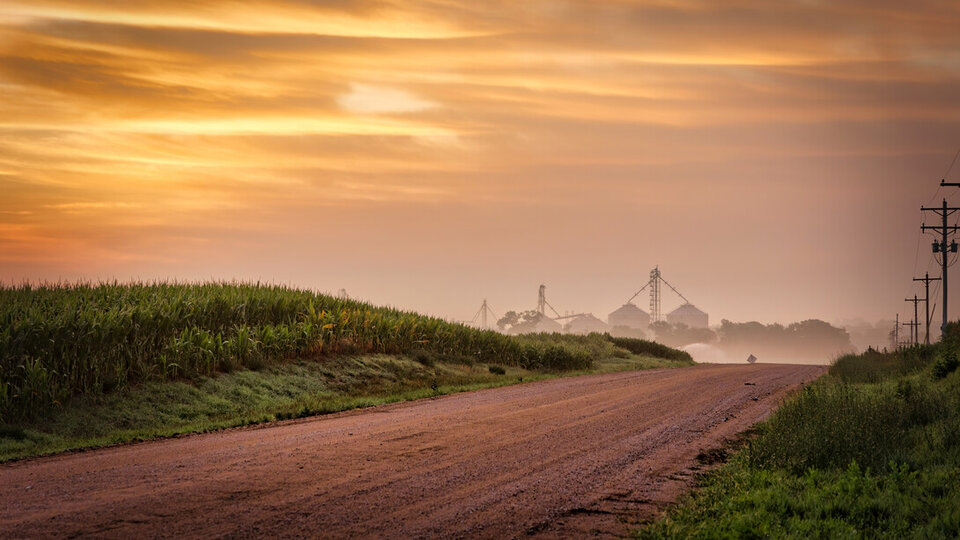
“Presently we saw a curious thing: There were no clouds, the sun was going down in a limpid, gold-washed sky. Just as the lower edge of the red disc rested on the high fields against the horizon, a great black figure suddenly appeared on the face of the sun… the handles, the tongue, the share—black against the molten red. The fields below us were dark, and the sky was growing pale, and that forgotten plough had sunk back to its own littleness somewhere on the prairie.” — Willa Cather (My Antonia, 1918)
April 24, 2020: NU regents greenlight $600M Memorial Stadium rebuild and renovations
Nebraska Electric Transmission Rules and Regulations
A real-life love story ❤️
After Nebraska’s win, TE @lukelindenmeyer proposed to his girlfriend, Kailyn! 🤩#NCAAFB x 📷 @HuskerFootball
— NCAA (@NCAA) September 8, 2025
This content is accessible to paid subscribers. To view it please enter your password below or send mike@standardsmichigan.com a request for subscription details.
Standards West Virginia | 2024 Net Position $2.586B (Page 26) | Master Plans
West Virginia University is integrated with the city of Morgantown in a way that shares some strong similarities with many European universities, though not identically in every aspect.
Many classic European universities (e.g., in cities like Oxford, Cambridge, Bologna, Paris/Sorbonne, Heidelberg, or Utrecht) are deeply embedded in their urban fabric. Buildings are often scattered throughout the historic city center, with lecture halls, libraries, and administrative spaces intermixed among shops, residences, cafes, and public streets rather than being confined to a walled-off or peripheral “campus.”
In Morgantown the university and city feel like one continuous, walkable entity — the institution essentially helped shape or co-evolved with the town over centuries, creating a seamless “town-gown” blend where university life spills directly into city life and vice versa.
West Virginia University Drinking Water Sanitation Program
Did you grab a photo tonight with one of our four Mountaineer finalists? 🤳 pic.twitter.com/99fXWs5lF2
— WVU Mountaineers · Let’s Go! (@WestVirginiaU) February 19, 2026
It’s an electric feeling when 60,000 of your closest friends lock arms and sing together as one.
When the Coliseum goes dark, and swirls of gold and blue flood the stands.@CharlesWesleyG‘s anthem captures the incredible feeling of being a Mountaineer. https://t.co/kqApoC4VdU pic.twitter.com/zMzI2Znms3
— WVU Mountaineers · Let’s Go! (@WestVirginiaU) November 24, 2025
West Virginia University is cutting over 140 faculty and gutting its liberal arts programs, but it still has money for training sessions on implicit bias, microaggressions, and DEI in research. pic.twitter.com/DYoTk8RjTL
— Steve McGuire (@sfmcguire79) February 12, 2024
Flagship public universities likely to cut more humanities, staff — especially in rural states
WVU walks it off & has the entire stadium singing Country Roads
Chills pic.twitter.com/T5Ng4bP3mw
— Barstool Sports (@barstoolsports) June 2, 2026
New update alert! The 2022 update to the Trademark Assignment Dataset is now available online. Find 1.29 million trademark assignments, involving 2.28 million unique trademark properties issued by the USPTO between March 1952 and January 2023: https://t.co/njrDAbSpwB pic.twitter.com/GkAXrHoQ9T
— USPTO (@uspto) July 13, 2023
Standards Michigan Group, LLC
2723 South State Street | Suite 150
Ann Arbor, MI 48104 USA
888-746-3670