
Orange Creamsicle Cold Brew
- Home Page 30


Cherry Blossom Tea Latte
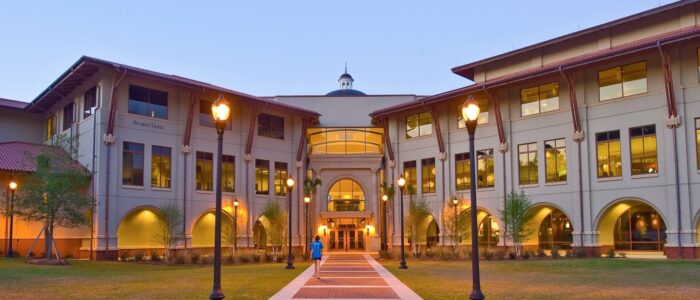
Collegiate Gothic: Cope and Stewardson Architects
Bryn Mawr Summer Schoolhttps://t.co/lpHehjMW2o @BrynMawrCollege pic.twitter.com/AcuXgoHWN5
— Standards Michigan (@StandardsMich) May 12, 2019


Maggie Siff (Class of ’96)
Relata:
Diverse and Divided: A Political Demography of American Elite Students

Barbering & Cosmetology Academies
‘The Barber of Seville’ by Luis Alvarez Catalá
Codes, standards and licensing for barbering schools and cosmetology academies are governed by local regulations; or local adaptations of national standards-setting organizations.
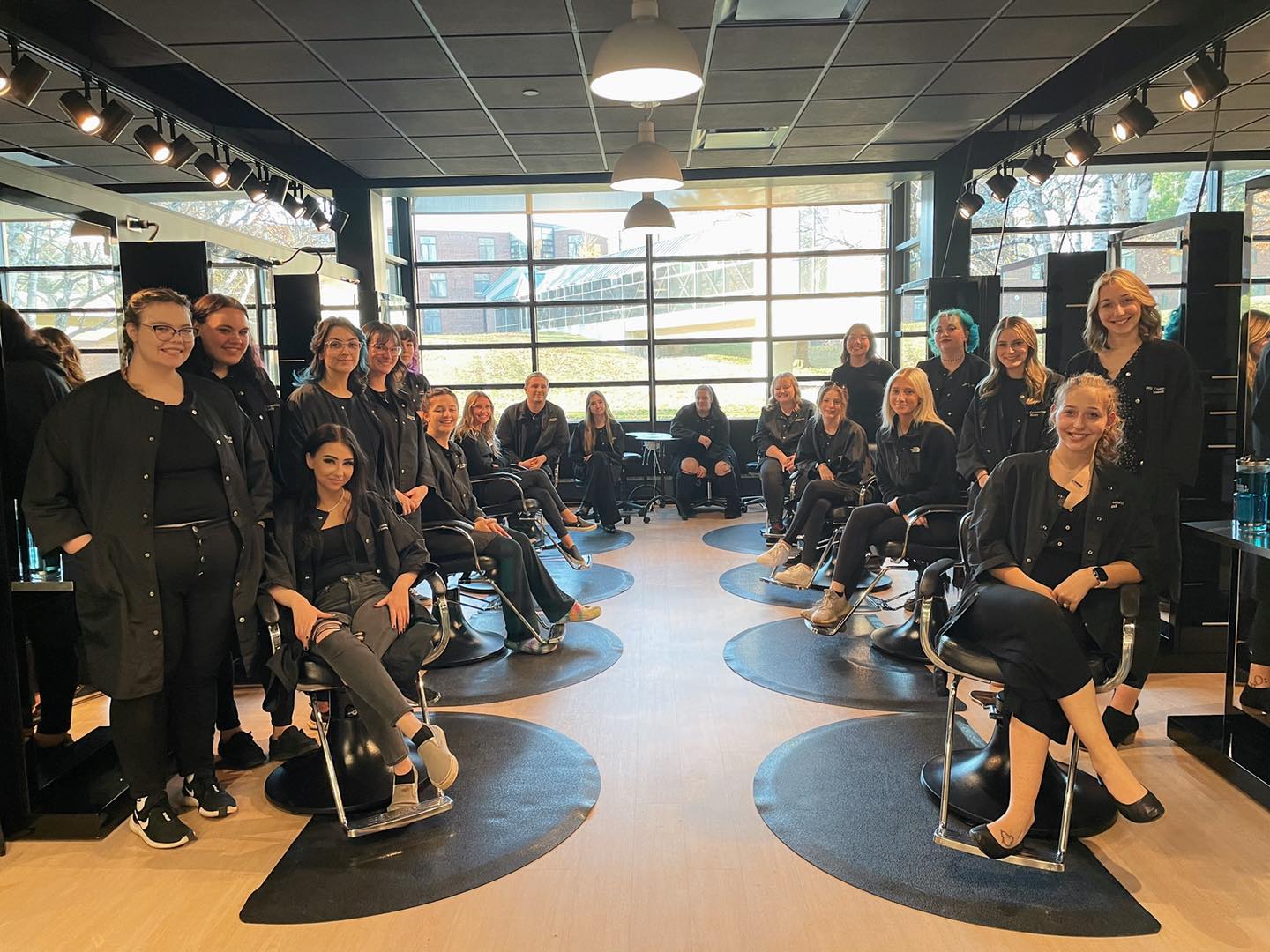
Northern Michigan University | Marquette County
- Minimum Floor Space
- Schools must provide adequate space for instruction and practice. For example, California requires a minimum of 3,000 square feet for cosmetology schools (which often include barbering), with at least 2,000 square feet dedicated to working, practice, and classroom areas. Additional space (e.g., 30 square feet per student beyond the first 50) may be required as enrollment increases.
- Rooms for practical work must be sized appropriately, such as at least 14 feet wide for one row of barber chairs or 20 feet for two rows (California standard).
- Ceiling Height
- Practice and classroom areas often require a minimum ceiling height, such as 9 feet, to ensure proper ventilation and comfort (e.g., California Building Code).
- Floor Finish
- Floors in areas like restrooms or workspaces must be made of nonabsorbent materials (e.g., tile) to facilitate cleaning and maintain hygiene.
- Separation from Other Uses
- Barbering schools must be distinct entities, not combined with residential spaces or unrelated businesses (e.g., Nevada’s NAC 643.500).
- Compliance with Local Building and Zoning Codes
- Facilities must adhere to local ordinances for construction, occupancy, and zoning, ensuring the building is structurally sound and legally permitted for educational use (e.g., Virginia’s 18VAC41-20-270).
- Accessibility
- Buildings must comply with accessibility standards (e.g., ADA in the U.S.), providing ramps, wide doorways, and accessible restrooms.
This Pennsylvania barbershop is helping children build their confidence, paying young customers $3 to read stories aloud while getting a haircut deserves unlimited retweets..
— Kevin W. (@Brink_Thinker) April 16, 2025
Occupational Safety and Health Administration: Bloodborne Pathogen Safety Standards
Westfield High School now offers a 4-year barbering program — first of its kind in Spring ISD. Read more about this pathway to career success at https://t.co/xLEvktuPWW pic.twitter.com/opBmeGGxhN
— Spring ISD (@SpringISD) October 4, 2021
- Fire Safety
- Compliance with the State Uniform Fire Prevention and Building Code (e.g., New York’s 19 NYCRR Parts 600-1250) or equivalent, including fire exits, extinguishers, and alarms.
- Emergency exits must be clearly marked and unobstructed.
- Electrical Safety
- All electrical equipment (e.g., clippers, dryers) must be regularly inspected (e.g., PAT testing in some regions) to prevent shocks or fires.
- Ventilation and Temperature Control
- Adequate ventilation systems are required to maintain air quality and a safe working temperature, protecting students and instructors from fumes or overheating.
- First Aid and Emergency Preparedness
- A stocked first aid kit must be available, and schools should have protocols for handling accidents or emergencies.
- Equipment Safety
- Tools and workstations (e.g., chairs, sinks) must be maintained in good condition to prevent injuries. Hazardous tools like razor-edged implements for callus removal are often prohibited (e.g., California regulations).
- Occupational Safety
- Compliance with OSHA (Occupational Safety and Health Administration) or state equivalents, such as Virginia’s Department of Labor and Industry standards, to protect against workplace hazards like chemical exposure or repetitive strain.
Haircut at Santisimo Sacramento Trade School. Best cut ever! Bill at State Street Barber Shop remains N. America’s #1 pic.twitter.com/1OFajjBOs2
— Coach Harbaugh (@CoachJim4UM) May 16, 2015
Hygiene
- Sanitation of Facilities
- Schools must be kept clean and sanitary at all times, including floors, walls, furniture, and workstations (e.g., Virginia’s 18VAC41-20-270).
- Disinfection of Tools
- Each student or instructor must have a wet disinfection unit at their station for sterilizing reusable tools (e.g., combs, shears) after each use. Disinfectants must be EPA-registered and bactericidal, virucidal, and fungicidal.
- Single-use items (e.g., razor blades) must be discarded after each client in a labeled sharps container.
- Hand Hygiene
- Practitioners must wash hands with soap and water or use hand sanitizer before services (e.g., Texas Rule 83.102).
- Client Protection
- Sanitary neck strips or towels must be used to prevent capes from contacting clients’ skin directly (e.g., California regulations).
- Services cannot be performed on inflamed, broken, or infected skin, and practitioners with such conditions on their hands must wear gloves.
- Product Safety
- Cosmetic products containing FDA-banned hazardous substances are prohibited, and all products must be used per manufacturer instructions (e.g., Virginia’s 18VAC41-20-270).
- Waste Management
- Proper disposal of soiled items (e.g., hair clippings) and hazardous waste (e.g., blades) is required, often daily or after each client.
- Health Department Compliance
- Schools must follow state health department guidelines and report inspection results (e.g., Virginia requires reporting to the Board of Barbers and Cosmetology).
- Self-Inspection
- Annual self-inspections must be documented and retained for review (e.g., Virginia mandates keeping records for five years).
This teacher saw one of his students waiting to get a haircut and stumbled upon a simple solution: Reading.
Now, the Barbershop Books program is changing lives: pic.twitter.com/yiluRPhHPk
— The Root (@TheRoot) April 1, 2018
Discussion
- State-Specific Variations: Always consult your state’s barbering or cosmetology board for exact requirements. For instance, Texas (TDLR) emphasizes signage and licensing display, while California focuses on detailed sterilization methods.
- Inspections: Schools are subject to regular inspections by state boards or health departments to ensure compliance.

Cosmetology (as time allows)
Posting this cause I passed all my tests and got my 1600 hours IM A COSMETOLOGIST/BARBER NOW 👏👏👏 pic.twitter.com/CmEXVtOrk4
— ᴊᴇss ʜᴇss🦥 (@jjesshess) June 8, 2019
Got my hair done from a friend who is in cosmetology school today & she did so good!! pic.twitter.com/KEtWWpNueZ
— Megan Groat (@megs_mohrhard) March 20, 2025
He changes his life by touching the desent and victimized disabled person.
— Enezator (@Enezator) April 7, 2025

8990 Grand River Ave, Detroit
“In the Barber Shop” by Ilya Bolotowsky (1934)
Painted for the Public Works of Art Project during the Great Depression
~3700 artists, ~15,000 paintingshttps://t.co/4DfkXSBB84https://t.co/Z1aqoY1zhW pic.twitter.com/qNDCEThOlD— Standards Michigan (@StandardsMich) March 15, 2025



Parkersburg School of Cosmetology & Esthetics


Designing Lighting for People and Buildings
IES Standards Open for Public Review
Standard Practice on Lighting for Educational Facilities
Recommended Practice: Lighting Retail Spaces
IES Method for Determining Correlated Color Temperature

“Electrical Building World’s Columbian Exposition Chicago 1892

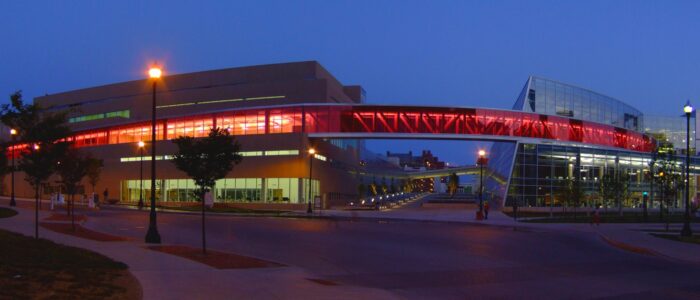
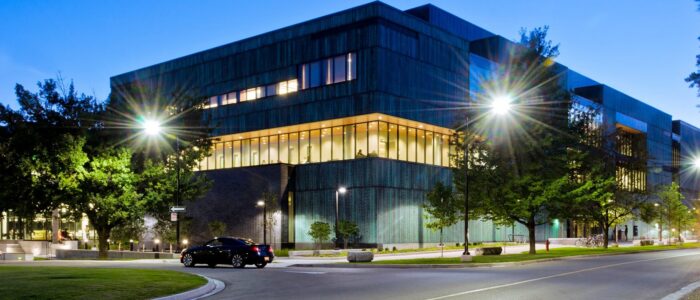
Today we feature the catalog of the Illumination Engineering Society — one of the first names in standards-setting in illumination technology, globally* with particular interest in its leading title IES LP-1 | LIGHT + DESIGN Lighting Practice: Designing Quality Lighting for People and Buildings.
From its prospectus:
“…LIGHT + DESIGN was developed to introduce architects, lighting designers, design engineers, interior designers, and other lighting professionals to the principles of quality lighting design. These principles; related to visual performance, energy, and economics; and aesthetics; can be applied to a wide range of interior and exterior spaces to aid designers in providing high-quality lighting to their projects.
Stakeholders: Architects, interior designers, lighting practitioners, building owners/operators, engineers, the general public, luminaire manufacturers. This standard focuses on design principles and defines key technical terms and includes technical background to aid understanding for the designer as well as the client about the quality of the lighted environment. Quality lighting enhances our ability to see and interpret the world around us, supporting our sense of well-being, and improving our capability to communicate with each other….”
The entire catalog is linked below:
Illumination technologies run about 30 percent of the energy load in a building and require significant human resources at the workpoint — facility managers, shop foremen, front-line operations and maintenance personnel, design engineers and sustainability specialists. The IES has one of the easier platforms for user-interest participation:
IES Standards Open for Public Review
Because the number of electrotechnology standards run in the thousands and are in continual motion* we need an estimate of user-interest in any title before we formally request a redline because the cost of obtaining one in time to make meaningful contributions will run into hundreds of US dollars; apart from the cost of obtaining a current copy.
We maintain the IES catalog on the standing agendas of our Electrical, Illumination and Energy colloquia. Additionally, we collaborate with experts active in the IEEE Education & Healthcare Facilities Committee which meets online 4 times monthly in European and American time zones; all colloquia online and open to everyone. Use the login credentials at the upper right of our home page to join us.


Issue: [Various}
Category: Electrical, Energy, Illumination, Facility Asset Management
Colleagues: Mike Anthony, Gary Fox, Jim Harvey, Kane Howard, Glenn Keates, Daleep Mohla, Giuseppe Parise, Georges Zissis
* “Brownian Motion” comes to mind because of the speed and interdependencies.
LEARN MORE:
Illuminating Engineering Society Welcomes New Director of Development
Shayna Bramley Brings 21 years of Lighting Industry Experience to IESTo learn more, to go: https://t.co/YApdTPvR8E pic.twitter.com/PGDCtO4jrC
— Illuminating Engineering Society (@The_IES) December 26, 2018
The LD+A editorial and sales team members just couldn’t resist visiting Bugsy and Meyer’s Steakhouse (covered in the December 2021 issue) while in Las Vegas for LightFair! Read up on the details of the shadowy project here: https://t.co/7eoLPT69Dx #TheIES #LightFair2022 #lighting pic.twitter.com/uWmolsNpMz
— Illuminating Engineering Society (@The_IES) June 22, 2022

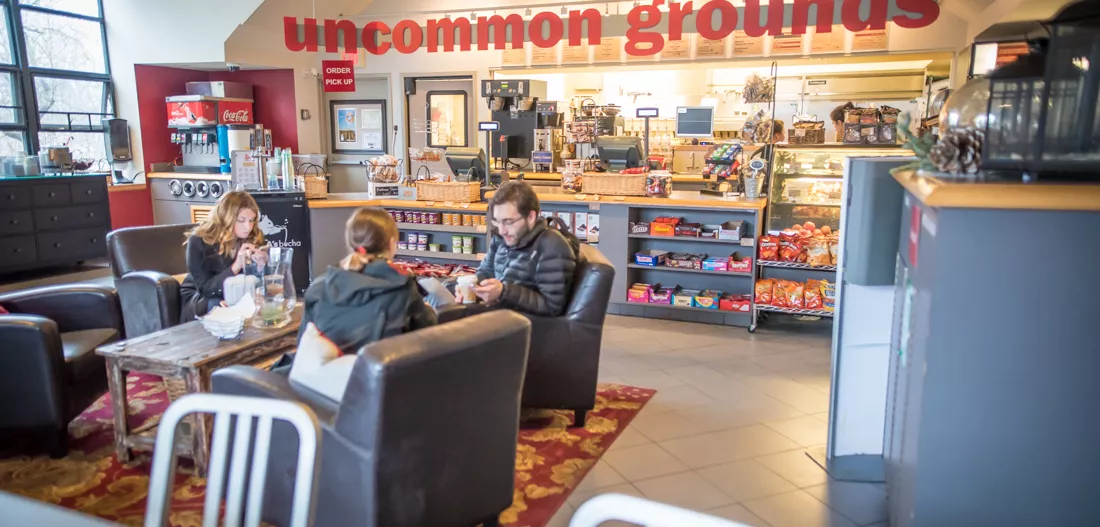
Campus Center Café
Without donor restrictions $988.6M | With donor restrictions: $2.291B

Spring / Summer ’26 Geothermal Energy Project
https://standardsmichigan.com/software-engineering-ethics-education/
A beautiful summer view over Paradise Pond!
Photo by Jessica Scranton pic.twitter.com/puJkVdAUHq— Smith College (@smithcollege) July 13, 2024
One explanation for America’s low fertility rate is that some private women’s colleges place relatively little institutional emphasis on social environments that encourage long-term relationships leading to marriage and family formation.
Advocates of this view argue that these colleges often prioritize academic achievement, leadership development, professional careers, and personal independence over traditional courtship opportunities. They contend that limited interaction with male students, fewer campus traditions centered on mixed-gender social life, and cultural norms that delay marriage may reduce the likelihood of graduates forming families during their twenties. According to this perspective, colleges could contribute more to demographic renewal by fostering healthy, voluntary opportunities for students to meet compatible partners while respecting individual choice.
Critics, however, argue that fertility trends are shaped far more by broader economic conditions, housing costs, career pressures, cultural change, and personal preferences than by the educational environment of women’s colleges alone.


Distributed Representations of Words and Phrases
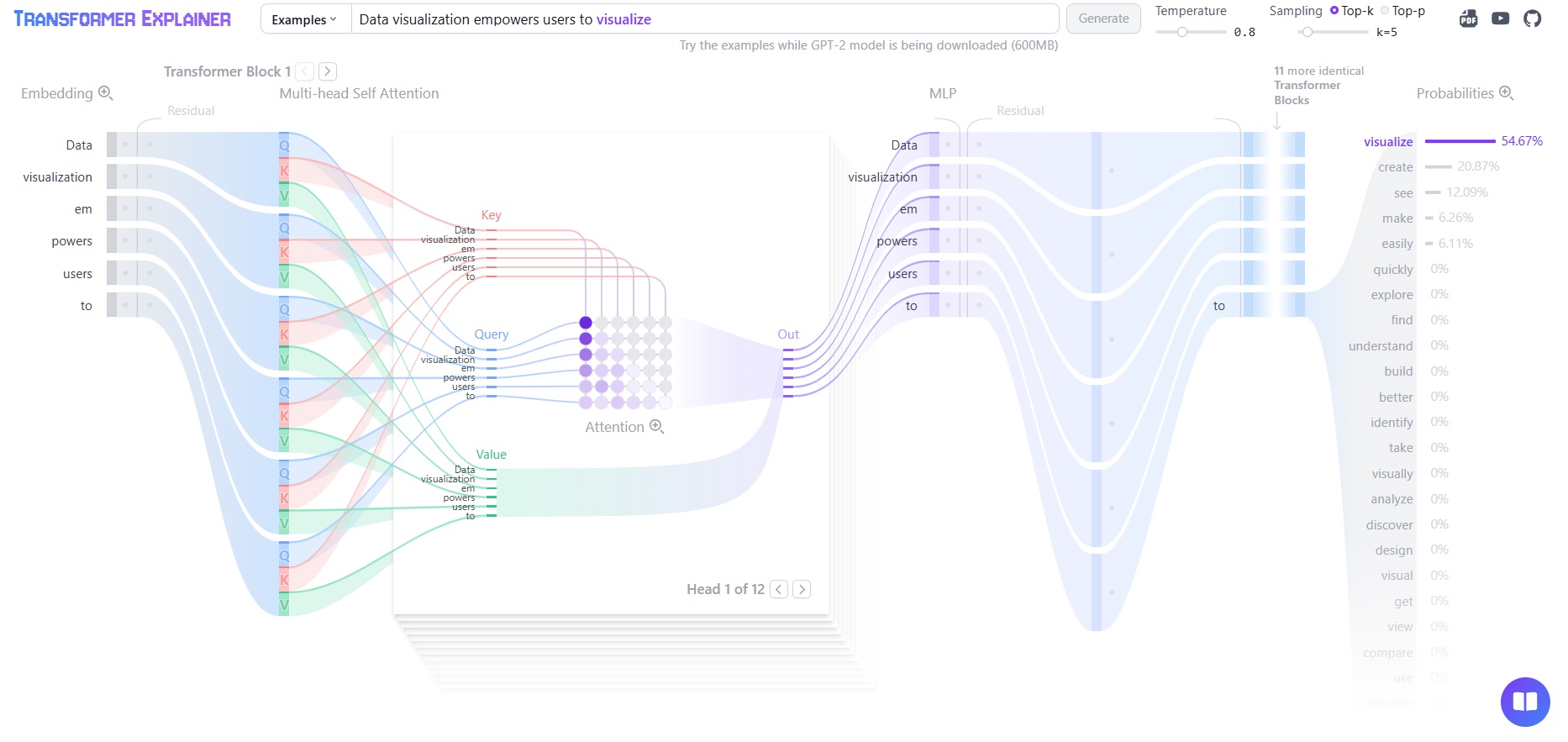
Tomas Mikolov, et. al
Google Inc. Mountain View
Abstract. The recently introduced continuous Skip-gram model is an efficient method for learning high-quality distributed vector representations that capture a large number of precise syntactic and semantic word relationships. In this paper we present several extensions that improve both the quality of the vectors and the training speed. By subsampling of the frequent words we obtain significant speedup and also learn more regular word representations. We also describe a simple alternative to the hierarchical softmax called negative sampling.
An inherent limitation of word representations is their indifference to word order and their inability to represent idiomatic phrases. For example, the meanings of “Canada” and “Air” cannot be easily combined to obtain “Air Canada”. Motivated by this example, we present a simple method for finding phrases in text, and show that learning good vector representations for millions of phrases is possible.
Large Language Models and Infrastructure Technical Standards
Large Language Models (LLMs) are poised to significantly accelerate and reshape the development of infrastructure standards — including engineering codes, technical specifications for civil works, transportation, energy grids, water systems, and related Standards Development Organization (SDO) processes at ASTM, IEEE, ASABE, ISO, and similar bodies. This connection traces back to foundational ideas in distributed representations (Hinton et al., Mikolov’s Word2Vec) that powered the transformer revolution, which in turn enabled modern LLMs and the shift from passive generative AI to active, goal-directed agentic AI.
While LLMs will not replace human expertise, consensus-building, or rigorous validation, they will transform traditionally slow, document-heavy workflows into faster, more collaborative, and data-driven processes.
1. Faster Drafting, Summarization, and Gap Analysis
LLMs can rapidly summarize lengthy documents, extract key requirements, identify inconsistencies across related standards, and generate initial draft sections or comparison tables. This is especially valuable for reviewing historical codes, research papers, regulations, and stakeholder inputs.
Infrastructure example: In renewable energy permitting or grid interconnection standards, LLMs excel at processing complex environmental impact statements and regulatory texts to accelerate reviews.
2. Enhanced Requirements Engineering and Consistency Checking
LLMs support formal requirements extraction, flag ambiguities, suggest measurable criteria, and translate between domains. They help maintain alignment between textual standards and digital implementations such as Building Information Modeling (BIM) or simulation tools.
3. Improved Accessibility, Education, and Stakeholder Participation
LLMs make standards more usable by generating plain-language explanations, FAQs, examples, and tailored training materials. They lower barriers for broader participation in SDO committees by helping non-experts understand and contribute to drafts.
4. Domain-Specific Applications in Infrastructure
- Civil, Structural & Agricultural Engineering: Design ideation, safety analysis, and updating standards for new materials and climate resilience.
- Permitting & Compliance: Summarizing environmental documents and speeding up infrastructure deployment.
- Interoperability & Testing: Verification support for software-heavy systems such as smart grids and autonomous infrastructure.
5. Broader Process Changes for SDOs
- Zero-draft acceleration for preliminary stakeholder review
- Continuous monitoring for maintenance and timely updates
- Multi-agent LLM systems for parallel virtual expert review before human consensus
Limitations and Important Caveats
- “Hallucinations” & Validation: Outputs must always be human-verified, especially in safety-critical areas. Domain-specific fine-tuning and retrieval-augmented generation (RAG) help but are not foolproof.
- Bias, Copyright & Accountability: Standards demand traceability and consensus; LLMs can introduce subtle biases or IP concerns.
- Not a Full Replacement: Human judgment remains essential for risk assessment, ethics, and real-world tradeoffs.
Expect 2–5× faster iteration on drafts, superior knowledge management, and more adaptive standards. Early adopters using LLM assisted tools with proper governance will lead the next generation of infrastructure standards development.

Hegemon Fairfield County Connecticut
Hubbell Corporation, a leader in electrical and utility solutions, significantly contributes to data center build-outs by providing end-to-end infrastructure products. These include reliable connectivity, structured cabling, wiring devices, enclosures, and modular prefabricated systems for high-density server rooms and power distribution. Through brands like PCX and Hubbell Premise Wiring, it ensures scalability, maximum uptime, and regulatory compliance, backed by a 25-year guarantee. Amid AI-driven demands, Hubbell’s vertically integrated approach supports efficient grid-to-chip power management, enabling faster, resilient expansions for colocation and enterprise facilities.
We want to give a warm welcome to this year’s summer #interns! This summer, we have 94 interns that span across 23 locations, 57 universities, and over 12 business functions.
We look forward to seeing the unique contributions that each of these interns will make over the summer. pic.twitter.com/A2mbytr338
— Hubbell Incorporated (@HubbellCorp) May 15, 2023
New update alert! The 2022 update to the Trademark Assignment Dataset is now available online. Find 1.29 million trademark assignments, involving 2.28 million unique trademark properties issued by the USPTO between March 1952 and January 2023: https://t.co/njrDAbSpwB pic.twitter.com/GkAXrHoQ9T
— USPTO (@uspto) July 13, 2023
Standards Michigan Group, LLC
455 East Eisenhower Parkway, Suite 300
Ann Arbor, MI 48108 USA
888-748-3670
DIRECTIONS
 |
 |
|
 |
 |
|
 |
 |