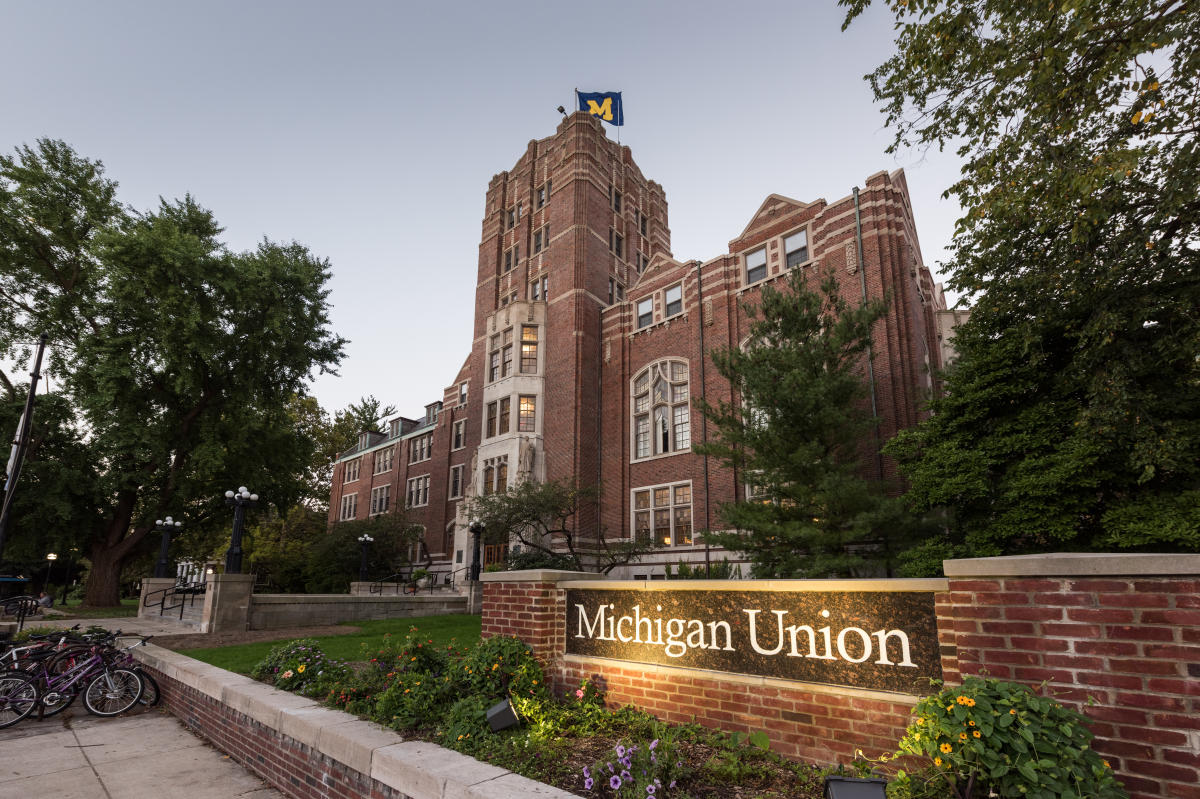
Most educational settlements are not overloaded by signage by design but distracted management (overlapping temporary signs, inconsistent styles) or large footprints supports the perception. Today at the usual hour we explore the literature covering exterior and interior signage with emphases on coherence and necessity.
Signage must align with the educational institution’s brand identity, including logos, colors, and typography (e.g., Helvetica font is often specified, as seen in some university standards).
Corporate logos are typically prohibited on primary exterior signage to maintain institutional focus.
Compliance with Local Zoning and Building Codes
Signs must adhere to municipal zoning regulations, which dictate size, height, placement, and illumination (e.g., NYC Building Code Appendix H or similar local codes).
Permits may be required, and signage must not obstruct traffic visibility or pedestrian pathways.
ADA Accessibility Requirements
Exterior signs identifying permanent spaces (e.g., entrances or exits) must meet Americans with Disabilities Act (ADA) standards, including visual character requirements (legible fonts, sufficient contrast).
Tactile signs with Braille are required at specific locations like exit stairways or discharge points, per the U.S. Access Board guidelines, though not all exterior signs need to be tactile.
Wayfinding and Identification Functionality
Signs should clearly identify buildings, provide directional guidance, and include essential information (e.g., building names, departments, or campus districts).
Placement is typically near main entrances, limited to one per building unless otherwise justified.
Material and Durability Standards
Materials must be weather-resistant and durable (e.g., extruded or cast aluminum with finishes like natural or dark bronze, avoiding plastic in some cases).
Maintenance considerations ensure longevity and legibility over time.
Size and Placement Restrictions
Size is often regulated (e.g., no larger than necessary for legibility, with some institutions capping temporary signs at 32 square feet).
Placement avoids upper building portions unless in urban settings or campus peripheries, ensuring aesthetic harmony.
Approval and Review Processes
Exterior signage often requires review by a campus design or sign committee (e.g., a university’s Design Review Board).
For partnerships or donor-funded buildings, a Memorandum of Understanding (MOU) may govern signage rights and standards.
Safety and Visibility Standards
Signs must not create hazards (e.g., minimum clearance of 7.5 feet above walkways, no sharp edges).
Illumination, if allowed, must comply with safety codes and enhance visibility without causing glare or distraction.
Temporary Signage Regulations
Temporary signs (e.g., banners or construction signs) have time limits (e.g., 30-90 days per year) and must be approved, with size and frequency restrictions. The National Electrical Code Article 590 covers temporary wiring for festoon illumination and defines “temporary” as 90 days.
Somewhat Related:
Before CAD, Architect wrote like this. A handwriting everyone could understand. pic.twitter.com/dYyIJMNsOx
IEEE English for Technical Professionals is a 14-hour online learning program designed to provide non-native English speakers with a working knowledge of English techniques and vocabulary that are essential for working in today’s technical workplace.
“It is a trite but true observation, that examples work more forcibly on the mind than precepts: and if this be just in what is odious and blameable, it is more strongly so in what is amiable and praiseworthy. Here emulation most effectually operates upon us, and inspires our imitation in an irresistible manner. A good man therefore is a standing lesson to all his acquaintance, and of far greater use in that narrow circle than a good book.
But as it often happens that the best men are but little known, and consequently cannot extend the usefulness of their examples a great way; the writer may be called in aid to spread their history farther, and to present the amiable pictures to those who have not the happiness of knowing the originals; and so, by communicating such valuable patterns to the world, he may perhaps do a more extensive service to mankind than the person whose life originally afforded the pattern…”
Since so much of what we do in standards setting is built upon a foundation of a shared understanding and agreement of the meaning of words (no less so than in technical standard setting) that time is well spent reflecting upon the origin of the nouns and verbs of that we use every day. Best practice cannot be discovered, much less promulgated, without its understanding secured with common language.
US academia has increasingly mirrored the dystopian control mechanisms in George Orwell’s 1984, particularly through the lens of Critical Race Theory (CRT) and its extensions into Diversity, Equity, and Inclusion (DEI) frameworks.
In Orwell’s novel, the Party enforces ideological conformity via Newspeak (a restricted language that limits thought), doublethink (holding contradictory beliefs), thoughtcrime (punishing unapproved ideas), and the rewriting of history to serve power.
CRT posits that racism is embedded in the structure of Western institutions. It rejects colorblindness and meritocracy as tools of “white supremacy,” framing individuals primarily by racial identity — oppressors versus the oppressed. In universities, this has evolved into mandatory trainings, curricula, and loyalty tests that prioritize “equity” (equal outcomes by group) over equality of opportunity.
Key Orwellian parallels include:
Language control resembling Newspeak: terms like “systemic racism,” “white fragility,” “microaggressions,” and “anti-racism” redefine reality so that disagreement signals complicity in oppression.
Doublethink: universities champion “diversity” while enforcing ideological uniformity, claiming to fight oppression while stigmatizing dissent as violence.
Thoughtcrime via cancel culture: surveys show high rates of self-censorship, with dissenting scholars facing social ostracism, investigations, or professional consequences.
History is reframed — America’s founding reduced to perpetual racial hierarchy — echoing the Ministry of Truth. Standpoint epistemology elevates “lived experience” of favored groups over empirical evidence and universal reason.
This agenda undermines academia’s core purpose: the pursuit of truth through open debate and evidence. Instead of rigorous inquiry, power — framed as “punching up” — dictates acceptable thought, eroding liberal education’s commitment to individualism and free expression.
This content is accessible to paid subscribers. To view it please enter your password below or send mike@standardsmichigan.com a request for subscription details.
Because electrotechnology changes continually, definitions (vocabulary) in its best practice literature changes continually; not unlike any language on earth that adapts to the moment and place.
The changes reflect changes in technology or changes in how the technology works in practice; even how the manufacturers create adaptations to field conditions by combining functions. Any smart electrical component has a digital language embedded in it, for example.
Consider the 2023 National Electrical Code. Apart from many others the NEC will contain a major change to Article 100 (Definitions); the subject of elevated debate over the past three years.
When we refer “language” we must distinguish between formal language, informal language, colloquial language and dialect which may differ the language spoken, language written at the office and language used on the job site. “Terms of art”
Are these terms (or, “terms of art”) best understood in context (upstream articles in Chapters 4 through 8) — or should they be adjudicated by the 14 Principals of Code Making Panel 1? The answer will arrive in the fullness of time. Many changes to the National Electrical Code require more than one cycle to stabilize.
Code Making Panel 1 has always been the heaviest of all NEC panels. As explained n our ABOUT, the University of Michigan held a vote in CMP-1 for 20+ years (11 revision cycles) before moving to the healthcare facilities committee for the IEEE Education & Healthcare Facilities Committee. Standards Michigan continues its involvement on behalf of the US education facility industry — the second largest building construction market. There is no other pure user-interest voice on any technical committee; although in some cases consulting companies are retained for special purposes.
To serve the purpose of making NFPA 70 more “useable” we respect the Standards Council decision to make this change if it contributes to the viability of the NFPA business model. We get to say this because no other trade association comes close to having as enduring and as strong a voice: NFPA stands above all other US-based SDO’s in fairness and consideration of its constituency. The electrical safety community in the United States is a mighty tough crowd.
If the change does not work, or work well enough, nothing should prohibit reversing the trend toward “re-centralizing” — or “de-centralizing” the definitions.
Public comment on the First Draft of the 2026 Edition will be received until August 28, 2024.
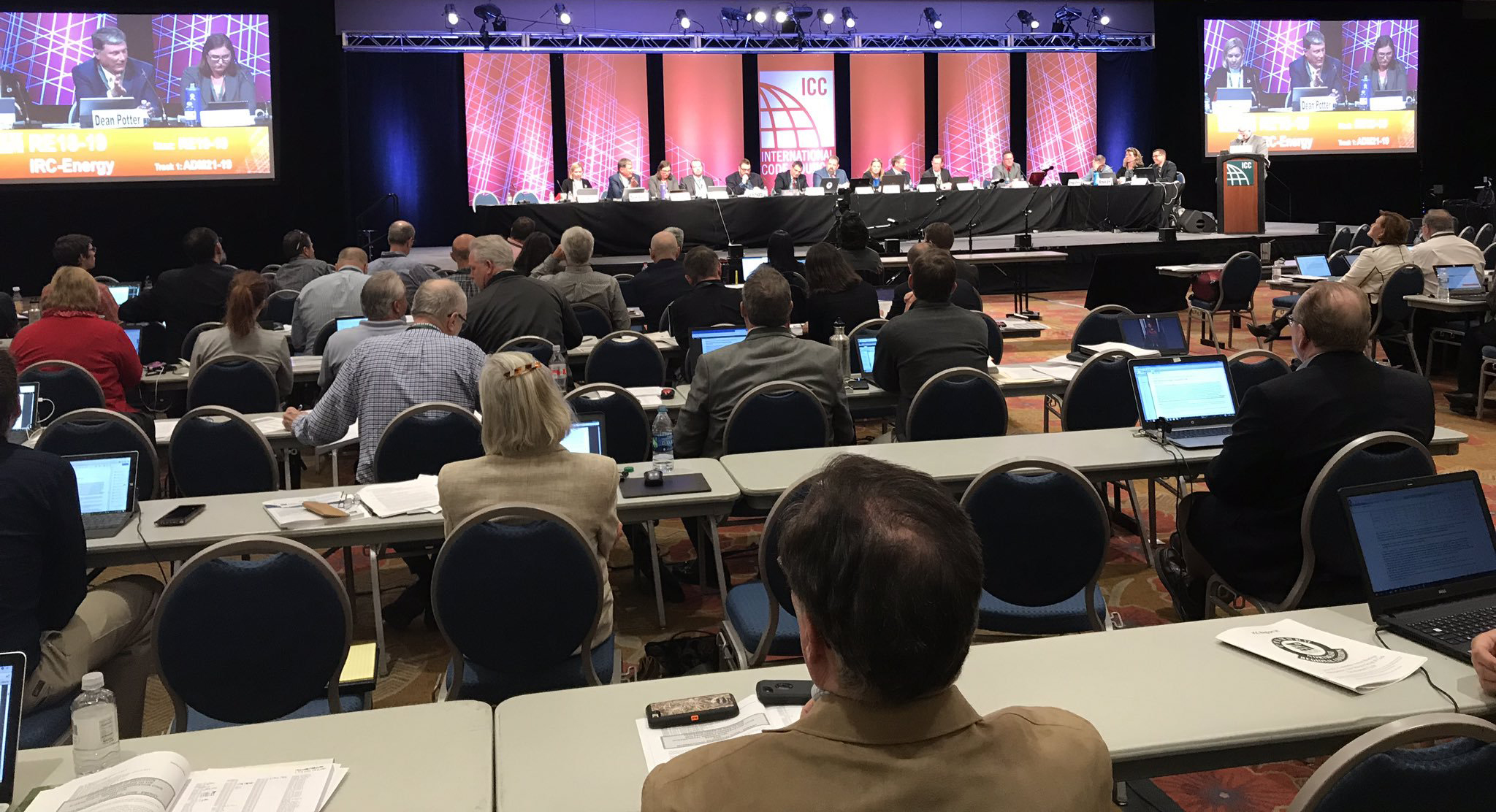
Technical Committees meet during the last half of October to respond to public comment on the First Draft of the 2026 National Electrical Code.
The Society of College and University Planning was founded in 1965 at the University of Michigan in Ann Arbor during an informal gathering of campus planners frustrated with the lack of professional exchange in their emerging field. Rapid postwar enrollment growth and massive campus expansion projects had created urgent needs for long-range physical planning, yet few institutions had dedicated planners or shared knowledge.
A small group, led by University of Michigan planners George J. Bruha and Frederick W Mayer met in Ann Arbor to discuss common challenges facing other State of Michigan settlements; joined by Stanford, Ohio State and the University of Illinois. They decided to create a formal organization to foster collaboration, research, and professional development. In 1966, with Michigan’s support, SCUP was officially established as a nonprofit with its first office on the Ann Arbor campus. Its founding principle—integrated planning linking academics, finances, and facilities—remains central today.
Early operations benefited from administrative support (aegis) provided by the University of Michigan, including office space and resources in Ann Arbor. This arrangement persisted until a financial crisis in the late 1970s (1976–1980), during which SCUP relocated to New York.
The decoupling—marking full operational and administrative independence from the University of Michigan—occurred in 1980, when SCUP returned to Ann Arbor as a self-sustaining nonprofit headquartered at a separate location –1330 Eisenhower Place — less than a mile walk from Standards Michigan‘s front door at 455 East Eisenhower.
* Of the 220 ANSI Accredited Standards Developers, the State of Michigan ranks 3rd in the ranking of U.S. states with the most ANSI-accredited standards developers (ASDs) headquartered there; behind the Regulatory Hegemons of California and ChicagoLand and excluding the expected cluster foxtrot of non-profits domiciled in the Washington-New York Deep State Megalopolis. Much of Michigan’s presence in the private consensus standards space originates from its industrial ascendency through most of the 1900’s.
“The Tower of Babel” 1563 | Pieter Bruegel the Elder
Widely accepted definitions (sometimes “terms of art”) are critical in building codes because they ensure clarity, consistency, and precision in communication among architects, engineers, contractors, and regulators. Ambiguity or misinterpretation of terms like “load-bearing capacity,” “fire resistance,” “egress” or “grounding and bonding” could lead to design flaws, construction errors, or inadequate safety measures, risking lives and property.
“Standardized” definitions — by nature unstable — create a shared language that transcends local practices or jargon, enabling uniform application and enforcement across jurisdictions. Today at the usual hour we explore the nature and the status of the operational language that supports our raison d’êtreof making educational settlements safer, simpler, lower-cost and longer-lasting.
New update alert! The 2022 update to the Trademark Assignment Dataset is now available online. Find 1.29 million trademark assignments, involving 2.28 million unique trademark properties issued by the USPTO between March 1952 and January 2023: https://t.co/njrDAbSpwBpic.twitter.com/GkAXrHoQ9T