At the request of IEEE Joint IAS/PES Standards Michigan, Mike Anthony moved to CMP-3 from CMP-15.
Articles Under CMP 3
- Article 300 — General Requirements for Wiring Methods and Materials
- Article 335 — Instrumentation Tray Cable (in some references for the 2029 cycle)
- Article 590 — Temporary Installations (being relocated/renumbered in the 2026 cycle, e.g., potentially to Article 140 in Chapter 1, as temporary wiring is not treated as a special occupancy)
- Article 720 — Limited-Energy System Installations (new/general article covering wiring methods for limited-energy systems)
- Article 721 — Limited-Energy Power Sources
- Article 722 — Limited-Energy Cable (covers cables for power-limited, fault-managed, etc.)
- Article 723 — Raceways, Cable Routing Assemblies, and Cable Trays for Limited-Energy Systems (newly created in the 2026 cycle)
- Article 725 — Class 2 and Class 3 Remote-Control, Signaling, and Power-Limited Circuits
- Article 726 — Class 4 Fault-Managed Power Circuits and Equipment
- Article 727 — Instrumentation Tray Cable
- Article 728 — Fire-Resistive Cable Systems
- Article 760 — Fire Alarm Systems (power-limited and non-power-limited portions)
CMP 3 also handles associated content in: Chapter 9 — Tables, including Tables 11(A) & (B) and Tables 12(A) & (B) (related to conductor properties and other supporting tables for the above topics).
- Notes on Changes and Scope
CMP 3 focuses on general wiring rules, cable types, raceways/trays for low-energy applications, and signaling/communications-related wiring (distinct from higher-power utilization equipment or special occupancies handled by other panels). - In the 2026 NEC cycle, there has been significant reorganization of Chapter 7 to consolidate limited-energy systems under articles like 720–726 (and related ones), moving away from older structures. This includes new articles for raceways/cable trays specific to limited-energy systems and adjustments to scopes for clarity.
- Article 206 (Non-Power-Limited Remote-Control and Signaling Circuits) appears in some 2026-related references as newly designated or relocated material handled in this area.
Temporary installations (Article 590) are transitioning out of “special” categories in restructuring efforts.
During today’s sessions of the IEEE E&H Committee and our own we will prepare draft proposals relevant to the safety and sustainability agenda of the USA education facility industry. Use the login credentials at the upper right of our home page.
Brown University Electrical Design Criteria | Information Technology Resources Policy
Posted December 20, 2025
The University of Michigan has supported the voice of the United States education facility industry since 1993 — the second longest tenure of any voice in the United States. That voice has survived several organizational changes but remains intact and will continue its Safer-Simpler-Lower Cost-Longer Lasting priorities on Code Panel 3 in the 2029 Edition.
Today, during our customary “Open Door” teleconference we will examine the technical concepts under the purview of Code Panel 3; among them:
Article 206 Signaling Circuits
Article 300 General Requirements for Wiring Methods and Materials
Article 335 Instrumentation Tray Cable
Article 590 Temporary Installations
Chapter 7 Large sections of limited energy cabling for signaling and information technology
Chapter 9 Conductor Properties Tables 11A & B, Tables 12A&B
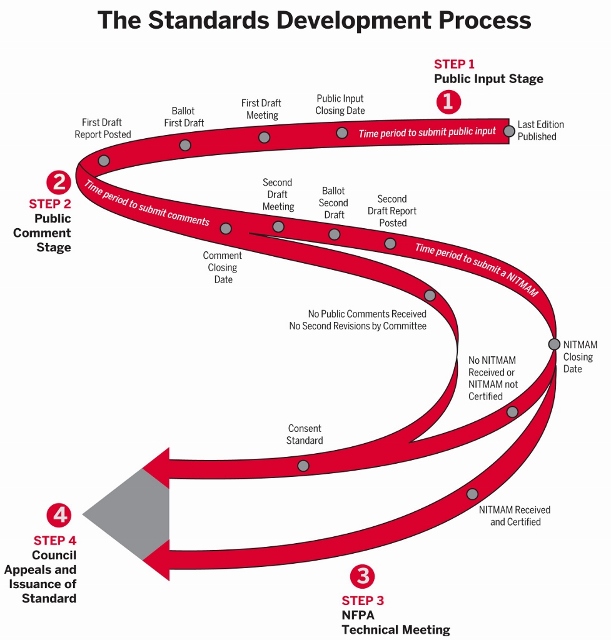
Public Input on the 2029 Edition will be received until April 9, 2026.
- Since the lifespan of educational buildings make the building core and shell susceptible to multiple changes not typically associated with commercial buildings, additional pathways should be placed in areas where the core and shell components of the facility are likely to re-main for extended periods of time
- It is recommended that all areas of an educational building have wireless coverage unless prohibited