


How much irreversible infrastructure should a society build when a technological competitor may be able to obsolete the demand for it faster than the infrastructure can recover its capital cost? Nobody has to behave maliciously for it to happen.
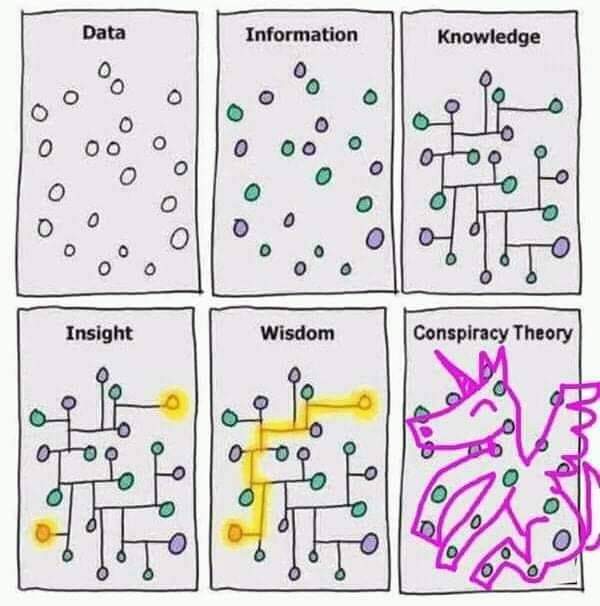
Engineering has always advanced by converting apparent limits into tractable problems. New technologies commonly arrive before the infrastructure, standards and operating experience needed to support them. Railways, electric power, telecommunications, aviation and computing each produced genuine hazards and public anxieties before engineers learned how to manage them.
Solutions emerged in the fullness of time through measurement, experiment, failure analysis, improved materials, better design and the patient development of technical standards. Data centers belong to this tradition. Their scale creates difficult problems of power, cooling, reliability and community infrastructure, but difficulty is not novelty. Engineering proceeds by defining constraints, testing alternatives and building workable solutions.
A few thoughts off the beaten path:
Stack the white space. Vertical construction has precedent in multi-story urban data centers. Consider three to five floors plus basements as a community land-use mitigation strategy. A smaller footprint leaves more land available for housing, recreation, landscape and other community uses.
PC’s can, and probably will, reduce AI data center sizes. There is a real literature behind this idea, although researchers usually call it edge AI, collaborative inference, distributed inference, AI PCs, device-edge-cloud computing or volunteer computing, rather than “moving data-center load onto desktops.”
Think of data centers as urban energy assets. A 2025 study models data centers not simply as loads but as “heat-active urban energy prosumers.” Using the EPFL campus in Lausanne, the authors find that flexible computing and district-heating integration can allow a data center to contribute materially to the surrounding energy system. This supports the larger proposition that a facility consuming extraordinary amounts of community infrastructure should return infrastructure value to its host community. Waste-heat recovery provides one route. Yuan et al. review integration of data-center heat into district-heating networks through heat pumps, thermal storage and related systems. Aalto University — Data Center Waste Heat for District Heating Networks
Every large technological build-out arrives before society has accumulated enough experience to distinguish durable engineering problems from speculative ones. Looking back to look forward: 5G/COVID-19 conspiracies and the long history of infrastructural fears
Look for novel secondary uses. Terenius, Garraghan and Harper consider data-center waste heat for buildings, agricultural and commodity processes, energy storage and other social uses. Their case studies deliberately place data centers within different community settings rather than treating them as isolated industrial loads. Frontiers — A Material Social View on Data Center Waste Heat
The community scale reliability problem is not new:
“Critical Operations Power Systems: Improving Risk Assessment in Emergency Facilities with Reliability Engineering,” IEEE Industry Applications Magazine. M. Anthony (University of Michigan), et. al





