

More


This content is accessible to paid subscribers. To view it please enter your password below or send mike@standardsmichigan.com a request for subscription details.
This content is accessible to paid subscribers. To view it please enter your password below or send mike@standardsmichigan.com a request for subscription details.
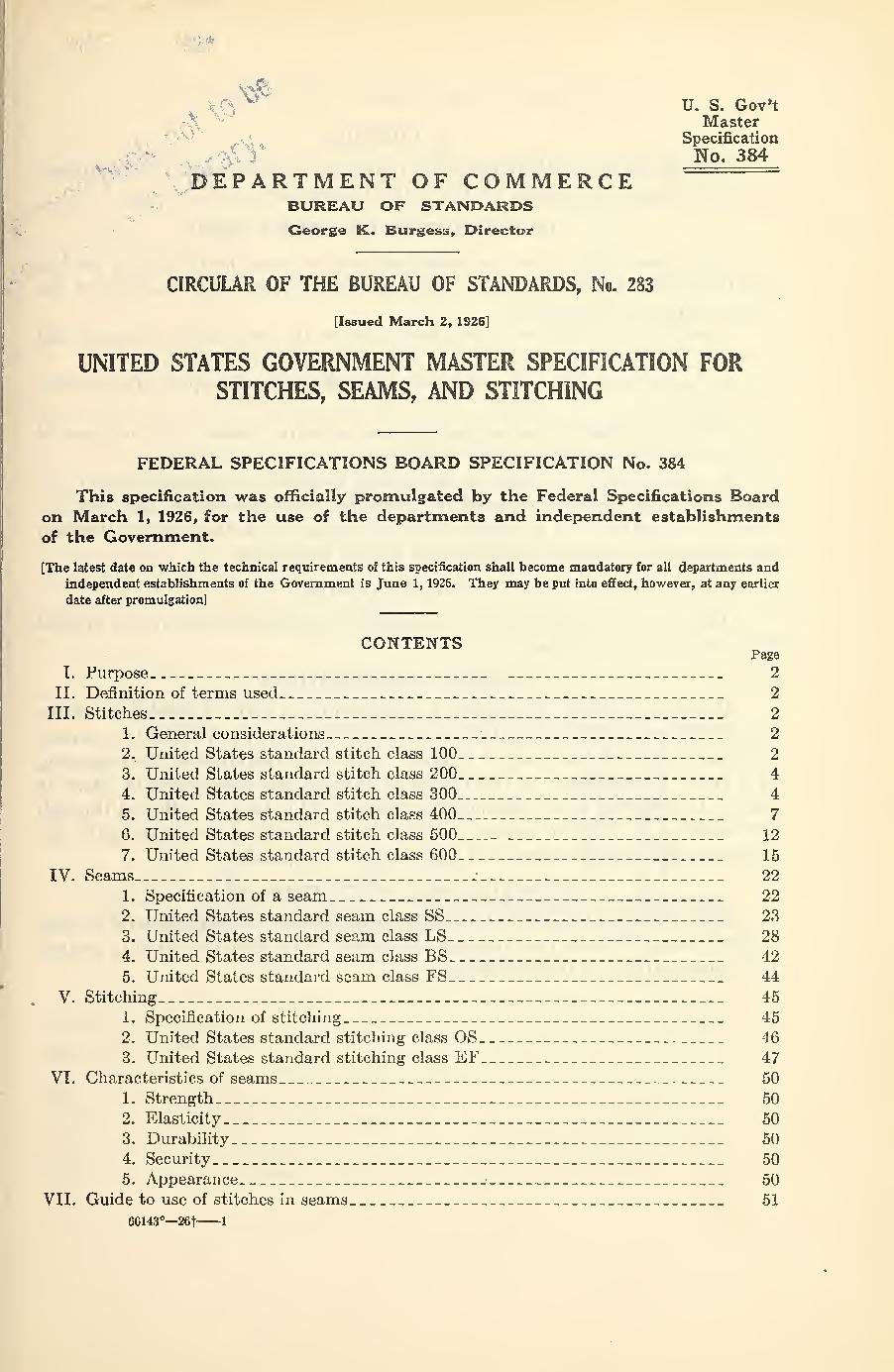

Standard stitch work – standards for men’s clothing sizes trace back to the Civil War, but no one even attempted to fix the sizes for women until almost a century later, when they called on NIST. #NYFW pic.twitter.com/dFQVGknU3w
— National Institute of Standards and Technology (@NIST) February 13, 2021


COLD WEATHER CONCRETING
BY
Cris-Hawk Farrin
University of New Hampshire, December, 2010
Placing concrete in cold weather is conventionally performed using external devices such as heaters or insulated forms to protect fresh concrete from freezing temperatures. Such practices imbed excessive carbon and result in an undesirable carbon footprint. The purpose of this study was to investigate the feasibility of casting concrete in cold weather using chemical admixtures instead of hydrocarbons or expensive insulating blankets so construction can continue during the winter season in the Northern Tier States. Several innovative tests were performed to evaluate the properties and performance of cold weather concrete created with chemical admixtures. Results indicate adequate concrete strength can be attained through the use of chemical admixtures without the use of any heating or insulating and construction can be accomplished in the winter. However, due to less than desirable air void characteristics, resistance to cycles of freezing and thawing in an adverse environment may be problematic.
International Building Code Chapter 19: Concrete

Related:
This content is accessible to paid subscribers. To view it please enter your password below or send mike@standardsmichigan.com a request for subscription details.
This content is accessible to paid subscribers. To view it please enter your password below or send mike@standardsmichigan.com a request for subscription details.
This content is accessible to paid subscribers. To view it please enter your password below or send mike@standardsmichigan.com a request for subscription details.
2022 IRS 990 Filing: President And Fellows Of Harvard College
NACUBO-TIAA Study of Endowments

The University continues its expansion in Allston, Massachusetts. The Harvard Business School and many of the university’s athletics facilities, including Harvard Stadium, are located on a 358-acre (145 ha) campus in Allston, a Boston neighborhood across the Charles River from the Cambridge campus. The John W. Weeks Bridge, a pedestrian bridge over the Charles River, connects the two campuses. Intending a major expansion, Harvard now owns more land in Allston than it does in Cambridge.
A ten-year plan calls for 1.4 million square feet (130,000 square meters) of new construction and 500,000 square feet (50,000 square meters) of renovations, including new and renovated buildings at Harvard Business School; a hotel and conference center; a multipurpose institutional building; renovations to graduate student housing and to Harvard Stadium; new athletic facilities; new laboratories and classrooms for the John A. Paulson School of Engineering and Applied Sciences; expansion of the Harvard Education Portal; and a district energy facility.
Allston Planning and Development
Harvard Research Summary 2023:
“Taking charge: Black electoral success and the redefinition of American politics”
New update alert! The 2022 update to the Trademark Assignment Dataset is now available online. Find 1.29 million trademark assignments, involving 2.28 million unique trademark properties issued by the USPTO between March 1952 and January 2023: https://t.co/njrDAbSpwB pic.twitter.com/GkAXrHoQ9T
— USPTO (@uspto) July 13, 2023
Standards Michigan Group, LLC
455 East Eisenhower Parkway, Suite 300
Ann Arbor, MI 48108 USA
888-748-3670
 |
 |
|
 |
 |
|
 |
 |