
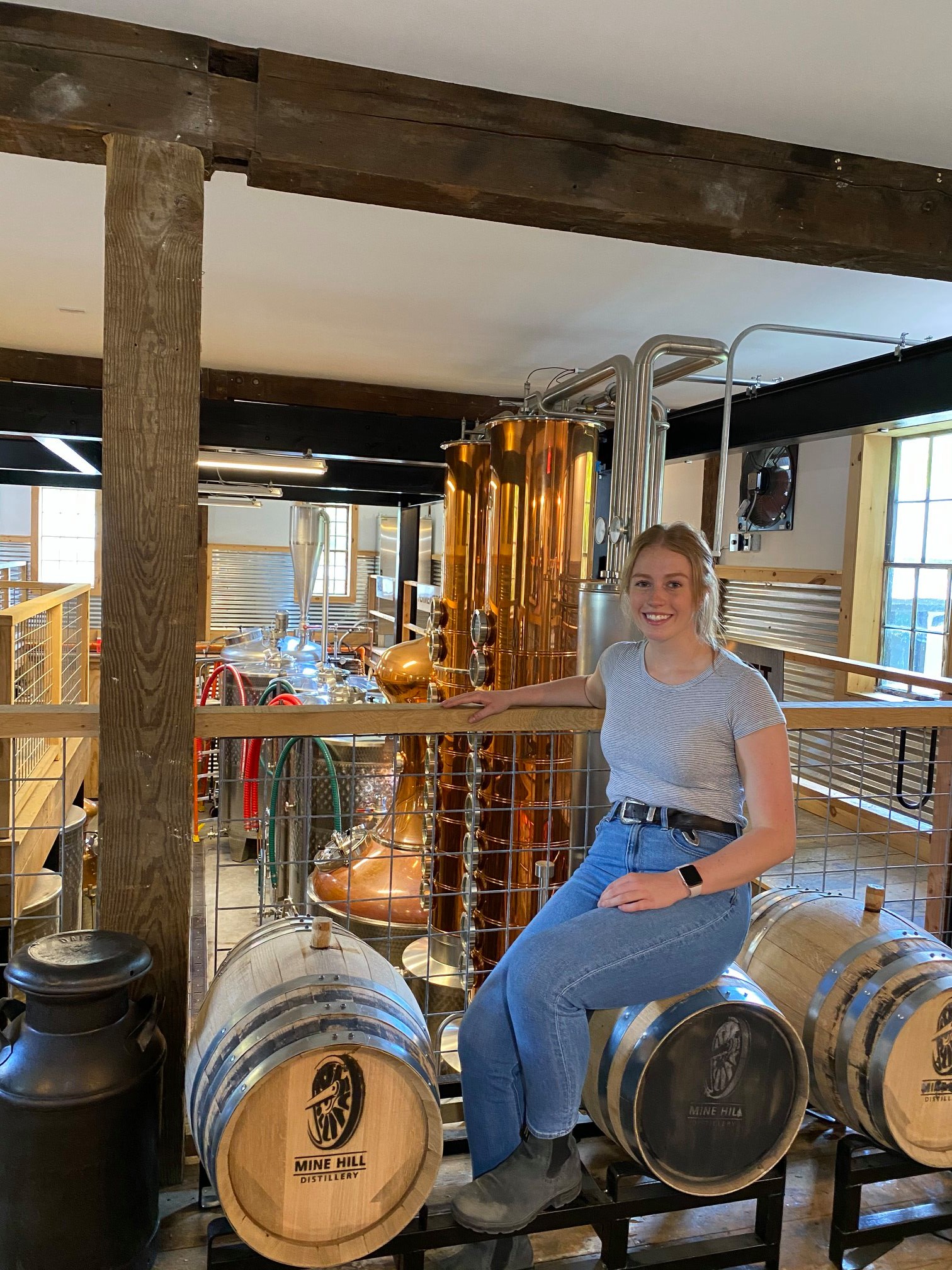
History: How Kentucky Became the World’s Bourbon Capital
Code of Federal Regulations: § 5.143 Whisky (Whiskey)
University of Kentucky College of Agriculture, Food and Environment


History: How Kentucky Became the World’s Bourbon Capital
Code of Federal Regulations: § 5.143 Whisky (Whiskey)
University of Kentucky College of Agriculture, Food and Environment
“There is no love sincerer than the love of food.”
– George Bernard Shaw

NIST Headquarters | Gaithersburg Maryland | Link to Standards Michigan coverage
Related:
This content is accessible to paid subscribers. To view it please enter your password below or send mike@standardsmichigan.com a request for subscription details.
This content is accessible to paid subscribers. To view it please enter your password below or send mike@standardsmichigan.com a request for subscription details.

United States Food & Drug Administration | Distilled Spirits
— Dr. Maya C. Popa (@MayaCPopa) May 26, 2023
https://www.facebook.com/groups/1089237785165822/permalink/1515826392506957/
Wine consumption in the US is higher on the coasts. Source: https://t.co/iXiIdQ6kAW pic.twitter.com/eTw3KjaTxn
— Simon Kuestenmacher (@simongerman600) January 9, 2025
This content is accessible to paid subscribers. To view it please enter your password below or send mike@standardsmichigan.com a request for subscription details.
“…I have spread my dreams under your feet;
Tread softly because you tread on my dreams.”
–W.B. Yeats | ‘He Wishes for the Cloths of Heaven’

The history of scones is believed to have originated in Scotland. The name “scone” is said to come from the Dutch word “schoonbrot,” which means “beautiful bread.” Scones have a long and interesting history that dates back several centuries.
Originally, scones were not the sweet, buttery treats we know today. Instead, they were simple unleavened oatcakes or griddle cakes made from barley, oats, or wheat. These early scones were baked on griddles or stovetops rather than being oven-baked.
As time went on, the recipe for scones evolved, and they became more commonly associated with Scotland and England. The Scottish version of scones was typically round and made with oats. They were cooked on a griddle or in a pan and then cut into triangular sections, which were known as “bannocks.” These bannocks were the ancestors of the modern scone.
In the 19th century, with the advent of baking powder and modern ovens, scones began to be baked instead of griddle-cooked. The addition of baking powder allowed scones to rise and become lighter and fluffier. The ingredients were refined to include flour, butter, milk or cream, and a leavening agent like baking powder. This marked the shift from the traditional oat-based scone to the more recognizable wheat-based scone we know today.
Scones’ popularity spread beyond Scotland and England, and they became a common teatime treat across the United Kingdom and other English-speaking countries. The addition of raisins, currants, or other dried fruits, as well as sugar, transformed scones into the sweet delicacies that are commonly enjoyed today, often served with clotted cream and jam in the classic English afternoon tea.
In the United States, scones have also become popular, with various regional and cultural variations. American scones may be larger, sweeter, and have a wider variety of flavor options, such as blueberry, cranberry-orange, or chocolate chip. Today, scones continue to be beloved treats enjoyed for breakfast, brunch, afternoon tea, or as a delightful snack with a cup of tea or coffee. Their history reflects centuries of evolution and cultural influence, making them a delightful and enduring part of baking traditions worldwide.
National Standards Authority of Ireland
Standard Scone Recipe
The standard scone is a simple and versatile preparation that can be customized with various additions, such as dried fruits, nuts, or chocolate chips, to suit different tastes.
Here is a basic recipe for making standard scones:
Ingredients:
Instructions:
This standard scone recipe provides a classic and delicious base that you can experiment with by adding various flavors and mix-ins to create your own unique variations.
This content is accessible to paid subscribers. To view it please enter your password below or send mike@standardsmichigan.com a request for subscription details.
New update alert! The 2022 update to the Trademark Assignment Dataset is now available online. Find 1.29 million trademark assignments, involving 2.28 million unique trademark properties issued by the USPTO between March 1952 and January 2023: https://t.co/njrDAbSpwB pic.twitter.com/GkAXrHoQ9T
— USPTO (@uspto) July 13, 2023
Standards Michigan Group, LLC
2723 South State Street | Suite 150
Ann Arbor, MI 48104 USA
888-746-3670
 |
 |
|
 |
 |
|
 |
 |