
Today we amble through the literature providing policy templates informing school district, college and university-affiliated transportation and parking facilities and systems. Starting 2024 we will break up our coverage thus:
Mobility 100 (Survey of both ground and air transportation instructional and research facilities)
Mobility 400 (Reserved for zoning, parking space allocation and enforcement, and issues related to one of the most troublesome conditions in educational settlements)
Today’s session will be the last when we cover both land and air transportation codes, standards, guidelines and the regulations that depend upon all them. We will break out space and aerospace mobility into a separate session — largely because many universities are tooling up square footage and facilities in anticipation of research grants.
Like many SDO’s the SAE makes it very easy to purchase a standard but makes it very difficulty to find a draft standard open for public review. It is not an open process; one must apply to comment on a draft standard. Moreover, its programmers persist in playing “keep away” with landing pages.
The public school bus system in the United States is the largest public transit system in the United States. According to the American School Bus Council, approximately 25 million students in the United States ride school buses to and from school each day, which is more than twice the number of passengers that use all other forms of public transportation combined.
The school bus system is considered a public transit system because it is operated by public schools and school districts, and provides a form of transportation that is funded by taxpayers and available to the general public. The school bus system also plays a critical role in ensuring that students have access to education, particularly in rural and low-income areas where transportation options may be limited.
National Association of State Directors of Pupil Transportation Services
National School Transportation Association
School Bus Manufacturers Association
…and 50-state spinoffs of the foregoing. (See our ABOUT for further discussion of education industry non-profit associations)
There are several ad hoc consortia in this domain also; which include plug-in hybrid electric vehicles. Charging specifications are at least temporarily “stable”; though who should pay for the charging infrastructure in the long run is a debate we have tracked for several revision cycles in building and fire codes.
Because incumbents are leading the electromobility transformation, and incumbents have deep pockets for market-making despite the “jankiness” of the US power grid, we can track some (not all) legislation action, and prospective public comment opportunities. For example:
Keep in mind that even though proposed legislation is sun-setted in a previous (116th) Congress, the concepts may be carried forward into the following Congress (117th).
Public consultations on mobility technologies relevant to the education facility industry are also covered by the IEEE Education & Healthcare Facilities Committee which meets 4 times monthly in European and American time zones.
This topic is growing rapidly and it may well be that we will have to break it up into more manageable pieces. For the moment, today’s colloquium is open to everyone. Use the login credentials at the upper right of our home page.
Written by William Walsham How in 1871 for the Church Hymns collection, this Christian standard is a celebration of God’s creation and love, set to the tune “Ruth” by Samuel Smith (1865). How, an Anglican bishop known for his pastoral work, crafted the hymn to reflect the joy of summer, with its vibrant imagery of glowing suns, flowing light, and nature’s voices uniting in praise.
The hymn’s four stanzas emphasize God’s mercy, eternal love, and guidance through life’s challenges, urging steadfast faith even in dark times. Its meaning centers on gratitude for divine providence, the beauty of creation, and trust in God’s presence, with the final stanza affirming hope in eternal light.
Published in over 239 hymnals, it remains a cherished expression of summer’s warmth and spiritual reassurance.
Electric vehicle charging stations are addressed in the 2024 International Energy Conservation Code (IECC) within two specific appendices:
Appendix RE: This appendix provides detailed requirements for electric vehicle charging infrastructure, focusing on both residential and commercial buildings. It includes definitions and infrastructure standards to ensure that new constructions are equipped to support electric vehicle charging
Appendix CG: This appendix offers guidance on electric vehicle power transfer and charging infrastructure, emphasizing the integration of EV-ready requirements into building designs. It outlines the necessary provisions for installing and managing EV charging stations, ensuring compliance with energy conservation standards
.These appendices are part of the broader efforts to incorporate EV infrastructure into building codes, promoting energy efficiency and supporting the transition to electric vehicles.
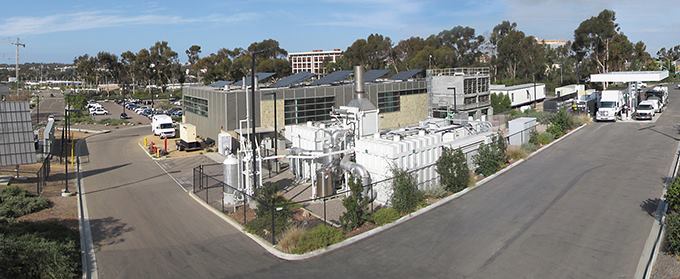
Recharging infrastructure at at Google’s Mountain View (California) campus | Pretty ugly, eh?
“Gas” 1940 Edward Hopper
This standard will be updated within a reconfigured code development cycle linked below:
Keep in mind that many electric vehicle safety and sustainability concepts will track in other titles in the ICC catalog. It is enlightening to see other energy related proposals tracking in the most recent Group A code revision cycle
The following proposals discussed during the Group A Hearings ended earlier this month are noteworthy:
R309.6 Electric vehicle charging stations and systems. Where provided, electric vehicle charging systems shall be installed in accordance with NFPA 70. Electric vehicle charging system equipment shall be listed and labeled in accordance with UL 2202. Electric vehicle supply equipment shall be listed and labeled in accordance with UL 2594.
IBC 406.2.7 Electric vehicle charging stations and systems. Where provided, electric vehicle charging systems shall be installed in accordance with NFPA 70. Electric vehicle charging system equipment shall be listed and labeled in accordance with UL 2202. Electric vehicle supply equipment shall be listed and labeled in accordance with UL 2594. Accessibility to electric vehicle charging stations shall be provided in accordance with Section 1108.
TABLE R328.5 MAXIMUM AGGREGATE RATINGS OF ESS (Energy Storage Systems) – PDF Page 1476
Incumbents are socking in EV concepts all across the ICC catalog. We refer them to experts in the Industrial Applications Society IEEE E&H Committee.
One of the more spirited debates in recent revision cycles is the following:
Who shall pay for electrical vehicle charging infrastructure?
The underlying assumption is that the electrification of the global transportation grid has a net benefit. We remain mute on that question; the question of net gain.
Of course, many proposals pointed the finger at the stakeholder with the deepest pockets. Accordingly, new commercial building owners will be required to install charging stations for new buildings. During 2018 and 2019 we tracked the action in the workspace below so that we could collaborate with the IEEE Education & Healthcare Facilities Committee:
Given that most higher education facilities are classified as commercial, the cost of charging stations will be conveyed into the new building construction budget unless the unit takes an exception. Generally speaking, most colleges and universities like to display their electric vehicle credentials, even if the use of such charging stations remains sparse.
Cornell University
Issue: [11-40]
Category: Electrical, #SmartCampus
Colleagues: Mike Anthony, Jim Harvey
* The education industry has significant square footage this is classified as residential; particularly on the periphery of large research campuses.
Founded in 1999, the European Bartender School (EBS) is the world’s leading bartending school, operating over 25 schools across five continents. Its mission is to provide top-quality, globally recognized bartending and barista courses designed by industry experts.
EBS aims to train aspiring bartenders with practical and theoretical skills, offering a comprehensive International Bartender Course that equips students for global career opportunities. With over 80,000 graduates, EBS fosters a vibrant community, connecting students to jobs via EBS MatchStaff. The school emphasizes a fun, social learning experience, blending professional education with personal growth and travel
KANM Student Radio, founded in 1973 at Texas A&M University, began as Student Government Radio, broadcasting via cable on 107.5 FM in partnership with Mid-West Video Corporation. Initially airing from 4 p.m. to 2 a.m. weekdays, it offered diverse genres like hard rock and country. Despite early financial struggles, accumulating $5,783.64 in debt by 1977, KANM grew its influence through the 1970s and 1980s, facing technical issues like outages in 1978 and 1979.
It became independent in the 1980s, moving to the Pavilion complex in 1983 with equipment donations. KANM pioneered online streaming in 1998, transitioning to online-only by the mid-2010s. In 2024, it secured a low-power FM permit (KAGZ-LP 95.5 FM), marking a return to airwaves. Now located in the Memorial Student Center, KANM remains student-run, promoting non-commercial music and hosting events like the bi-annual “Save the Music” concert.
Howdy! I am so stoked to announce that we recently got to work with The Highway 6 Band, a sick group based out of College Station, to produce a KANM Library Session!!
Here’s a quick clip of the band performing their original song “Me or the Road” 🔊 pic.twitter.com/0lWpzZhFDU
In the fiscal year ending June 30, 2023, charitable donations to U.S. colleges and universities amounted to $58 billion. This figure represents a slight decline of 2.5% from the previous year’s record of $59.5 billion, but it remains the second-highest level of donations in history (CASE) (Inside Higher Ed). This figure includes money donated for new building projects and other capital expenses.
Some benefactors contribute to the lifecycle upkeep of buildings they help fund. These contributions often come in the form of endowed funds specifically designated for the maintenance, repair, and renovation of facilities. Such endowments are crucial as they provide a continuous source of funding to ensure that buildings remain functional and in good condition over time.
Charitable giving to colleges and universities in the U.S. is governed by a range of standards and best practices designed to ensure transparency, accountability, and effectiveness. These standards help donors, institutions, and the public understand and manage the complexities of philanthropic contributions. Key standards include:
Donor Intent and Restrictions:
Documentation: Donor intent should be clearly documented in gift agreements or endowment contracts to ensure funds are used as intended.
Restrictions: Restrictions on the use of funds must be explicitly stated and agreed upon by both the donor and the institution. These can include specific programs, scholarships, research, or infrastructure projects.
Transparency and Reporting:
Annual Reports: Institutions should provide detailed annual reports on how donated funds are being utilized, including breakdowns of expenditures and outcomes.
Stewardship Reports: For major gifts or endowments, institutions often provide personalized stewardship reports to donors, detailing the impact of their contributions.
Governance and Oversight:
Board Oversight: Boards of trustees or equivalent governing bodies should oversee fundraising practices and the management of donated funds.
Audit and Compliance: Regular audits and compliance checks should be conducted to ensure adherence to donor restrictions and institutional policies.
Ethical Fundraising Practices:
Professional Standards: Fundraisers and development officers should adhere to ethical standards set by professional organizations such as the Association of Fundraising Professionals (AFP) and the Council for Advancement and Support of Education (CASE).
Confidentiality and Respect: Institutions must respect donor confidentiality and handle all interactions with integrity and respect.
Tax and Legal Considerations:
IRS Regulations: Donations must comply with Internal Revenue Service (IRS) regulations to qualify for tax deductions. This includes proper documentation of gifts and adherence to rules regarding charitable contributions.
501(c)(3) Status: Colleges and universities must maintain their 501(c)(3) tax-exempt status, which requires adherence to various federal and state laws governing charitable organizations.
Gift Acceptance Policies:
Policy Framework: Institutions should have clear gift acceptance policies outlining the types of gifts they can accept, including cash, securities, real estate, and in-kind contributions.
Review and Approval: Complex or potentially problematic gifts should be reviewed by a gift acceptance committee or similar body to assess risks and alignment with institutional priorities.
Endowment Management:
Spending Policies: Endowments should have spending policies that balance the need for current income with the preservation of principal to ensure long-term sustainability.
Investment Strategies: Institutions should adopt prudent investment strategies for their endowments, often guided by the principles of the Uniform Prudent Management of Institutional Funds Act (UPMIFA).
Recognition and Acknowledgment:
Donor Recognition: Institutions should have systems in place to appropriately recognize and thank donors, which can include naming opportunities, public acknowledgments, and donor recognition societies.
Acknowledgment Letters: Prompt and accurate acknowledgment letters should be sent to donors, including the necessary information for tax purposes.
By adhering to these standards, colleges and universities can effectively manage charitable contributions, ensuring that donor intent is honored, funds are used appropriately, and the institution maintains trust and credibility with its supporters and the broader public.
“Ten Books on Architecture” 30-20 B.C | Vitruvius
No single charitable organization claims hegemony over all others in the realm of charitable giving to U.S. universities but there are a others in the domain.
Association of Fundraising Professionals (AFP):
Role: AFP is a professional association that supports fundraisers through education, training, and advocacy. It serves a wide range of nonprofit sectors, including higher education.
Ethical Standards: AFP’s Code of Ethical Standards and Donor Bill of Rights are widely recognized and adopted by fundraising professionals in higher education.
National Association of College and University Business Officers (NACUBO):
Role: NACUBO represents chief business and financial officers through advocacy, professional development, and research.
Financial Management: It provides guidance on the financial management of gifts, endowments, and other resources critical to higher education institutions.
Council on Foundations:
Role: This membership organization supports grantmaking foundations in the U.S., including those that fund higher education.
Philanthropic Guidance: It offers legal resources, best practices, and networking opportunities for foundations that support colleges and universities.
Charity Navigator and Guidestar (Candid):
Role: These organizations evaluate and rate nonprofits, including higher education institutions, based on their financial health, accountability, and transparency.
Public Accountability: By providing ratings and financial data, they help donors make informed decisions about their contributions to colleges and universities.
Internal Revenue Service (IRS):
Role: As the federal tax authority, the IRS oversees the tax-exempt status of educational institutions and enforces compliance with laws governing charitable contributions.
Regulations: The IRS provides guidelines and requirements for tax-deductible donations, ensuring legal compliance in charitable giving.
New update alert! The 2022 update to the Trademark Assignment Dataset is now available online. Find 1.29 million trademark assignments, involving 2.28 million unique trademark properties issued by the USPTO between March 1952 and January 2023: https://t.co/njrDAbSpwBpic.twitter.com/GkAXrHoQ9T