Category Archives: Food/Kitchen/Farm/Agriculture

Loading
loading...

The “Sugaring” Season

Standards Vermont

Vermont is the largest producer of maple syrup in the United States, and the maple syrup industry is an important part of the state’s economy and culture. Vermont maple syrup is renowned for its high quality and distinctive flavor, and many people around the world seek out Vermont maple syrup specifically.

The maple syrup industry in Vermont is primarily made up of small-scale family farms, where maple sap is collected from sugar maple trees in early spring using a process called “sugaring.” The sap is then boiled down to produce pure maple syrup, which is graded according to its color and flavor. Vermont maple syrup is graded on a scale from Grade A (lighter in color and milder in flavor) to Grade B (darker in color and more robust in flavor).

The Vermont maple syrup industry is heavily regulated to ensure quality and safety, and the state has strict standards for labeling and grading maple syrup. In addition to pure maple syrup, many Vermont maple producers also make maple candy, maple cream, and other maple products.

University of Vermont Facilities Management

Vermont

Strawberries

This content is accessible to paid subscribers. To view it please enter your password below or send mike@standardsmichigan.com a request for subscription details.

Nourriture Hiver

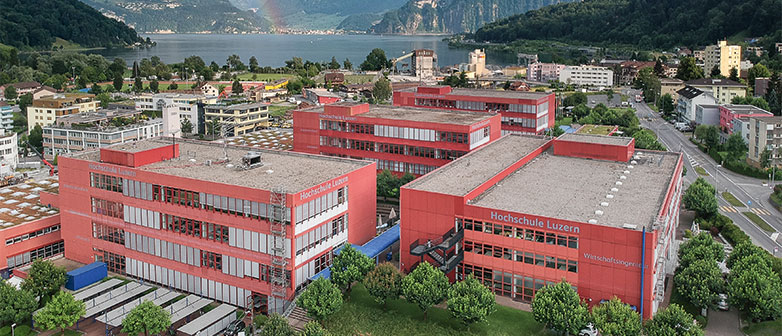
Western Colorado University Center for Cold Climate Food Security

Today we break down the catalog for food safety in education communities; with primary attention to consultations from private standard developing organizations and federal agencies charged with food safety.  We do so with sensitivity to animals and plants and sustainability of the global food supply chain.   Many schools are the communal cafeterias for the communities that own and operate them and run at commercial scale.

We prepare responses to public consultations released by standards developing organizations which, in many cases, have significant conformance enterprises.

ANSI Standards Action | Current Weekly Edition

Note the call for public comment on proposed WTO Agriculture, Sanitary and Phytosanitary (SPS) measures (Page 48)

Core titles are published by the ANSI accredited organizations listed below:

3-A Sanitary Standards

Catalog

ASHRAE International

The ASHRAE catalog is the most cross-cutting and fastest moving catalog in the land.   If you claim ownership of the United States energy domain you pretty much capture everything related campus safety and sustainability.  Best to deal with it on a day-by-day basis as we usually do according to daily topics shown on our CALENDAR.

Association for Packaging and Processing Technologies

American Society of Agricultural and Biological Engineers

Institute of Electrical and Electronic Engineers

National Electrical Safety Code   (Our particular interest lies in the safety and reliability of off-campus agricultural and research facilities that receive power from regulated utilities)

Kitchen Safety and Security System for Children

TupperwareEarth: Bringing Intelligent User Assistance to the “Internet of Kitchen Things”

Designing an IoT based Kitchen Monitoring and Automation System for Gas and Fire Detection

Re-Inventing the Food Supply Chain with IoT: A Data-Driven Solution to Reduce Food Loss

International Code Council

Commercial Kitchens

International Building Code Assembly Group A-2

International Building Code Group U Section 312 Agricultural Buildings

International Building Code Moderate Hazard Factory Industrial Group F-1 (Food Processing)

Who Gets Rich From School Lunch

National Fire Protection Association

Kitchen Wiring

National Electrical Code Article 210 (Branch Circuits)

National Electrical Code Article 547 (Agricultural Buildings)

Standard for the Installation of Air-Conditioning and Ventilating Systems

Public Input Report for the 2024 Revision

Standard for Ventilation Control and Fire Protection of Commercial Cooking Operations

Public Input Report for the 2024 Revision

NSF International

Food Equipment

Commercial Warewashing Equipment

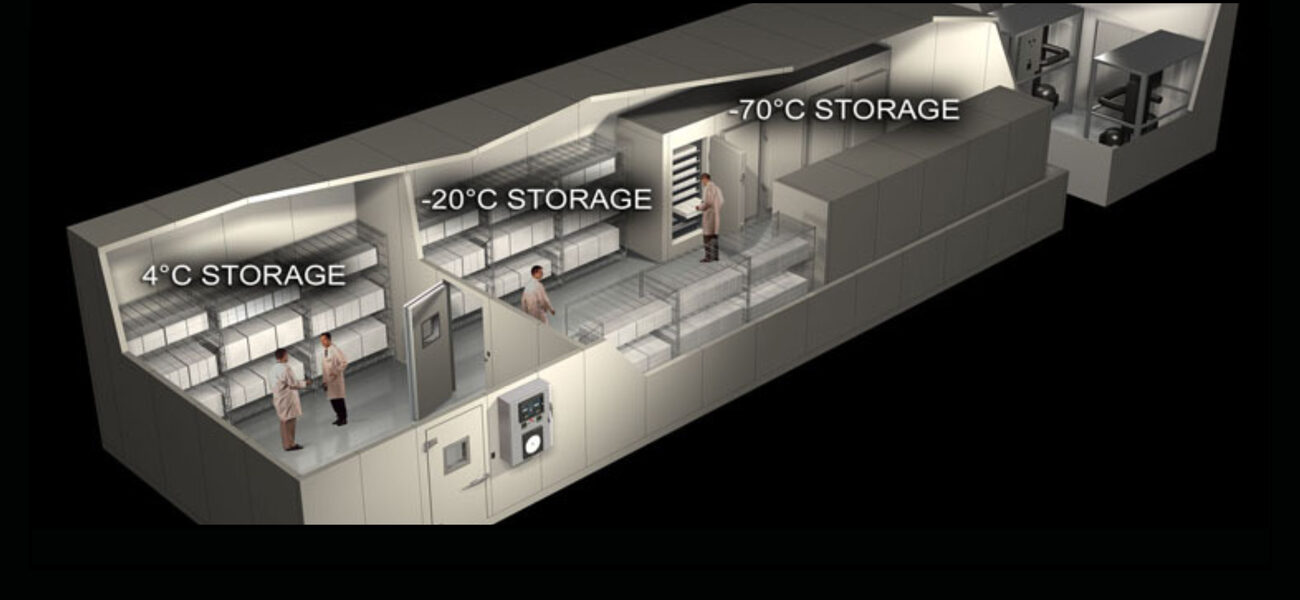
Commercial Refrigerators and Freezers

Commercial Cooking, Rethermalization and Powered Hot Food Holding and Transport Equipment

Commercial Powered Food Preparation Equipment

US Federal Government:

US Department of Agriculture

Food & Drug Administration (HACCP)

State Governments:

Lorem ipsum @StandardsState

Global:

International Organization for Standardization

International Electrotechnical Commission

Codex Alimentarius

Food safety and sustainability standards populate are of the largest domains we track so if we need a break0-out session, let’s do it.  Use the login credentials at the upper right of our home page.

University of Kentucky College of Agriculture, Food and Environment

Agenda / Farm & Table


More

Standards supporting vertical farming

STANDARDS SUPPORT SOPHISTICATED FARMING METHODS THAT BRING PRODUCE TO YOUR TABLE

US Food & Drug Administration: Food Facility Registration Statistics (as  of January 11, 2021)

National Grange of the Order of Patrons of Husbandry

The U.S. Land-Grant University System: An Overview

American Society of Agricultural and Biological Engineers Standards Development

The origin of the Land grant act of 1862 

International Electrotechnical Commission: Keeping food safe from farm to plate

 Codex Alimentarius

Council for the Advancement of Standards in Higher Education: Dining Services Programs

Science and Our Food Supply: A Teacher’s Guide for High School Classrooms

Food Code 2017

The Goose that Laid the Golden Egg

Homophily Michigan

Cornell Cooperative Extension: Click image for roast goose recipe

Wild Harvest Table

Commercial Cooking Operations

Standard for Ventilation Control and Fire Protection of Commercial Cooking Operations

Food Science & Technology | University of California Davis

We’ll be getting down into the weeds today; starting with these transcripts:

First Draft Public Input Report

Second Draft Public Comment Report

Related:

Commercial Kitchens

Ventilation for Commercial Cooking Operations


More than 4,000 cadets gather for lunch inside Mitchell Hall at the U.S. Air Force Academy in Colorado Springs, Colo., Aug. 10, 2009. A staff of 200 food service professionals prepare nearly 13,000 meals per day for cadets throughout the academic year. (U.S. Air Force photo/Ann Patton)

CARBONARA by Adriana

Home


Friday End of Workweek Provocation: Chemistry of Beer

Nourriture d’automne


Split Pea Soup & Ham

High Tea Wichita

🌻 Standards Kansas 🌻

Newman University hosts its Heritage Month in February to celebrates the English heritage of the university’s namesake, St. John Henry Newman. It typically takes place in the Dugan-Gorges Conference Center following the St. Newman Mass and features meticulously prepared finger foods, English breakfast or Earl Grey tea, and elegant tea sets, fostering a sense of community among students, alumni, faculty, and staff.


Why and How High Tea Originated as a Working-Class Custom: High tea, despite its modern association with elegance and afternoon tea, began as a practical, working-class custom in 19th-century Britain. Its origins lie in the Industrial Revolution, when factory workers, miners, and laborers, typically from the lower classes, returned home after long, physically demanding shifts. Unlike the leisurely afternoon tea enjoyed by the upper classes, high tea was a hearty, substantial meal served around 5–7 p.m., designed to sustain workers after a grueling day.

Why It Was Working-Class:Timing and Necessity: Workers couldn’t afford mid-afternoon breaks for tea, as their schedules revolved around factory or manual labor. High tea was served after work hours, replacing or supplementing dinner with affordable, filling foods like meat pies, bread, cheese, and tea, which provided energy and comfort.

Economic Constraints: The working class lacked the resources for the delicate sandwiches and pastries of upper-class afternoon tea. High tea used simple, inexpensive ingredients, reflecting the economic realities of laborers.
Cultural Context: Tea was a cheap, widely available beverage by the 19th century, thanks to Britain’s colonial trade. It became a staple for workers, offering warmth and stimulation, while the meal addressed their hunger.

How It Developed: High tea was served at a high dining table (unlike the low tables of aristocratic tea settings), where families gathered for a practical meal. The term “high” referred to the table height, distinguishing it from the refined “low tea” of the elite.
Food and Function:

The meal included robust dishes like stews, cold meats, or potatoes, paired with strong tea. It was less about social ritual and more about nourishment, often the main meal of the day for working families.
Social Evolution:

As tea became a British cultural staple, high tea spread across classes, but its working-class roots remained evident in its heartier fare and evening timing, contrasting with the lighter, earlier afternoon tea of the wealthy.

By the late 19th century, high tea’s association with the working class faded as middle and upper classes adopted and refined it, leading to its modern, more elegant connotations.

Animal Safety

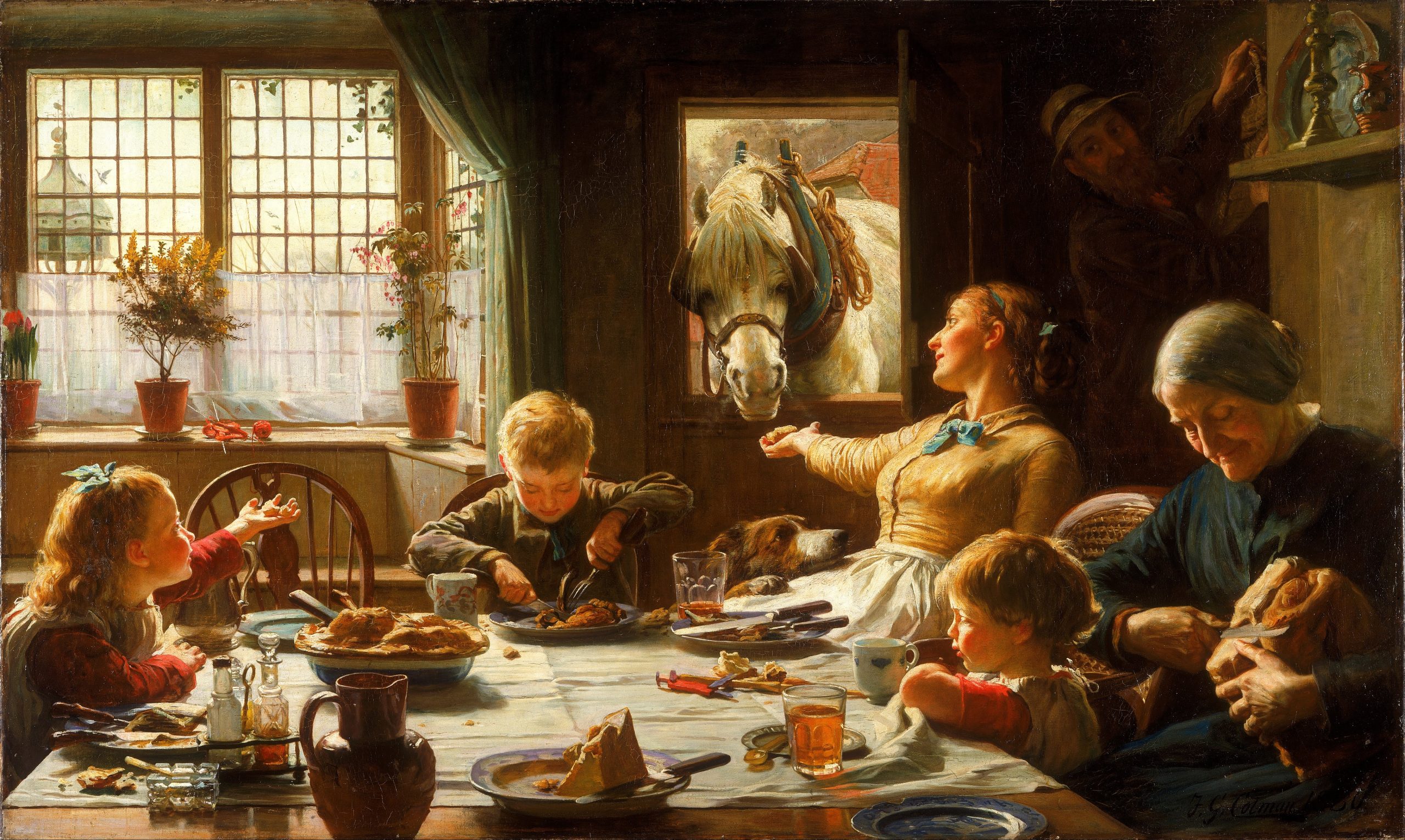
“One of the Family” 1880 | Frederick George Cotman

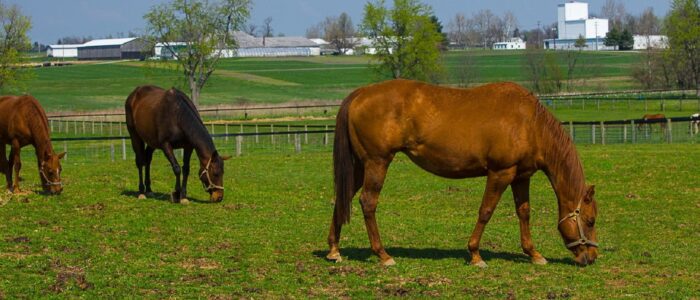
NFPA 150 Fire and Life Safety in Animal Housing Facilities Code has entered its s025 revision cycle.   Many education communities are responsible for animal safety in academic units, research enterprises. museums and even — as in the United Kingdom — large farm animals that wander freely on campus with students, faculty and staff.  The number of colleges and universities that permit students to live with their pets has expanded; and with it the responsibilities of university administration.

From the document scope:

This standard shall provide the minimum requirements for the design, construction, fire protection, and classification of animal housing facilities.  The requirements of NFPA 150 recognize the following fundamental principles:

(1) Animals are sentient beings with a value greater than that of simple property.

(2) Animals, both domesticated and feral, lack the ability of self-preservation when housed in buildings and other structures.

(3) Current building, fire, and life safety codes do not address the life safety of the animal occupants. The requirements found in NFPA 150 are written with the intention that animal housing facilities will continue to be designed, constructed, and maintained in accordance with the applicable building, fire, and life safety codes.

The requirements herein are not intended to replace or rewrite the basic requirements for the human occupants. Instead, NFPA 150 provides additional minimum requirements for the protection of the animal occupants and the human occupants who interact with those animals in these facilities. 


A full description of the project is linked below:

Fire and Life Safety in Animal Housing Facilities Code

Access to the 2025 Edition is linked below:

FREE ACCESS NFPA 150

We provide the transcript of the back-and-forth on the current 2022 edition to inform how education communities can contribute to the improvement of this title; a subject that stirs deep feelings about animal safety in research enterprises.

NFPA 150 First Draft Agenda

NFPA 150 Second Draft Report

Public comment on the Second Draft of the 2025 Edition will be received until March 27, 2024.   

We have been advocating risk-informed animal safety concepts in this document since the 2013 Edition and have found that it is nearly impossible to overestimate the sensitivity of educational communities to the life safety of animals — either for agriculture or medical research.

We maintain the entire NFPA catalog on the standing agenda of our Prometheus colloquia.  See our CALENDAR for the next online meeting; open to everyone.

"i thank You God for most this amazing day:for the leaping greenly spirits of trees and a blue true dream of sky;and for everything which is natural which is infinite which is yes" -- e.e.cummings ('Seventy-One Poems' 1950)


Issue: [11-1] and [19-5]

Category: Fire Protection, Facility Asset Management, Academic, Risk Management

Colleagues: Mike Anthony, Josh Elvove, Joe DeRosier

More:

Protecting Animals When Disaster Strikes

Animals 300


Bibliography:

25 Most Pet-Friendly Colleges

National Institute of Health: Policy on Humane Care and Use of Laboratory Animals

International Building Code: Section 304 (Business Group B): Animal hospitals, kennels and pounds

Terrestrial Animal Health Code

IEEE Guide for Animal Deterrents for Electric Power Supply Substations

ASHRAE Animal Facilities

IEEE Livestock Monitoring System

Ventilation Design Handbook on Animal Research Facilities

HVAC Design in Animal Facilities

USDA Animal Welfare Information Center

ISO Assistance Dogs

US Department of Agriculture: Animal Welfare Act and Animal Welfare Regulations

S. 4288: Reducing Animal Testing Act

Guaranteeing safety of animals under risk of fire: conceptual framework and technical issues analysis

Protecting Animals When Disaster Strikes

 

Layout mode
Predefined Skins
Custom Colors
Choose your skin color
Patterns Background
Images Background
Standards Michigan
error: Content is protected !!
Skip to content