Category Archives: illumination

Loading
loading...

Rightsizing Electrical Power Systems

Standards Michigan, spun-off in 2016 from the original University of Michigan Business & Finance Operation, has peppered NFPA 70 technical committees writing the 2016-2026 National Electric Code with proposals to reduce the size of building premise feeder infrastructure; accommodating the improvements made in illumination and rotating machinery energy conservation since the 1980’s (variable frequency drives, LED lighting, controls, etc.)

These proposals are routinely voted down in 12-20 member committees representing manufacturers (primarily) though local inspection authorities are complicit in overbuilding electric services because they “bill by the service panel ampere rating”.  In other words, when a municipality can charge a higher inspection fee for a 1200 ampere panel, what incentive is there to support changes to the NEC that takes that inspection fee down to 400 amperes?

The energy conservation that would result from the acceptance of our proposals into the NEC are related to the following: reduced step down transformer sizes, reduced wire and conduit sizes, reduced panelboard sizes, reduced electric room cooling systems — including the HVAC cooling systems and the ceiling plenum sheet metal carrying the waste heat away.   Up to 20 percent energy savings is in play here and all the experts around the table know it.   So much for the economic footprint of the largest non-residential building construction market in the United States — about $120 billion annually.

The market incumbents are complicit in ignoring energy conservation opportunity.  To paraphrase one of Mike Anthony’s colleagues representing electrical equipment manufacturers:

“You’re right Mike, but I am getting paid to vote against you.”

NFPA Electrical Division knows it, too.
University of Michigan


Rightsizing Commercial Electrical Power Systems: Review of a New Exception in NEC Section 220.12

Michael A. AnthonyJames R. Harvey

University of Michigan, Ann Arbor

Thomas L. Harman

University of Houston, Clear Lake, Texas

For decades, application of National Electrical Code (NEC) rules for sizing services, feeders and branch circuits has resulted in unused capacity in almost all occupancy classes. US Department of Energy data compiled in 1999 indicates average load on building transformers between 10 and 25 percent. More recent data gathered by the educational facilities industry has verified this claim. Recognizing that aggressive energy codes are driving energy consumption lower, and that larger than necessary transformers create larger than necessary flash hazard, the 2014 NEC will provide an exception in Section 220.12 that will permit designers to reduce transformer kVA ratings and all related components of the power delivery system. This is a conservative, incremental step in the direction of reduced load density that is limited to lighting systems. More study of feeder and branch circuit loading is necessary to inform discussion about circuit design methods in future revisions of the NEC.

CLICK HERE for complete paper

University of Houston

2026 National Electrical Code Workspace

Illumination 300

IEEE Education & Healthcare Facilities Committee

Outdoor Sport Illumination Technical Issues & Representative Calculation

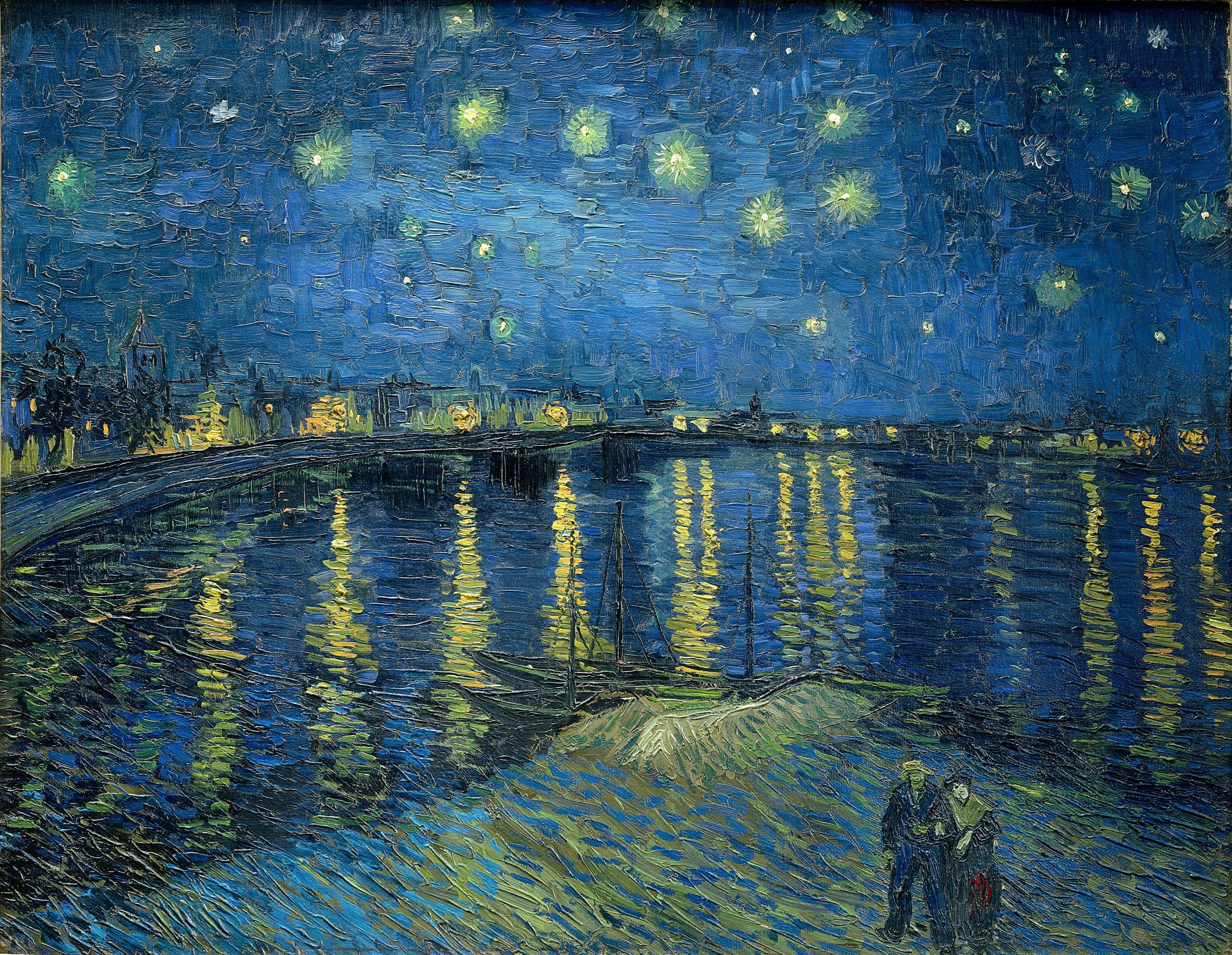
“Starry Night Over the Rhône” 1888 Vincent van Gogh

Today we refresh our understanding of the moment in illumination technologies for outdoor lighting systems— related but different from our exploration of building interior illumination systems in Illumination 200.  Later in 2023 we will roll out Illumination 500 which explores litigation related to public illumination technology.  As cities-within-cities the shared perimeter of a campus with the host municipality has proven rich in legal controversy and action.

Illumination technology was the original inspiration for the electric utility industry; providing night-time security and transforming every sector of every economy on earth.  Lighting load remains the largest component of any building’s electric load — about 35 percent– making it a large target for energy regulations.

Our inquiry begins with selections from the following documents…

International Electrotechnical Commission TC 34 Lighting

IEC 60364 Electrical Installations in Buildings

2023 National Electrical Safety Code

IEEE P3001.9 – Recommended Practice for the Design of Power Systems Supplying Lighting Systems in Commercial and Industrial Facilities

Institution of Engineering and Technology: Recommendations for Energy-efficient Exterior Lighting Systems

2023 National Electrical Code: Article 410  (While the bulk of the NEC concerns indoor wiring fire hazards, there are passages that inform outdoor lighting wiring safety)

2019 ASHRAE 90.1: Chapter 9 Lighting

Illumination Engineering Society: Various titles

ISO/TC 274 Light and lighting

Salt Water River Project: Outdoor Lighting Standards

US DOE-EERE Building Energy Codes Program

…and about 20 other accredited, consortia or ad hoc standards developers and publishers aligned principally with vertical incumbents.  Illumination was the original inspiration (i.e. the first “killer app”) for the electrical power industry in every nation.  Its best practice literature reflects a fast-moving, shape-changing domain.

Click in today with the login credentials at the upper right of our home page.

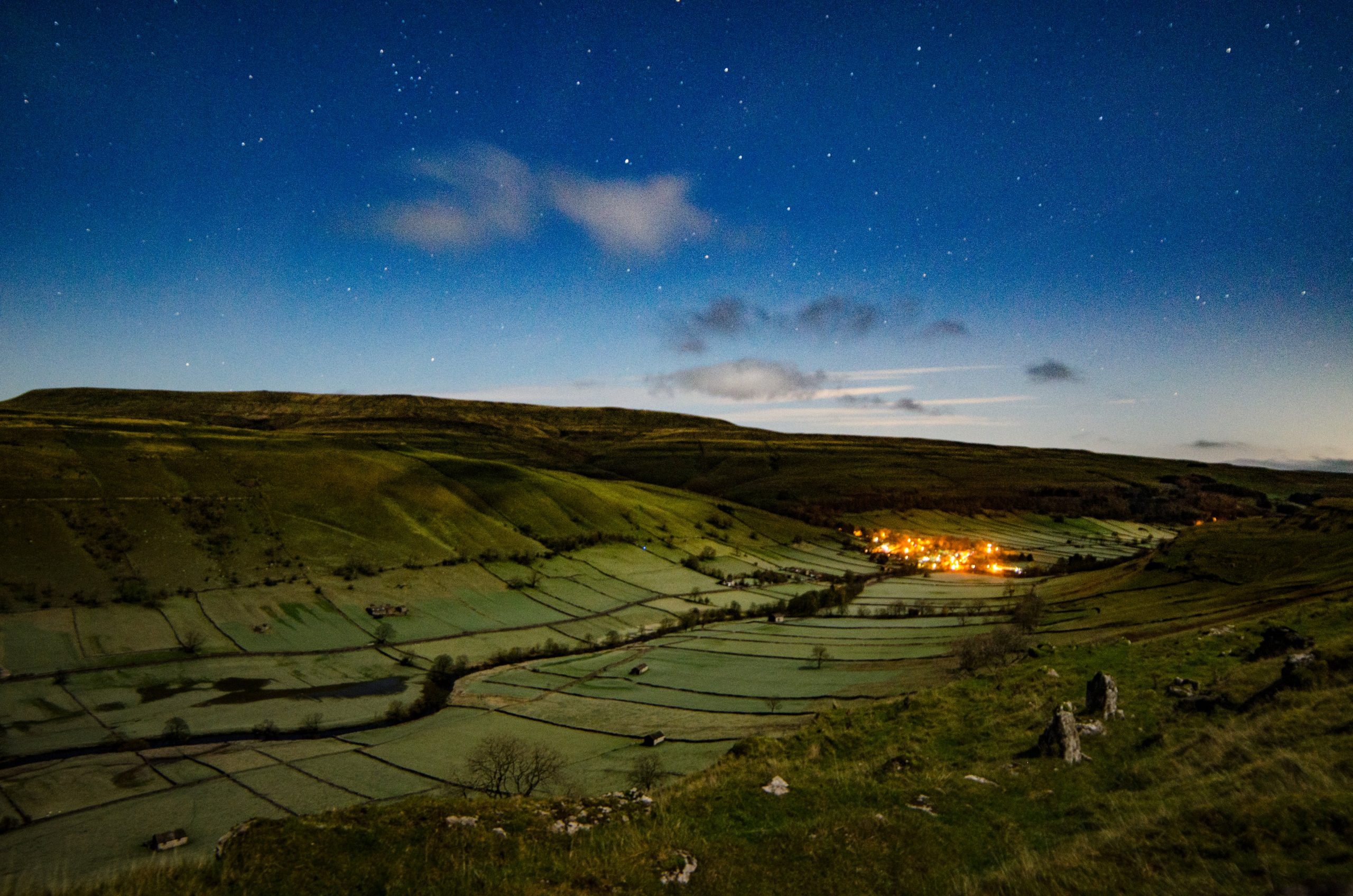
Upper Wharfedale Primary Federation School District Yorkshire Dales

McGill University: Before electricity, streets were filled with gas lights

Outdoor lighting systems can be owned and maintained by different entities depending on the context and location. Here are some examples of ownership regimes for outdoor lighting systems:

  1. Public ownership: In this case, outdoor lighting systems are owned and maintained by the local government or municipal authority. The lighting may be installed in public spaces such as parks, streets, and other outdoor areas for the safety and convenience of the public.
  2. Private ownership: Outdoor lighting systems may be owned by private individuals or organizations. For example, a business owner may install outdoor lighting for security or aesthetic reasons, or a homeowner may install outdoor lighting in their garden or yard.
  3. Co-owned: Outdoor lighting systems may be owned jointly by multiple entities. For example, a residential community may jointly own and maintain outdoor lighting in their shared spaces such as parking areas, community parks, or recreational facilities.
  4. Utility ownership: Outdoor lighting systems may be owned and maintained by utility companies such as electric or energy companies. These companies may install and maintain street lights or other lighting systems for the public good.
  5. Third-party ownership: In some cases, a third-party entity may own and maintain outdoor lighting systems on behalf of a public or private entity. For example, a lighting contractor may install and maintain lighting in a public park on behalf of a local government.

The ownership regime of an outdoor lighting system can have implications for issues such as installation, maintenance, and cost-sharing. It is important to consider ownership when designing and implementing outdoor lighting systems to ensure their long-term effectiveness and sustainability.

More

International Commission on Illumination

National Electrical Manufacturers Association

National Electrical Contractors Association

Representative Specifications

Sam Houston State University | Division 26500 Interior and Exterior Lighting

University of Delaware | Division 265100 Interior Lighting

Cal Poly University San Luis Obispo | Division 265100 Interior Lighting

Relevant Research

Enhancing the Sustainability of Outdoor Floodlighting for Cultural Heritage Buildings

The Performance and Impact of LED Floodlights in an Outdoor Electrical Substation During Misty Weather Conditions

Replacement of HPS Luminaires with LED Luminaires for the Lighting Requirements of an Outdoor Electrical Substation


Illumination 200

“The Schoolgirl Reading by Lamplight” 1917 | Nikolai Bogdanov-Belsky

Replacing oil and natural gas lighting, the first practical electric light bulb was invented by Thomas Edison in 1879.  Joseph W. Swan filed a similar Electric Lamp Patent in 1880.  One of the first large-scale installations of electric lighting was at the Savoy Theatre in London in 1881, which was followed by the installation of electric lights in the Palace of Westminster in 1882. By the 1890s, electric lighting had become more widespread and affordable.

Opticks: or, A treatise of the reflections, refractions, inflexions and colours of light | Sir Isaac Newton 1704

The widespread transition to LED lighting in buildings began in the early 2010s. While LED technology had been available since the 1960s, it wasn’t until the 2000s that the technology improved to the point where LED lighting was cost-effective and efficient enough to replace traditional lighting technologies like incandescent and fluorescent lighting.  In addition to their energy efficiency, LED lights also have a longer lifespan than traditional lighting technologies, which makes them more cost-effective over the long term.

What is light?

Today we refresh our understanding of the moment in illumination technologies.  Illumination technology was the original inspiration for the electric utility industry; providing night-time security and transforming every sector of every economy on earth.  Lighting load remains the largest component of any building’s electric load — about 35 percent– making it a large target for energy regulations.  We are organizing our approach to this topic during 2023:

Illumination 100.  Survey of illumination standards catalogs

Illumination 200.  Interior illumination including industrial and laboratory occupancies

USPTO: Thomas Edison’s Patent Application for the Light Bulb (1880)

Amir Adibi: Light Bulb Patent: The Evolution of Illumination Technology

IEEE: Energy Optimization in Consumer Lightings: An IoT-Based Adaptive Control Mode

Illumination 300.  Exterior illumination with emphasis on pathways

Illumination 400.  Sport lighting, interior and exterior

Illumination 500.  Advanced topics including relevant legislation and noteworthy litigation.

Except jankiness well into 2025.  We have been doing this work since 1993 — starting with the National Electrical Code — and getting the topic organized into manageable segments will be a challenge.

Today our inquiry begins with selections from the following documents:

International Electrotechnical Commission TC 34 Lighting

IEC 60364 Electrical Installations in Buildings

Electrical installations and Protection Against Electric Shock

2023 National Electrical Safety Code

IEEE P3001.9 – Recommended Practice for the Design of Power Systems Supplying Lighting Systems in Commercial and Industrial Facilities (under development)

Institution of Engineering and Technology: Recommendations for Energy-efficient Exterior Lighting Systems

2023 National Electrical Code: Article 410

2019 ASHRAE 90.1: Chapter 9 Lighting

Illumination Engineering Society: Various titles

ISO/TC 274 Light and lighting

…and about 20 other accredited, consortia or ad hoc standards developers and publishers aligned principally with vertical incumbents.  Illumination was the original inspiration (i.e. the first “killer app”) for the electrical power industry in every nation.  Its best practice literature reflects a fast-moving, shape-changing domain.

Click in today with the login credentials at the upper right of our home page.

Upper Wharfedale Primary Federation School District Yorkshire Dales

More

International Commission on Illumination

National Electrical Manufacturers Association

Lighting Systems Division Standards

National Electrical Contractors Association

Standard for Installing Indoor Commercial Lighting Systems (NECA500-06PDF)

Standard for Installing Exterior Lighting Systems (NECA501-06PDF)

Standard for Installing Industrial Lighting Systems (NECA502-06PDF)

Representative Specifications

Sam Houston State University | Division 26500 Interior and Exterior Lighting

University of Delaware | Division 265100 Interior Lighting

Cal Poly University San Luis Obispo | Division 265100 Interior Lighting

Lighting Calculations

A Procedure to Estimate the Energy Requirements for Lighting


A Procedure to Estimate the Energy Requirements for Lighting

Giuseppe Parise – Luigi Martirano – Luigi Parise

Sapienza, University of Rome

Abstract:  The amount of the electrical energy used for the interior lighting of medium and large buildings is generally considerable. The European Standard EN15193 was devised to establish conventions and procedures for the estimation of energy requirements of lighting in buildings by an energy performance numeric indicator. This methodology is based on the three derating factors that consider the influence of the daylight exploitation, the occupancy behavior and, if present, of a constant illuminance sensor. The factors are evaluated by a statistical approach on the basis of general reference data tabulated by the same Standard, not considering more detailed parameters of the control system that can impact severely in the effective energy savings. The Standard methodology appears extremely useful for a preliminary evaluation. For a more accurate evaluation, this paper suggests an improvement of the procedure that considers the effective operation time and occupancy behavior, the type of control and lamps, the number of control groups, the technique of modulation (dimming or switching), and the delay in turning off. The suggested procedure is compared with the Standard one to highlight the improvements.

CLICK HERE to order complete paper

Related:

Energy performance of interior lighting systems

Energy performance of buildings: An useful procedure to estimate the impact of the lighting control systems

Topology of Continuous Availability for LED Lighting Systems

EV Charging Stations Integration into Public Lighting Infrastructure

Technical Conditions of EV Charging Stations Integration into Public Lighting Infrastructure

Jurica Perko

Regional Energy Agency North, Koprivnica, Croatia

Danijel TopicGoran KnezevicMatej Znidarec

University of Osijek


Abstract:  Increase in the number of electric vehicles (EV) is closely related to the availability of a charging station network. Users of electric vehicles require high-quality distribution and well-covered charging network. The obstacles in electric mobility are small mobility of electric cars due to the lack of charging stations. The main objective of the paper is to encourage the growth of electric mobility through the development of electric vehicle charging stations. Integration of EV charging stations in public lighting infrastructure with proper demand side management (DSM) is a step forward to microgrid system deployment. It can contribute to microgrid stability and decrease distribution network dependence. Electric vehicles have a significant role in peak load shaving in microgrid due to its threefold role. They can be observed as demand side, supply side or storage. As a consumer or storage, they can take over energy surplus from a distributed generation or provide stored energy in key moments as flexible supply. In that way, they actively participate in the microgrid. Technical possibilities of EV charging stations integration in public lighting infrastructure are explored through this paper. Special attention is devoted to conditions and limitations of charging stations integration regarding power system grid, public lighting system and legislative framework. Paper provides fundamentals of EV charging stations and public lighting system where possibilities and limitations of integration are presented. Furthermore, the paper deals with limitations from the perspective of transformer capacity and cable cross sections which are obtained through analysis of calculated results.

CLICK HERE to order complete paper

Fast & Ultra-Fast Charging for Battery Electric Vehicles

IEEE 3001.9 | Campus Outdoor Lighting Standard

This content is accessible to paid subscribers. To view it please enter your password below or send mike@standardsmichigan.com a request for subscription details.

Flicker Characterization of Energy Saving Lamps


Photometric Flicker Characterization Study on Energy Saving Lamps Under Wide Variation Voltage AC Network


Rizally Priatmadja

PT PLN (Persero), Jl. Trunojoyo Blok M I/135 Kebayoran Baru, Jakarta, Indonesia

Pascal Dupuis

Kawantech S.A.S, 6 Rue Françoise d’Eaubonne, Toulouse, France

Ngapuli I. Sinisuka

School of Electrical Engineering and Informatics, Bandung Institute of Technology, Jalan Ganesha 10, Bandung, Indonesia

Georges Zissis

Université de Toulouse, Laplace, UMR 5213 (CNRS, INPT, UPS), 118 rte de Narbonne, Toulouse, France


Abstract:  With the advent of Solid State Lighting came a renewed interest in the study of flicker. Potential effects include brightness enhancement, but also discomfort, ocular fatigue, phantom and stroboscopic effects. Both IEEE and IEC developed new metrics, but at the time of writing no firm consensus has been reached. Yet previous lamp studies in the Laplace laboratory showed that various flicker phenomenon are present on different lamps, but this feature is not documented. This paper focus on flicker changes w.r.t. applied voltage. The Indonesian power grid network is indeed characterized by large voltage variations; our purpose is to detect which lamps may exhibit too elevated flicker levels during out of nominal excursion and map such behavior with other electrical characteristics.

CLICK HERE to order complete paper

More

International Standardization Organization Technical Committee 274 Light and Lighting | Strategic Business Plan

Harmonic Impacts on the Electrical Distribution Network by the Broad Usage of LED Lamps

LED lighting — Reduce the power consumption and increase the users comfort

Variation of discharge parameters versus cold spot temperature in a 50 Hz AC operated fluorescent lamp

Illumination 100

Replacing oil and natural gas lighting, the first practical electric light bulb was invented by Thomas Edison in 1879.  Joseph W. Swan filed a similar Electric Lamp Patent in 1880.  One of the first large-scale installations of electric lighting was at the Savoy Theatre in London in 1881, which was followed by the installation of electric lights in the Palace of Westminster in 1882. By the 1890s, electric lighting had become more widespread and affordable.

Opticks: or, A treatise of the reflections, refractions, inflexions and colours of light | Sir Isaac Newton 1704

 
The widespread transition to LED lighting in buildings began in the early 2010s. While LED technology had been available since the 1960s, it wasn’t until the 2000s that the technology improved to the point where LED lighting was cost-effective and efficient enough to replace traditional lighting technologies like incandescent and fluorescent lighting.  In addition to their energy efficiency, LED lights also have a longer lifespan than traditional lighting technologies, which makes them more cost-effective over the long term.

What is light?

Today we refresh our understanding of the moment in illumination technologies.  Illumination technology was the original inspiration for the electric utility industry; providing night-time security and transforming every sector of every economy on earth.  Lighting load remains the largest component of any building’s electric load — about 35 percent– making it a large target for energy regulations.  We are organizing our approach to this topic during 2023:

Illumination 100.  Survey of illumination standards catalogs

Illumination 200.  Interior illumination including industrial and laboratory occupancies

Illumination 300.  Exterior illumination with emphasis on pathways

Illumination 400.  Sport lighting, interior and exterior

Illumination 500.  Advanced topics including relevant legislation and litigation.

Except jankiness for most of 2023.  We have been doing this work since 1993 — starting with the National Electrical Code — and getting the topic organized into manageable segments will be a challenge.

Today our inquiry begins with selections from the following documents:

International Electrotechnical Commission TC 34 Lighting

IEC 60364 Electrical Installations in Buildings

Electrical installations and Protection Against Electric Shock

2023 National Electrical Safety Code

IEEE P3001.9 – Recommended Practice for the Design of Power Systems Supplying Lighting Systems in Commercial and Industrial Facilities (under development)

Institution of Engineering and Technology: Recommendations for Energy-efficient Exterior Lighting Systems

2023 National Electrical Code: Article 410

2019 ASHRAE 90.1: Chapter 9 Lighting

Illumination Engineering Society: Various titles

ISO/TC 274 Light and lighting

…and about 20 other accredited, consortia or ad hoc standards developers and publishers aligned principally with vertical incumbents.  Illumination was the original inspiration (i.e. the first “killer app”) for the electrical power industry in every nation.  Its best practice literature reflects a fast-moving, shape-changing domain.

Click in today with the login credentials at the upper right of our home page.

Upper Wharfedale Primary Federation School District Yorkshire Dales

More

International Commission on Illumination

National Electrical Manufacturers Association

Lighting Systems Division Standards

National Electrical Contractors Association

Standard for Installing Indoor Commercial Lighting Systems (NECA500-06PDF)

Standard for Installing Exterior Lighting Systems (NECA501-06PDF)

Standard for Installing Industrial Lighting Systems (NECA502-06PDF)

Representative Specifications

Sam Houston State University | Division 26500 Interior and Exterior Lighting

University of Delaware | Division 265100 Interior Lighting

Cal Poly University San Luis Obispo | Division 265100 Interior Lighting

Lighting Calculations

Layout mode
Predefined Skins
Custom Colors
Choose your skin color
Patterns Background
Images Background
Standards Michigan
error: Content is protected !!
Skip to content