
This content is accessible to paid subscribers. To view it please enter your password below or send mike@standardsmichigan.com a request for subscription details.
PART ONE
Chapter 1
It was a bright cold day in April, and the clocks were striking thirteen.
Winston Smith, his chin nuzzled into his breast in an effort to escape the
vile wind, slipped quickly through the glass doors of Victory Mansions,
though not quickly enough to prevent a swirl of gritty dust from entering
along with him.
The hallway smelt of boiled cabbage and old rag mats. At one end of it a
coloured poster, too large for indoor display, had been tacked to the wall.
It depicted simply an enormous face, more than a metre wide: the face of a
man of about forty-five, with a heavy black moustache and ruggedly handsome
features. Winston made for the stairs. It was no use trying the lift. Even
at the best of times it was seldom working, and at present the electric
current was cut off during daylight hours. It was part of the economy drive
in preparation for Hate Week. The flat was seven flights up, and Winston,
who was thirty-nine and had a varicose ulcer above his right ankle, went
slowly, resting several times on the way. On each landing, opposite the
lift-shaft, the poster with the enormous face gazed from the wall. It was
one of those pictures which are so contrived that the eyes follow you about
when you move. BIG BROTHER IS WATCHING YOU, the caption beneath it ran.
Inside the flat a fruity voice was reading out a list of figures which had
something to do with the production of pig-iron. The voice came from an
oblong metal plaque like a dulled mirror which formed part of the surface
of the right-hand wall. Winston turned a switch and the voice sank
somewhat, though the words were still distinguishable. The instrument
(the telescreen, it was called) could be dimmed, but there was no way of
shutting it off completely. He moved over to the window: a smallish, frail
figure, the meagreness of his body merely emphasized by the blue overalls
which were the uniform of the party. His hair was very fair, his face
naturally sanguine, his skin roughened by coarse soap and blunt razor
blades and the cold of the winter that had just ended.
Outside, even through the shut window-pane, the world looked cold. Down in
the street little eddies of wind were whirling dust and torn paper into
spirals, and though the sun was shining and the sky a harsh blue, there
seemed to be no colour in anything, except the posters that were plastered
everywhere. The black-moustachio’d face gazed down from every commanding
corner. There was one on the house-front immediately opposite. BIG BROTHER
IS WATCHING YOU, the caption said, while the dark eyes looked deep into
Winston’s own. Down at street level another poster, torn at one corner,
flapped fitfully in the wind, alternately covering and uncovering the
single word INGSOC. In the far distance a helicopter skimmed down between
the roofs, hovered for an instant like a bluebottle, and darted away again
with a curving flight. It was the police patrol, snooping into people’s
windows. The patrols did not matter, however. Only the Thought Police
mattered.
Behind Winston’s back the voice from the telescreen was still babbling away
about pig-iron and the overfulfilment of the Ninth Three-Year Plan. The
telescreen received and transmitted simultaneously. Any sound that Winston
made, above the level of a very low whisper, would be picked up by it,
moreover, so long as he remained within the field of vision which the metal
plaque commanded, he could be seen as well as heard. There was of course
no way of knowing whether you were being watched at any given moment. How
often, or on what system, the Thought Police plugged in on any individual
wire was guesswork. It was even conceivable that they watched everybody all
the time. But at any rate they could plug in your wire whenever they wanted
assumption that every sound you made was overheard, and, except in
darkness, every movement scrutinized.
Winston kept his back turned to the telescreen. It was safer; though, as he
well knew, even a back can be revealing. A kilometre away the Ministry of
Truth, his place of work, towered vast and white above the grimy landscape.
This, he thought with a sort of vague distaste–this was London, chief
city of Airstrip One, itself the third most populous of the provinces of
Oceania. He tried to squeeze out some childhood memory that should tell him
whether London had always been quite like this. Were there always these
vistas of rotting nineteenth-century houses, their sides shored up with
baulks of timber, their windows patched with cardboard and their roofs
with corrugated iron, their crazy garden walls sagging in all directions?
And the bombed sites where the plaster dust swirled in the air and the
willow-herb straggled over the heaps of rubble; and the places where the
bombs had cleared a larger patch and there had sprung up sordid colonies
of wooden dwellings like chicken-houses? But it was no use, he could not
remember: nothing remained of his childhood except a series of bright-lit
tableaux occurring against no background and mostly unintelligible.
The Ministry of Truth–Minitrue, in Newspeak [Newspeak was the official
language of Oceania. For an account of its structure and etymology see
Appendix.]–was startlingly different from any other object in sight. It
was an enormous pyramidal structure of glittering white concrete, soaring
up, terrace after terrace, 300 metres into the air. From where Winston
stood it was just possible to read, picked out on its white face in
elegant lettering, the three slogans of the Party:
WAR IS PEACE
FREEDOM IS SLAVERY
IGNORANCE IS STRENGTH
This content is accessible to paid subscribers. To view it please enter your password below or send mike@standardsmichigan.com a request for subscription details.
Virginia Woolf: pic.twitter.com/8IPw1Fmevk
— Dr. Maya C. Popa (@MayaCPopa) May 25, 2023
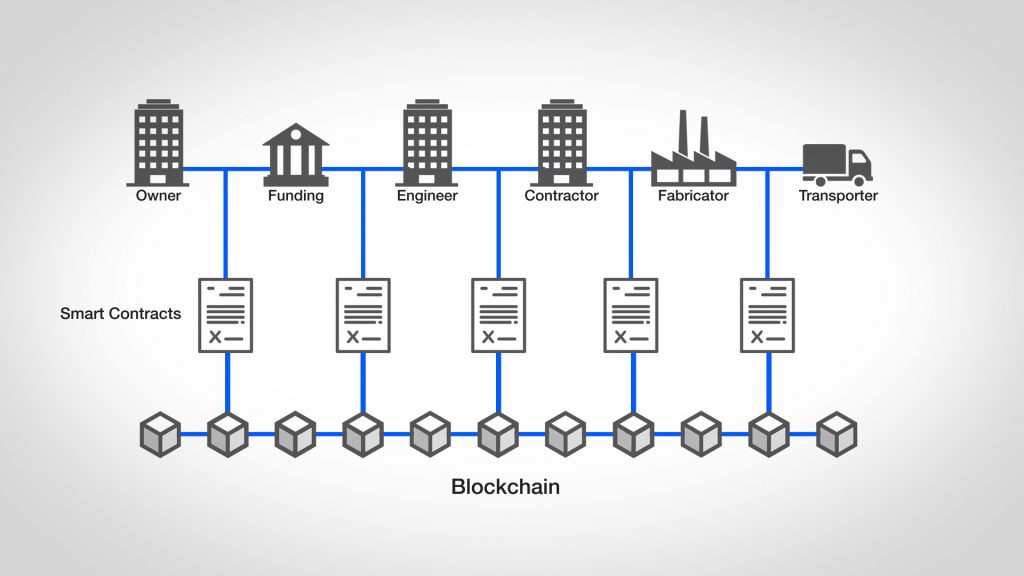
Blockchain and distributed ledger technology has the potential to improve building construction in several ways:
• Asset Tokenization: Some projects explore the idea of tokenizing real estate assets, including buildings, which can enable fractional ownership and increase liquidity in the real estate market.
• Supply chain management: Blockchain can be used to track building materials throughout the supply chain, from the manufacturer to the construction site. This can increase transparency and traceability, reduce fraud and counterfeiting, and improve quality control.
• Payment processing: Blockchain can be used to automate payment processing for construction projects, allowing for faster and more efficient payments that are verified through the blockchain. This can reduce payment disputes and delays and increase the speed of project completion.
• Smart contracts: Smart contracts can be used in building construction to automatically execute contractual obligations, such as making payments or releasing building plans when certain conditions are met. This can reduce the need for intermediaries and improve the efficiency of the construction process.
• Building maintenance and management: Blockchain can be used to create a decentralized database of building maintenance and management records, such as warranties, repair records, and energy usage. This can make it easier for building owners and managers to track and manage building maintenance, reducing downtime and costs.
• Decentralized project management: Blockchain can be used to create a decentralized platform for project management, allowing all stakeholders to have access to the same information and reducing the risk of miscommunication and errors.
Emergent vendors in this domain:
ImmVRse is a blockchain-based platform that is being developed to help with the design and construction of educational facilities. The platform uses virtual reality to create 3D models of buildings, which can be used to identify potential design flaws and optimize construction plans. The platform also uses blockchain to track project progress, reduce disputes, and facilitate payments.
Solar DAO is a blockchain-based platform that is being developed to fund renewable energy projects, including solar energy systems for educational facilities. The platform allows investors to fund solar energy projects and receive dividends based on the amount of energy generated. The platform also uses blockchain to track project progress and verify energy generation.
Blockcerts is a blockchain-based platform that is being used for digital credentialing in education. The platform allows educational institutions to issue digital certificates and diplomas that are verified through the blockchain, making them more secure and tamper-proof.
Widespread adoption of these technologies will require collaboration and standardization within the industry.
How Blockchain Will Change Construction
Don Tapscott – Ricardo Viana Vargas
Blockchain technology is among the most disruptive forces of the past decade. Its power to record, enable, and secure huge numbers and varieties of transactions raises an intriguing question: Can the same distributed ledger technology that powers bitcoin also enable better execution of strategic projects in a conservative sector like construction, involving large teams of contractors and subcontractors and an abundance of building codes, safety regulations, and standards?
“Increasingly, we are thinking more carefully about when and where we need to compete and what can we share and collaborate on,” said David Bowcott, global director of growth, innovation, and insight in Aon’s global construction and infrastructure group. Using blockchain to automate the contractual processes and paperwork underpinning these complex projects could save money, free up valuable resources, and speed up project delivery. (Unless otherwise noted, quotes are from interviews we conducted as part of our research.)
Bibliography
On-Site Construction Quality Inspection Using Blockchain and Smart Contracts
This content is accessible to paid subscribers. To view it please enter your password below or send mike@standardsmichigan.com a request for subscription details.
“Things aren’t all so tangible and sayable as people would usually have us believe; most experiences are unsayable; they happen in a space that no word has ever entered, and more unsayable than all other things are works of art, those mysterious existences, whose life endures beside our own small, transitory life.”
Barklune en Grutte Pier: Bernlef bliuwt it fertroude stikje yn Grins foar nije Fryske studinten https://t.co/MZAiZZwwx9 #omropfryslân
— Frysk (@FryskeTaal) August 17, 2023
New update alert! The 2022 update to the Trademark Assignment Dataset is now available online. Find 1.29 million trademark assignments, involving 2.28 million unique trademark properties issued by the USPTO between March 1952 and January 2023: https://t.co/njrDAbSpwB pic.twitter.com/GkAXrHoQ9T
— USPTO (@uspto) July 13, 2023
Standards Michigan Group, LLC
2723 South State Street | Suite 150
Ann Arbor, MI 48104 USA
888-746-3670