
Category Archives: Water
- Home
- Archive by category "Water" (Page 10)


Uniform Plumbing Code
This content is accessible to paid subscribers. To view it please enter your password below or send mike@standardsmichigan.com a request for subscription details.

Irrigation Sprinkler Heads
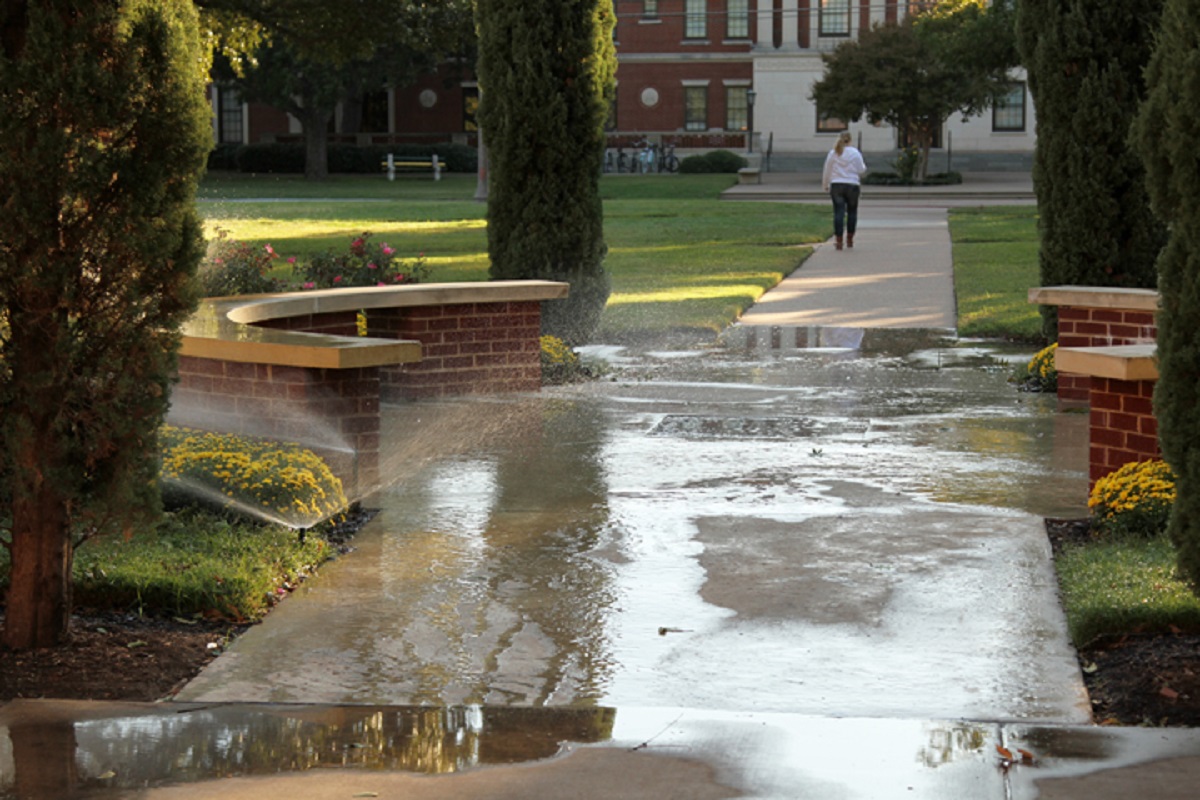
Baylor University | Meagan Downing | Lariat Photographer

A fairly stable, best practice product jointly developed by the International Code Council and the American Society of Agricultural and Biological Engineers — ASABE/ICC 802 Landscape Irrigation Sprinkler and Emitter Standard — was released for public consultation a few weeks ago; a required 5-year revision.
Prospectus: Establishes design and testing requirements for landscape irrigation sprinklers, bubblers, drip emitters and microsprays. Provides minimum design and performance requirements, and specifies uniform test methods for product performance. Sets definitions and product classifications for commonly used sprinklers and emitters. First edition of a new consensus standard developed through ICC’s ANSI-accredited standard development process in collaboration with the American Society of Agricultural and Biological Engineers (ASABE).
Redline of the proposed changes are available here: ANSI Standards Action Pages 53-56
Comments are due October 15th.
Even though the consultation period has since passed you may communicate with the project leader Fred Grable. P.E. Senior Staff Engineer and Secretariat for ICC 802 (fgrable@iccsafe.org)








Our resource allocation priorities place product and testing standards below interoperability standards because, frankly, the user-interest in education communities — despite its $300 billion annual spend on facilities — is outnumbered by Producer and General Interest stakeholders. Manufacturers (Producers) and Nationally Recognized Testing Laboratories (General Interests) can build the cost of their advocacy into the price of the product they sell to us according to ANSI’ stakeholder balance requirements. Many trade associations conform to business models that depend upon manufacturer support; particularly global industry manufacturing conglomerate support. These trade associations do re-route some of their revenue into educational and student support programs.
We keep most landscaping standards on our periodic Bucolia, Pathway and Water teleconferences. See our CALENDAR for the next online meeting; open to everyone.
Issue: [20-267]
Category: Pathways, Bucolia, Water
Colleagues: Richard Robben, Jack Janveja, John Lawter

Efficient Use of Water in Buildings

Student Art: “Water is Precious” 2012 / R.A. Karishka
The American Society of Heating and Refrigeration Engineers collaborates with the American Water Works Association, the American Society of Plumbing Engineers and the US Green Building Council on the development of a consensus document (ASHRAE/ASPE/AWWA 191P) that contributes to lower #TotalCostofOwnership in education communities; thus our interest.
The purpose of this collaborative best practice project is:
• Provide baseline requirements for the design of mechanical systems that minimize the volume of water required to operate HVAC systems.
• Balance environmental responsibility, resource efficiency, process efficacy, and community sensitivity.
• Support the goal of the development that meets the needs of the present without compromising the ability of future generations to meet their own needs.
A live public consultation opportunity was identified by our tracking algorithm. The public review draft is available at this link:
BSR/ASHRAE/ASPE/AWWA 191P: Standard for the Efficient Use of Water in Building Mechanical Systems
Comments are due September 27th.
You may comment directly at the portal linked below:
ASHRAE Online Standards Actions & Public Review Drafts.
We hold all ASHRAE standards on the standing agenda of our Water, Energy and Mechanical teleconferences. See our CALENDAR for the next online meeting; open to everyone.
Issue: 17-230
Category: Water, Plumbing
Colleagues: Richard Robben, Larry Spielvogel

Rainwater Catchment Systems 400

“Hanging Gardens of Babylon”
Earlier this year American Society of Plumbing Engineers released public review draft of its consensus product — ASPE 63 Rainwater Catchment Systems. The scope of this standard covers requirements for the design and installation of rainwater catchment systems that utilize the principle of collecting and using precipitation from a rooftop and other hard, impervious building surfaces. This standard does not apply to the collection of rainwater from vehicular parking or other similar surfaces.
Click on the link below to view the redline regarding U.S. EPA Guide Standard and Protocol for Testing Microbiological Water Purifiers or to NSF Protocol P231.
That is all we see from ASPE on this and other standards; most likely owing to the pandemic. ASPE typically posts its redlines in ANSI Standards Action and on the landing page for its standards development enterprise:
Note that many of its products are co-developed with NSF International, IAPMO and the American Rainwater Catchment Systems Association, among others. It is noteworthy that ASPE provides a detailed description of the User Interest; which enlightens understanding of the lamentable presence of the User Interest, thus the raison d’être of Standards Michigan.

University of Warsaw Rooftop Rain Garden
We place the ASPE suite on the standing agenda of our monthly Water teleconferences. See our CALENDAR about when and how to log in; always open to everyone.
Issue: [13-61]
Category: Water, Mechanical
Colleagues: Jack Janveja, Richard Robben, Larry Spielvogel
Readings / Estimating Water Demand in Buildings
This content is accessible to paid subscribers. To view it please enter your password below or send mike@standardsmichigan.com a request for subscription details.
Swimming Pool & Spa Code
This content is accessible to paid subscribers. To view it please enter your password below or send mike@standardsmichigan.com a request for subscription details.

Water Reuse Treatment Systems
This content is accessible to paid subscribers. To view it please enter your password below or send mike@standardsmichigan.com a request for subscription details.
Drinking Water
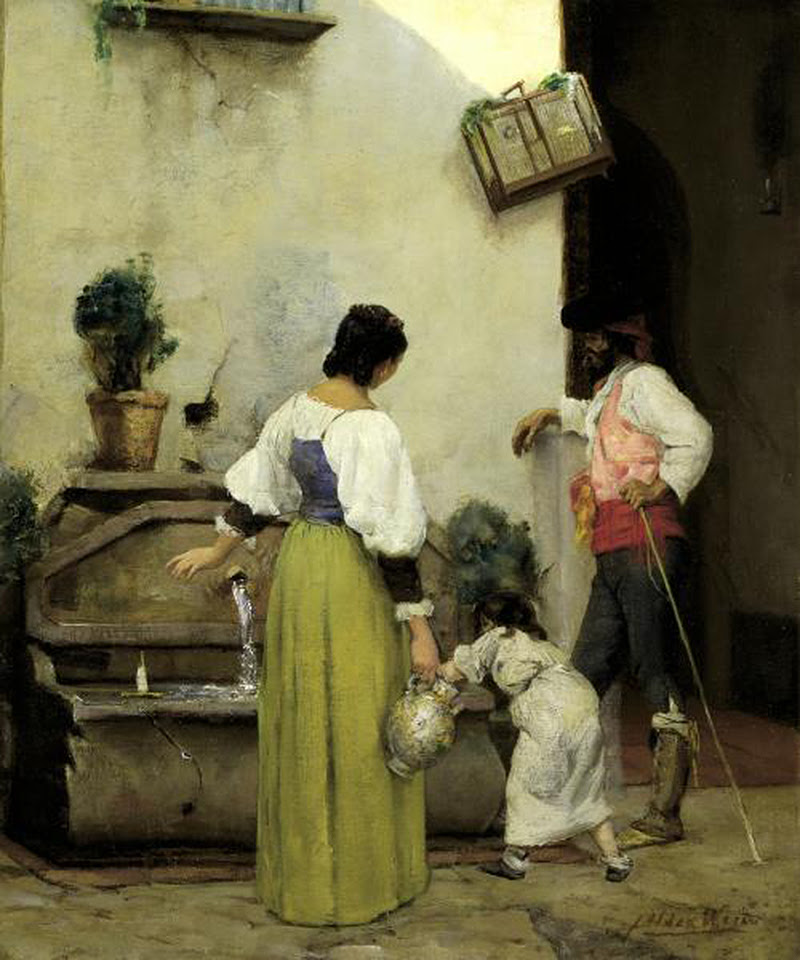
“At the Water Trough” 1876 / J. Alden Weir
NSF International — founded by University of Michigan public health faculty during the polio pandemic of the 1950’s — has since grown to be one of the first names in standard setting for public health; drinking water safety high among its priorities.
NSF International continuously maintains its consensus products on a continuous maintenance basis. NSF 53 Drinking Water Treatment Units is one of several related water safety titles in its bibliography:
It is the purpose of this Standard to establish minimum requirements for materials, design and construction, and performance of point-of-use and point-of-entry drinking-water treatment systems that are designed to reduce specific health-related contaminants in public or private water supplies. Such systems include point-of-entry drinking-water treatment systems used to treat all or part of the water at the inlet to a residential facility or a bottled water production facility, and includes the material and components used in these systems. This Standard also specifies the minimum product literature and labeling information that a manufacturer shall supply to authorized representatives and system owners, as well as the minimum service-related obligations that the manufacturer shall extend to system owners.
In last week’s ANSI Standards Action NSF International posted changes to NSF 53 Drinking Water Treatment Units; available at the link below:
ANSI Standards Action Pages 2 and 6
The proposed change remedies the lack of requirements for conditioning and conditioning volumes in the presence of microcystin; a type of toxin produced by freshwater blue-green algae.
Comments are due August 2nd.
Because NSF International posts its redlines in ANSI standards action, and also on NSF Online Workspace; it is easier respond to calls for public comment. This facility is especially important in the public safety domain.
You may communicate directly with the NSF Joint Committee Chairperson, Mr. Tom Vyles (admin@standards.nsf.org) about arranging direct access as an observer or technical committee member. Almost all ANSI accredited technical committees have a shortage of user-interests (compliance officers, manufacturers and installers usually dominate).
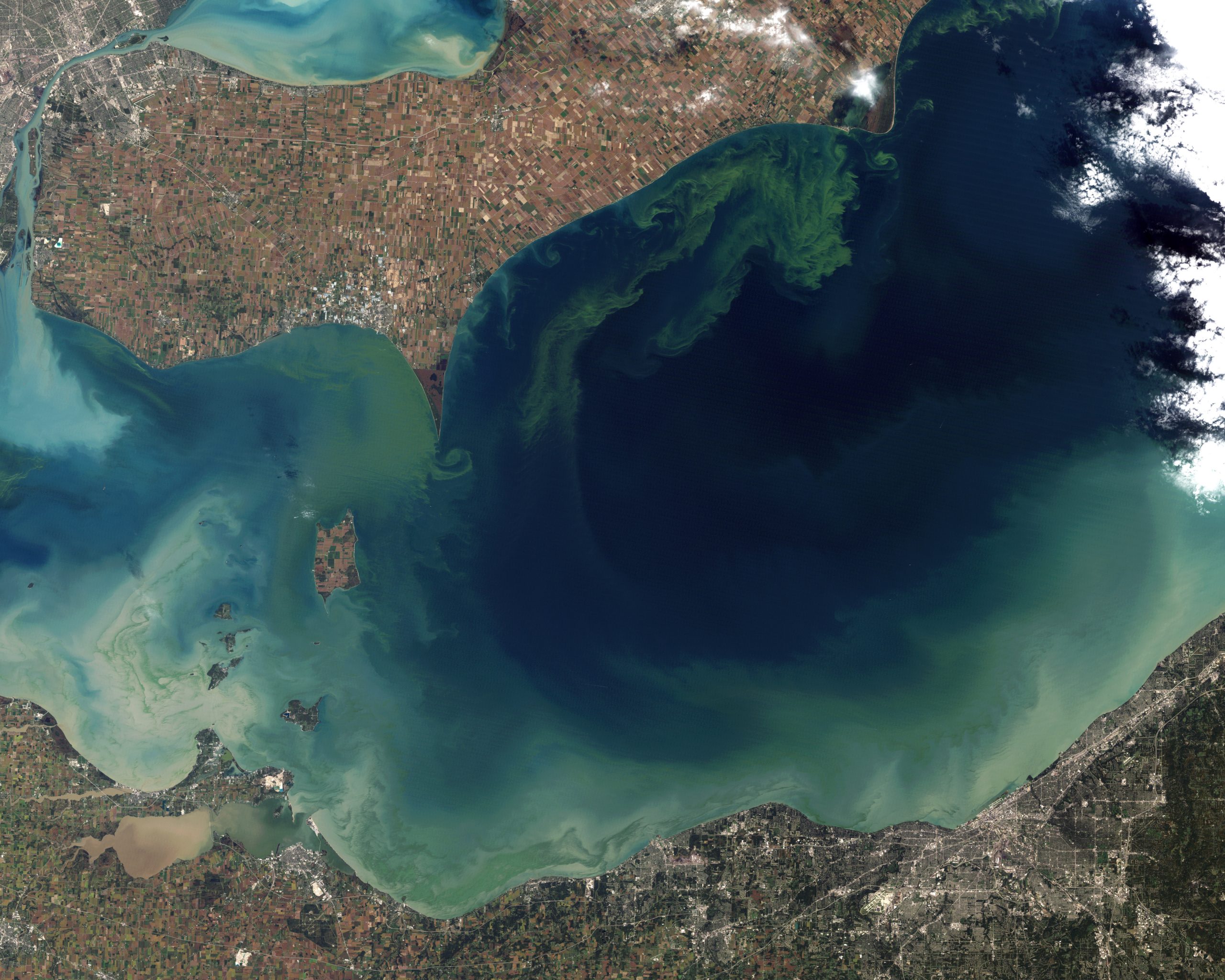
Lake Erie in October 2011, during an intense cyanobacteria bloom
We encourage front line staff with experience, data and war stories to participate by communicating with Tom Vyles. We also host a periodic teleconference on the topic of the twenty-odd water safety and sustainability consensus products that affect #TotalCostofOwnership of education communities. See our CALENDAR for the next Water and Sport teleconferences; open to everyone.
Issue: [13-89]
Category: Athletic Facilities. Water Safety
Colleagues: Mike Anthony, Ron George, Larry Spielvogel
Water Testing Standards ASTM
This content is accessible to paid subscribers. To view it please enter your password below or send mike@standardsmichigan.com a request for subscription details.
New update alert! The 2022 update to the Trademark Assignment Dataset is now available online. Find 1.29 million trademark assignments, involving 2.28 million unique trademark properties issued by the USPTO between March 1952 and January 2023: https://t.co/njrDAbSpwB pic.twitter.com/GkAXrHoQ9T
— USPTO (@uspto) July 13, 2023
Standards Michigan Group, LLC
2723 South State Street | Suite 150
Ann Arbor, MI 48104 USA
888-746-3670
DIRECTIONS
 |
 |
|
 |
 |
|
 |
 |