
Category Archives: Water
- Home
- Archive by category "Water" (Page 9)


Turning on the Fountain
This content is accessible to paid subscribers. To view it please enter your password below or send mike@standardsmichigan.com a request for subscription details.

Municipal Tap v. Bottled Water
This content is accessible to paid subscribers. To view it please enter your password below or send mike@standardsmichigan.com a request for subscription details.



Measuring Organic Pollutants
This content is accessible to paid subscribers. To view it please enter your password below or send mike@standardsmichigan.com a request for subscription details.

Anthropogenic warming versus multidecadal natural oscillations
This content is accessible to paid subscribers. To view it please enter your password below or send mike@standardsmichigan.com a request for subscription details.

Emergency Shower & Eyewash Testing
This content is accessible to paid subscribers. To view it please enter your password below or send mike@standardsmichigan.com a request for subscription details.

H.R. 1863 Public School Green Rooftop Program

117th Congress Swearing In Floor Proceedings – January 3, 2021, House Chamber

Artificial Intelligence Applications to Achieve Water-related Sustainable Development Goals
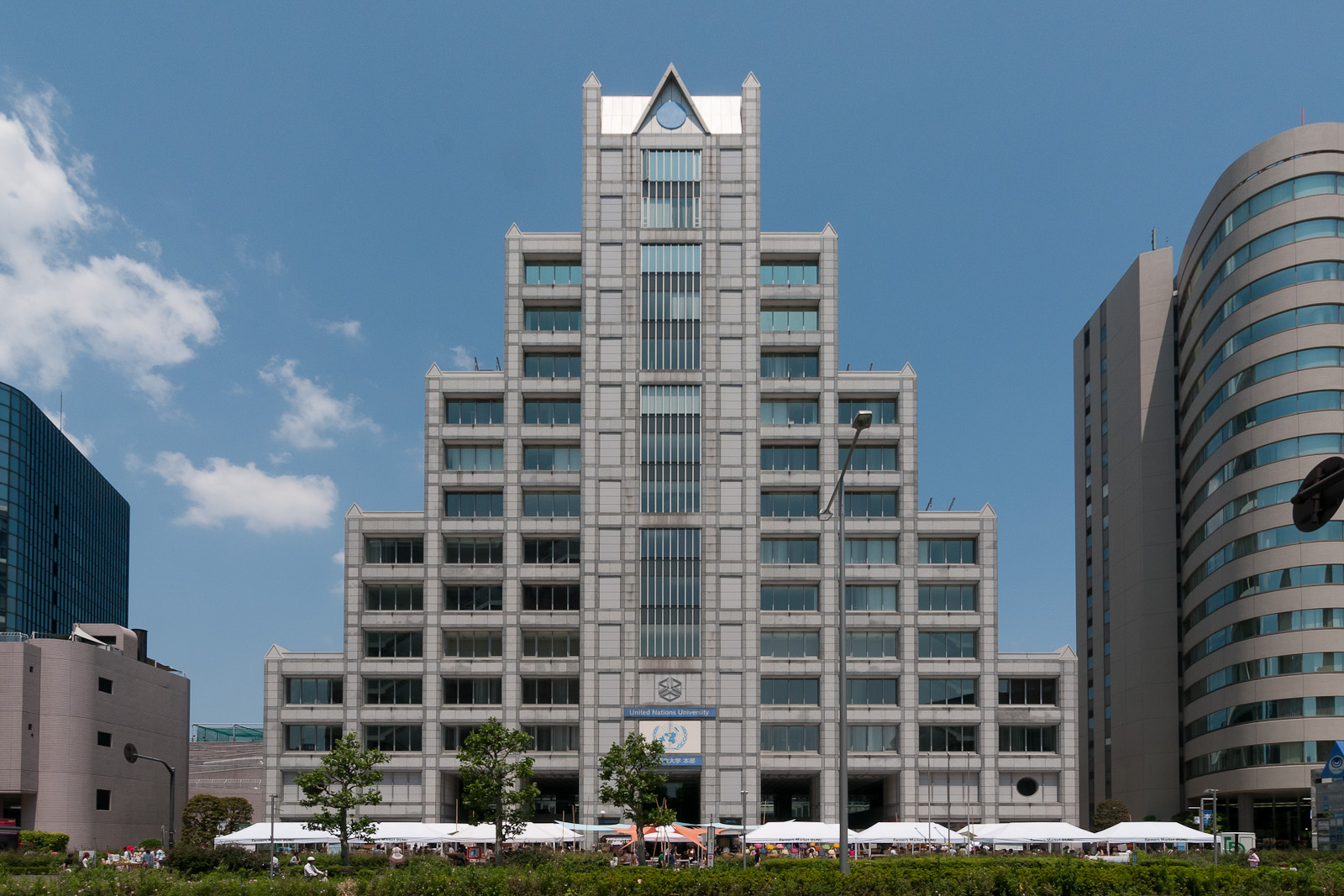
国際連合大学
Abstract: This paper reviews the Artificial Intelligence (AI) applications that help achieve water-related Sustainable Development Goals (SDGs). Current applications of AI in the water sector include i) predictive maintenance of water infrastructure, ii) forecasting water demand and consumption, iii) monitoring water reservoirs and dams, iv) tracking water quality, and v) monitoring and predicting water-related disasters. These applications contribute to achieving water-related SDG targets, specifically 3, 6, 11, and 15. The literature review shows that: i) the rate of adoption of AI-based solutions in predictive maintenance of water infrastructure has accelerated, as AI becomes increasingly accessible, and data analytics and smart sensors become more efficient and affordable; ii) deep learning technology has enabled a new generation of water management systems, which can generate short-term (daily) and long-term (annual) forecasts. iii) as Asia and South America experience an increase in water reservoir and dam construction, AI-based techniques are being successfully implemented in reservoir development and operation; iv) water quality monitoring has been the most significantly impacted by AI relative to other applications, as AI is used to examine small samples and large water bodies, and for real time water quality monitoring; v) AI can be used to forecast water-related disasters with higher accuracy, frequency and lead time, allowing for focused management of post-disaster activity. The paper ends by highlighting the challenges of adopting AI to achieve water-related SDGs.

CLICK HERE to order the complete paper
New update alert! The 2022 update to the Trademark Assignment Dataset is now available online. Find 1.29 million trademark assignments, involving 2.28 million unique trademark properties issued by the USPTO between March 1952 and January 2023: https://t.co/njrDAbSpwB pic.twitter.com/GkAXrHoQ9T
— USPTO (@uspto) July 13, 2023
Standards Michigan Group, LLC
2723 South State Street | Suite 150
Ann Arbor, MI 48104 USA
888-746-3670
DIRECTIONS
 |
 |
|
 |
 |
|
 |
 |