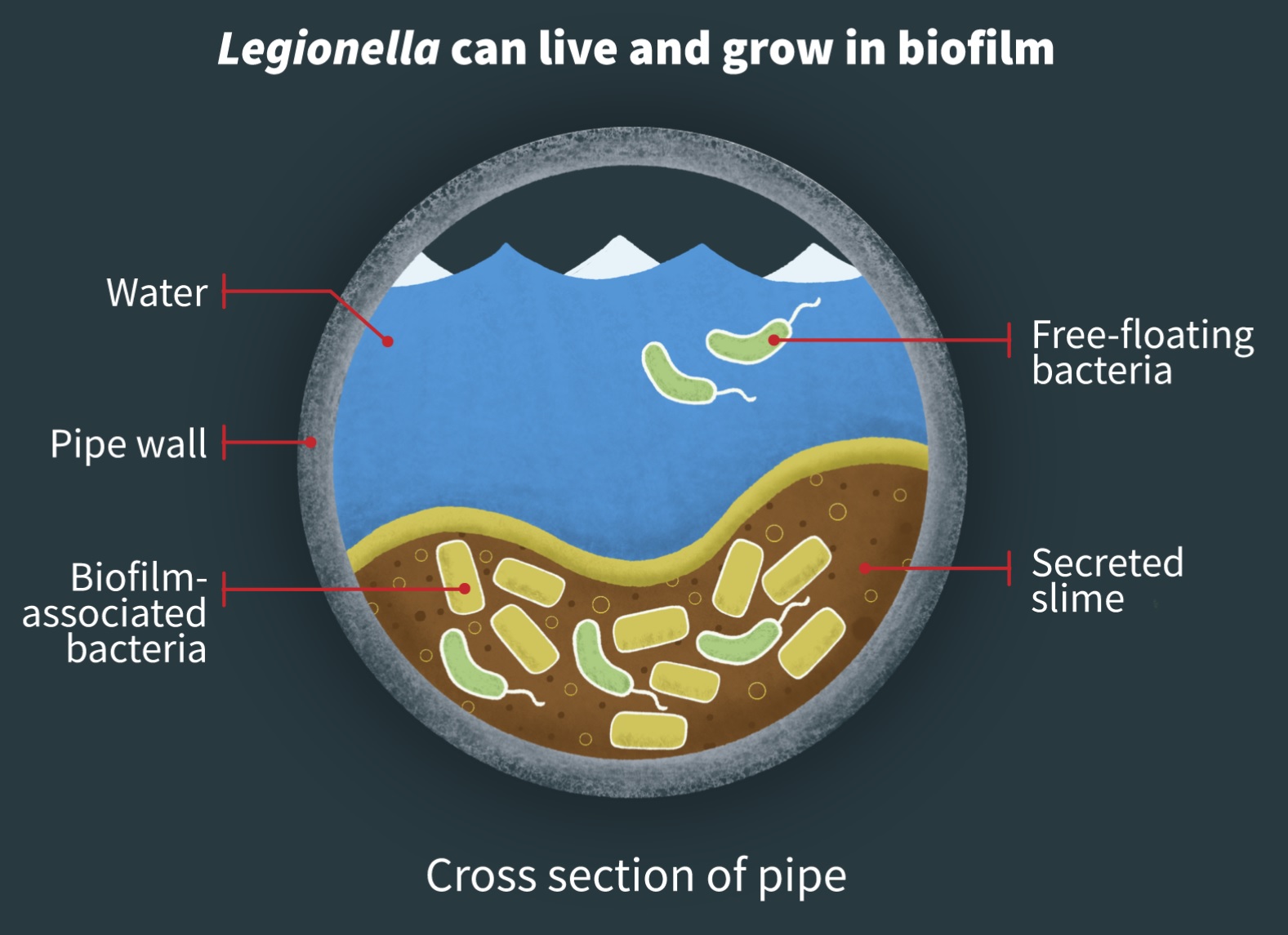
“…To combat the challenges that plumbing designers face, the NIST report recommends that researchers address a plethora of questions, including how water is used in different types of buildings, how water flow and plumbing design affect water quality, what factors influence chemical reactions and bacterial growth in pipes, and how fast water quality declines in plumbing systems…”
Abstract: With the rapid deployment of smart technologies and the growing complexity in our modern society, there is a huge demand for coordination in day-to-day operation of the critical infrastructure networks. The coordination between water and electricity networks particularly stands out and is urgently demanding as (i) water system is one of the most energy-intensive critical infrastructure, and (ii) water unavailability, if experienced, swiftly translates into a health, safety, and national security concern. This paper proposes a comprehensive day-ahead optimization framework for joint operation of the interdependent power and water systems. Different from the conventional paradigms where the power and water systems are independently and individually operated by their respective operators, the proposed optimization framework integrates the Optimal Power Flow (OPF) models in power grids with innovative models of the water distribution systems. The nonlinear hydraulic operating constraints in the proposed optimization models are linearized, resulting into a mixed-integer linear programming (MILP) model formulation. The proposed framework is applied to three 15-node water distribution systems, operated within the IEEE 9-bus test system. The simulation results demonstrate a significant cost saving that will be achieved when the proposed approach is applied for joint operation of power and water networks.
Abílio C. Da Silva Júnior – Aloísio V. Lira Neto – Victor Hugo C. De Albuquerque
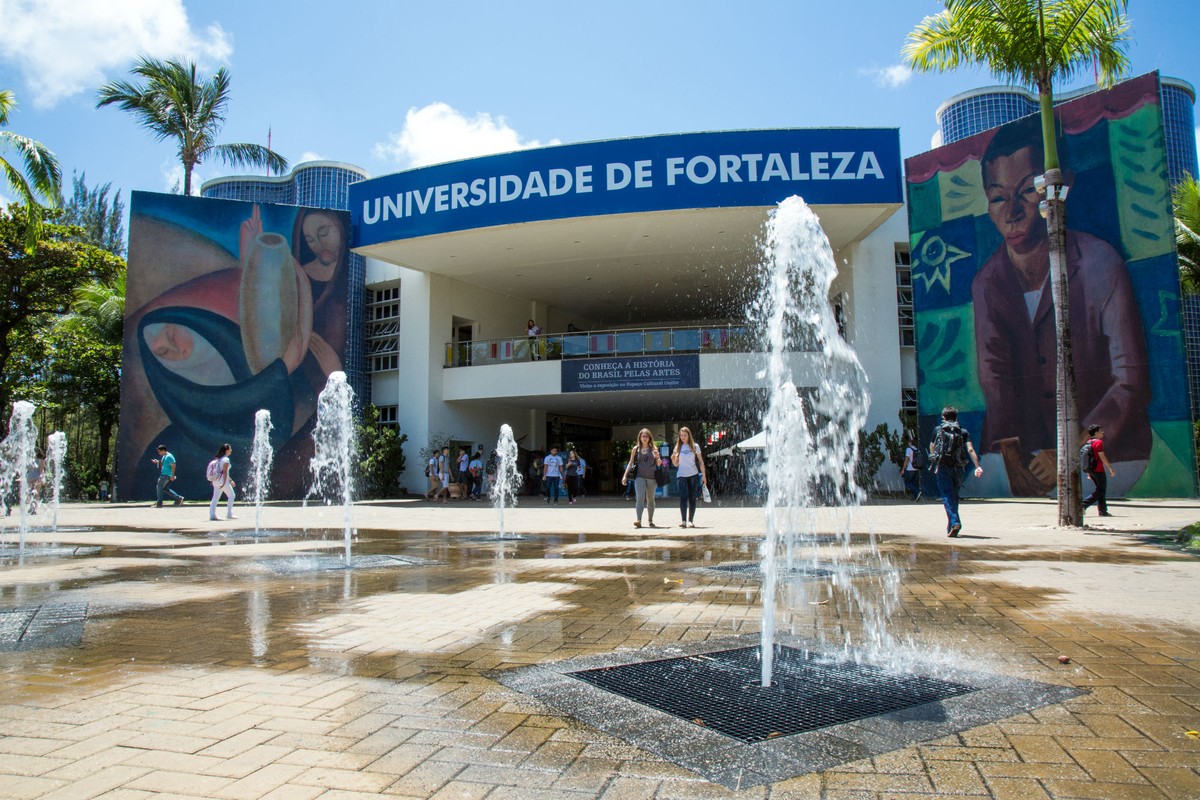
Universidade de Fortaleza
.
Roberto Munoz
Universidad de Valparaíso
.
María De Los Ángeles Quezada
Instituto Tecnológico de Tijuana
.
Mohammad Mehedi Hassan
King Saud University
.
Abstract: The scarcity of the planet’s water resources is a concern of several international entities and governments. Smart solutions for water quality monitoring are gaining prominence with advances in communication technology. This work’s primary goal is to develop a new online system to monitor and manage water resources, called Internet of Water Things (IoWT). The proposed system’s objective would be to control and manage raw water resources. Thus, it has developed a platform based on the server-less architecture and Internet of Things Architectural Reference Model, in which it is applied in a simulation environment, considering several electronic devices to validate its performance. For this research, there is a system for capturing raw water from tubular wells. Each well has a level sensor, a temperature sensor and a rain gauge. The data is collected every minute by an electronic device and sent every hour to the IoWT system. From data analysis, the amount of memory allocated to functions minimally interferes with efficiency. The IoWT system, applied in a real case, consists of connecting a device installed in a water well to the platform, where the data is transmitted through a 3G network and then processed. Thus, the proposed approach has great potential to be considered a complementary tool in monitoring raw water and assisting in decision-making for the management of water resources.
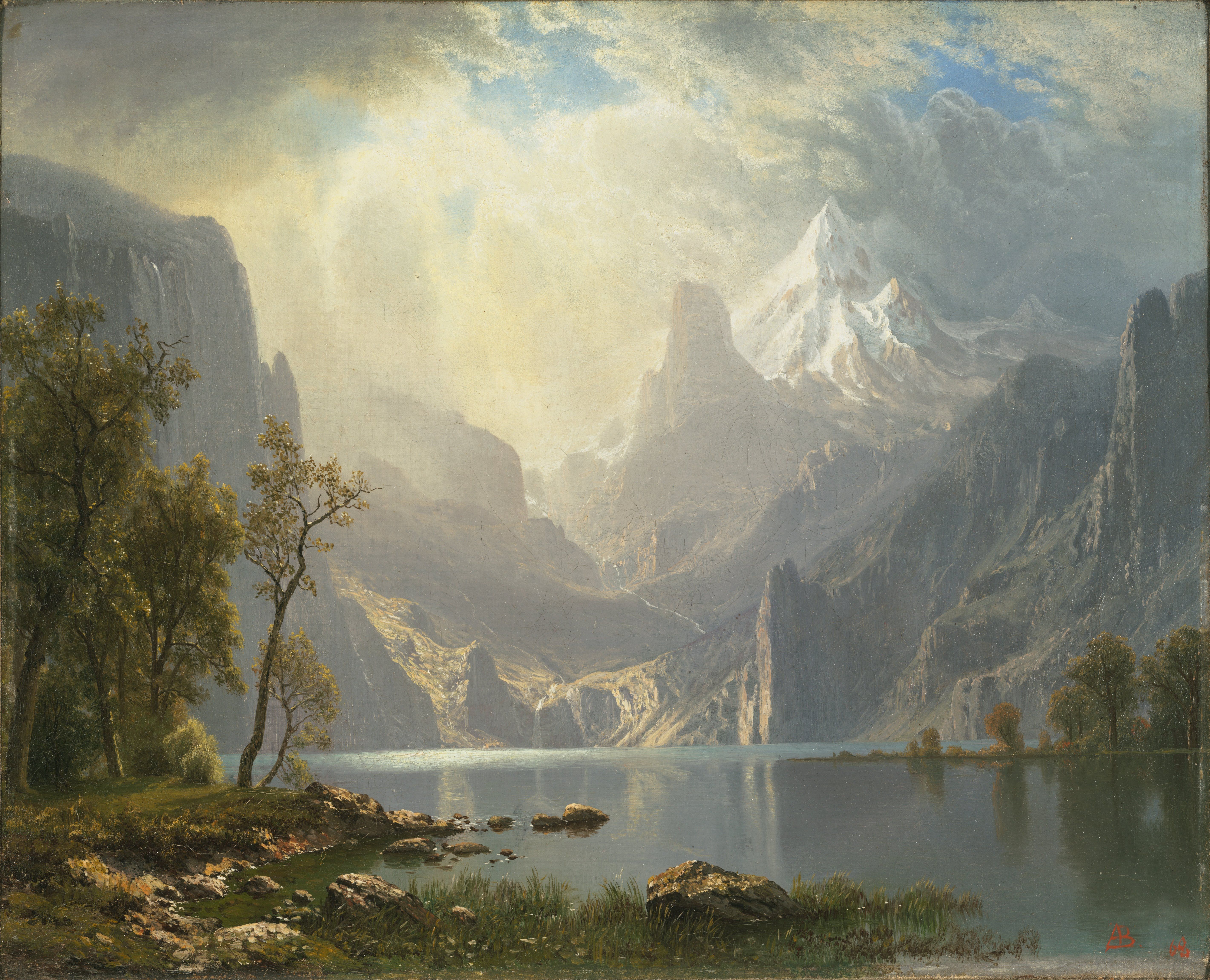
Harvard University Art Museum | In the Sierras, Lake Tahoe | Albert Bierstadt
Best is water
— Pindar 476 B.C.
The American Water Works Association (AWWA) has an extensive catalog that sets the standard of care for water quality and piping systems running through all communities.
We approach them from the point of view of education communities; some with agriculture, vast hospital systems heavily dependent upon a higher level of water quality and district energy plants. Like most every technology in the United States, water issues enliven political discourse. Essential features of water supply — such as backflow protection, separation, piping systems to playground water fountains, etc. — are subordinated to fury over to access and tariff issues. For the moment we steer away from them.
The landing page for the AWWA standardization enterprise is linked below:
The original University of Michigan standards advocacy enterprise engaged in some back-and-forth with the backflow and cross-connection technical committees. It found ambiguity in the language found in AWWA C510-C511-C512 covering reduced pressure zone (RPZ) values that caused some education facility units to over-specify RPZ valves for all facility classes. Many research universities have enterprises that create toxic water waste which must be blocked from entering the municipal water supply. Some of that back-and-forth is recounted in the workspace linked below.
We found that minimum requirements for backflow prevention technology was easier managed at state level plumbing safety administrative boards.
Several AWWA standards are now open for public review; AWWA G430 Security Practices for Operation and Management among them. We point you toward them; though, in the interest of resource conservation, we will follow but not advocate user-interest in this product at the moment. It appears to have stabilized compared with other standards in the water safety domain (though that could change).
Comments due August 9th.
We find AWWA best practice literature heavily referenced in school district, college and university design guidelines and construction contracts. We do a status check of the AWWA suite every month during our Water teleconferences. See our CALENDAR for the next online meeting; open to everyone.
#Backflow Incident: A winery in a small town of Italy, backpressures 1,000 liters of wine into the water supply. The cause, a faulty valve.https://t.co/pFMIUSfwfp
Legionella risk is a domain rich in possibilities for lawsuits so we should not be surprised that best practice titles in the ASHRAE suite — and other standards bibliographies — go unstable with new findings. We encourage facility units in education communities to contribute data to technical committees and to participate directly. you may access titles open for public comment at the link below:
ASHRAE runs one of the best public consultation facilities in the United States. Its titles appear in most of our daily colloquia; this one best practice titles are on the standing agendas of our Energy, Mechanical, Water 200/Water 400 and Risk colloquia. See our CALENDAR for the next online meeting; open to everyone.
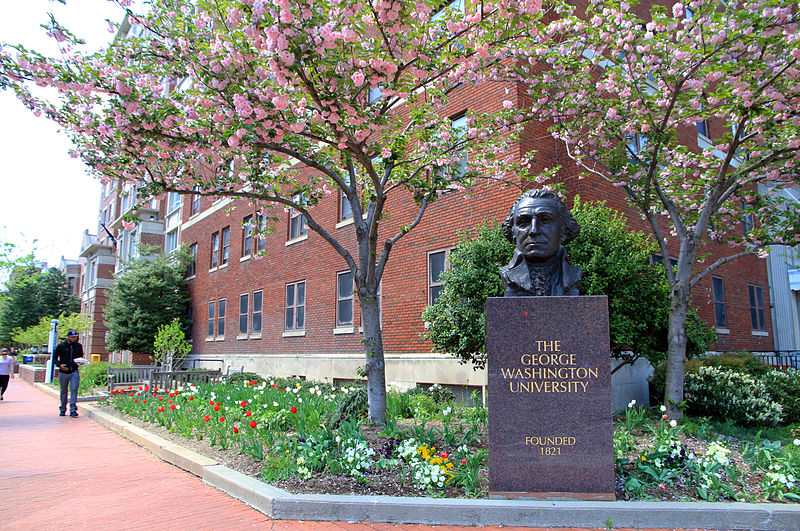
Columbia University
Issue: 12-42
Category: Mechanical Engineering, Occupational Health & Safety, Water
Colleagues: Richard Robben, Ron George, Larry Spielvogel
Water standards make up a large catalog and it will take most of 2023 to untangle the titles, the topics, proposals, rebuttals and resolutions. When you read our claim that since 1993 we have created a new academic discipline we would present the best practice literature of the world’s water standards as just one example.
During the Water 200 session we reckon with best practices inside buildings. During the Water 400 session will run through water management outside buildings, including interface with regional water management systems.
Water safety and sustainability standards have been on the Standards Michigan agenda since the early 2000’s. Some of the concepts we have tracked over the years; and contributed data, comments and proposals to technical committees, are listed below:
Send bella@standardsmichigan.com an email to request a more detailed advance agenda. To join the conversation use the login credentials at the upper right of our home page.
This topic is in the process of being re-organized. We present the relevant literature for now. See our CALENDAR for the break out session later in 2023.
This content is accessible to paid subscribers. To view it please enter your password below or send mike@standardsmichigan.com a request for subscription details.
This content is accessible to paid subscribers. To view it please enter your password below or send mike@standardsmichigan.com a request for subscription details.
New update alert! The 2022 update to the Trademark Assignment Dataset is now available online. Find 1.29 million trademark assignments, involving 2.28 million unique trademark properties issued by the USPTO between March 1952 and January 2023: https://t.co/njrDAbSpwBpic.twitter.com/GkAXrHoQ9T