




“The most important role of technology is to create time.
Information technology epitomizes this role.
And wealth creation is ultimately about time,
freeing human time from labor.”
— George Gilder

L’italiano Luca Pacioli, riconosciuto come “Il padre della contabilità e della contabilità” è stato il primo a pubblicare un’opera sulla partita doppia, e ha introdotto il campo in Italia.
“Hatred of the rich is the
beginning of all wisdom”
— H.L. Mencken
Today we break down the literature that informs the finances of the real assets of education settlements. We examine a few publicly available university annual budget documents and, lately, have been looking ahead at innovation in distributed ledger solutions, digital currencies and blue sky conceptions of a circular economy which has captured the imagination of trendsniffers in every nation.
Since our 2016 estimate of $300 billion — triangulated from several private and public databases; the number that measures construction spend coupled with operations and maintenance — a fair estimate of growth is likely closer to $500 billion now. Based upon the US Census Bureau monthly construction spend reports we have seen a slight uptick in construction spend. We still see construction activity running at an $85-$90 billion clip.
During 2023-2024 we will be breaking down this subject into manageable segments as interest in it clarifies. For now it is enlightening to approach finance standards with an examination of a few operating budgets:
San Jose State University 2022/2023 SJSU Budget Report
University of Minnesota 2022 Final Capital Budget Requests with Governor’s Recommendations
The 2022-2023 Budget: Overview of the Governor’s Higher Education Budget Proposals (California)
Prince George County Public Schools Operating Budget 2022
University of Illinois Deferred Maintenance
Central Michigan University Capital & Deferred Maintenance Budgets
Every dollar passing through the business or academic side of the education industry has rules for how it is received and tracked.* At the moment we track, but do not dwell, on the grant management standards asserted by state and federal funding agencies. When we do, we place them on the agenda of the appropriate colloquium.
Money, money, money… 😳 pic.twitter.com/Ssyz5PQPVV
— Agnieszka Herrmann (@AgaHerrmann) February 4, 2022
Appropriate use of public funding underlies some — but not all — of the accounting burden of the education industry. We steer clear of the grant management requirements public funding agencies place upon the education industry; maintain focus on the titles developed and published by organizations that have a due process platform. For example:
Accredited Standards Committee X9
Financial Industry Standards: Program of Work
Data Center OIX-2 Certification
Sustainability Accounting Standards Board
There are several trackworthy non-ANSI accredited standard developing organizations:
Sustainability Accounting Standards Board
Real Estate Information Standards Board
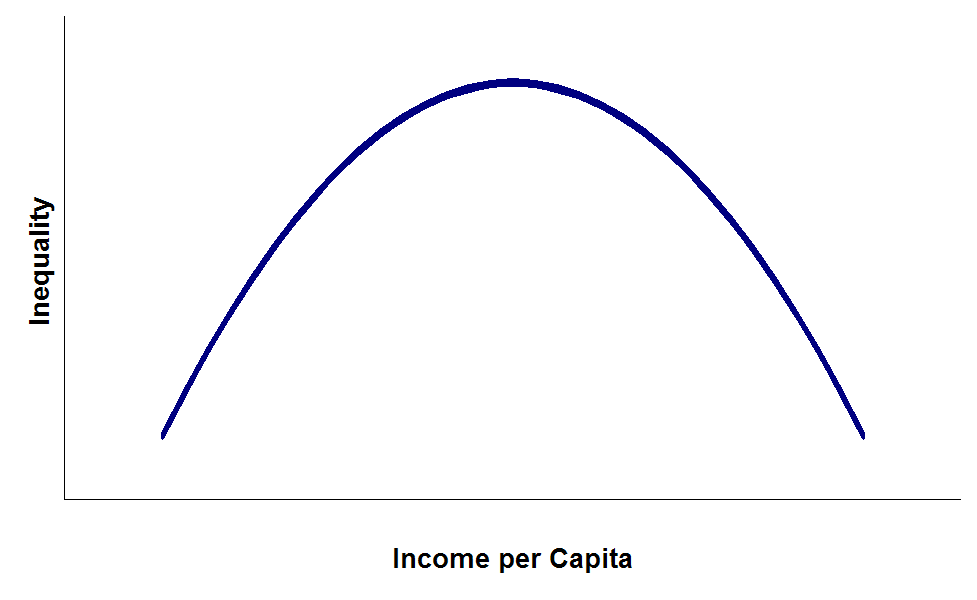
Kuznets curve
Send bella@standardsmichigan.com an email for a detailed advance agenda. To join the colloquium today use the login credentials at the upper right of our home page.

“De armen en het geld” 1882 Vincent van Gogh
More:
Community FY22 Appropriations Request Letterdocx
Letter-Tax-Provisions-American-Jobs-Families-Plans-061421
Half the people working in schools aren’t classroom teachers—so what?

CLICK ON IMAGE FOR DOWNLOAD

In our collaboration with the IEEE Education & Healthcare Facilities Committee we are sensitive to the point of view of our research and standards setting colleagues in other nations; among them CEN (European Committee for Standardization) and CENELEC (European Committee for Electrotechnical Standardization) are two standardization organizations in Europe, and they have some similarities and differences.
Another key difference between CEN and CENELEC is their membership. CEN has members from 34 European countries, including national standardization bodies, industry associations, and consumer organizations. CENELEC has members from 34 European countries as well, but they are limited to national electrotechnical committees, which are responsible for electrotechnical standardization in their respective countries.
Despite their differences, both CEN and CENELEC play important roles in the development and promotion of European standards, and their standards are widely recognized and used across Europe and beyond. Its leadership committees meet this week in Brussels. CLICK HERE to access videolinks.
We had the pleasure to welcome the new CENELEC President Elect Mr Riccardo Lama at our offices, for a moment to engage with the CEN and CENELEC senior management team and the CEN and CENELEC Presidents Mr Stefano Calzolari and Mr Wolfgang Niedziella.@CEInorme @IECStandards pic.twitter.com/ynk9ViWb60
— CEN and CENELEC (@Standards4EU) January 17, 2024
Electropedia: The World’s Online Electrotechnical Vocabulary

Distributed Ledger Technology
The U.S. Commerce Department’s National Institute of Standards and Technology (NIST) issued a draft report — and a commenting opportunity the repport — that details a high-level technical overview of blockchain technology, its architecture, and how it works as the foundation of modern cryptocurrencies. NIST requested feedback from the public and private sectors, national and international, for the final publication. The document, Draft NIST Interagency Report (NISTIR) 8202: Blockchain Technology Overview, provided an in-depth look at the technologies that compromise blockchain systems and breaks down how blockchains can best be utilized, and how blockchain technology can be an asset to a business and its products.
“We want to help people understand how blockchains work so that they can appropriately and usefully apply them to technology problems,” said Dylan Yaga, a NIST computer scientist and co-author of the report. “It’s an introduction to the things you should understand and think about if you want to use blockchain.”
The report appears to have integrated public comment and now a landing page for NIST work in this area — as well as contact information for project leaders — is linked below
NIST Report on Blockchain Technology Aims to Go Beyond the Hype
Blockchain Technology Overview
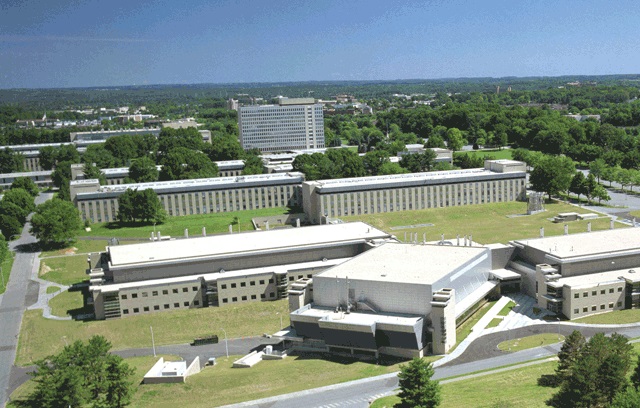
NIST Headquarters / Gaithersburg, Maryland
Blockchain technology is a standing item on our Blockchain and Finance colloquia; open to everyone. Keep in mind that blockchain is a nascent (or “pre-adoption”) technology.
Issue: [18-25]
Category: Finance, Academics, Administration & Management
Colleagues: Mike Anthony, Jack Janveja, Richard Robben
Private universities own and manage real estate properties; many of them of historical significance spanning across centuries with settings similar to public universities — academic buildings, research facilities, student housing, administrative offices, and other amenities.
Public universities usually have larger campuses with a mix of owned and leased properties. The specific real estate holdings and their status can vary widely depending on the university’s size, location, and funding. Some public universities have vast land holdings and extensive real estate portfolios and engage in real estate development projects to expand their campuses, construct new buildings, or create public-private partnerships.
Finally got to meet him in person. pic.twitter.com/eQ2SWJfaM7
— Esteban Rossi-Hansberg (@HansbergRossi) August 10, 2023
#Standards helfen, Ergebnisse aus Forschungs- und Innovationsprozessen schneller zu marktfähigen Produkten und Dienstleistungen zu machen. Wie die Brücke erfolgreich geschlagen werden kann, erfahren Sie am 13. Juni live in Wien.💡🌍💫https://t.co/rupEcLC0qK #Bridgit pic.twitter.com/3vRVQjbWYq
— Austrian Standards (@ATstandards) May 20, 2019

We find a few ANSI-accredited financial service standards developers with meaningful effect upon #TotalCostofOwnership of the real assets of the education industry; though consortia* are the rule, rather than the exception. Education community use of public money requires rigorous oversight; with some of the nuttiest party/counterparty regimes imaginable.
That much said we find that the existing suite of financial service standards coming from Geneva are too high level to have direct perceptible effect on money flows through the $300 billion education facility industry. Still, the best practice originating from ISO administration are noteworthy as prospective policy templates.
Vocabulary, instrument lexicon and data exchange issues are important; especially for a global industry (CLICK HERE for ISO TC/68 titles).
We limit our interest to the arcane and rather dreary world of tax-free bonds that school districts, colleges and universities rely upon to fund capital improvements and “continuing operations”. We see the prospect of disruption on the horizon as distributed ledger technologies roll out; the topic of our monthly Blockchain teleconferences. See our CALENDAR for the next online meeting; open to everyone.
For the moment, let us acknowledge Technical Committee 68 of the International Standardization Organization for which the American National Standards Institute is the Global Secretariat. The prospectus of this standardization project is linked below:
ISO/TC 68 Financial services: Background, structure and information
For obvious reasons, because the finance sector runs on the order of 20 percent of any economy there are many nations involved and a respectable number of published standards.
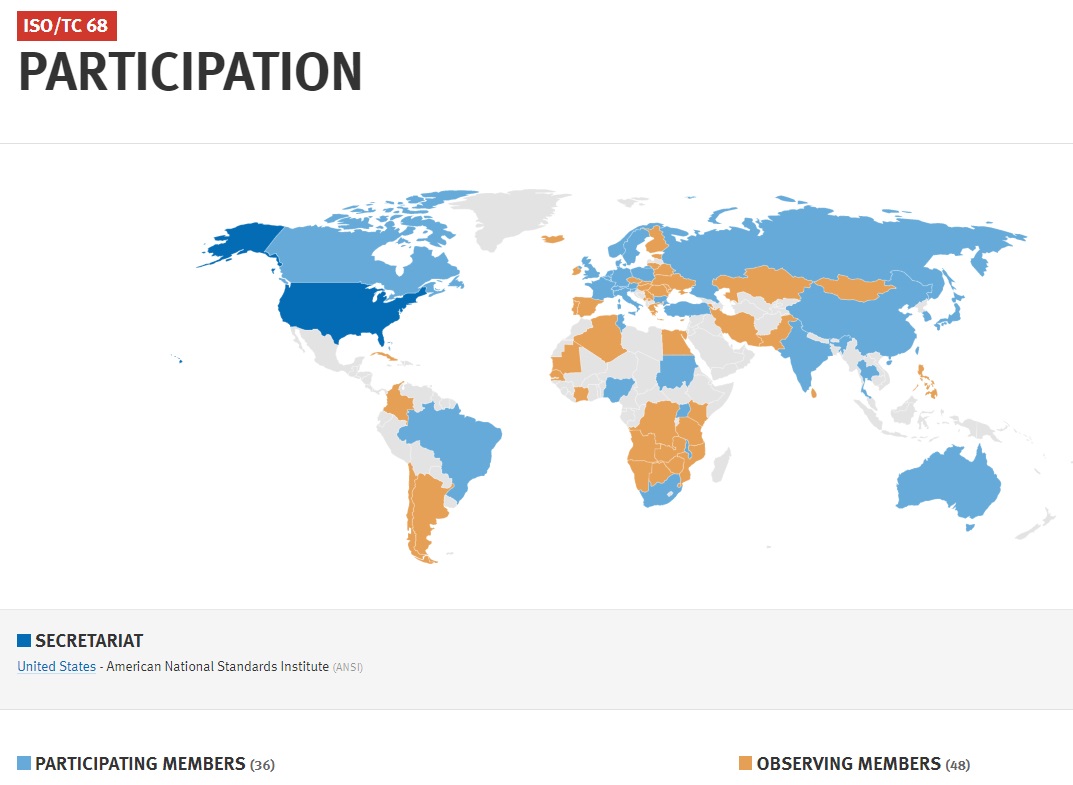
This section of the ISO catalog may interest business school and/or international studies students. We are happy to point students in the right direction any day during our 11 AM/ET “open office hours” teleconferences.
Finance staff on the business side of the education industry, who would like to keep pace with the rollout of smart contracts in grant and infrastructure enterprises, are encouraged to communicate directly with Accredited Standards Committee X9, Inc. for more information about the US Technical Advisory Group. Janet Busch is listed as the contact person (janet.busch@x9.org). Our colleagues in other nations interested in participating should communicate directly with Stefan Marinkovic at the ISO Offices in Geneva (marinkovic@iso.org)
We keep all ISO standards on the standing agenda of our International and Finance standards monthly teleconferences. See our CALENDAR for the next online meeting.
Issue: [16-135]
Category: Finance, International, Blockchain
Colleagues: Mike Anthony, Christine Fischer, Richard Robben
An exploration of the resemblance of 17th Century France academia and the present 21st Century United States academia in upending hard won, and hard to keep civilization. The Jacobins are out there.
https://www.study.eu/university/universite-de-paris
The Jacobins were a radical political faction during the French Revolution, known for their role in advocating for and implementing significant social and political changes. They played a crucial role during the most intense phase of the Revolution, particularly between 1792 and 1794.
The Jacobins were originally a debating society founded in 1789 by a group of liberal and reform-minded individuals who wanted to discuss political and social issues. As the Revolution progressed, their influence grew, and they evolved into a more cohesive political group with a particular focus on advancing republican ideals and social equality.
Key characteristics of the Jacobins during the French Revolution included:
The legacy of the Jacobins is complex and debated. They were instrumental in pushing forward radical reforms and republican ideals, but their methods, especially during the Reign of Terror, have also been criticized for their brutality and disregard for human rights. The Jacobins’ role in the French Revolution remains a topic of historical analysis and interpretation.
The Jacobin debating society in French was called “Société des Amis de la Constitution” or “Society of the Friends of the Constitution.” This society was initially formed in 1789 as a political club focused on discussing and advocating for constitutional reforms in France. Over time, it evolved into a more radical and influential political faction during the French Revolution, known simply as the “Jacobins.”
The University of Paris, particularly the Faculty of Arts, had a notable affiliation with the Jacobins during the French Revolution. The Faculty of Arts, also known as the Collège de France, was a center of education and intellectual activity in Paris. Many influential Jacobin leaders and supporters were educated at the University of Paris and were influenced by Enlightenment ideas that circulated within its academic circles.
Robespierre, one of the most prominent Jacobin leaders, studied law at the University of Paris. His education and exposure to revolutionary ideas played a role in shaping his political beliefs and his eventual leadership within the Jacobin movement.
It’s important to note that while the University of Paris had connections with the Jacobins, the movement itself was not limited to any single institution. The Jacobins had a broader presence throughout France and drew support from various social and educational backgrounds.
————-
the Jacobins were responsible for the mass killings that occurred during the Reign of Terror, which involved the extensive use of the guillotine as a method of execution. The Reign of Terror, a period from 1793 to 1794, was marked by extreme political repression and violence carried out by the Committee of Public Safety, a powerful body dominated by Jacobin leaders.
During the Reign of Terror, the Committee of Public Safety, under the leadership of figures like Maximilien Robespierre, implemented measures to suppress perceived enemies of the French Revolution and to root out counter-revolutionary activities. This led to the establishment of revolutionary tribunals that conducted trials and issued death sentences, often with little regard for due process.
The guillotine became the primary method of execution during this time because it was seen as a more egalitarian and efficient way of carrying out executions compared to previous methods. The guillotine was used to execute not only members of the aristocracy and perceived enemies of the Revolution but also a significant number of common citizens who were accused of being counter-revolutionaries or threats to the state.
The widespread and systematic use of the guillotine during the Reign of Terror resulted in a staggering number of executions across France. While the Reign of Terror was carried out under the banner of the Committee of Public Safety, the Committee was heavily influenced and led by Jacobins, making them directly responsible for the policies and actions that led to the mass killings during that period.
New update alert! The 2022 update to the Trademark Assignment Dataset is now available online. Find 1.29 million trademark assignments, involving 2.28 million unique trademark properties issued by the USPTO between March 1952 and January 2023: https://t.co/njrDAbSpwB pic.twitter.com/GkAXrHoQ9T
— USPTO (@uspto) July 13, 2023
Standards Michigan Group, LLC
455 East Eisenhower Parkway, Suite 300
Ann Arbor, MI 48108 USA
888-748-3670
 |
 |
|
 |
 |
|
 |
 |