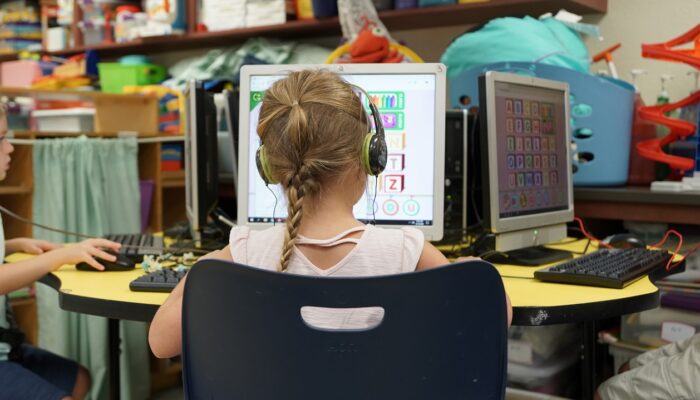
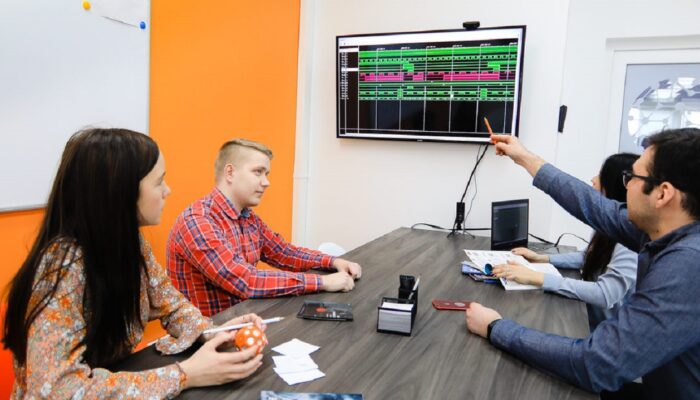
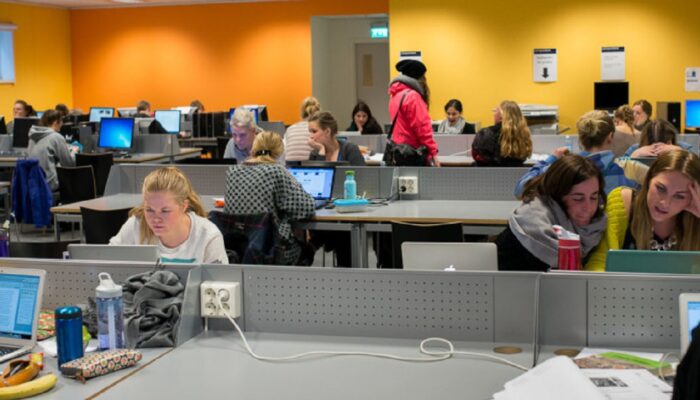
The Institution of Engineering and Technology is leading an inquiry into how the rapidly increasing reliance on digital technology, accelerated by the pandemic, may have a long-term impact on our social and economic wellbeing. A detailed prospectus is linked below
The consultation closed on January 20th but, as we do with many IET titles, we maintain the project on the standing agenda of our Infotech colloquia and our 4 times monthly collaboration with the IEEE Education & Healthcare Facilities Committee; all online gatherings open to everyone. You may communicate directly with Duncan Kenyon (duncankenyon@theiet.org) for additional information.
Issue: [20-288]
Category: Infotech, Telecommunications
Colleagues: Mike Anthony, Jim Harvey, Mike Hiler, David Law
The world’s first building codes were put in action in ancient Babylon by King Hammurabi around 1754 BCE. The codes were a subset of the larger Code of Hammurabi and were designed to regulate the construction of buildings in the city of Babylon. These codes emerged from a time of great social and economic change in Babylon. The city* was rapidly expanding, and the construction of new buildings was essential for accommodating the growing population.
Famously, building unsafe buildings carried “risk” to the builder:
“If a builder builds a house for someone, and does not construct it properly, and the house which he built falls in and kills its owner, then that builder shall be put to death.” (Law 229, Sacred Texts)
Fast forward 3700 years and construction litigation is Big Business. According to research by one of the first names in construction dispute research (Arcadis) the the average cost of construction disputes in North America is $19.6 million with an average length of was 15.2 months (2020 data).
When university-affiliated healthcare facilities are included in the count, the education industry is the largest non-residential building construction market in the United States at about $100 billion every year.
We meet at the usual time today for a status check on public commenting opportunities on best practice titles that set the standard of care for designing, building and operating the physical spaces of education communities. In the past we have limited our coverage to the International Code Council suite. Today we expand our interest to other model building codes; a few of them listed below:
To a surprising degree these bodies borrow safety concepts from one another; owing to field experience, technological changes. response to government regulation regarding disasters and accessibility, among others. Some of the concepts we have been tracking:
Use of education facilities as storm shelters
Occupancy classifications
Carbon monoxide detection and alarms
Electric vehicle power supply from new buildings
Daylight responsive lighting controls
Scope of work in alterations
Enhanced classroom acoustics
Security (door locking, access, etc.)
Assemblies, laboratories, sport facilities, etc, etc, etc.
(Plenty to do)
We will pick through the transcript of the ICC Group B Public Comment Monograph to estimate the state of the debate ahead of this month’s meetings in Lexington:
* The modern-day name of Babylon is Al Hillah, which is a city in central Iraq, about 85 kilometers south of Baghdad. It is located on the east bank of the Euphrates River and was once an important cultural and political center in ancient Mesopotamia.
The retreat of state funding at public institutions paired with the growing concerns surrounding vulture capitalism that has weaponized philanthropic gift-giving (i.e., distinguished chairs, scholarships and fellowships, academic research centers, faculty lines, campus maintenance) means educators must find ways to teach students about the importance of using their knowledge and skillsets to promote public interests and improve lives. The term vulture capitalism is used here as it relates to donor influence to critique the types of donors (individuals, foundations, and corporations) who use gift-giving to advance conservative, elitist agendas that serve privatized interests at the expense of public interests (Carey, 2019; Mintz, 2019). Vulture capitalism and donor (gift-giving), as a case study, provide instructors and students constructive opportunities to reflect on how hegemonic power operates in and impacts our daily lives. To do so, the article begins by reflecting on a few examples of harmful donor influence to demonstrate how discussions concerning vulture capitalism can stimulate important conversations surrounding power, hegemony, and institutional oppression. It is argued that critical communication pedagogy (CCP) assists instructors who wish to teach students how to discuss issues of power and hegemony in contemporary communication classrooms. CCP offers a pragmatic approach to addressing and examining how power operates through a consideration of language and discourse. This article highlights three major tenets of CCP to propose an in-class activity that stresses the importance of dialogic reflexivity in classroom conversations concerning hegemony, power, and communication.
This content is accessible to paid subscribers. To view it please enter your password below or send mike@standardsmichigan.com a request for subscription details.
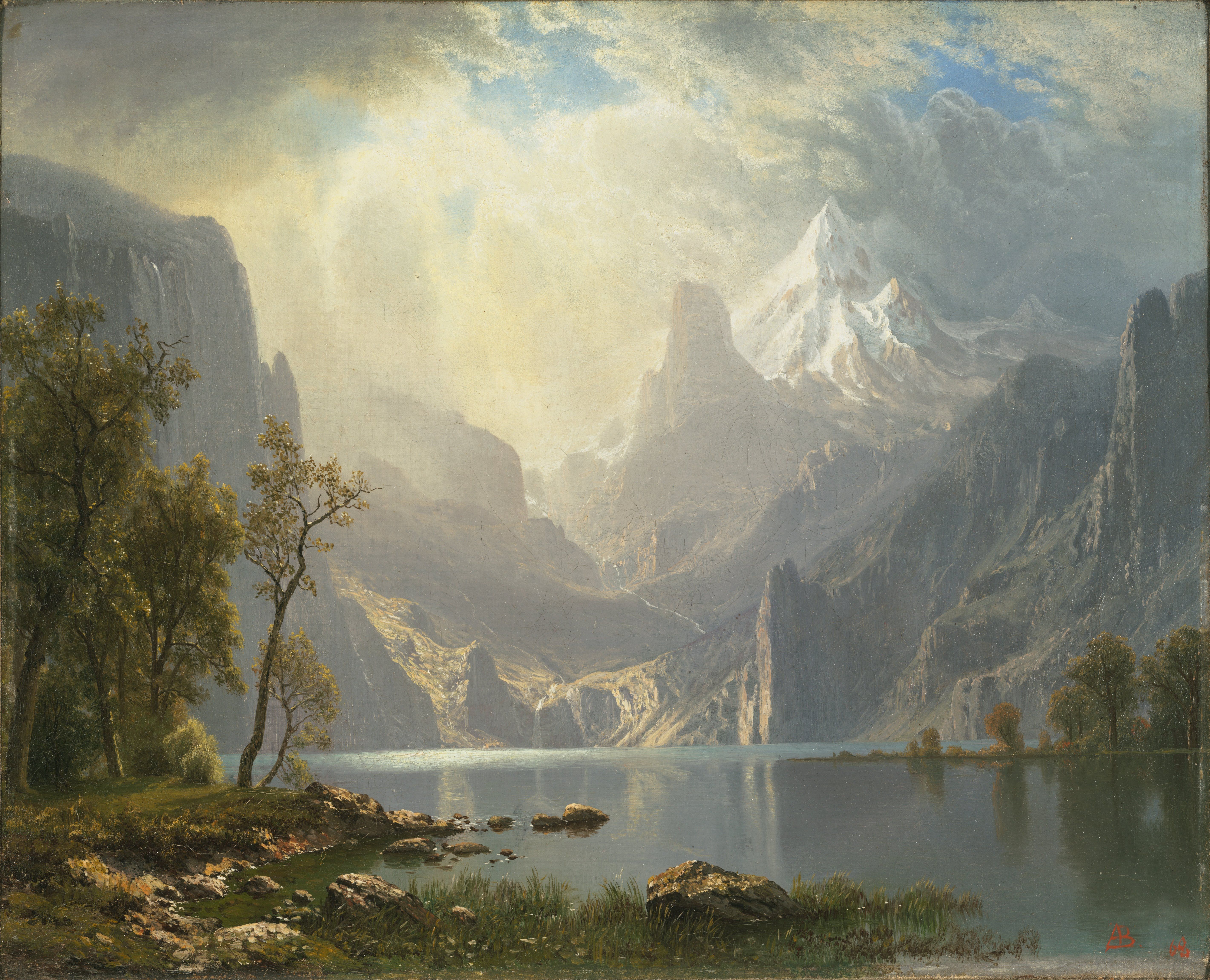
Harvard University Art Museum | In the Sierras, Lake Tahoe | Albert Bierstadt
Best is water
— Pindar 476 B.C.
The American Water Works Association (AWWA) has an extensive catalog that sets the standard of care for water quality and piping systems running through all communities.
We approach them from the point of view of education communities; some with agriculture, vast hospital systems heavily dependent upon a higher level of water quality and district energy plants. Like most every technology in the United States, water issues enliven political discourse. Essential features of water supply — such as backflow protection, separation, piping systems to playground water fountains, etc. — are subordinated to fury over to access and tariff issues. For the moment we steer away from them.
The landing page for the AWWA standardization enterprise is linked below:
The original University of Michigan standards advocacy enterprise engaged in some back-and-forth with the backflow and cross-connection technical committees. It found ambiguity in the language found in AWWA C510-C511-C512 covering reduced pressure zone (RPZ) values that caused some education facility units to over-specify RPZ valves for all facility classes. Many research universities have enterprises that create toxic water waste which must be blocked from entering the municipal water supply. Some of that back-and-forth is recounted in the workspace linked below.
We found that minimum requirements for backflow prevention technology was easier managed at state level plumbing safety administrative boards.
Several AWWA standards are now open for public review; AWWA G430 Security Practices for Operation and Management among them. We point you toward them; though, in the interest of resource conservation, we will follow but not advocate user-interest in this product at the moment. It appears to have stabilized compared with other standards in the water safety domain (though that could change).
Comments due August 9th.
We find AWWA best practice literature heavily referenced in school district, college and university design guidelines and construction contracts. We do a status check of the AWWA suite every month during our Water teleconferences. See our CALENDAR for the next online meeting; open to everyone.
#Backflow Incident: A winery in a small town of Italy, backpressures 1,000 liters of wine into the water supply. The cause, a faulty valve.https://t.co/pFMIUSfwfp
Legionella risk is a domain rich in possibilities for lawsuits so we should not be surprised that best practice titles in the ASHRAE suite — and other standards bibliographies — go unstable with new findings. We encourage facility units in education communities to contribute data to technical committees and to participate directly. you may access titles open for public comment at the link below:
ASHRAE runs one of the best public consultation facilities in the United States. Its titles appear in most of our daily colloquia; this one best practice titles are on the standing agendas of our Energy, Mechanical, Water 200/Water 400 and Risk colloquia. See our CALENDAR for the next online meeting; open to everyone.
Columbia University
Issue: 12-42
Category: Mechanical Engineering, Occupational Health & Safety, Water
Colleagues: Richard Robben, Ron George, Larry Spielvogel
Water standards make up a large catalog and it will take most of 2023 to untangle the titles, the topics, proposals, rebuttals and resolutions. When you read our claim that since 1993 we have created a new academic discipline we would present the best practice literature of the world’s water standards as just one example.
During the Water 200 session we reckon with best practices inside buildings. During the Water 400 session will run through water management outside buildings, including interface with regional water management systems.
Water safety and sustainability standards have been on the Standards Michigan agenda since the early 2000’s. Some of the concepts we have tracked over the years; and contributed data, comments and proposals to technical committees, are listed below:
Send bella@standardsmichigan.com an email to request a more detailed advance agenda. To join the conversation use the login credentials at the upper right of our home page.
21/1166/CDV IEC 61427-2 ED2: Secondary cells and batteries for renewable energy storage – General requirements and methods of test – Part 2: On-grid applications | Close Date: 2023-06-16
We limit our interest to electrotechnology interoperability issues that are present in education communities (rather than product related issues). We track coordinated action among the ISO/IEC/ITU:
Note that there is what may appears to be a “competitor” standardization project at the ISO — TC 274 Lights and Lighting. There is enough coordination between the IEC and the ISO that we ignore the slight overlap for our purposes.
We also collaborate with other US-based and other international universities through several societies of the Institute of Electrical and Electronic Engineers (IEEE). The IEC also has several committees where leading practice is discovered and promulgated that influence electrotechnology research agendas in both the academic and business side of the education facility industry:
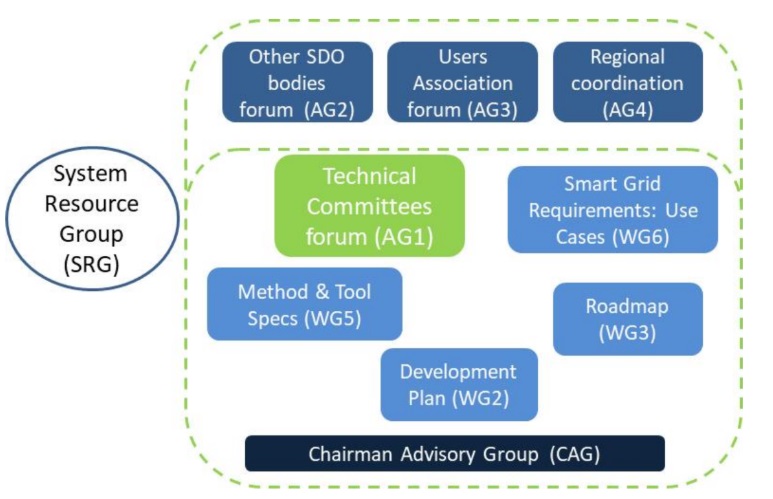
The ambitions of this batch of documents is to formalize the landscape of the emergent Smart City (and, accordingly, #SmartCampus) by doing the following:
Providing the rationale for the market relevance of the future standards being produced in the parent IEC technical committee.
Providing an indication of global or regional sales of products or services related to the TC/SC work and state the source of the data.
Providing standards that will be significantly effective for assessing regulatory compliance.
In electrotechnology, a great deal of research is conducted in US colleges and universities — some of it funded by federal agencies; some by the corporate sector. Where appropriate we identify and highlight their research and findings — especially findings that will find a way into best practice literature that informs safety and sustainability in education communities. Many IEC titles are referenced in ISO, IET, IEEE and NFPA consensus products.
There is a great deal of economic activity in this domain so we maintain our focus on the technical specifics presented in draft material. About 80 percent of the work involved in standards setting is administrative. Our focus has always been on the remaining 20 percent that involves a non-administrative skill set. Because of copyright restrictions on draft material — very common in the standards setting systems in many nations — we are mindful of releasing the full text of draft documents intended for public consultation only.
We do it this way out of necessity. There is no structured workspace provided by USNA/IEC at the moment; only emails with attachments among USNA/IEC members. Instead, we use a combination content management system hosted by the University of Michigan and the Institute of Electrical and Electronic Engineers. We coordinate our review of the state of energy sector literature here and with the IEEE Education & Healthcare Facilities Committee. All IEC products are on the standing agendas of our Energy, Power and Global colloquia. See our CALENDAR for the next online meeting; open to everyone.
Colleagues: Mahesh Illindala (Ohio State University), Giuseppe Parisi (Sapienza University of Roma), Loren Clark (University of Alberta). Jim Murphy (Lawrence Livermore Laboratory: University of California Berkeley), Brian Marchionini (NEMA), Paul Green (University of Michigan)
Category: Electrical, Telecommunications, Energy Management, #SmartCampus, Informatics, Information & Communications Technology
The @NEMAupdates Intelligence Portal pulls together targeted content from a wide variety of sources to keep Members apprised of the policy environment. Members can login here for more information: https://t.co/w0ublpgse0pic.twitter.com/HoXaQsvycf
New update alert! The 2022 update to the Trademark Assignment Dataset is now available online. Find 1.29 million trademark assignments, involving 2.28 million unique trademark properties issued by the USPTO between March 1952 and January 2023: https://t.co/njrDAbSpwBpic.twitter.com/GkAXrHoQ9T