
2027: Dal plans new residence to meet growing student housing needs
Dalhousie University Facilities Management



This content is accessible to paid subscribers. To view it please enter your password below or send mike@standardsmichigan.com a request for subscription details.

Student Musicians Perform Backyard Concerts | University of North Dakota@UofNorthDakotahttps://t.co/mOy8oKr6Ke pic.twitter.com/X8gobawkrQ
— Standards Michigan (@StandardsMich) June 24, 2023
The Alerus is electric! ⚡️ #LGH
#UNDproud @UNDfootball https://t.co/eNUZRTkkkF
— U of North Dakota (@UofNorthDakota) September 28, 2024
§
While there isn’t a universally standardized pizza that everyone agrees upon, certain types of pizza have become iconic and widely recognized. Some of these include:
Margherita Pizza: This classic pizza features tomato sauce, fresh mozzarella cheese, fresh basil, and a drizzle of olive oil. It’s named after Queen Margherita of Italy.
Pepperoni Pizza: Topped with tomato sauce, mozzarella cheese, and slices of pepperoni (a cured pork and beef sausage).
Margarita Pizza: Similar to the Margherita, but without the basil. It typically has tomato sauce, fresh mozzarella, and sometimes a drizzle of olive oil.
Neapolitan Pizza: This style originated in Naples, Italy. It has a thin, soft, and chewy crust with simple and fresh ingredients like San Marzano tomatoes, mozzarella, fresh basil, and olive oil.
New York Style Pizza: Characterized by its large, foldable slices with a thin and flexible crust. It’s often topped with tomato sauce and mozzarella cheese.
Chicago Deep-Dish Pizza: Known for its thick crust, this pizza has layers of cheese, toppings, and tomato sauce. It’s baked in a deep pan, resulting in a substantial and hearty pizza.
Sicilian Pizza: Square-shaped and thick-crusted, Sicilian pizza is often topped with tomato sauce, mozzarella, and various toppings.
California Pizza: Often associated with innovative and non-traditional toppings, California-style pizza might include ingredients like barbecue chicken, goat cheese, arugula, and more.
North Dakota doesn’t have one iconic, universally recognized “official” pizza style that the whole country talks about. The state is more known for hearty, loaded, comfort-food pizzas that reflect Midwestern tastes — generous toppings, practical portions, and creative local twists. Pizza here often leans toward heavily topped pies (think “the more toppings, the better”), with locals frequently praising places that pile on ingredients rather than keeping things minimalist.
Overall, North Dakota pizza is more about satisfying, no-fuss, topping-heavy eats that pair perfectly with cold winters than about rigid “style” rules.
Next week, @kipras_r and I will be at Como – Optical Probes 2023 conference to try some authentic Italian pizza. If you'd like to meet up, drop me a message or simply catch us at the conference! See you there! #OpticalProbes2023 #femtoinfluencer @light_con pic.twitter.com/7vdMCFaOfN
— Greta Bučytė (@GretaBucyte) September 5, 2023

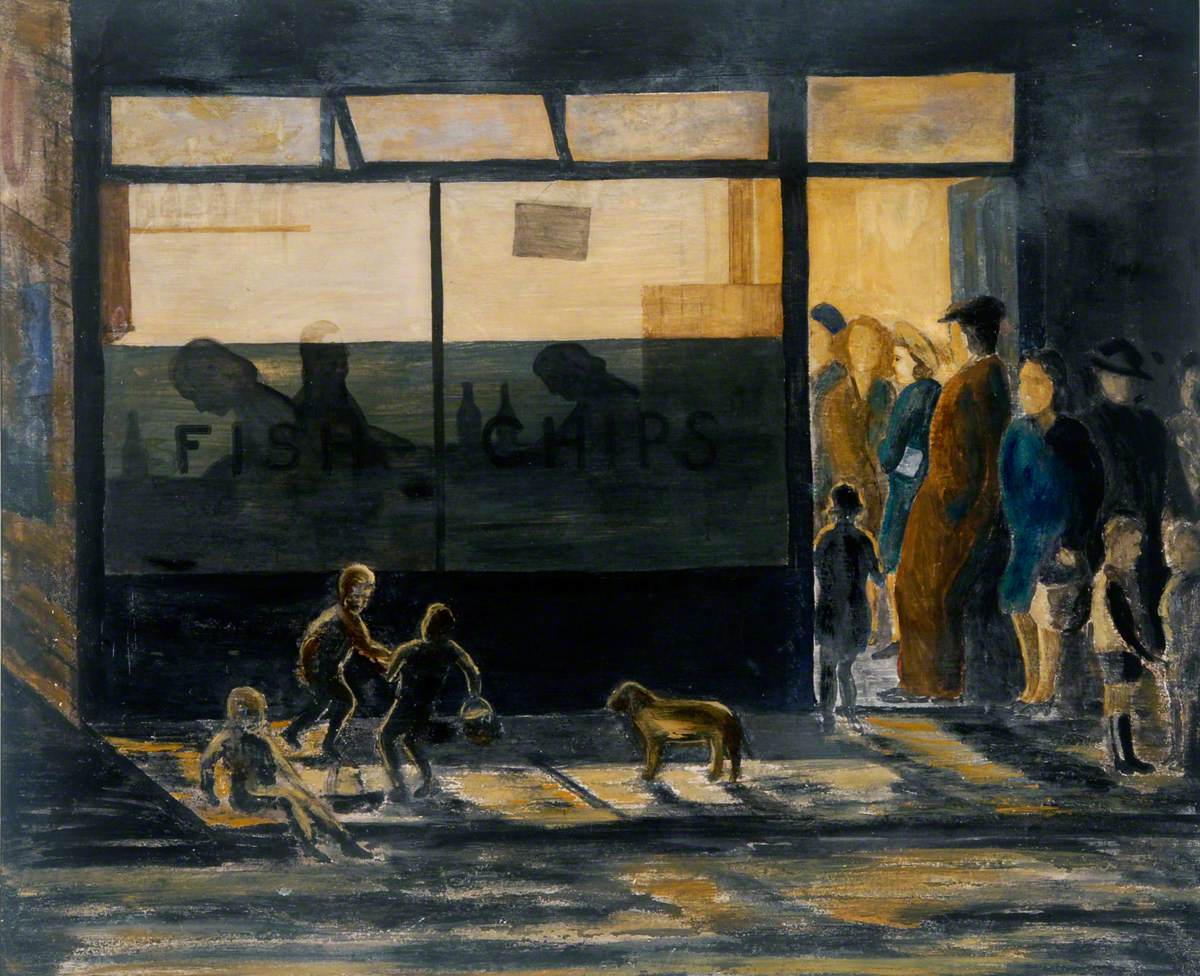
“Fish and Chips” | Fred Laidler (1918–1988)
Fish and Chips and the British Working Class, 1870-1930
“Fish and chips was in many ways the pioneer fast-food industry. It became an essential component of working-class diet and popular culture in parts of London, and over wide areas of industrial midland and northern England and southern Scotland, in the early decades of the twentieth century…I propose to argue that the fish and chip trade was not only important enough in itself to justify sustained historical analysis, but also that it provides a useful vantage point for examining important changes in British society more generally.”
— John Walken, 1998, Journal of Social History
In England I’m in a very international community. I’m meeting students attempting to learn English, they are from all over the world. Many have never heard of Jesus, some have heard the name and nothing more. It’s amazing, a kind smile and warm conversation is a perfect pretext… pic.twitter.com/jLiDAc8nlU
— Riley Nuttall (@nuttallriley1) July 11, 2025
Dickinson College Financial Statement 2022: $873.4M

Dickinson College | Cumberland County Pennsylvania
“Every week, patrons of Farmers on the Square can count on locating the Dickinson College Farm’s wood-fired pizza oven right at the heart of the square. Our handmade and fresh-baked pizzas reflect the seasonal fluctuations on our farm in addition to quality ingredients grown within the Cumberland Valley. In addition to wood-fired pizzas, our stand features seasonal organic vegetables, fresh salad dressings, refreshing popsicles and “our farm in a jar” through canned soups, pickled favorites, salsa, hot sauce and more!”
Why College Women Want a 50-50 Gender Ratio: Better Odds for Finding a Husband

Craving the College Farm’s wood-fired pizza and made-from-scratch soup? So are we! Now you can indulge in these mouthwatering treats without stepping foot off campus. https://t.co/7pxypmxb10 pic.twitter.com/UYgxpDnms6
— Dickinson College (@DickinsonCol) September 14, 2024
Hops are a major ingredient for beer brewing. Read more about a new design for a hops dryer for small-scale producers by the @University of Tennessee’s Department of Biosystems Engineering in the latest issue of Resource. #hops #beer #brewing https://t.co/CSQgQp5EXc pic.twitter.com/6S5k8OD5zT
— ASABE.org (@ASABEorg) October 14, 2025

To the regiment! 🍻 pic.twitter.com/gwtnZeWwKZ
— Nick (@BigNGandBertie) August 25, 2023
“The only emperor is the emperor of ice cream”
— Wallace Stevens
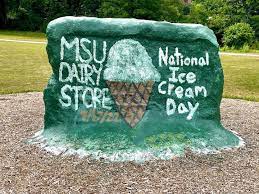
The invention of ice cream, as we know it today, is a product of historical evolution, and there isn’t a single individual credited with its creation. Various cultures and civilizations throughout history have contributed to the development of frozen treats resembling ice cream.
One of the earliest records of frozen desserts can be traced back to ancient China, where people enjoyed a frozen mixture of milk and rice around 200 BC. Similarly, ancient Persians and Arabs had a tradition of mixing fruit juices with snow or ice to create refreshing treats.
In Europe, frozen desserts gained popularity in the 17th and 18th centuries, and it was during this time that the more modern version of ice cream, made with sweetened milk or cream, began to take shape. During this period, ice cream became more widely accessible and enjoyed by the nobility and upper classes.
MSU Infrastructure Planning and Facilities
To produce ice cream on a commercial scale, several key pieces of infrastructure and equipment are necessary. The specific requirements may vary depending on the production capacity and the type of ice cream being produced, but the basic infrastructure typically includes:
University of Mississippi Financial Statement 2023: $1.207B
🍧
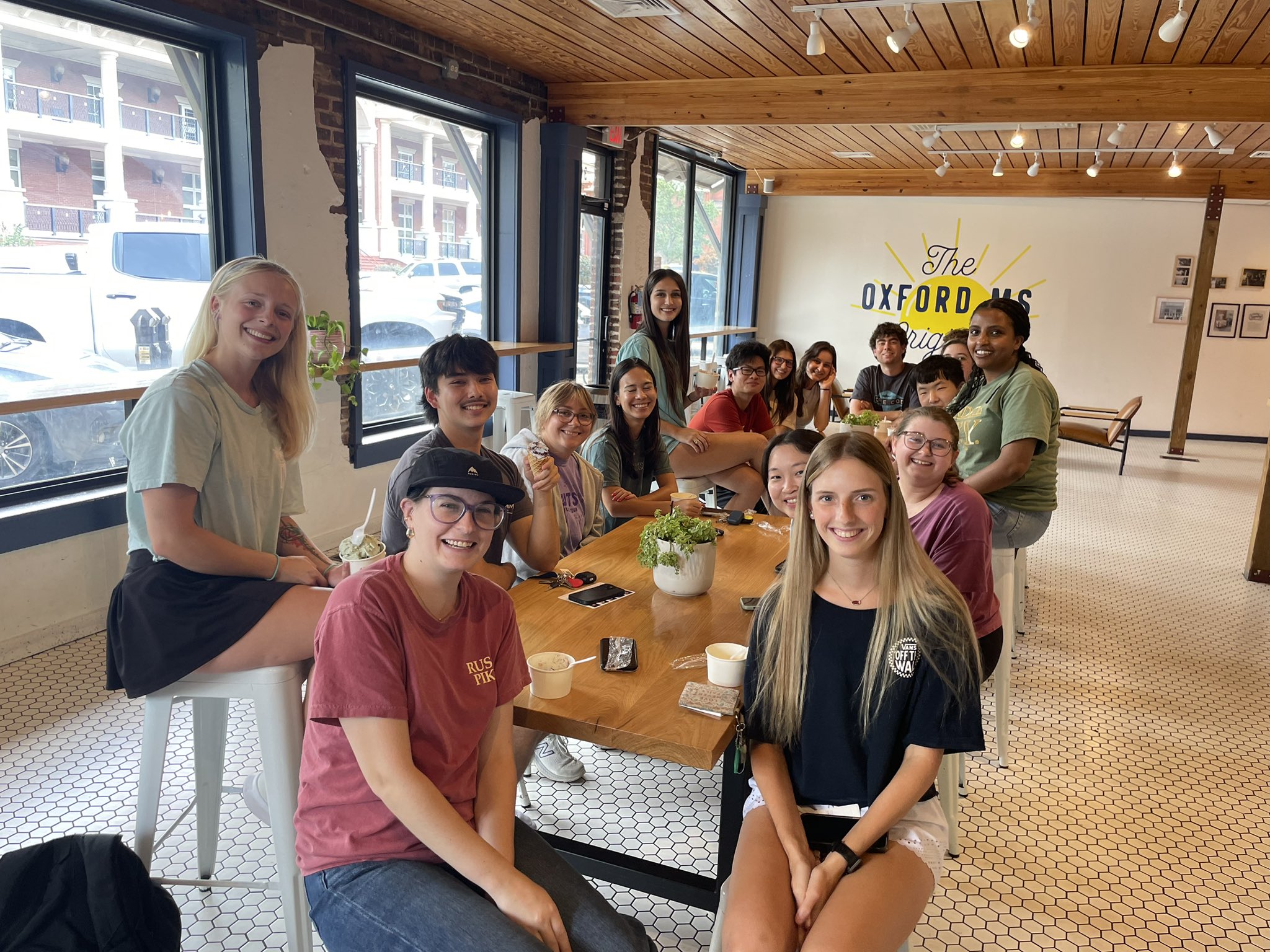
Demystifying the graduate school application process with our #nanoREU students @OxfordCreamery 🍦 pic.twitter.com/4HLda9lhSC
— Nikki Reinemann (@OleMiss_MBELab) July 15, 2024

US Department of Agriculture | § 58.2825 United States Standard for ice cream.
Southern ice cream often differs from ice cream in other regions of the U.S. in several ways, reflecting regional tastes, ingredients, and traditions:
These differences highlight the South’s rich culinary traditions and how they extend even to sweet treats like ice cream.

University of Mississippi | Lafayette County
What’s the date today?#HottyToddy pic.twitter.com/BdrX9LltMY
— Ole Miss (@OleMiss) June 3, 2026
Beer was discovered accidentally as a result of grains being left in water and undergoing fermentation. The process of making beer involves converting the starches in grains (such as barley or wheat) into sugars, which are then fermented by yeast to produce alcohol. It was often consumed as a safer alternative to water, which could be contaminated with disease-causing pathogens.
Beer was also used in religious ceremonies and was considered a valuable commodity for trade. Over time, beer-making techniques spread throughout the world, and different regions developed their own unique styles of beer; now supported by artificial intelligence algorithms that analyze chemical compounds to identify specific flavor and aroma profiles for more nuanced flavors.

Towards Crafting Beer with Artificial Intelligence
Marc Bravin, et al
Lucerne University of Applied Sciences and Arts, Rotkreuz, Switzerland
Abstract: The art of brewing beer has a long tradition that dates back to the very dawn of civilization. While the brewing process has been automated to a great extent, the creation of new beer recipes remains the result of creativity and human expertise with only minor support from software to validate chemical constraints. We collected a dataset of 157,000 publicly available recipes from all over the world and created a transformer-based model to support the creative process in brewing by suggesting new beer recipe templates. As a proof of concept, we crafted the IPA “Deeper” along a recipe generated by our model. Over 100 international newspapers and radio stations have reported on the first AI-crafted beer from Switzerland over the past few months. For the first time, this paper reveals the underlying pipeline architecture of eight transformer networks trained end-to-end that made this remarkable success possible.
CLICK HERE for complete paper

There are several international organizations and agreements that set standards for beer production and labeling:
New update alert! The 2022 update to the Trademark Assignment Dataset is now available online. Find 1.29 million trademark assignments, involving 2.28 million unique trademark properties issued by the USPTO between March 1952 and January 2023: https://t.co/njrDAbSpwB pic.twitter.com/GkAXrHoQ9T
— USPTO (@uspto) July 13, 2023
Standards Michigan Group, LLC
455 East Eisenhower Parkway, Suite 300
Ann Arbor, MI 48108 USA
888-748-3670
 |
 |
|
 |
 |
|
 |
 |