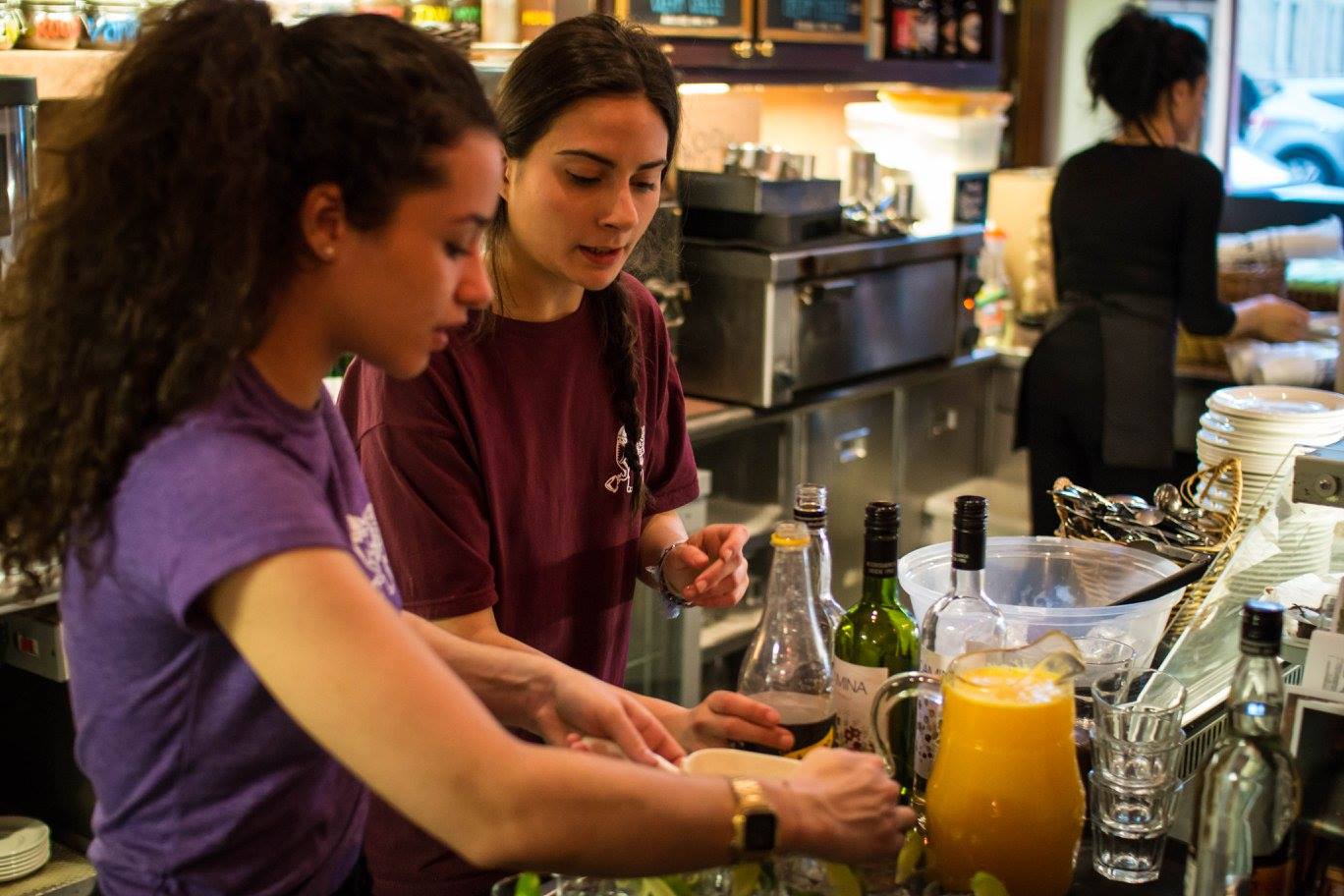
Did you know we have a number of programmes available with a January start date? Find out more about our programmes, scholarships and accommodation and join us in the new year – https://t.co/0sb2ziLGnKpic.twitter.com/kJopkWS8QH
“John Barleycorn” is a figure in English and Scottish folklore who represents the personification of barley and the alcoholic beverages made from it, such as beer and whiskey. In folklore, John Barleycorn is often depicted as a person who is subjected to various forms of mistreatment and violence, such as being crushed, ground, and fermented, before eventually being reborn in the form of alcoholic beverages.
The figure of John Barleycorn has been the subject of various poems, songs, and other works of literature throughout English and Scottish history. One of the most famous works about John Barleycorn is the traditional English folk song of the same name, which tells the story of John Barleycorn’s journey from a growing plant to a fully fermented alcoholic beverage. The song has been covered by many artists over the years, including the British group Traffic.
The legend of John Barleycorn is not widely known in the United States, but it does have some cultural resonance in certain regions and among certain groups of people. The legend is a traditional British folk song that tells the story of a man named John Barleycorn, who is personified as a personification of the cereal crop barley, which is used to make beer and other alcoholic beverages. Some breweries in the US have even named beers after John Barleycorn, as a nod to the traditional English roots of brewing. The legend of John Barleycorn also has some resonance in American literature and popular culture. The American author Jack London wrote a novel titled “John Barleycorn” in 1913, which was a semi-autobiographical account of his own struggles with alcoholism. The novel has since become a classic of American literature and is still widely read today.

Located on George IV Bridge, near the heart of the city’s historic Old Town. It is perhaps best known as one of the places where J.K. Rowling is said to have written parts of the early Harry Potter books.
— Universities UK International (@UUKIntl) March 27, 2025
Heavy financial dependence on international (non-citizen) students—who often comprise 20-30%+ of enrollments in Anglosphere universities (e.g., high proportions in Australia, Canada, UK)—shifts institutional priorities toward revenue maximization over preserving or promoting traditional Anglo-Western cultural norms and values.
Administrations adapt campuses to attract and retain large cohorts from Asia, the Middle East, and elsewhere by internationalizing curricula, diluting Western-centric content, emphasizing global/multicultural perspectives, and sometimes de-emphasizing local historical narratives (including Indigenous ones in settler societies like Australia, Canada, US). Socially, large enclaves form where students cluster by nationality, reducing meaningful integration with domestic students and altering campus social norms, events, discourse, and even language use in shared spaces.
Critics argue this erodes the distinctive Anglospheric ethos—rooted in English common law traditions, Enlightenment individualism, free speech norms, and Judeo-Christian/secular heritage—replacing it with a homogenized, market-driven globalism. Indigenous cultures face compounded marginalization as resources prioritize international accommodation over deeper indigenization efforts.
“The only true sport is that which arises spontaneously
from the heart and the blood.”
— Alistair MacLean
The University of Stirling has produced several famous athletes over the years. Here are a few examples:
Duncan Scott: Duncan Scott is a Scottish swimmer who graduated from the University of Stirling in 2018. He has won numerous medals at major international competitions, including the Olympics, the World Championships, and the Commonwealth Games.
Andy Murray: While Andy Murray did not technically graduate from the University of Stirling, he did attend the university for a brief period in the early 2000s. Murray is a famous Scottish tennis player who has won multiple Grand Slam titles and an Olympic gold medal.
Ross Murdoch: Ross Murdoch is a Scottish swimmer who graduated from the University of Stirling in 2016. He has won multiple medals at major international competitions, including the Commonwealth Games.
Robbie Renwick: Robbie Renwick is a Scottish swimmer who graduated from the University of Stirling in 2009. He has won multiple medals at major international competitions, including the Olympics and the Commonwealth Games.
This content is accessible to paid subscribers. To view it please enter your password below or send mike@standardsmichigan.com a request for subscription details.
Haggis is Scotland’s ancestral meal — a savory pudding made from sheep’s pluck (heart, liver, and lungs), minced with onion, oatmeal, suet, spices, and stock, traditionally encased in a sheep’s stomach (now often artificial) and boiled. It is typically served with “neeps and tatties” (mashed turnips and potatoes). Usually “observed” on Hogmanay (Scots New Year) it symbolizes resourcefulness, using humble offal for a nourishing meal, and national pride.
If you’re staying on or near campus during the winter break, we have pulled together this useful list of available services to help you during this time. 📅🎄https://t.co/tMMjugUsJapic.twitter.com/N68nWnqoxK
F. B. Wadsworth, C. E. J. Vossen, M. J. Heap, A. Kushnir, J. I. Farquharson, D. Schmid, L. Belohlavek, M. Huebsch, L. Carbillet, J.E. Kendrick, D. Dingwell
The French press is a popular device for brewing coffee, comprising a cylindrical beaker—or “jug”—fitted with a lid and plunger with a fine wire mesh filter. The plunger is used to drive the solid coffee particles to the bottom of the jug, separating these grounds from hot liquid above. When using the French press in this way, a growing permeable pack of ground coffee is pushed through hot water by applying force to the plunger. We use a combination of kitchen-based and laboratory experiments to determine the force required to push on the plunger as a function of the speed of the plunger and the mass of coffee used. We calculate that for the recommended preparation method, the maximum force is 32 N to complete the pressing action in 50 s. We propose that home coffee preparation provides a fun, low-cost, and relatable learning opportunity for students and for those who are interested in coffee science.
New update alert! The 2022 update to the Trademark Assignment Dataset is now available online. Find 1.29 million trademark assignments, involving 2.28 million unique trademark properties issued by the USPTO between March 1952 and January 2023: https://t.co/njrDAbSpwBpic.twitter.com/GkAXrHoQ9T