




“I know that I am mortal by nature, and ephemeral;
but when I trace at my pleasure the windings to and fro of the heavenly bodies,
I no longer touch Earth with my feet:
I stand in the presence of Zeus himself and take my fill of ambrosia.”
— Ptolemy, “Mathematike Syntaxis” 150 A.D
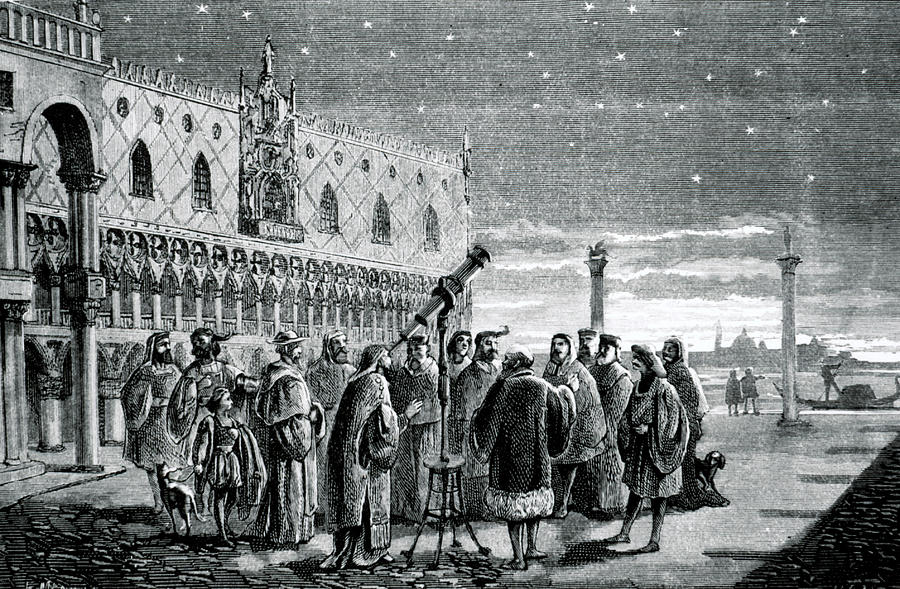
Galileo Demonstrating His Telescope In 1609
Planetariums in schools and colleges play a central in enhancing astronomy and astrophysics education. They provide immersive experiences that can ignite students’ interest and curiosity about the universe, making complex astronomical concepts more comprehensible and engaging. Observatories do much that but with direct access to telescopes and other observational tools — frequently away from campus — thus allowing them to engage in hands-on learning and real-time data collection.
Establishing research and teaching programs present special occupancy challenges. The cost of high-quality telescopes and equipment, along with the need for a suitable location with minimal light pollution, can be substantial. Additionally, schools require trained staff to guide students in using the equipment and interpreting data. Weather conditions and geographical location also impact the effectiveness of observatories. Despite these hurdles, the educational value of observatories is immense, providing students with unique opportunities to explore the universe and cultivate a passion for scientific inquiry.
Today we examine both occupancies using our SAFER-SIMPLER-LOWER COST-LONGER LASTING discipline. Use the login credentials at the upper right of our home page at the usual hour.
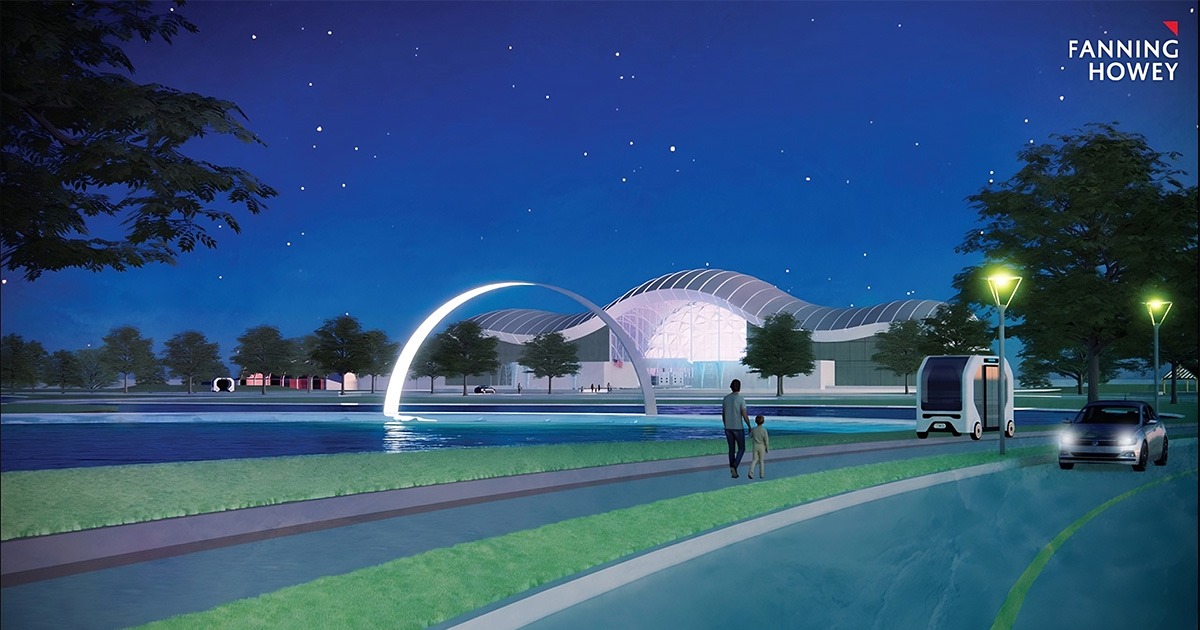
Purdue University: Grand Universe planning liftoff in Hamilton County
The International Building Code includes various sections that address safety requirements relevant to observatories and planetariums. Key parts of the IBC that cover these requirements include:
These chapters collectively ensure that planetariums and observatories are designed and constructed with safety, accessibility, and functionality in mind. For detailed information, it is recommended to refer to the latest edition of the IBC and consult with a professional knowledgeable in building codes and standards.
Denison receives major gift to transform planetarium
World Astronomy Day is Saturday, and to celebrate we are showing off some of our favorite pictures of the Albion College Observatory. The Albion College Observatory was constructed from 1883-1884 under the direction of Dr. Samuel Dickie. #ThrowbackThursday #TBT #MyAlbion pic.twitter.com/ixgtAMlP4z
— Albion College (@albioncollege) May 13, 2021
Designing and building a telescope for teaching and light research at a college or university requires a detailed consideration of both the telescope itself and the supporting infrastructure. Here are the central architectural features:
Telescope Structure:
Support Infrastructure:
By integrating these architectural features, a college or university can create a functional and effective observatory that supports both teaching and light research in astronomy.
University of Michigan | Detroit Observatory
Designing and building a planetarium for public use involves careful consideration of various architectural features to ensure functionality, aesthetics, and a positive visitor experience. Here are the central architectural features required:
These architectural features are essential to create a functional, welcoming, and educational environment in a planetarium for public use.
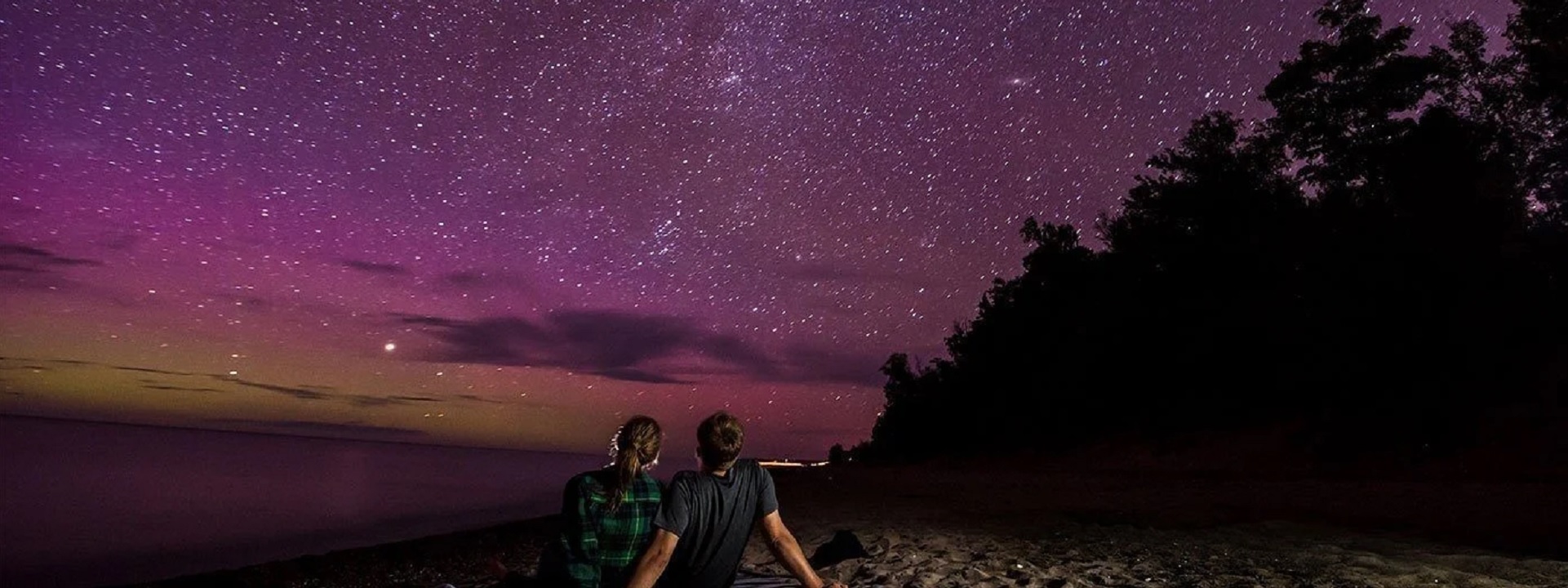
Michigan Technological University | Houghton County
#Emotional Well-being Week at VU is approaching, with lectures, workshops, and activities designed to support mental health and resilience. 🌿 #OpenVU
🔗 Find out more: https://t.co/bqkHbVy5oT pic.twitter.com/yNsGFaJ3ju
— Vilnius University (@VU_LT) February 28, 2025
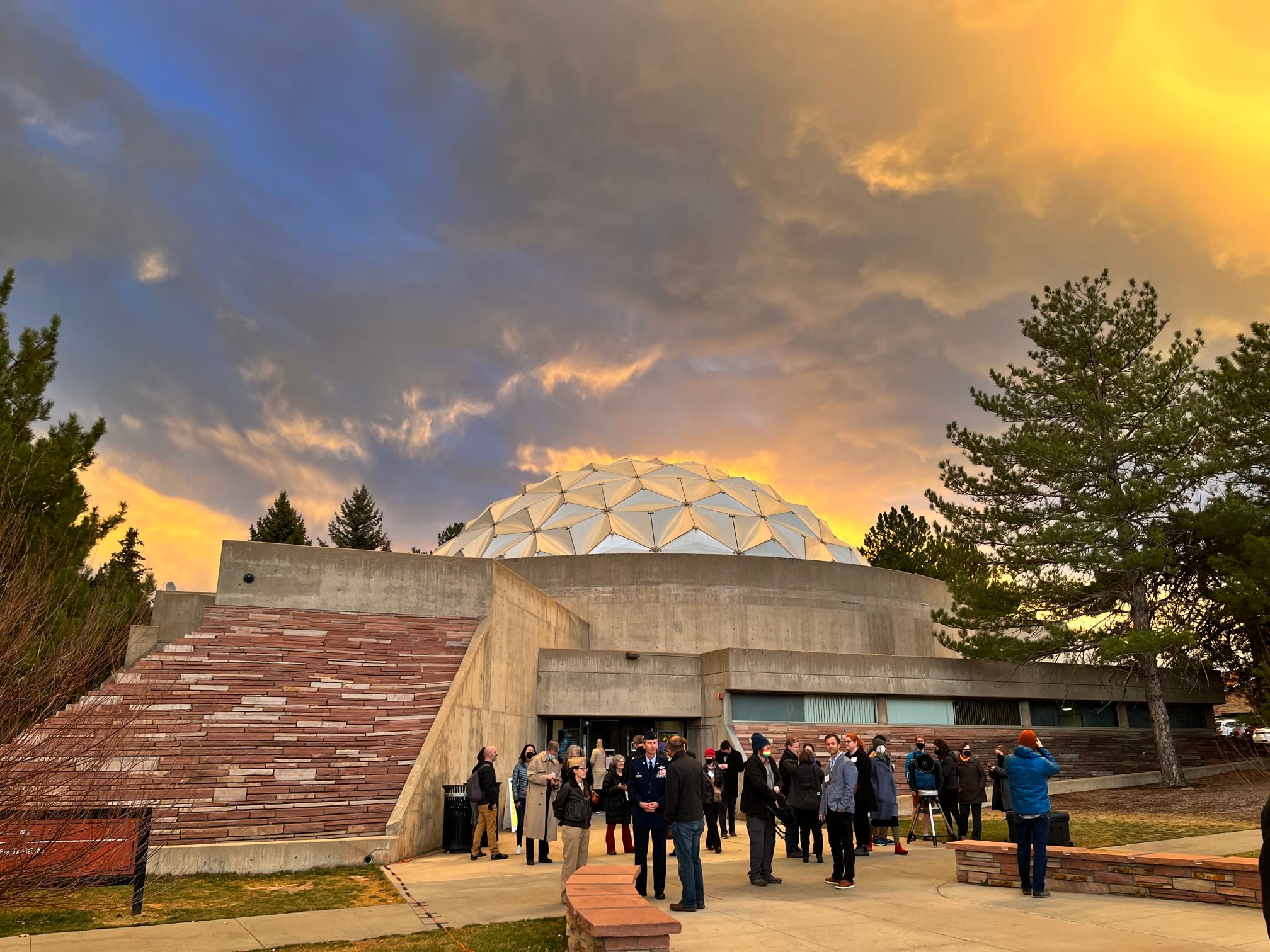
The largest planetarium on a U.S. college or university campus is the Fiske Planetarium at the University of Colorado Boulder. The Fiske Planetarium features a 65-foot diameter dome and has undergone significant technological upgrades, making it one of the most advanced planetariums in the country. It offers a variety of shows, including live demonstrations and immersive experiences that simulate different cosmic phenomena and environments (CU Connections).
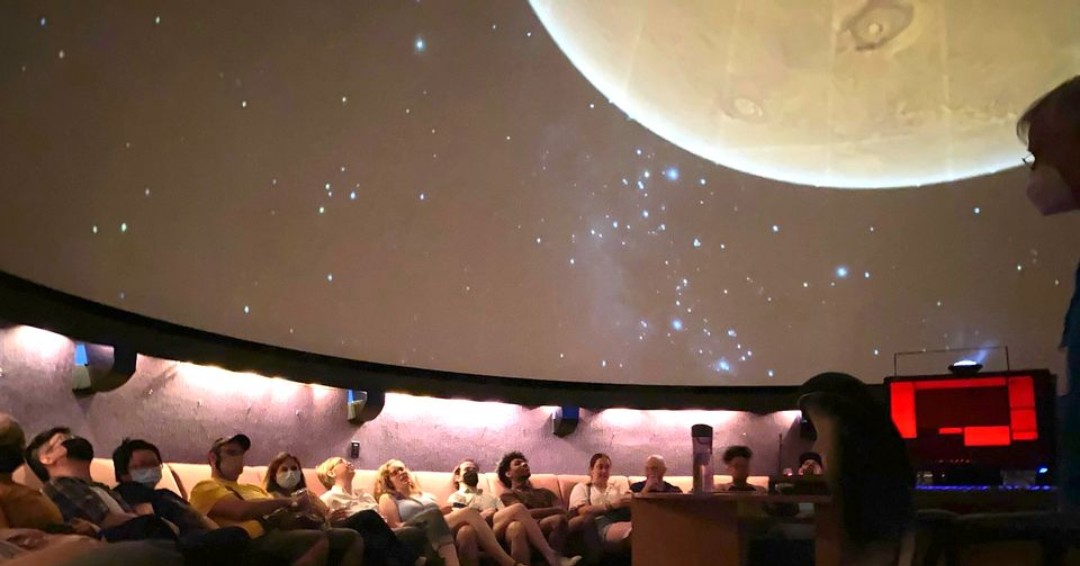
Planetarians’ Zoom Seminar of 2024 May 31. Preschool Children in the Dome. Led by Tony Smith (Astronomy Educator for Online Learning at ASP; planetarian), Anna Hurst (Program Director at the Astronomical Society of the Pacific) and Mary Holt (Planetarium Programs Specialist at California Academy of Sciences). How can planetariums offer engaging programming for preschool children and their families, an audience often overlooked and feared by even the most experienced planetarians?
The Astronomical Society of the Pacific (ASP) and California Academy of Sciences (CAS) share some resources and experiences engaging pre-school children in earth and space science and then facilitate a conversation among attendees. What has worked well in your dome? What are the challenges? What support do you need to feel confident about reaching this audience?
The University of Michigan Radio Telescope, also known as the Michigan-Dartmouth-MIT (MDM) Radio Telescope, has several essential dimensions and specifications:
Dish Diameter: The primary reflector of the telescope has a diameter of 45 meters (147.6 feet). This large size allows it to collect radio waves effectively.
Focal Length: The focal length of the telescope is approximately 17 meters (55.8 feet). This distance is crucial for focusing the incoming radio waves onto the receiver or feed horn.
Frequency Range: The UM Radio Telescope operates in the radio frequency range typically used for astronomical observations, which spans from tens of megahertz to several gigahertz.
Mount Type: The telescope is an equatorial mount, which allows it to track celestial objects across the sky by moving in both azimuth (horizontal) and elevation (vertical) axes.
Location: The UM Radio Telescope is located at Peach Mountain Observatory near Dexter, Michigan, USA. Its geographical coordinates are approximately 42.39°N latitude and 83.96°W longitude.
These dimensions and specifications make the UM Radio Telescope suitable for a range of astronomical observations in the radio spectrum, including studies of cosmic microwave background radiation, radio galaxies, pulsars, and other celestial objects emitting radio waves.
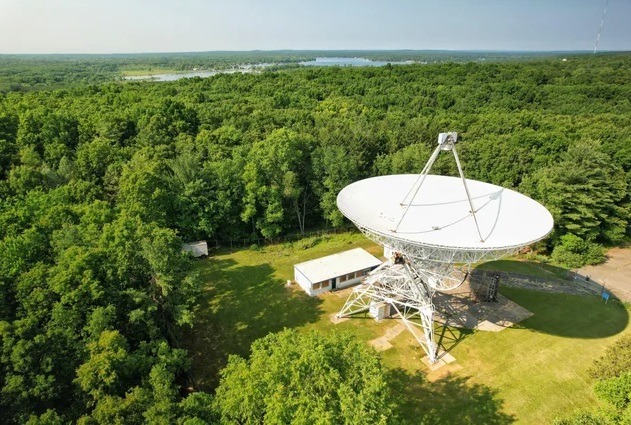
Conceived as a research facility primarily for astronomy in the 1950’s, the observatory quickly gained recognition for its contributions to various astronomical studies, including star formation, planetary nebulae, and more.
“Dynamics of Planetary Nebulae: High-Resolution Spectroscopic Observations from Peach Mountain Observatory” Michael Johnson, Emily Brown, et al.
“Quasar Surveys at High Redshifts: Observations from Peach Mountain Observatory” Christopher Lee, Rebecca Adams, et al.
“Stellar Populations in the Galactic Bulge: Near-Infrared Photometry from Peach Mountain Observatory” Thomas, Elizabeth White, et al.
“Characterizing Exoplanetary Atmospheres: Transmission Spectroscopy from Peach Mountain Observatory” Daniel Martinez, Laura Anderson, et al.
Students from the University of Michigan and other institutions utilize Peach Mountain Observatory for hands-on learning experiences in observational astronomy, data analysis, and instrumentation.
Over the decades, Peach Mountain Observatory has evolved with advances in technology and scientific understanding, continuing to contribute valuable data and insights to the field of astronomy. Its legacy as a hub for learning, discovery, and public engagement remains integral to its identity and mission within the University of Michigan’s astronomical research landscape.
Development of a Touchable VR Planetarium for Both Sighted and Visually Impaired People
Kota Suzuki, et. al
Abstract: The authors proposed and developed a “touchable” VR planetarium. The user wears a VR headset and “touches” the stars with the controllers. Because we can’t touch the stars in reality, this application provides the users with additional value and experience of the planetarium. As this feature is valuable for visually impaired people to experience the starry sky, the authors also implemented the functions that help it. In the trial use by visually impaired people, they experienced the starry sky with the support functions and evaluated the VR planetarium as a valuable application.
「月面版GPS」を日米欧が標準化へ、月-地球間の光通信も実用化に前進 https://t.co/HvmfDrdH8O
— 日本規格協会 (@jsainfra) June 18, 2024
New update alert! The 2022 update to the Trademark Assignment Dataset is now available online. Find 1.29 million trademark assignments, involving 2.28 million unique trademark properties issued by the USPTO between March 1952 and January 2023: https://t.co/njrDAbSpwB pic.twitter.com/GkAXrHoQ9T
— USPTO (@uspto) July 13, 2023
Standards Michigan Group, LLC
2723 South State Street | Suite 150
Ann Arbor, MI 48104 USA
888-746-3670
 |
 |
|
 |
 |
|
 |
 |