
Tag Archives: Sunday
- Home
- Posts tagged "Sunday" (Page 5)


“Thine Be the Glory”
“Thine Be the Glory” (originally “À toi la gloire” in French) is a Christian hymn written by Swiss pastor and hymnwriter Edmond Louis Budry in 1884. The hymn was composed to celebrate the Resurrection of Jesus Christ, making it particularly associated with Easter. Budry, a minister in the Reformed Church of Vevey, Switzerland, wrote the text in French, inspired by the triumphant and victorious nature of Christ’s resurrection.
The tune commonly used for the hymn is adapted from a piece in George Frideric Handel’s oratorio Judas Maccabaeus (1747), specifically the chorus “See, the Conqu’ring Hero Comes.” This lively and majestic melody was arranged for the hymn by 1885, when the text and tune were first published together in the Swiss hymnal L’Organiste. The English translation, which begins “Thine be the glory, risen, conqu’ring Son,” was made by Richard Birch Hoyle in 1923, enabling the hymn to gain widespread popularity in English-speaking congregations.
The hymn’s text draws heavily on biblical themes, particularly from the New Testament accounts of the Resurrection (e.g., Matthew 28, 1 Corinthians 15). It emphasizes Christ’s victory over death, the hope of eternal life, and the call for believers to offer praise and glory to God.
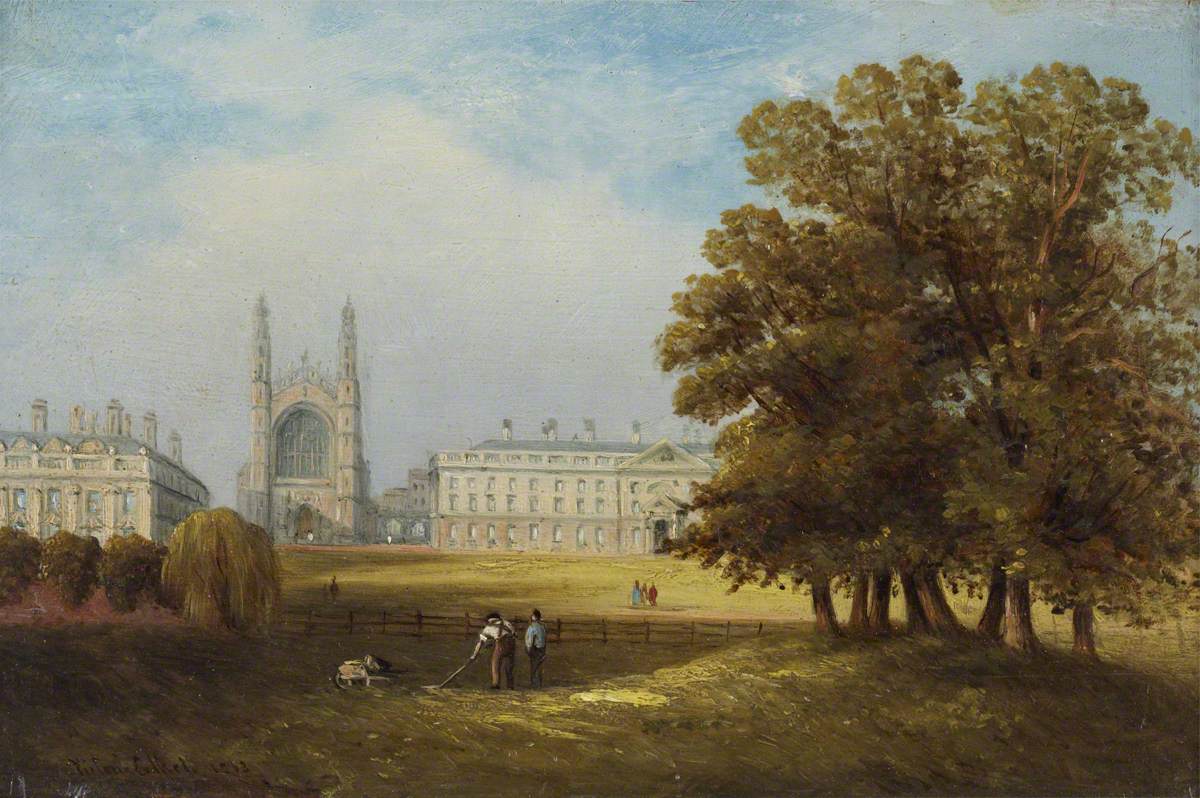
Thine be the glory, risen, conquering Son;
endless is the victory, thou o’er death hast won;
angels in bright raiment rolled the stone away,
kept the folded grave clothes where thy body lay.
Refrain:
Thine be the glory, risen conquering Son,
Endless is the vict’ry, thou o’er death hast won.
Lo! Jesus meets us, risen from the tomb;
Lovingly he greets us, scatters fear and gloom;
let the Church with gladness, hymns of triumph sing;
for her Lord now liveth, death hath lost its sting.
No more we doubt thee, glorious Prince of life;
life is naught without thee; aid us in our strife;
make us more than conquerors, through thy deathless love:
bring us safe through Jordan to thy home above.

Places of Worship
Ballroom Dance
This content is accessible to paid subscribers. To view it please enter your password below or send mike@standardsmichigan.com a request for subscription details.

Morning with Cows
Statement of Net Position | ($1.3B)*

General Specifications for Dairy Plants Approved for USDA Inspection and Grading Service

Food Science & Technology / University of California Davis

*The UCD Financial Statements — the simple balance sheet showing assets and liabilities — is not easy to find in it crazily overproduced Finance and Business web page. Perhaps the apparent $1.3B operating loss has since been remediated. The loss may be absorbed into the larger University of California University System which consists of 23 colleges and universities.

International Standard Classification of Education
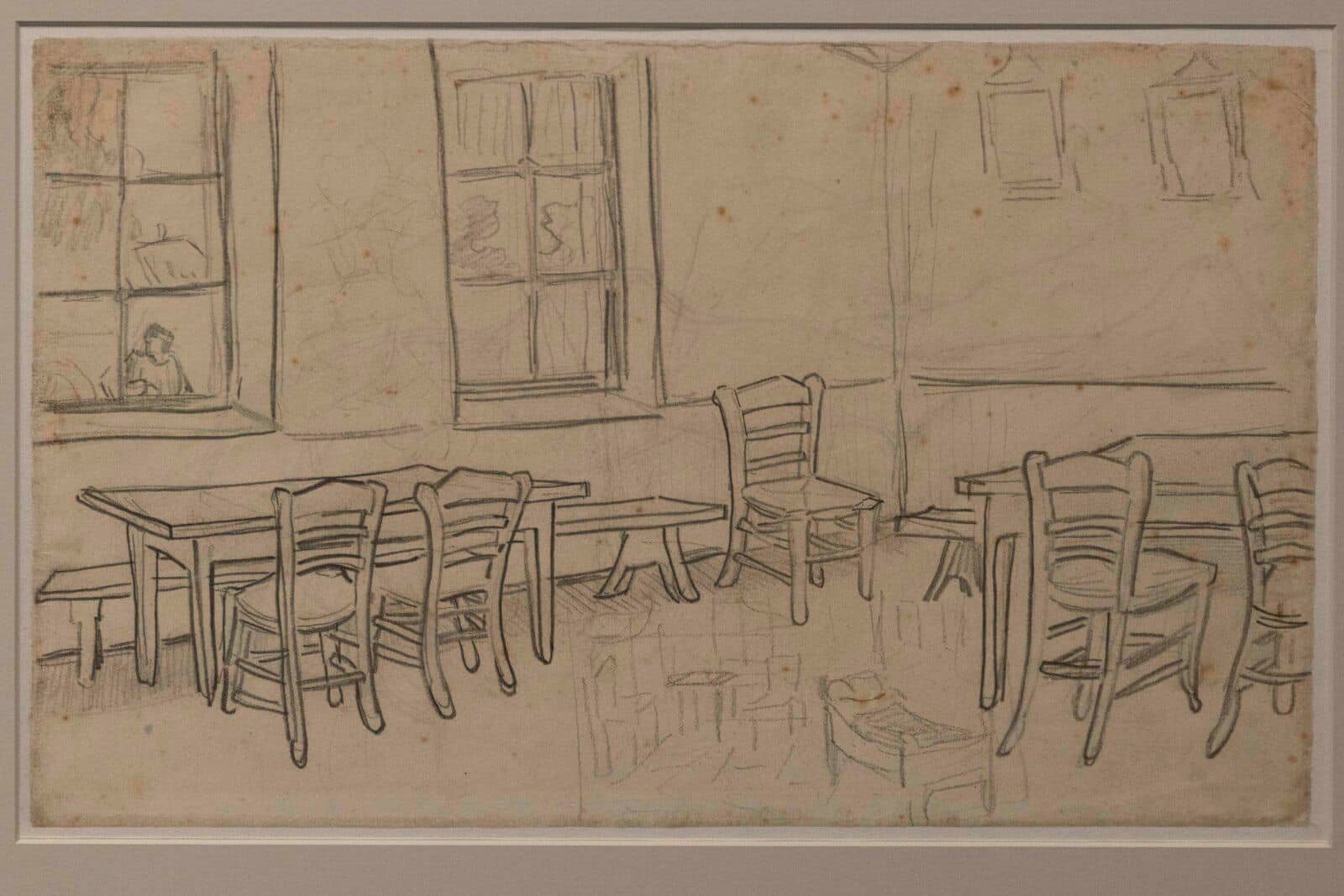
“Etudes Graphiques” | Vincent van Gogh 1853-1890
“I am not an Athenian or a Greek,
but a citizen of the world.”
— (Plato quoting Socrates, Phaedo 64a)
ISCED 2011 is an updated version of the previous classification, ISCED 1997, and provides a framework for organizing education programs according to their level of complexity and content. The classification is designed to facilitate the comparison of education systems across countries and regions, and to improve the collection, reporting, and analysis of education statistics.
ISCED 2011 introduces several changes and updates, such as the introduction of a new level of education called “early childhood education,” the expansion of the tertiary education level to include short-cycle tertiary education, and the inclusion of a separate category for vocational education at the secondary level. The classification also includes detailed descriptions of the content and characteristics of each education level, as well as guidelines for classifying educational programs that do not fit neatly into the existing categories.
ISCED 2011 is widely used by national and international organizations, including UNESCO, to collect and report education data, and it provides a common language for discussing education across borders.




Herbert Hoover Policy Center
This content is accessible to paid subscribers. To view it please enter your password below or send mike@standardsmichigan.com a request for subscription details.







College students create the ultimate hangover cure
Two Yale University seniors have created a product they believe will cure what ails their peers — and many others: hangovers.
Margaret Morse and Liam McClintock wanted a supplement that would allow them to have fun on a night out, but would not impede on being able to work the next morning.
What causes hangovers to begin with? Morse, a molecular cellular and developmental biology major, told local news outlet WTNH, “There’s an acetaldehyde build up. There is a vitamin and electrolyte loss. There is a glutamine rebound and there are immunological disturbances.”
Their proposed solution is SunUp, a powdered citrus-flavored supplement filled with vitamins and nutrients.
“This is a powder that you take before you start drinking and it helps your liver deal with the stress you’re putting it under when you drink,” McClintock told WTNH. According to the New Haven Register, one would drink SunUp in a glass of water around an hour before they start drinking. While one might believe dehydration is the cause of hangovers, SunUp’s website explains that it is actually a symptom. “These two phenomena are concurrent because of the diuretic effects of alcohol, but dehydration does not cause the actual hangover feeling,” says the site’s FAQ. SunUp instead focuses on combating four root causes of a hangover: acetaldehyde building, vitamin and electrolyte loss, glutamine rebound and immunological disturbances.
“It’s intended for productive workers,” McClintock told WTNH. “Like ourselves who like to have a social life, like to go out and have a couple of drinks but also need to be productive the next day and get up and have work to do.”
Morse and McClintock have received positive feedback from fellow students and the Yale community. They’ve brought it to a pharmaceutical company, and it could be available in April. SunUp will retail for $5; if you want to pre-order, you can purchase through the company’s Indiegogo page.
New update alert! The 2022 update to the Trademark Assignment Dataset is now available online. Find 1.29 million trademark assignments, involving 2.28 million unique trademark properties issued by the USPTO between March 1952 and January 2023: https://t.co/njrDAbSpwB pic.twitter.com/GkAXrHoQ9T
— USPTO (@uspto) July 13, 2023
Standards Michigan Group, LLC
455 East Eisenhower Parkway, Suite 300
Ann Arbor, MI 48108 USA
888-748-3670
DIRECTIONS
 |
 |
|
 |
 |
|
 |
 |