Tag Archives: WK46

Loading
loading..

MIL-STD

Today at the usual hour we take will take a broad view of the technical standards catalog of all military branches as they apply to the educational settings of each of the US military branches. Use the login credentials at the upper right of our home page.

“Overgrown military establishments are under any form of government inauspicious to liberty, and are to be regarded as particularly hostile to republican liberty.” Farewell Address, September 19, 1796.

United States defense standards are used to help achieve standardization objectives by the U.S. Department of Defense. Standardization is beneficial in achieving interoperability, ensuring products meet certain requirements, commonality, reliability, total cost of ownership, compatibility with logistics systems, and similar defense-related objectives. Defense standards are also used by other non-defense government organizations, technical organizations, and industry.

Military technical standards and public sector technical standards differ primarily in their purposes, scope, and requirements. Military standards — such as MIL-STD and MIL-SPEC — are designed to ensure high reliability, durability, and performance under extreme conditions, as they often pertain to defense systems, weaponry, and other critical applications. These standards prioritize security, robustness, and interoperability in challenging environments, and typically involve stringent testing and certification processes.

In contrast, public sector technical standards, like those developed by the International Organization for Standardization  or the Institute of Electrical and Electronics Engineers, are geared towards broader civilian applications. They focus on safety, quality, efficiency, and compatibility for a wide range of industries, including manufacturing, technology, and services. These standards aim to facilitate trade, ensure consumer safety, and promote innovation and best practices. While public sector standards also emphasize reliability and performance, they are generally less rigid than military standards, reflecting a broader range of use cases and operational conditions.
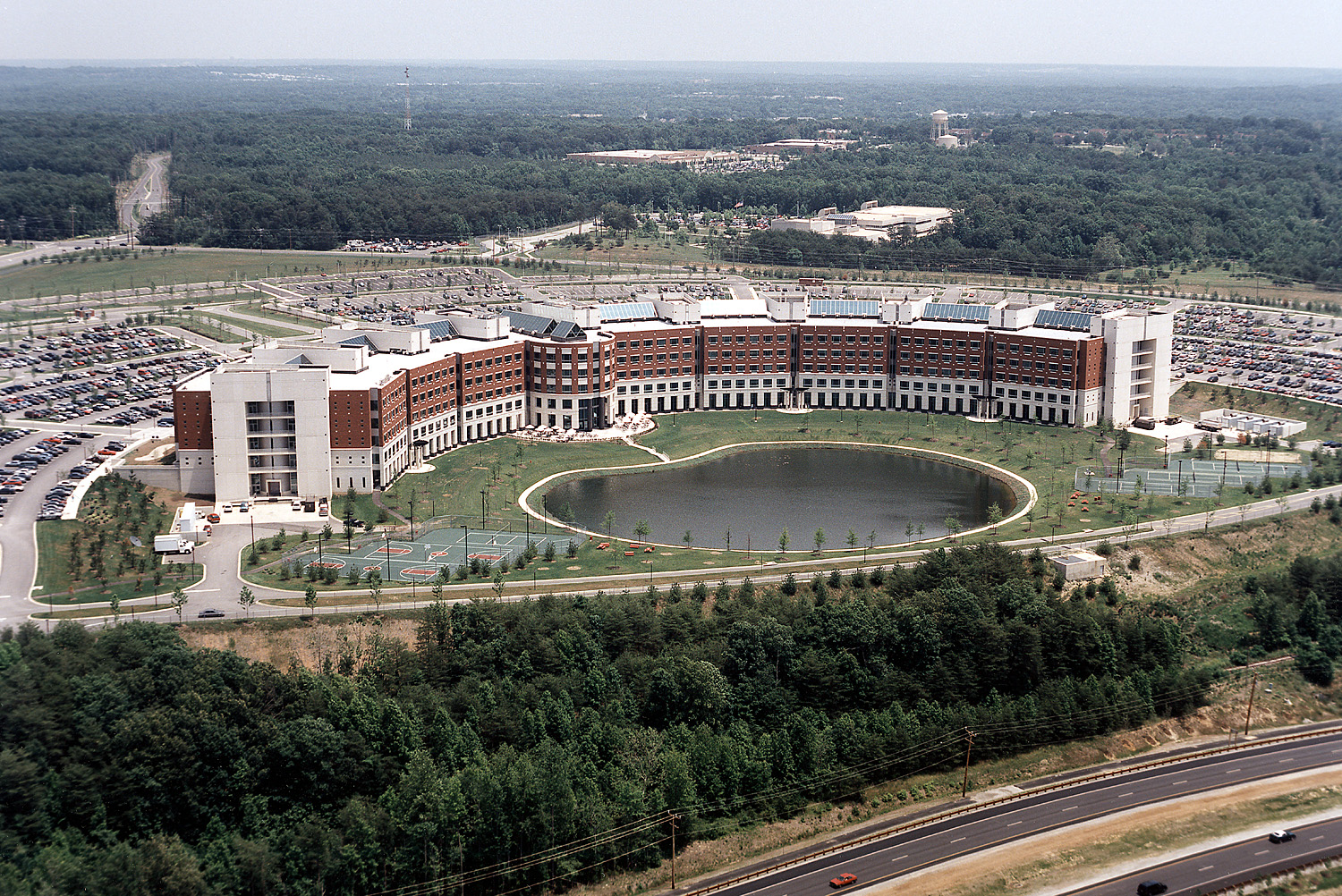
United States Defense Logistics Agency


 

Unified Facilities Criteria

Memorandum

Our interest lies in the built environment for higher education students seeking careers in the military.   Many marquee colleges and universities are, at best, ambivalent about the presence of the military in their educational settlements.  Alas, that is a discussion for another organization; not ours.

 We list a few pros and five cons regarding how the National Institute of Building Sciences (NIBS) may support our primary mission this industry, based on its alignment with the National Clearinghouse for Educational Facilities (NCEF) and the National Center on School Infrastructure (NCSI).

Pros

  • Comprehensive Resource Hub via NCEF: NIBS manages the National Clearinghouse for Educational Facilities (NCEF), established by the U.S. Department of Education in 1997, which serves as a vital resource for school administrators, facility managers, designers, and researchers. It provides free access to news, events, data, and statistics on school facilities planning, design, funding, construction, and maintenance, enabling stakeholders to make informed decisions for safe, healthy, and high-performing educational environments.

  • Advocacy for Safe and Sustainable Schools: Through the National Center on School Infrastructure (NCSI), NIBS collaborates with partners to provide technical assistance and training to state and local educational agencies. This initiative focuses on improving public school infrastructure to ensure health, safety, sustainability, and equity, helping schools address challenges like aging facilities and climate resilience.

  • Development of Standards and Guidelines: NIBS develops criteria, guidelines, and best practices recognized by organizations like the American Institute of Architects (AIA) and the International Code Council (ICC). These resources can guide the construction and renovation of educational facilities to meet high-performance standards, ensuring durability, energy efficiency, and safety.

  • Promotion of Digital Transformation: NIBS supports initiatives like the U.S. National BIM Program, which promotes digital transformation in designing, constructing, and operating educational facilities. Building Information Modeling (BIM) can streamline project management, reduce costs, and improve facility maintenance in schools.

  • Stakeholder Collaboration: NIBS brings together experts from government, industry, labor, and academia to address challenges in the built environment. This collaborative approach fosters innovative solutions tailored to educational facilities, such as resilient design to mitigate natural hazards, which is critical for protecting students and staff.

Cons

  • Dependence on Funding and Membership: NIBS relies on a mix of public and private financing, including membership dues and grants. Budget constraints or shifts in funding priorities could limit the resources available for educational facility-specific programs like NCEF or NCSI, reducing their effectiveness.
  • Complexity of Implementation: The technical standards and guidelines developed by NIBS, such as those for BIM or resilience, may be complex and require significant expertise to implement. Smaller school districts with limited resources or technical know-how may struggle to adopt these advanced practices.

  • Potential for Slow Consensus-Building: NIBS emphasizes collaboration and consensus among diverse stakeholders, which can be time-consuming. This process may delay the development or implementation of solutions critical for addressing urgent needs in educational facilities, such as rapid repairs for aging infrastructure.

  • Limited Public Awareness: Despite its contributions, NIBS may not be widely known among local school administrators or facility managers. This lack of awareness could hinder the adoption of its resources, such as NCEF’s database or NCSI’s technical assistance, limiting their impact on the educational facilities industry.

NIBS offers significant benefits to the educational facilities industry through its resources, technical assistance, and collaborative approach, particularly via programs like NCEF and NCSI. However, its broad focus, funding dependencies, and the complexity of its solutions may pose challenges for widespread adoption, especially in under-resourced school districts. For more information on NIBS’s initiatives, visit nibs.org or explore specific programs like the NCSI at ed.gov.


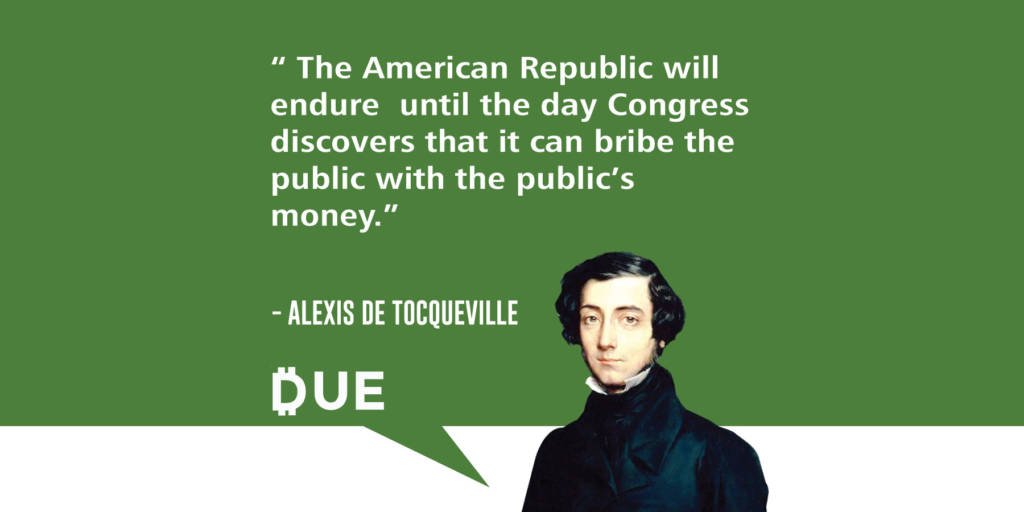
Comment (MAA):  A snarky slide title that implies that current policy is working.  Uncertain policy means the American people are asking for change given US Debt; some of it accelerated by partisans of a large government and its handmaidens in academia.


Alexis de Tocqueville on the Foundations of American Democracy

Alexis de Tocqueville was born in Paris and came from a prominent lineage, with his father serving as a royalist prefect under the Bourbon restoration.

In 1831, at the age of twenty-five, Alexis de Tocqueville made his fateful journey to America, where he observed the thrilling reality of a functioning democracy. From that moment onward, the French aristocrat would dedicate his life as a writer and politician to ending despotism in his country and bringing it into a new age.


Quotes from Alexis de Tocqueville’s “Democracy in America”:

  1. “The greatness of America lies not in being more enlightened than any other nation, but rather in her ability to repair her faults.”
  2. “Americans are so enamored of equality that they would rather be equal in slavery than unequal in freedom.”
  3. “In democratic ages, human beings rarely sacrifice themselves for one another voluntarily; they almost always do so because they are impelled to by some power outside themselves.”
  4. “Despotism often presents itself as the repairer of all ills suffered, the support of just rights, defender of the oppressed and founder of order.”
  5. “The best laws cannot make a constitution work in spite of morals; morals can turn the worst laws to advantage.”
  6. “I do not know if the people of the United States would vote for superior men if they ran for office, but there can be no doubt that such men do not run.”
  7. “The most dangerous moment for a bad government is when it begins to reform.”
  8. “The Americans combine the notions of Christianity and of liberty so intimately in their minds that it is impossible to make them conceive the one without the other.”
  9. “The will of man is not shattered, but softened, bent, and guided; men are seldom forced by it to act, but they are constantly restrained from acting. Such power does not destroy, but it prevents existence; it does not tyrannize, but it compresses, extinguishes, and stupefies a people, till each nation is reduced to nothing better than a flock of timid and industrious animals, of which the government is the shepherd.”
  10. “Americans combine the notions of Christian morality and of liberty so intimately in their minds that it is impossible to make them conceive the one without the other.”
  11. “In the United States, the most enlightened are the most religious; and the most religious are the most enlightened.”
  12. Americans of all ages, all conditions, and all dispositions constantly form associations… Wherever at the head of some new undertaking you see the government in France, or a man of rank in England, in the United States you will be sure to find an association.”


Layout mode
Predefined Skins
Custom Colors
Choose your skin color
Patterns Background
Images Background
Standards Michigan
error: Content is protected !!
Skip to content