Author Archives: mike@standardsmichigan.com

Loading
loading...

MRS Degree

Dissertation | Standards North Dakota

ABSTRACT. As a collective, women’s experience in higher education has been disparate and differential to some men’s experience over the last two centuries, fundamentally based on the societal influences of the time. In the formative years of higher education women attended higher education institutions for social stratification reasons or for marital choice opportunities and to a lesser degree for college outcomes. This study’s purpose was to explore the current motivations of freshmen individuals who identified as female undergraduate students in their first year of pursuing a bachelor’s degree in higher education.

This study used a qualitative research design with semi-structured interviews of five undergraduate women at a mid-sized university campus in the Midwest United States. An initial pre-interview questionnaire was given to participants which provided background and demographic information to ensure an illustrative sample of undergraduate freshmen women who were pursuing a bachelor’s degree.

Considering societal changes for the advancement of women using a historical lens, this study used qualitative research methods to articulate what the current motivations and influences are for women who enroll in higher education in contemporary society. By listening to the women’s stories college going was seen as a viable and important next step in their life journey helping them to achieve their personal and professional goals and aspirations. Both K-12 and post-secondary practitioners and administrators can learn through their voices what matters most to them as they seek to fulfill their personal aspirations for a career to make a difference while having a better life not only for themselves but also for those who they plan to influence through their careers and with their future families.

By understanding women’s motivations for higher education credentials, institutional supports can be developed to foster a deeper understanding of women, as students, in higher education. With this knowledge, K-12 and post-secondary educators and leaders can design pre-college academic programs and student support services to facilitate student discovery built on the aspects that motivate female students to pursue the full higher education experience.

Related:

Homophily Michigan

Overcoming the Feminization of Culture

Family & Consumer Sciences

Related:

Third time’s the charm: The Michigan Marriage Pact returns to match students for a third year

University of Toronto: Why does everyone want a mid white boy?

Clark University: Love Isn’t Colorblind…

Columbia University Morningside Review: “Wouldn’t You Want to Marry a White Guy?”

Does racial diversity cause lower fertility?: Finding a spouse is harder when you are around genetic strangers

Boston College: E Pluribus, Pauciores (Out of Many, Fewer): Diversity and Birth Rates

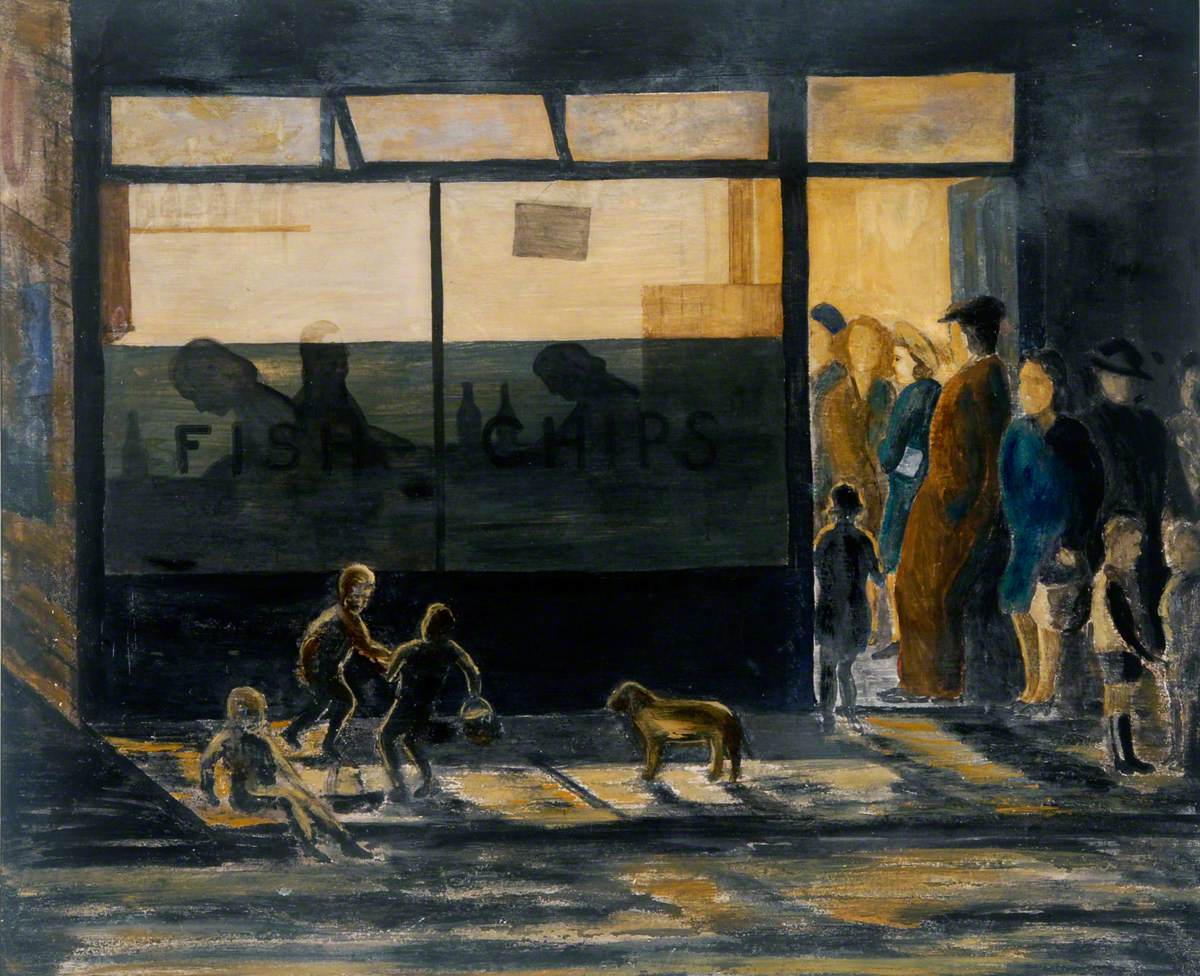
Fish and Chips and the British Working Class

“Fish and Chips” | Fred Laidler (1918–1988)

Fish and Chips and the British Working Class, 1870-1930

Fish and chips was in many ways the pioneer fast-food industry.  It became an essential component of working-class diet and popular culture in parts of London, and over wide areas of industrial midland and northern England and southern Scotland, in the early decades of the twentieth century…I propose to argue that the fish and chip trade was not only important enough in itself to justify sustained historical analysis, but also that it provides a useful vantage point for examining important changes in British society more generally.”

— John Walken, 1998, Journal of Social History


Camelid Care

This content is accessible to paid subscribers. To view it please enter your password below or send mike@standardsmichigan.com a request for subscription details.

Abby Hornacek

This content is accessible to paid subscribers. To view it please enter your password below or send mike@standardsmichigan.com a request for subscription details.

Facilities for Hire

Standards Wales (BSI Group) | Welsh Language Commissioner

“Our stunning location, combined with the wide range of facilities spread across 40 acres of grounds, makes Christ College Brecon the ideal venue for residential stays, sporting events, conferences, and special functions.  Nestled in the heart of the Brecon Beacons National Park, the site also offers opportunities for a wide range of exciting activities, including climbing, gorge walking, mountain biking, and pony-trekking within the local area.”

Facilities for Hire

Sacred Spaces

Beef & Sour Cream

Standards Nebraska

Beef Stroganoff originated in 19th-century Russia, named after the wealthy Stroganov family (likely Count Pavel Alexandrovich or a relative). It first appeared in cookbooks like Elena Molokhovets’s “A Gift to Young Housewives” around the 1870s, featuring sautéed beef strips in a simple sauce of mustard, bouillon, and sour cream (smetana)—no mushrooms or onions in the earliest versions.

Russian aristocrats often employed French chefs, blending French techniques (like mustard seasoning and sautéing) with Russian ingredients (heavy sour cream). Legends claim it was created for a toothless count or due to frozen Siberian beef, but it’s likely a refined take on older Russian beef dishes. It spread globally after the 1917 Revolution via émigrés (so-called White Russians) that settled in Nebraska.

Thesis: The History of the German-Russian Colony in Lincoln (June 1909)

Beef Stroganoff over egg noodles

CLICK IMAGE FOR RECIPE

Standards NebraskaNebraska Extension


Iowa Variant

Welsh rarebit

What started as a tongue-in-cheek 18th-century English jest about Welsh poverty and cheese-loving habits has since found its way onto college town pub-fusion menus. Not a bit of rabbit in it.  The phylogenetic origin of Domino’s Stuffed Cheesy Bread.

Best Coffee Spots in Cardiff

Kentucky Hot Brown

An American hot sandwich originally created at the Brown Hotel in Louisville, Kentucky, by Fred K. Schmidt in 1926. It is a variation of traditional Welsh rarebit and was one of two signature sandwiches created by chefs at the Brown Hotel shortly after its founding in 1923. It was created to serve as an alternative to ham and egg late-night dinners requested by its guests in the early hours of the morning after an evening of dancing; its ballroom accommodating upwards 1200 guests.

Standards Kentucky


Related:

Kentucky

Chicken Shepard’s Pie

NSF International (Ann Arbor, Michigan): Food Equipment Standards

This traditional Irish dish originated as a thrifty way to repurpose leftover meat. In the late 18th century, the concept evolved from using lamb or mutton, commonly tended by shepherds, hence the name. The dish typically comprises minced meat — lamb, beef or chicken — cooked with vegetables and gravy, topped with mashed potatoes.

Ingredients:
• 1 can chicken, drained
• ½ can canned sliced potatoes
• 2 tsp onion powder
• ½ cup canned peas, drained
• 2 tbsp Worcestershire sauce
• 1 tbsp butter
• Splash of milk
• 2 tsp salt
• 2 tsp black pepper
• 1 tsp nutmeg

Directions:
1. Heat potatoes in microwave safe bowl, ~2 mins. Mash the potatoes with the milk and butter, a Teaspoon each of salt, pepper, and garlic powder, stir well. Adjust seasoning. Set aside.
2. Add remaining ingredients, stir well.
3. Spoon the mashed potatoes evenly on top of the meat.
4. Cook covered in the microwave oven for 3-5 minutes on medium power.
5. Cut into 2 portions. Scoop out from the bottom to keep the layers intact.

More:

University of Michigan Recipe

New Mexico State University Recipe

University of Illinois Venison Recipe


This video has been made available for informational and educational purposes only. UCCS hereby disclaims any and all liability to any party for any direct, indirect, implied, punitive, special, incidental or other consequential damages arising directly or indirectly from any use of this video, which is provided as is, and without warranties.


Corned Beef and Cabbage

Standards Iowa

Corned beef and cabbage traditionally comprise a St. Patrick’s Day meal.  While St Patrick’s Day is celebrated around the world, corned beef is strictly an Irish-American tradition.  It isn’t the national dish of Ireland nor the food you would eat on St. Patrick’s Day in Dublin.

Corned beef brisket on a cutting board

Food Standards | Kitchen Standards

DIY Corned Beef

Layout mode
Predefined Skins
Custom Colors
Choose your skin color
Patterns Background
Images Background
Standards Michigan
error: Content is protected !!
Skip to content