
Twitter Blue
- Home Page 274



Readings: The “Donor Class” in Higher Education
This content is accessible to paid subscribers. To view it please enter your password below or send mike@standardsmichigan.com a request for subscription details.
Gaudeamus Igitur
This content is accessible to paid subscribers. To view it please enter your password below or send mike@standardsmichigan.com a request for subscription details.
Health Care System Branding
This content is accessible to paid subscribers. To view it please enter your password below or send mike@standardsmichigan.com a request for subscription details.
Readings: Moral Bearing of “The Student Life”
This content is accessible to paid subscribers. To view it please enter your password below or send mike@standardsmichigan.com a request for subscription details.

Embedded Systems
This content is accessible to paid subscribers. To view it please enter your password below or send mike@standardsmichigan.com a request for subscription details.

Non-Euclidean Geometries
While we reflect upon the fundamental constant π that appears routinely in Euclidean geometry it is also time well spent recognizing other “standard” geometries:
- Hyperbolic geometry: In hyperbolic geometry, the parallel postulate of Euclidean geometry is replaced with a different postulate, which leads to the development of a non-Euclidean geometry. In hyperbolic geometry, the sum of the angles in a triangle is always less than 180 degrees, and there are no parallel lines. This type of geometry has important applications in areas such as non-Euclidean geometry, topology, and physics.
- Elliptic geometry: In elliptic geometry, the parallel postulate is replaced with a different postulate that leads to the development of a non-Euclidean geometry. In elliptic geometry, the sum of the angles in a triangle is always greater than 180 degrees, and there are no parallel lines. This type of geometry has important applications in areas such as geometry, topology, and cartography.
- Projective geometry: Projective geometry is a type of geometry that studies properties that are invariant under projective transformations. It is used extensively in areas such as computer graphics, computer vision, and machine learning, as well as in the study of complex projective structures in algebraic geometry.
Each of these geometries has its own set of axioms, theorems, and properties that are distinct from those of Euclidean geometry. They have important applications in a wide range of fields, including mathematics, physics, engineering, computer science, and many others.
Understanding non-Euclidean geometries is important for several reasons:
- Broadening our understanding of geometry: Non-Euclidean geometries expand our understanding of geometry beyond the traditional Euclidean model, which is limited to two-dimensional and three-dimensional space. Non-Euclidean geometries allow for the exploration of curved spaces, which can have practical applications in fields like physics, engineering, and computer graphics.
- Advancing scientific knowledge: Non-Euclidean geometries have played a crucial role in the development of modern physics, particularly in the study of gravity and the structure of the universe. For example, Einstein’s theory of general relativity relies heavily on non-Euclidean geometries to explain the behavior of massive objects in the presence of gravity.
- Challenging our assumptions: Non-Euclidean geometries challenge our assumptions about the nature of space and our perceptions of reality. By exploring these alternative models of space, we can gain a deeper understanding of the limits of our knowledge and the nature of the universe.
- Encouraging creativity and innovation: Exploring non-Euclidean geometries can stimulate creativity and innovation in fields like art, architecture, and design. By breaking free from traditional Euclidean constraints, designers can create novel and innovative structures that challenge our perceptions of space and form.
Understanding non-Euclidean geometries is important for expanding our knowledge of the universe, challenging our assumptions, and encouraging creativity and innovation in various fields.
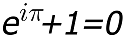

Free Speech Week
This content is accessible to paid subscribers. To view it please enter your password below or send mike@standardsmichigan.com a request for subscription details.

Laundry
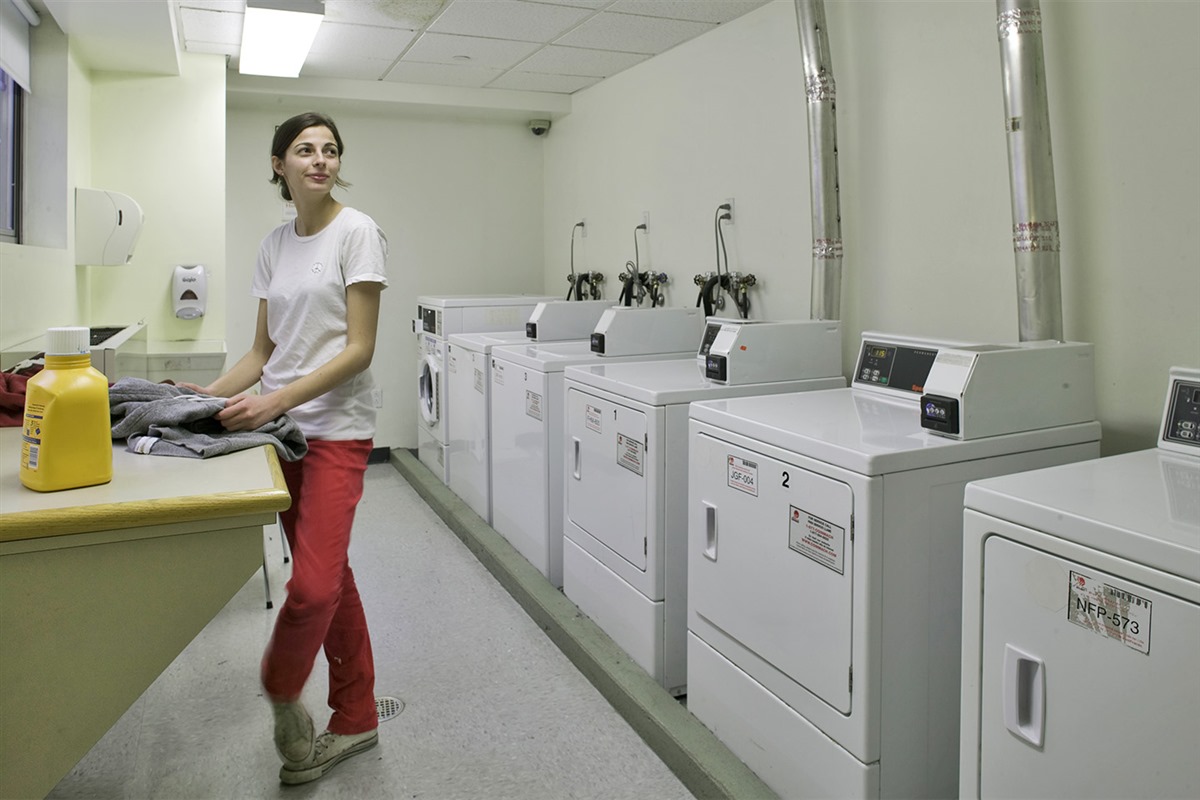
The New School | New York City
Consumer Product Testing and Certification FAQs

More
United States Consumer Product Safety Commission: Clothes Dryers
Design of Public Self-service Laundry System in College Dormitory

Highpoint University | Guilford County North Carolina
My D-i-l never wanted to be a farmer's wife. I think she is killin' it. pic.twitter.com/uBpRRqhG44
— Leslie (@Hopeleslie1234) August 10, 2024

Biden v. Nebraska


SUPREME COURT OF THE UNITED STATES | OCTOBER TERM 2022
Biden v. Nebraska | Docket Number: 22-506
Dept. of Education v. Brown | Docket Number: 22-535
The Federal Student Loan Forgiveness hearings at the Supreme Court today are significant because they involve a legal challenge to a government policy that could affect the lives of millions of Americans who have student loan debt. Student loan debt can indirectly affect college and university building construction in a few different ways:
- Reduced enrollment: High levels of student loan debt can discourage some potential students from enrolling in college or university, particularly if they believe that the cost of education will leave them with insurmountable debt. This can lead to reduced enrollment, which can impact a school’s budget and its ability to fund new building construction projects.
- Reduced state funding: State funding for higher education has declined in many states in recent years, as policymakers have shifted resources toward other priorities. As a result, many colleges and universities have had to rely more heavily on tuition revenue and other sources of funding to finance building construction projects. However, high levels of student loan debt can also impact state funding decisions, as policymakers may be less inclined to invest in higher education if they believe that students are already burdened with too much debt.
- Increased operating costs: High levels of student loan debt can also impact the operating costs of colleges and universities, particularly if they have to allocate more resources toward financial aid and student support services. This can make it more difficult to fund building construction projects, which may be viewed as a lower priority in tight budgetary times.
Overall, while student loan debt may not directly impact building construction decisions at colleges and universities, it can play a role in shaping the broader financial context in which those decisions are made.

Certiorari before Judgment: No. 22–535. Argued February 28, 2023—Decided June 30, 2023
New update alert! The 2022 update to the Trademark Assignment Dataset is now available online. Find 1.29 million trademark assignments, involving 2.28 million unique trademark properties issued by the USPTO between March 1952 and January 2023: https://t.co/njrDAbSpwB pic.twitter.com/GkAXrHoQ9T
— USPTO (@uspto) July 13, 2023
Standards Michigan Group, LLC
2723 South State Street | Suite 150
Ann Arbor, MI 48104 USA
888-746-3670
DIRECTIONS
 |
 |
|
 |
 |
|
 |
 |