


The Science Behind Brewing Beer
- Home Page 58

loading...

How to Make Baby Food
How to Make Banana Puree for Babies
Special Supplemental Nutrition Program for Women, Infants, and Children
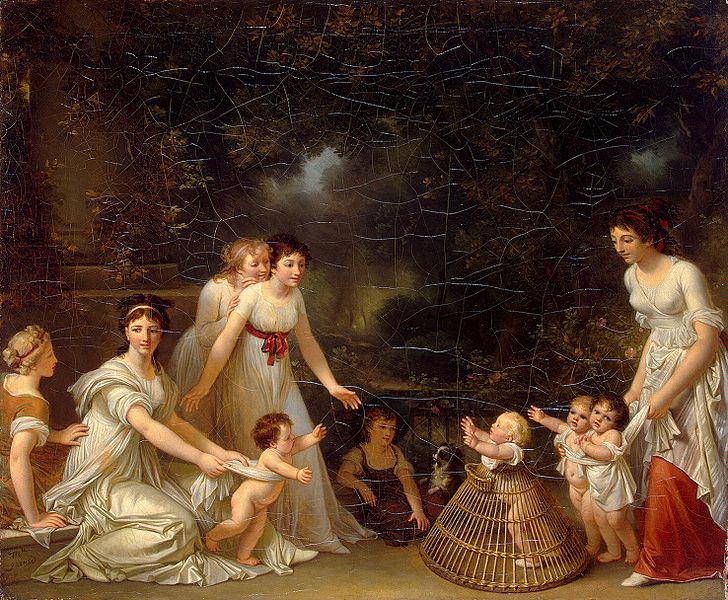
Before the commercialization of baby food, parents typically prepared homemade baby food using simple kitchen tools and ingredients. Here’s a general overview of how baby food was made traditionally:
Selection of Ingredients: Parents would select fresh fruits, vegetables, grains, and meats suitable for their baby’s age and dietary needs. These ingredients were chosen based on their nutritional value and ease of digestion.
Cooking: The selected ingredients would be cooked using methods such as boiling, steaming, or baking to soften them and make them easier for the baby to eat. Cooking methods were chosen to preserve as much of the natural nutrients as possible.
Mashing or Pureeing: Once cooked, the ingredients would be mashed or pureed into a smooth consistency suitable for a baby’s developing digestive system. This could be done using tools like a fork, potato masher, food mill, or blender.
Straining (Optional): Some parents might choose to strain the pureed food to remove any seeds, skins, or fibers that could be difficult for a baby to digest or might pose a choking hazard.
Storage: Homemade baby food could be stored in small containers or ice cube trays and frozen for future use. This allowed parents to prepare larger batches of baby food at once and thaw individual portions as needed.
Feeding: When it was time to feed the baby, parents would simply thaw the desired portion of homemade baby food and serve it to their baby using a spoon or by bottle-feeding.
Variety: Parents would typically introduce a variety of flavors and textures to their baby over time, gradually expanding their palate and exposing them to a wide range of nutrients.
Overall, making homemade baby food required time, effort, and attention to detail, but many parents preferred it because they had control over the quality and ingredients used, ensuring that their baby received nutritious and wholesome meals.

“Gelukkige Koningsdag!” Stamppot
🇳🇱 KING’S DAY IN THE NETHERLANDS
👑 Today, Dutch King Willem-Alexander celebrates his 57th birthday with Queen Máxima and his daughters Amalia, Alexia and Ariane in Emmen, a town in the northeastern Netherlands.
📍 Emmen city center pic.twitter.com/JLcd51K2Bq
— [Wim Dehandschutter] (@WDehandschutter) April 27, 2024
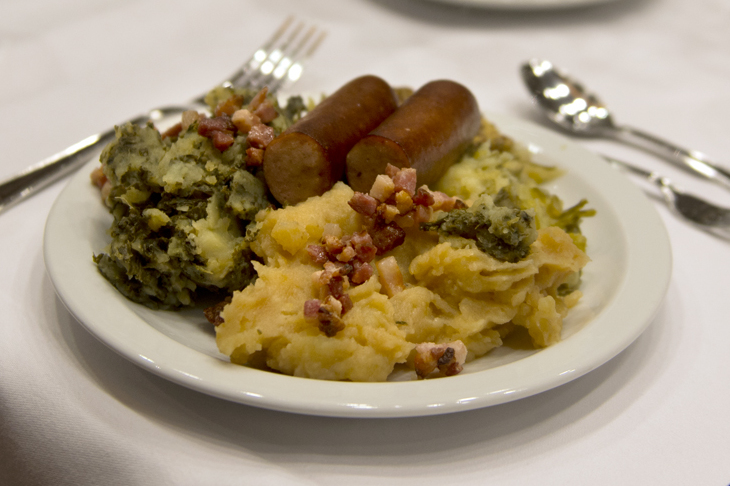
Stamppot is a Dutch comfort food known for its simplicity and versatility. It combines mashed potatoes with various vegetables, typically leafy greens like kale (boerenkool), endive (andijvie), or sauerkraut (zuurkool), and often includes bacon or sausage.
The name “stamppot” comes from the Dutch words “stampen” (to mash) and “pot” (pot). The dish is prepared by mashing the boiled potatoes and vegetables together in a single pot. The result is a slightly chunky mixture of mashed potatoes and vegetables.
There are many variations of stamppot, depending on the vegetables used. The most common types include boerenkool stamppot (kale stamppot), andijvie stamppot (endive stamppot), and zuurkool stamppot (sauerkraut stamppot). Each variation has its own distinct flavor and texture.
Stamppot runs deep in the Netherlands and is considered a staple of Dutch cuisine. It’s a dish that brings people together, especially during the traditional “Hutspot Day” (Hutspotfeest) celebrations in some regions.
Related: Dutch Student Stew
“Dutch Student Stew” also known as “Hutspot” in Dutch. It’s a traditional Dutch dish that consists of mashed potatoes, carrots, and onions, often flavored with salt, pepper, and sometimes bacon. It’s a hearty and simple comfort food that has been popular in the Netherlands for many years. The name “Dutch Student Stew” might be a colloquial or humorous reference to the fact that it’s an easy and inexpensive dish to prepare, making it suitable for students or anyone on a budget.
Texas Permanent School Fund
This content is accessible to paid subscribers. To view it please enter your password below or send mike@standardsmichigan.com a request for subscription details.

Hot Cross Buns
These are spiced sweet buns, typically studded with raisins or currants and marked with a cross on top. Their origins trace to pre-Christian pagan traditions, where ancient peoples (including Saxons honoring the goddess Eostre) baked crossed buns for spring festivals symbolizing rebirth and the moon’s quarters. In Christian tradition, an English monk at St. Albans Abbey is credited with baking spiced buns marked with a cross on Good Friday in 1361, distributing them to the poor.
The cross represents Jesus’ crucifixion, while spices evoke the embalming spices used on his body. Buns became linked to breaking the Lenten fast. In Tudor England, their sale was restricted except on Good Friday, Christmas, and funerals. Today, they are enjoyed worldwide during Easter as a symbol of faith, renewal, and the end of Lent.

ICE Alum Meredith Hayden Goes from Viral TikTok Chef to Cookbook Queen
The 2019 alum has amassed a major social media following — and turned her life as a private chef into food media stardom. Read more here: https://t.co/XHysOVuLHX pic.twitter.com/BK0XpThB78
— Institute of Culinary Education – NY & LA (@iceculinary) November 5, 2025

vvsfasdfasdf


Passover Menu
Standards Ohio
Dining options available for Passover https://t.co/U2l5xxJwSv
— Standards Michigan (@StandardsMich) April 2, 2026

Bruin Café
“Europe today has little desire to reproduce itself,
fight for itself or even take its own side in a argument.
By the end of the lifespans of most people currently alive,
Europe will not be Europe and the peoples of Europe
will have lost the only place in the world we had to call home”
– Douglas Murry (“The Strange Death of Europe”)

Large European universities such as Rijksuniversiteit Groningen are integrated into the fabric of the surrounding city. There are several ways in which this integration takes place:
Physical location: Many European universities are located in the heart of the city, often in historic buildings that have been repurposed for educational use. This central location means that the university is easily accessible to students and the general public, and that it is often surrounded by other cultural institutions, such as museums, theaters, and libraries.
Student life: The presence of a large student population can have a significant impact on the city’s culture and economy. Many European cities have developed a vibrant student culture, with cafes, bars, and other venues catering to the needs and interests of young people. This can help to create a sense of community between the university and the city, and can also bring economic benefits to local businesses.
Research and innovation: Large European universities are often at the forefront of research and innovation, and they can be important drivers of economic growth in the surrounding region. Many universities work closely with local businesses and industries, and they may also collaborate with other universities and research institutions in the area.
Cultural exchange: Universities can be important centers of cultural exchange, both for international students and for local residents. Many European universities offer language classes and other cultural programs that are open to the public, and they may also host lectures, concerts, and other events that are designed to promote cross-cultural understanding.
Overall, the integration of large European universities into the city is a complex and multifaceted process that can have a significant impact on the social, cultural, and economic life of the surrounding region.
The origin of brown cafés can be traced back to the 17th century, during the Dutch Golden Age. At that time, the Netherlands was a prosperous and influential trading nation, and Amsterdam was a bustling city with a thriving port. Sailors, merchants, and locals needed places to socialize, relax, and conduct business, leading to the emergence of taverns and pubs.
The term “brown café” is believed to have originated from the brownish stains that formed on the walls and ceilings due to tobacco smoke, candle soot, and other atmospheric elements. These stains gave the cafés a distinct, cozy ambiance and a sense of history.
Brown cafés became an integral part of Dutch culture, serving as communal gathering spots for people of all walks of life. They were places where locals would meet friends, engage in conversations, enjoy a drink, and sometimes play board games like chess or backgammon. Over time, brown cafés became associated with an authentic, unpretentious, and relaxed atmosphere, attracting both locals and tourists.
The unique charm of brown cafés lies in their preserved historical interiors, with old wooden furniture, dim lighting, and a wide selection of local beers and spirits. Many brown cafés still retain their original character, transporting visitors back in time and providing a cozy retreat from the hustle and bustle of modern life.
While the concept of brown cafés originated in the Netherlands, similar types of establishments can also be found in other European countries, such as Belgium and parts of Germany. However, the term “brown café” is primarily associated with the Dutch tradition of cozy, atmospheric, and convivial drinking establishments.

Of Beauty and Consolation: Roger Scruton
These beautiful Dutch will not be around if they keep on importing Muslims pic.twitter.com/YsRYQp1YgD
— Evil Feynman (@evilfeynman) March 22, 2026
Studenten van @RSMErasmus passen het vak #standaardisatie toe in de praktijk. Komende maand helpen zij vijf ondernemers van @TheGrnVillage met #normalisatie vraagstukken rondom hun #innovatie.
Wij zijn benieuwd naar de resultaten.#learningcommunity #praktijkonderwijs pic.twitter.com/OIpPXQpGsf
— NEN (@NEN_nl) February 13, 2023

Saxbys
Standards New Jersey | Montclair State University Net Position: $404.5M
New Jersey College Faculty Pensions
Saxbys Coffee at Montclair State University is a fully student-run experiential learning cafe located on the first floor of the Feliciano School of Business. Launched in April 2024 as part of Saxbys’ Experiential Learning Platform (ELP), it is designed for students, by students.Students handle every aspect of operations: baristas, food service, inventory, marketing, and daily management.
Each semester, a student serves as the Student Cafe Executive Officer (SCEO), gaining real-world entrepreneurial experience while earning academic credit and wages. This hands-on model supplements classroom learning, builds leadership skills, and boosts post-graduation success rates.
The cafe creates a vibrant campus hub with student-friendly pricing, all-day breakfast, and specialty drinks. It fosters community and practical business training in a supportive environment.

The Early Swedes in New Jersey

Alumni Network
This is….BCMSU 🐻❤️🏠
What a beauty 😍 pic.twitter.com/oaTmX4P0ni— Bloomfield College of Montclair State University (@montclair_bc) June 24, 2024



Breakfast Table Trilogy
Red Lion Cafe | College Avenue | Financial Position 2024 | $2.914B

Institutional Planning & Operations

Proud of who we are and excited for our future. We’re thrilled to welcome our newest Scarlet Knights! #upstreamredteam
.
.
.
.#NationalSigningDay #NSD #ScarletKnights #RutgersRowing #ncaarowing #bigtenrowing #bigten pic.twitter.com/CyXhRdpEV7— RutgersWomensRowing (@RutgersWRowing) November 14, 2024
New update alert! The 2022 update to the Trademark Assignment Dataset is now available online. Find 1.29 million trademark assignments, involving 2.28 million unique trademark properties issued by the USPTO between March 1952 and January 2023: https://t.co/njrDAbSpwB pic.twitter.com/GkAXrHoQ9T
— USPTO (@uspto) July 13, 2023
Welcome
Standards Michigan Group, LLC
455 East Eisenhower Parkway, Suite 300
Ann Arbor, MI 48108 USA
888-748-3670
DIRECTIONS
 |
 |
|
 |
 |
|
 |
 |
Layout mode
Predefined Skins
Custom Colors
Choose your skin color
Patterns Background
Images Background
error: Content is protected !!
Skip to content