This content is accessible to paid subscribers. To view it please enter your password below or send mike@standardsmichigan.com a request for subscription details.
🇺🇸Nick Baumgartner, Iron River, snowboarding
🇺🇸Abby Roque, Sault St Marie, hockey
🇺🇸Deedra Irwin, Michigan Tech, biathalon
🇮🇹Alex Petan, Michigan Tech, hockey pic.twitter.com/xVyf2fquVw
Secretary of State Marco Rubio’s full speech today at the 2026 Munich Security Conference.
Excerpt:
“At the time of that first (1963 Munich Security Conference) gathering, Soviet communism was on the march. Thousands of years of Western civilization hung in the balance. At that… pic.twitter.com/YsE59U2dQU
— Paul Villarreal (AKA Vince Manfeld) (@AureliusStoic1) February 14, 2026
Illustration from 1913 showing Pythagoras teaching a class of women. Pythagoras believed that women should be taught philosophy as well as men and many prominent members of his school were women.Our practice is fairly structured as our Syllabus reveals. Once a month we like to break form and throw our agenda “open”. Unstructured. Completely determined by the interest of our clients, colleagues and followers. Use the login credentials at the upper right of our home page.
* Lyndon B. Johnson played a significant role in the passage of the Education Acts of 1965, which consisted of two key pieces of legislation: the Elementary and Secondary Education Act (ESEA) and the Higher Education Act (HEA).
As President of the United States, Johnson made education reform a priority of his administration and saw it as a means of addressing poverty and inequality in America. He signed the ESEA into law in April 1965, which was designed to provide funding to schools serving low-income students and aimed to close the achievement gap between disadvantaged students and their more affluent peers. The ESEA also provided funds for teacher training and other educational programs.
In November of the same year, Johnson signed the HEA into law, which provided funding for college and university education and sought to make higher education more accessible to all Americans.
Together, these Education Acts of 1965 were a significant achievement for Johnson’s administration and played a crucial role in expanding educational opportunities for millions of Americans. They marked a major shift in federal education policy and helped to establish the federal government’s role in shaping education policy in the United States.
Alexander Fleming
Born on: August 6, 1881, in Scotland.
Died on: March 11, 1955.
The Scottish bacteriologist known for discovering penicillin, revolutionizing medicine. His work paved the way for antibiotics, saving countless lives and earning him the Nobel Prize in Medicine. pic.twitter.com/jNkmKKNaJm
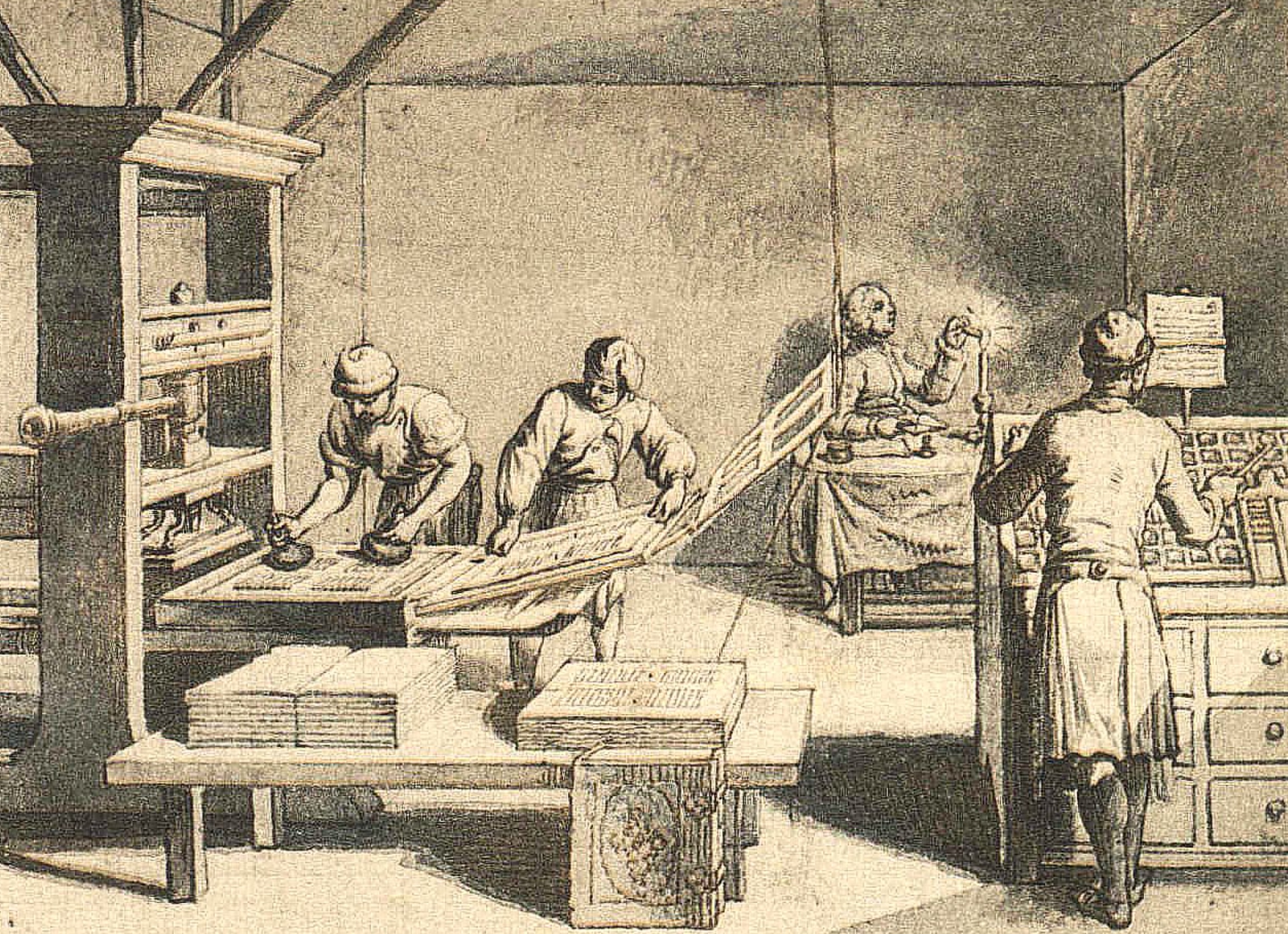
1439 – Johannes Gutenberg invents the printing press.
Oliver Heaviside (1850–1925) was a self-taught English mathematician and physicist who reformulated James Clerk Maxwell’s original set of twenty equations into the four differential equations known today as Maxwell’s equations. pic.twitter.com/xYFJFa341G
In 1883 the Edison & Swan United Electric Light Company was established. Known commonly as “Ediswan” the company sold lamps made with a cellulose filament that Swan had invented in 1881. Variations of the cellulose filament became an industry standard, https://t.co/mmDHYKDTlqpic.twitter.com/t5fRFKCEyW
We’re celebrating the International Day of Women and Girls in Science!
Let’s look back on the life of Marie Skłodowska Curie: a Nobel Prize laureate who dedicated her life to science and became one of the world’s greatest scientists.#WomenInScience#NobelPrizepic.twitter.com/urix0dUh9B
The Steam Engine: The invention of the steam engine in the 18th century by pioneers like James Watt revolutionized industry, transportation, and agriculture, powering factories, locomotives, and ships and driving the Industrial Revolution.
The Internal Combustion Engine: The development of the internal combustion engine in the 19th century revolutionized transportation and manufacturing, leading to the proliferation of automobiles, airplanes, and machinery that powered economic growth and globalization.
The Internet: Originating from research projects in the late 20th century, the internet has become a fundamental infrastructure for communication, commerce, education, and entertainment, connecting billions of people worldwide and enabling unprecedented access to information and resources.
Semiconductors and Integrated Circuits: The invention of semiconductors and integrated circuits in the mid-20th century paved the way for the digital revolution, enabling the miniaturization and mass production of electronic devices such as computers, smartphones, and microprocessors.
Agriculture: The transition from a hunter-gatherer lifestyle to settled agriculture marked the beginning of civilization and allowed for the development of permanent settlements, leading to population growth, specialization of labor, and the emergence of complex societies.
The Wheel: Invented around 3500 BCE, the wheel revolutionized transportation, enabling the movement of goods and people over long distances and laying the foundation for subsequent advancements in engineering and machinery.
Writing: The development of writing systems, such as cuneiform in Mesopotamia and hieroglyphs in Egypt, facilitated the recording and dissemination of information, contributing to the preservation of knowledge, governance, and cultural expression.
Purpose: This study explored the impacts of elite-level youth sport participation on family life.
Methodology: In-depth semi-structured interviews were conducted with parents of youth athletes (N = 17).
Findings: Parents extensively talked about the temporal demands of elite youth sports and necessity of time management. Three domains were found in parents’ accounts including, children’s time, parents’ time, and family’s time; temporal opportunities and challenges were identified within each domain. Time spent on sports was perceived positively, keeping children out of trouble and from video games/time online; however, it left no time for other activities. Although parents sacrificed their own activities to facilitate their child’s sports participation, they used the practice and tournament time to engage in personal interests, such as reading or exercising. Likewise, family’s time was restricted by youth sport schedules, but parents managed to turn car rides or tournament trips into quality family time.
Practical implications: Findings can be used by youth sport practitioners to enhance children and parents’ experiences.
Research contribution: Findings contribute to the literature by assessing the impacts of elite-level youth sports participation on family life.
Originality: The intricacies of how time-on task relates to parents’ relationship with their child’s sport have been understudied.
Located on George IV Bridge, near the heart of the city’s historic Old Town. It is perhaps best known as one of the places where J.K. Rowling is said to have written parts of the early Harry Potter books.
— Universities UK International (@UUKIntl) March 27, 2025
Heavy financial dependence on international (non-citizen) students—who often comprise 20-30%+ of enrollments in Anglosphere universities (e.g., high proportions in Australia, Canada, UK)—shifts institutional priorities toward revenue maximization over preserving or promoting traditional Anglo-Western cultural norms and values.
Administrations adapt campuses to attract and retain large cohorts from Asia, the Middle East, and elsewhere by internationalizing curricula, diluting Western-centric content, emphasizing global/multicultural perspectives, and sometimes de-emphasizing local historical narratives (including Indigenous ones in settler societies like Australia, Canada, US). Socially, large enclaves form where students cluster by nationality, reducing meaningful integration with domestic students and altering campus social norms, events, discourse, and even language use in shared spaces.
Critics argue this erodes the distinctive Anglospheric ethos—rooted in English common law traditions, Enlightenment individualism, free speech norms, and Judeo-Christian/secular heritage—replacing it with a homogenized, market-driven globalism. Indigenous cultures face compounded marginalization as resources prioritize international accommodation over deeper indigenization efforts.
New update alert! The 2022 update to the Trademark Assignment Dataset is now available online. Find 1.29 million trademark assignments, involving 2.28 million unique trademark properties issued by the USPTO between March 1952 and January 2023: https://t.co/njrDAbSpwBpic.twitter.com/GkAXrHoQ9T








.jpg)