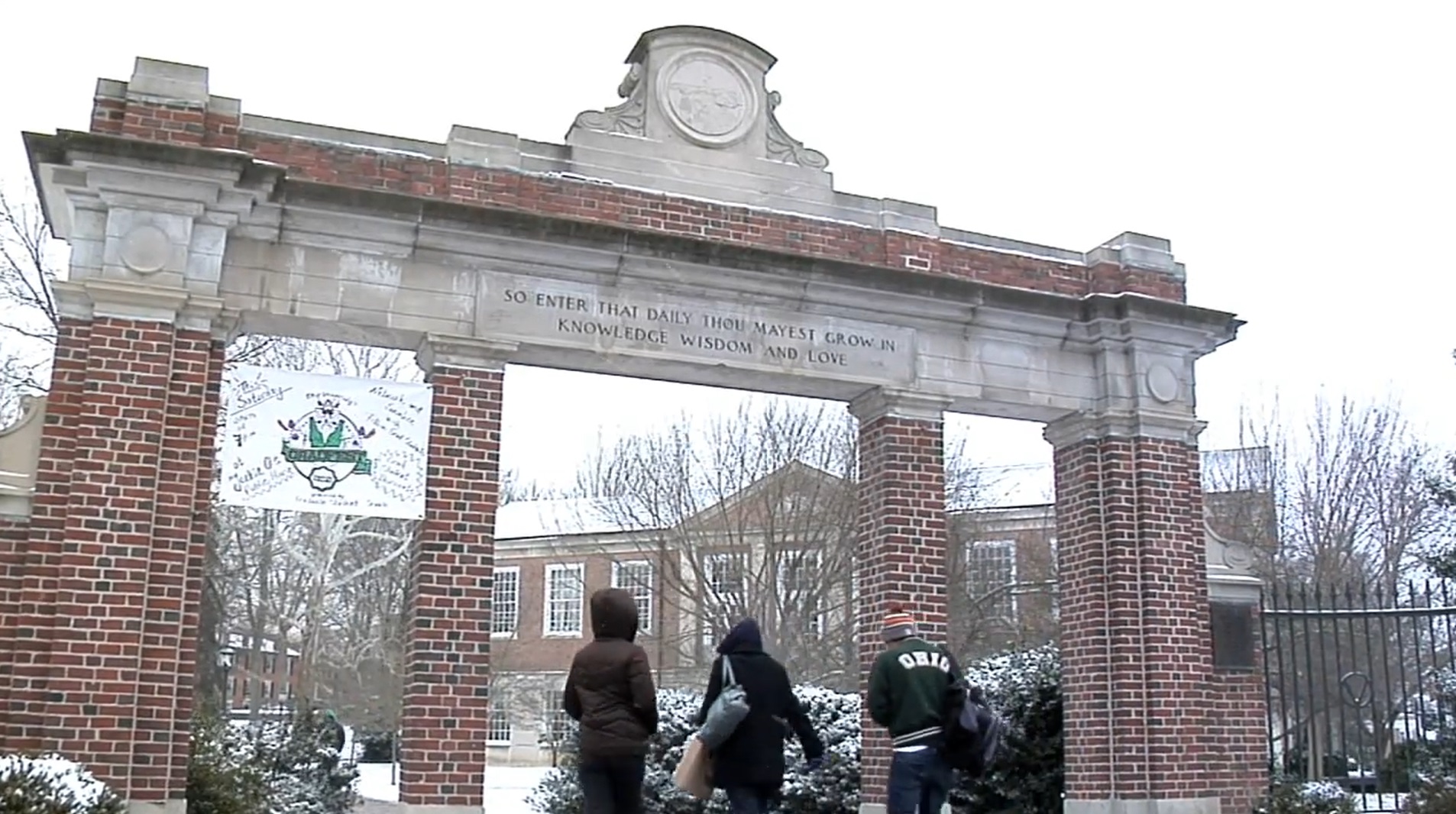
“The All-Campus Radio Network, known as ACRN Media, is Ohio University’s student-run radio station. Founded in 1971, we’ve evolved over the past 50-plus years into a media hub, producing visual, editorial and audio content in addition to radio and live music shows. ACRN Media has several departments working together to foster discussion, interaction and participation within accepting popular and DIY music cultures.”
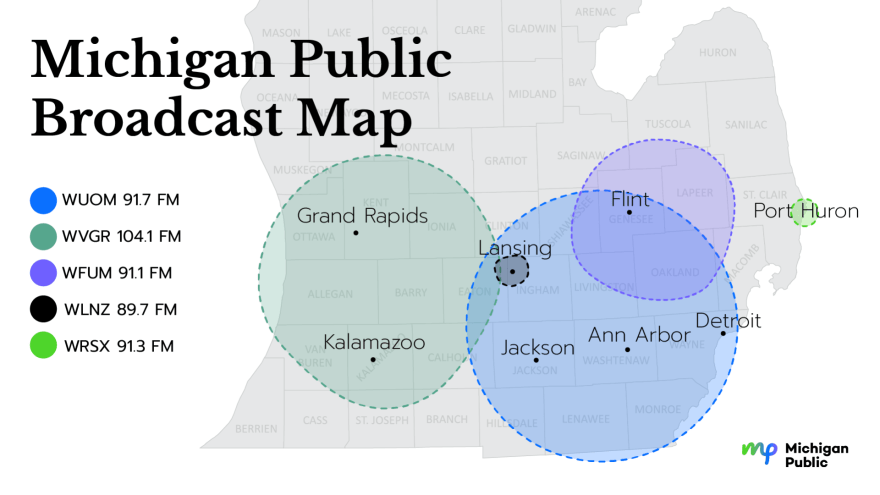
Why are there at least 10 publicly funded radio stations receivable in a 75 mile radius (back and forth, up and down) the I-94/I-75 corridor of Michigan — all of them domiciled in public universities? These stations also receive revenue from other non-profit organizations, unending funding drives and private advertising from multinational financing organizations such as Schwab, Fidelity and other for-profit corporations. Most of them purchase their “content” from the same source; reflecting the same large government bias seen across the entire nation; concentrated in college towns with spotty intellectual history.
Within an approximate 50 mile radius of the University of Michigan, five national public radio stations are receivable:
WUOM University of Michigan Ann Arbor
WEMU Eastern Michigan University
WDET Wayne State University
WKAR Michigan State University
WGTE University of Toledo
Move 25 miles to the northwest and two more are receivable:
Standards for radio broadcast coverage can vary depending on factors like location, broadcasting technology, and regulatory requirements. Here’s a general list covering various aspects:
Technical Standards:
Transmission Power and Frequency Allocation: Standards set by regulatory bodies like the Federal Communications Commission (FCC) in the United States or Ofcom in the UK regulate the power levels and frequencies allocated to radio stations to prevent interference.
Audio Quality: Standards for audio encoding and decoding, such as those defined by organizations like the European Broadcasting Union (EBU) or the Advanced Audio Coding (AAC) standards.
Antenna Design and Installation: Standards for antenna design, placement, and maintenance to ensure efficient transmission and coverage.
Content Standards:
Language and Content Regulations: Regulations on language, decency, and content suitability enforced by regulatory bodies to ensure broadcasts adhere to community standards and do not contain offensive or harmful material.
Advertising Standards: Guidelines on the content and placement of advertisements to prevent deceptive practices and ensure fairness and transparency.
Copyright and Licensing: Regulations governing the use of copyrighted material and licensing agreements for broadcasting music, interviews, and other content.
Emergency Broadcast Standards:
Emergency Alert Systems (EAS): Standards for implementing emergency alert systems to disseminate important information to the public during emergencies or disasters.
Public Safety Communications: Standards for communication protocols and procedures to coordinate with emergency services and agencies during crises.
Accessibility Standards:
Closed Captioning: Standards for providing closed captioning for the hearing impaired, ensuring accessibility to radio broadcasts.
Descriptive Video Service (DVS): Standards for providing audio descriptions of visual content for the visually impaired.
Ethical Standards:
Journalistic Integrity: Guidelines for ethical reporting and journalism standards, including accuracy, fairness, and impartiality.
Disclosure of Sponsored Content: Standards for disclosing sponsored or paid content to maintain transparency and trust with the audience.
Conflict of Interest Policies: Standards for identifying and managing conflicts of interest in news reporting and programming.
Health and Safety Standards:
Electromagnetic Radiation Exposure Limits: Standards set by health organizations and regulatory bodies to limit human exposure to electromagnetic radiation emitted by radio transmitters.
Workplace Safety: Standards for ensuring the safety of radio station personnel and compliance with occupational health and safety regulations.
These standards are often enforced by governmental regulatory agencies, industry organizations, and professional associations to ensure the quality, integrity, and safety of radio broadcast coverage.
This content is accessible to paid subscribers. To view it please enter your password below or send mike@standardsmichigan.com a request for subscription details.
Yes — I found a better one, and this one is quite good for our purposes.
Mount Holyoke College’s European Alumnae group has an accessible page devoted specifically to “Labskaus (German salted meat & potatoes)”, contributed by alumna Lynn Meins ’70, resident in Germany. It gives the complete recipe: corned beef, onions, mashed potatoes and pickle brine, served with fried eggs, pickles, beet salad and optionally herring/Rollmops. Mount Holyoke Alumnae Association
The contributor describes it as a traditional North German dish, supposedly originating as a 19th-century shipboard meal. Her recipe source is the 1971 Dr. Oetker Schulkochbuch. Mount Holyoke Alumnae Association
This may actually be better for STDMi than Hamburg: an American college alumna living in Germany transmitting a traditional North German maritime recipe. That is almost exactly what we mean by a Hanseatic Foodway.
I also found an intriguing university connection at Würzburg: a university dining official discussing student dining identifies Labskaus as a northern German specialty. zeit.de But Mount Holyoke gives us the actual recipe, so I’d use Mount Holyoke.
The Statler Hotel is a real, operating luxury hotel in the middle of Cornell’s Ithaca campus — and simultaneously a teaching laboratory for Cornell’s Nolan School of Hotel Administration. Cornell calls it the Ivy League’s only “teaching hotel.” Cornell SC Johnson College of Business
It is substantial: 153 guest rooms, restaurants, banquet and meeting facilities and the J. Willard Marriott Executive Education Center. Guests are ordinary paying hotel guests—alumni, parents, visiting scholars, conference attendees and others—but Cornell hospitality students work alongside professional hotel staff in actual hotel and restaurant operations. More than 200 Nolan students participate annually according to the school. Cornell SC Johnson College of Business
The history is particularly good for your hospitality thread. Cornell established its hotel program in 1922. Hotelier E. M. Statler became a major benefactor, and the original 36-room Statler Inn opened with Statler Hall in 1950. The present hotel opened in 1989 as a much larger successor. Cornell SC Johnson College of Business
And there is an especially interesting SES feature: Cornell students also operate Establishment at Statler, a public restaurant where students in the restaurant-management course apply food-service and hospitality theory in a functioning dining room. Cornell SC Johnson College of Business
For STDMi, Statler may be the ideal American example of what we were discussing this morning. The university hasn’t merely created a degree in hospitality; it has built an actual hotel into the educational settlement so that lodging, food, architecture, service, events and beauty become part of the laboratory.
“The Liberals are Coming, and They’re Bringing Fancy Coffee” https://t.co/XykfCFYZgVhttps://t.co/exHU6TR2h9
America is changed by flight from miserable Blue States to better Red States—only to import the policies that created the misery they fled from in the first place. pic.twitter.com/OaVVgrTxJr
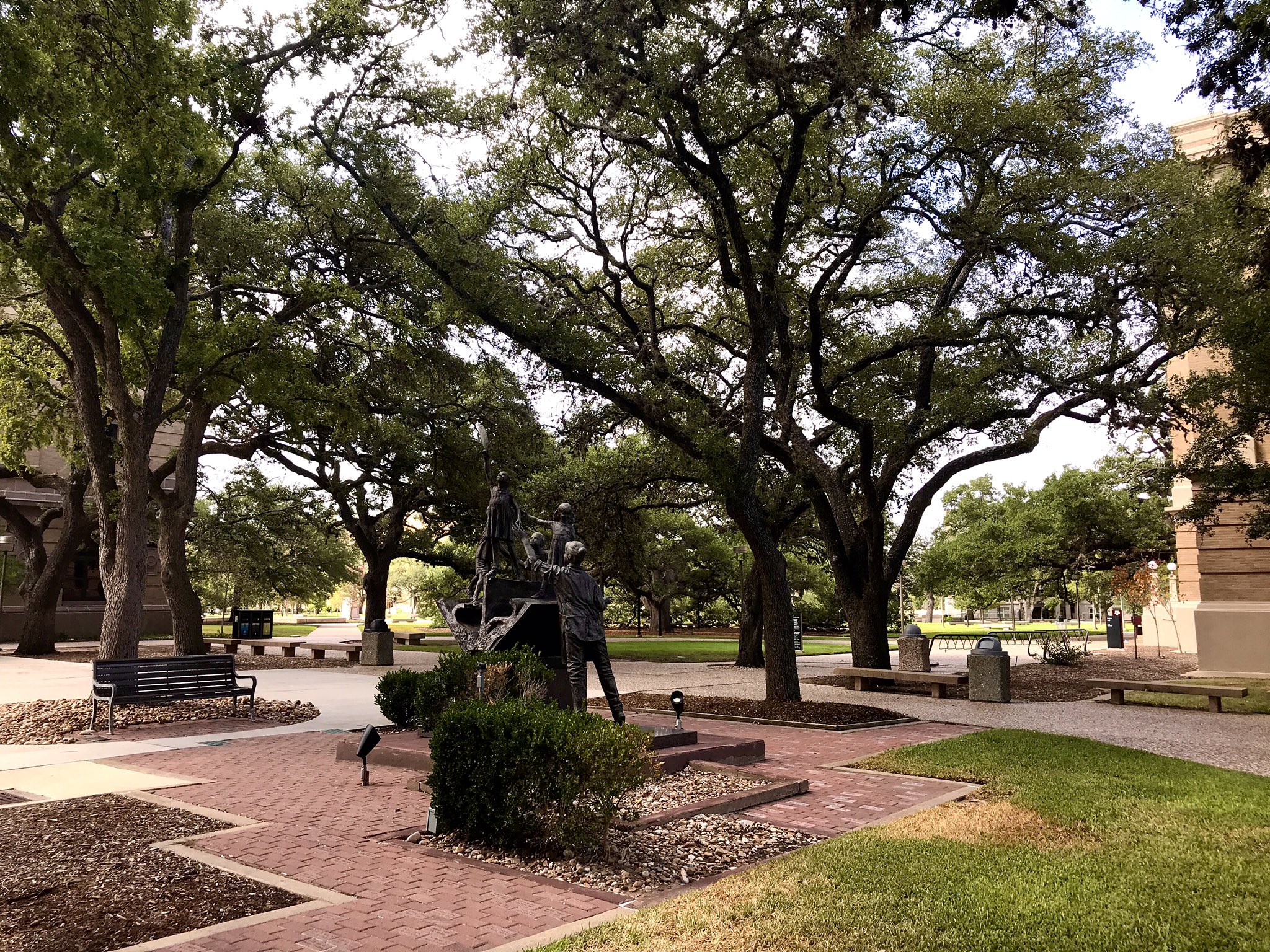
Medal of Honor recipient Matt Williams ’25 grew up in an Aggie household in Boerne, Texas, learning the value of hard work and service from his dad ’77. Matt was recognized at the Military Appreciation game as one of nine Aggie Medal of Honor recipients.
While there isn’t a universally standardized pizza that everyone agrees upon, certain types of pizza have become iconic and widely recognized. Some of these include:
Margherita Pizza: This classic pizza features tomato sauce, fresh mozzarella cheese, fresh basil, and a drizzle of olive oil. It’s named after Queen Margherita of Italy.
Pepperoni Pizza: Topped with tomato sauce, mozzarella cheese, and slices of pepperoni (a cured pork and beef sausage).
Margarita Pizza: Similar to the Margherita, but without the basil. It typically has tomato sauce, fresh mozzarella, and sometimes a drizzle of olive oil.
Neapolitan Pizza: This style originated in Naples, Italy. It has a thin, soft, and chewy crust with simple and fresh ingredients like San Marzano tomatoes, mozzarella, fresh basil, and olive oil.
New York Style Pizza: Characterized by its large, foldable slices with a thin and flexible crust. It’s often topped with tomato sauce and mozzarella cheese.
Chicago Deep-Dish Pizza: Known for its thick crust, this pizza has layers of cheese, toppings, and tomato sauce. It’s baked in a deep pan, resulting in a substantial and hearty pizza.
Sicilian Pizza: Square-shaped and thick-crusted, Sicilian pizza is often topped with tomato sauce, mozzarella, and various toppings.
California Pizza: Often associated with innovative and non-traditional toppings, California-style pizza might include ingredients like barbecue chicken, goat cheese, arugula, and more.
North Dakota doesn’t have one iconic, universally recognized “official” pizza style that the whole country talks about. The state is more known for hearty, loaded, comfort-food pizzas that reflect Midwestern tastes — generous toppings, practical portions, and creative local twists. Pizza here often leans toward heavily topped pies (think “the more toppings, the better”), with locals frequently praising places that pile on ingredients rather than keeping things minimalist.
Overall, North Dakota pizza is more about satisfying, no-fuss, topping-heavy eats that pair perfectly with cold winters than about rigid “style” rules.
All episodes of the #ThisIsPurdue Amelia Earhart miniseries “Finding Amelia” are out now! We’re uncovering everything you need to know about Amelia and the attempt to identify her missing plane. 🔎
Listen to all four parts today: https://t.co/EJCO8jF7TT https://t.co/485HkLDyK8
Iowa State’s CyTown is a going to be a revenue engine, and the pro forma is starting to show it. The university is projecting $184M in net revenue over 30 years, with about half coming from a revenue-share with developer Goldenrod and roughly 30% from a tax arrangement with the… pic.twitter.com/5938dy6cfb
New update alert! The 2022 update to the Trademark Assignment Dataset is now available online. Find 1.29 million trademark assignments, involving 2.28 million unique trademark properties issued by the USPTO between March 1952 and January 2023: https://t.co/njrDAbSpwBpic.twitter.com/GkAXrHoQ9T