Author Archives: mike@standardsmichigan.com

Loading
loading...

Child Day Care

Group B Proposed Changes to the 2024 Editions Complete Monograph (2650 pages)

For today’s session note the proposals listed below:

ADM1-25 Part I (p. 61)

G39-25 Part I (p. 522)

G40-25 Part I (p. 527)

G39-25 Part II (p. 535)

G144-25 (p. 740)

EB7-25 (p. 1438)

Z1-25 (p. 2582)

2025 ICC Leadership Week + Hearings Committee Action Hearings – Group B #1 | April 26 – May 6 | Orlando, Florida


Link to April Committee Action Hearing Videos

2024 Complete Change Monograph (2658 Pages)


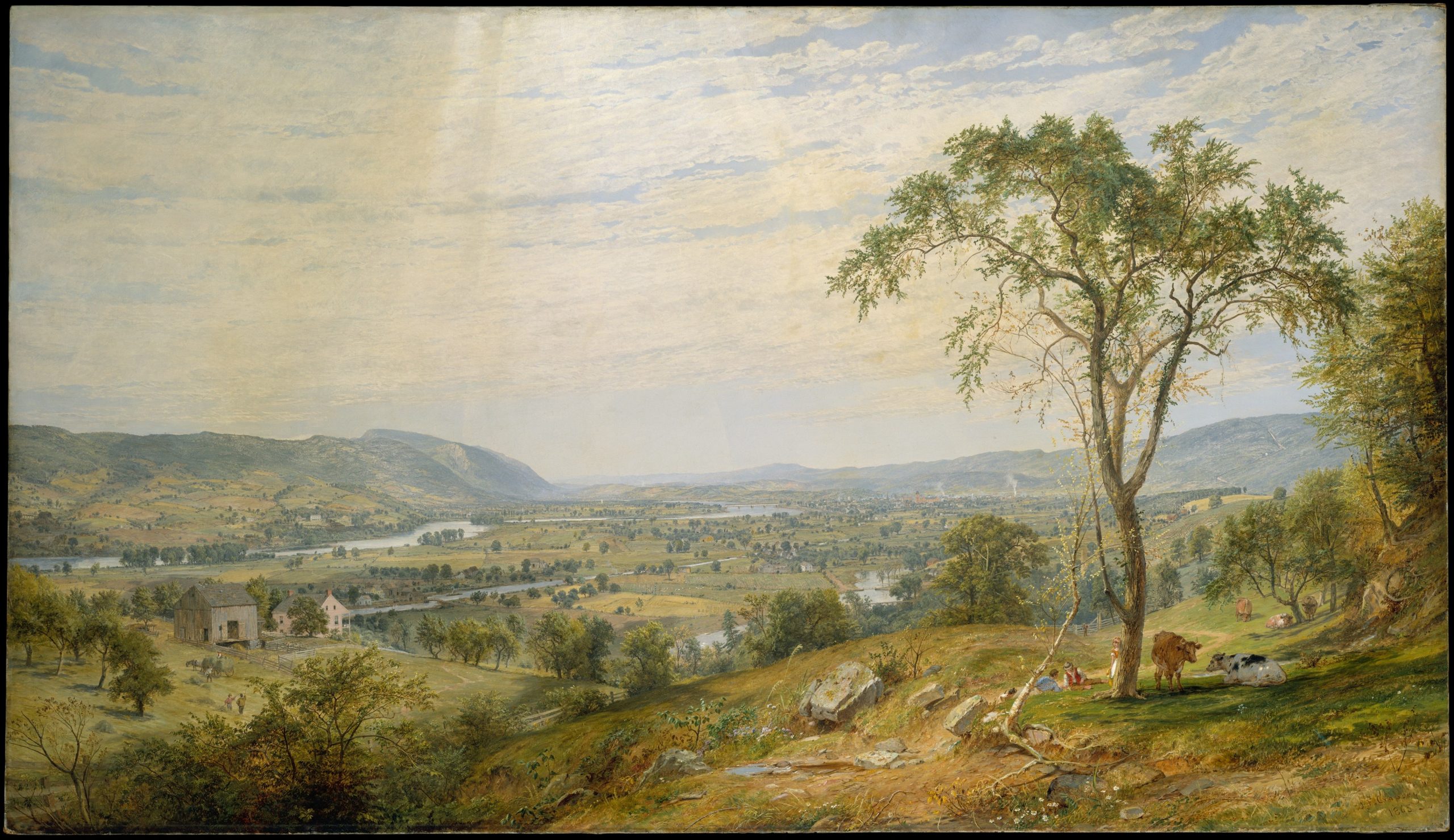
“Kindergarten” c. 1885 | Johann Sperl

Safety and sustainability for any facility begins with an understanding of who shall occupy the built environment and how.  University settings, with mixed-use phenomenon arising spontaneously and temporarily, often present challenges.   Educational communities are a convergent settings for families; day care facilities among them.  First principles regarding occupancy classifications for day care facilities appear in Section 308 of the International Building Code, Institutional Group I; linked below:

2018 International Building Code Section 308 Institutional Group I-4 (Superseded in some jurisdictions)

The ICC Institutional Group I-4 classification includes buildings and structures occupied by more than five persons of any age who received custodial care for fewer than 24 hours per day by persons other than parents or guardian, relatives by blood, marriage or adoption, and in a place other than the home of the person cared far.  This group includes both adult and child day care.

We maintain focus on child day care.  Many educational communities operate child day care enterprises for both academic study and/or as auxiliary (university employee benefit) enterprises.

Princeton University Child Care Center

Each of the International Code Council code development groups fetch back to a shared understanding of the nature of the facility; character of its occupants and prospective usage patterns.

The 2024 revision of the International Building code is in production now.   Ahead of the formal, market release of the Group A tranche of titles you can sample the safety concepts in play during this revision with an examination of the documents linked below:

2019 GROUP B PROPOSED CHANGES TO THE I-CODES ALBUQUERQUE COMMITTEE ACTION HEARINGS

2019 REPORT OF THE COMMITTEE ACTION HEARINGS ON THE 2018 EDITIONS OF THE GROUP B INTERNATIONAL CODES

Search on the terms “day care” and “daycare” in the link at the top of this page to get a sample of the prevailing concepts; use of such facilities as storm shelters, for example.

“The Country School” | Winslow Homer

We encourage our safety and sustainability colleagues to participate directly in the ICC Code Development process.   We slice horizontally through the disciplinary silos (“incumbent verticals”) created by hundreds of consensus product developers every week and we can say, upon considerable authority that the ICC consensus product development environment is one of the best in the world.  Privately developed standards (for use by public agencies) is a far better way to discover and promulgate leading practice than originating technical specifics from legislative bodies.   CLICK HERE to get started.  Contact Kimberly Paarlberg (kpaarlberg@iccsafe.org) for more information.

There are competitor consensus products in this space — Chapter 18 Day-Care Occupancies in NFPA 5000 Building Construction and Safety Code, for example; a title we maintain the standing agenda of our Model Building Code teleconferences.   It is developed from a different pool of expertise under a different due process regime.   See our CALENDAR for the next online meeting; open to everyone.


Issue: [18-166]

Category: Architectural, Healthcare Facilities, Facility Asset Management

Colleagues: Mike Anthony, Jim Harvey, Richard Robben

Recent concepts in play in transcripts:

  • Tempered water for public hand-washing facilities
  • Walking surfaces
  • Exit signage for non-resident, non-English speaking children
  • Fire rating of corridors 
  • Bathing privacy concepts
  • Water heater controls and monitoring; mixing valves

LEARN MORE:

cdpACCESS Hearing Video Streaming Service


Potato Latkes & Sufganiyot

Financial Position $1.417B (Page 16)  | Campus Master Plan 2025-2035  | Revenue Bonds

Traditional Hanukkah foods (Spoon University) are often fried or cooked in oil, symbolizing the miracle of the oil that lasted eight days in the rededication of the Second Temple in Jerusalem.

Latkes (Potato Pancakes): Grated potatoes mixed with onions, eggs, and flour, then fried until crispy. They are often served with applesauce or sour cream.

Sufganiyot (Jelly-filled Doughnuts): Deep-fried doughnuts filled with jelly or custard and dusted with powdered sugar. They represent the oil that miraculously burned for eight days.

Brisket: Slow-cooked beef brisket is a popular main course for Hanukkah dinners.

Applesauce: Often served as a topping for latkes or as a side dish.

Matzo Ball Soup: While traditionally associated with Passover, some families also serve matzo ball soup during Hanukkah. It consists of light, fluffy dumplings made from matzo meal in a chicken broth.

Kugel: A baked casserole dish that can be sweet or savory, made with noodles, potatoes, or other ingredients.

Chocolate Gelt: Chocolate coins wrapped in gold or silver foil, often used in the game of dreidel.

Dreidel Cookies: Cookies shaped like the spinning top used in the traditional Hanukkah game of dreidel.

Cheese: In reference to the story of Judith, who is said to have fed cheese to an enemy general to make him thirsty and then gave him wine to make him drunk.


Sufganiyot in a Minute

Florida

First Snow

Du Froid | Standards Indiana

Estopinal College of Architecture and Planning

First Snow of the Season

“Everyone begins as a child by liking Weather. You learn the art of disliking it as you grow up. Noticed it on a snowy day? The grown-ups are all going about groaning and saying it is ‘dreadful’ and they are nearly always worrying about some awful thing or other happening because of the snow. But the children? They are out in it, throwing snowballs, building snowmen, sliding down slopes on toboggans—having a marvelous time.” — C.S. Lewis (‘That Hideous Strength – A Modern Fairy Tale for Grownups, 1945)


Abiit sed non oblitus | Houghton County Michigan

Michigan Upper Peninsula

One-hundred-twenty-five years ago, hardy and hard-working Finnish Lutheran immigrants founded a school in Michigan’s Upper Peninsula. Their lives were marked by a gritty quality captured in the Finnish term, sisu – grit and perseverance in the face of adversity.  Citing financial difficulties related to demographic changes, the Board of Trustees announced that the Class of 2023 was Finlandia’s final graduating class.

“The Board of Trustees and University President Timothy Pinnow stated the extremely difficult decision is the result of an intensive analysis of Finlandia’s operations after exploring all potentially feasible strategic alternatives, including the rigorous search for new partnerships and reorganization of the institution’s finances. With financial challenges impacting liberal arts colleges throughout the country, Finlandia is no exception….

The combination of demographic changes, with fewer high school graduates available, a steep decrease in interest in going to college among those graduates, a dwindling endowment, and an unbearable debt load have made Finlandia no longer viable…

…Finlandia University has finalized eight Teach-Out Agreements with Adrian College, Bay College, Michigan Technological University, Northeast Wisconsin Technical College, Northern Michigan University, University of Dubuque, Waldorf University, and Wartburg College. Several non-partnering institutions have also made commitments to supporting FinnU students in incredible ways…”

Board of Trustees vote to dissolve University wind up affairs in orderly manner


“History of the Finns in Michigan” 2001 | Armas K. E. Holmio


Midnight Breakfast

Financial Position 2024: $6.784B (Page 21)Capital Projects • General Revenue Bonds


Alabama

Kitchens 100

Global Positioning System: A Generation of Service to the World

Citizens of the Earth depend upon United States leadership in this technology for several reasons:

Development: The GPS was originally developed by the US Department of Defense for military purposes, but it was later made available for civilian use. The US has invested heavily in the development and maintenance of the system, which has contributed to its leadership in this area.

Coverage: The GPS provides global coverage, with 24 satellites orbiting the earth and transmitting signals that can be received by GPS receivers anywhere in the world. This level of coverage is unmatched by any other global navigation system.

Accuracy: The US has worked to continually improve the accuracy of the GPS, with current accuracy levels estimated at around 10 meters for civilian users and even higher accuracy for military users.

Innovation: The US has continued to innovate and expand the capabilities of the GPS over time, with newer versions of the system including features such as higher accuracy, improved anti-jamming capabilities, and the ability to operate in more challenging environments such as indoors or in urban canyons.

Collaboration: The US has collaborated with other countries to expand the reach and capabilities of the GPS, such as through the development of compatible navigation systems like the European Union’s Galileo system and Japan’s QZSS system.

United States leadership in the GPS has been driven by a combination of investment, innovation, collaboration, and a commitment to improving the accuracy and capabilities of the system over time.

Timing Applications: GPS.GOV

Suggested Functional Specifications for a GPS-Synchronized Clock System using Network Time Protocol and Power over Ethernet

Construction Specifications for Exterior Clocks

Seamless positioning system using GPS and beacons for community service robot

Global Positioning System: Monitoring the Fuel Consumption in Transport Distribution

Layout mode
Predefined Skins
Custom Colors
Choose your skin color
Patterns Background
Images Background
Standards Michigan
error: Content is protected !!
Skip to content