“Standard Root Beer” is typically made using a combination of ingredients that include water, sugar, sassafras root or extract, and various other flavoring agents. Here’s a general overview of the process:
Sassafras Flavoring: In traditional root beer recipes, sassafras root or extract is a key ingredient. However, it’s important to note that sassafras contains safrole, a compound that has been deemed potentially carcinogenic. For this reason, commercial root beers often use a safrole-free sassafras flavoring.
Sweetener: Sugar is commonly used to sweeten root beer, although some recipes may use alternatives like corn syrup or honey. The amount of sweetener can vary based on personal preference.
Water: Root beer typically starts with plain water as its base. The water is heated to dissolve the sweetener and other ingredients.
Flavorings: Besides sassafras flavoring, root beer can include a range of other flavorings to create its distinct taste. These may include wintergreen, vanilla, anise, licorice, molasses, or other herbs and spices. The exact combination of flavors varies among different root beer recipes.
Carbonation: Carbonation gives root beer its characteristic fizz. This can be achieved by using carbonated water or by introducing carbon dioxide gas into the mixture. In commercial production, carbonation is typically added during the bottling process.
Yeast Fermentation (optional): Some traditional homemade root beer recipes involve a fermentation step. Yeast is added to the root beer mixture, which consumes the sugar and produces carbon dioxide as a byproduct. This creates a natural carbonation in the beverage. However, this step can also increase the alcohol content, so it’s important to be mindful of the fermentation duration.
Bottling and Aging: Once the root beer is prepared, it is typically poured into bottles or kegs and sealed. Some recipes may recommend allowing the root beer to age for a certain period to develop the desired flavors.
It’s worth noting that the commercial production of root beer may involve different processes, as well as the use of artificial flavors, stabilizers, and preservatives to ensure consistency and shelf life. The specific recipe and production methods may vary among manufacturers.
The World Soil Museum hosts a range of educational programs and workshops for students, researchers, and other visitors who are interested in learning more about soil science. These programs cover topics such as soil classification, soil management, and soil conservation, and they are designed to help people understand the vital role that soils play in supporting agriculture, ecosystems, and human societies around the world.
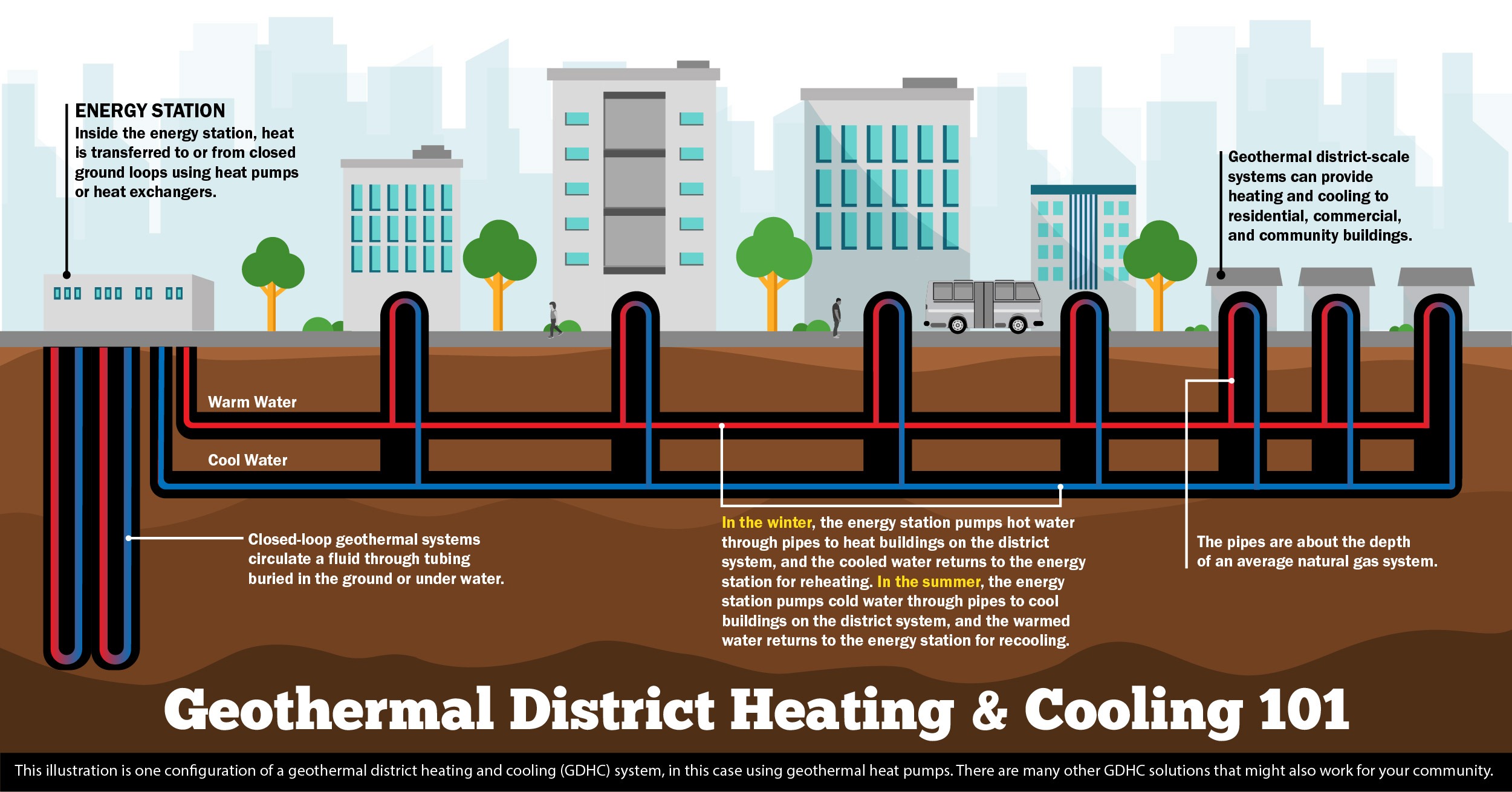
Geothermal systems cool buildings by leveraging the stable temperatures found beneath the Earth’s surface. A geothermal heat pump system consists of a ground loop, heat exchanger, and distribution system.
In cooling mode, the system extracts heat from the building and transfers it to the ground. The ground loop, typically composed of pipes buried horizontally or vertically, circulates a fluid that absorbs heat from the building’s interior. The fluid, warmed by this process, is then pumped through the ground loop where the Earth’s cooler temperatures absorb the heat, effectively dissipating it into the ground.
The cooled fluid returns to the heat pump, which distributes the now-cooler air throughout the building via the distribution system, such as ductwork. This process is highly efficient because the ground maintains a relatively constant temperature year-round, allowing the geothermal system to operate with less energy compared to traditional air-source cooling methods.
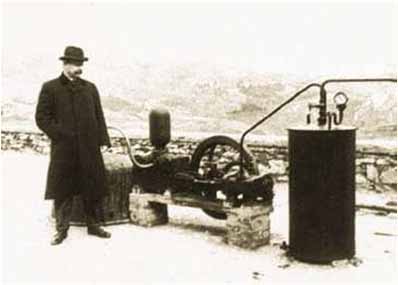
At the moment, though the technology has been made practical since Prince Piero Ginori Conti’s discovery in 1904, and has since tracked well in local building codes and environmental regulations, the bibliography for earth energy systems is nascent and relatively thin. One trade association is emerging from the gathering pace of applications and case studies: Closed-Loop/Geothermal Heat Pump Systems Design and Installation Standards
We maintain the IGSHPA catalog on the standing agenda of our Energy, Mechanical and Air Conditioning colloquia. See our CALENDAR for the next online meeting; open to everyone.
ISO 13612-1:2014 – Heating and cooling systems in buildings — Method for calculation of the system performance and system design for heat pump systems — Part 1: Design and dimensioning.
This standard covers the design and performance calculation of geothermal heat pump systems.
ISO 14823:2017 – Intelligent transport systems — Graphic data dictionary.
While not specific to geothermal, this standard includes data relevant to various systems, including geothermal energy systems.
ISO 52000-1:2017 – Energy performance of buildings — Overarching EPB assessment — Part 1: General framework and procedures.
This standard provides a general framework for assessing the energy performance of buildings, which includes geothermal systems.
IEC 61753-111-7:2014 – Fibre optic interconnecting devices and passive components – Performance standard – Part 111-7: Sealed closures for category S – Subterranean environments.
Relevant for the installation of geothermal systems that include fiber optic components in subterranean environments.
North American Standards
CSA C448: Design and installation of earth energy systems.
ANSI/CSA C448 Series-16 – Design and Installation of Earth Energy Systems.
This standard covers the design and installation of geothermal heat pump systems in the United States, providing guidelines on installation practices, materials, and system performance.
ASHRAE Standard 90.1 – Energy Standard for Buildings Except Low-Rise Residential Buildings.
This standard sets the minimum energy efficiency requirements for the design and construction of buildings, including the installation of geothermal systems.
IGSHPA Standards – International Ground Source Heat Pump Association (IGSHPA) Standards.
The IGSHPA develops standards for the design and installation of geothermal heat pump systems, with a focus on closed-loop systems.
NFPA 54 – National Fuel Gas Code.
Although primarily focused on fuel gas systems, this standard may intersect with geothermal systems when they involve hybrid solutions that include gas heating.
EPA Standards for Geothermal Energy (40 CFR Part 144) – Underground Injection Control (UIC) Program.
This standard regulates the injection of fluids into underground wells, relevant for geothermal systems that involve deep wells for heat exchange.
UL 1995 – Heating and Cooling Equipment.
This standard applies to the safety of heating and cooling equipment, including geothermal heat pumps.
Jack Kilby is credited with inventing the integrated circuit.
In 1958, while at Texas Instruments, Kilby created the first working integrated circuit — a germanium device that combined a transistor, resistor, and capacitor on a single semiconductor chip. He received the Nobel Prize in Physics in 2000 for this achievement.
Robert Noyce (at Fairchild Semiconductor) independently developed a more practical silicon-based version in 1959 using the planar process. His design became the foundation for modern microchips.
Both are recognized as co-inventors of the integrated circuit:
Kilby — concept and first demonstration
Noyce — practical, manufacturable version
Their invention revolutionized electronics and enabled the entire digital age.
Jack Kilby is primarily credited with inventing the integrated circuit (IC).Key Details:In 1958, while working at Texas Instruments, Kilby developed the first working integrated circuit. It was a germanium-based device that combined multiple electronic components (transistor, resistor, capacitor) on a single piece of semiconductor material.
He demonstrated it in 1959 and received a U.S. patent for it.
For this achievement, Jack Kilby was awarded the Nobel Prize in Physics in 2000.
Important Note on Co-Inventor:Robert Noyce (at Fairchild Semiconductor) independently developed a more practical silicon-based integrated circuit in 1959 using the planar process. His version became the foundation for modern IC manufacturing. Noyce co-founded Intel Corporation.Both men are widely recognized as co-inventors of the integrated circuit:Kilby for the concept and first demonstration.
Noyce for the practical, manufacturable version.
Summary of Credit:Inventor
Year
Company
Contribution
Recognition
Jack Kilby
1958
Texas Instruments
First working IC (germanium)
Nobel Prize 2000
Robert Noyce
1959
Fairchild
Silicon planar IC (industry standard)
Co-credited, National Medal
The invention of the IC revolutionized electronics, enabling microchips, computers, smartphones, and virtually all modern technology. Kilby is the one most directly associated with the “invention” in historical accounts and the Nobel citation.
Square D was founded in 1902 in Detroit, Michigan, by Bryson Dexter Horton and James B. McCarthy as McBride Manufacturing Company, focusing on electrical fuses. By 1908, it became Detroit Fuse and Manufacturing, adopting the iconic “Square D” logo—a “D” in a square—reflecting its Detroit roots.
Renamed Square D in 1917, the company pioneered safety switches and circuit breakers, growing significantly with 18,500 employees and $1.65 billion in sales by 1991. That year, after a competitive 10-week bidding process, French multinational Groupe Schneider S.A. acquired Square D for $2.23 billion, raising its offer from $1.96 billion to $88 per share.
The acquisition, approved by Square D’s board and the U.S. Justice Department, made Schneider Electric the world’s largest electrical distribution equipment manufacturer, integrating Square D’s innovative products into its global energy management portfolio.
Did you know we have a number of programmes available with a January start date? Find out more about our programmes, scholarships and accommodation and join us in the new year – https://t.co/0sb2ziLGnKpic.twitter.com/kJopkWS8QH
This content is accessible to paid subscribers. To view it please enter your password below or send mike@standardsmichigan.com a request for subscription details.
US academia has increasingly mirrored the dystopian control mechanisms in George Orwell’s 1984, particularly through the lens of Critical Race Theory (CRT) and its extensions into Diversity, Equity, and Inclusion (DEI) frameworks.
In Orwell’s novel, the Party enforces ideological conformity via Newspeak (a restricted language that limits thought), doublethink (holding contradictory beliefs), thoughtcrime (punishing unapproved ideas), and the rewriting of history to serve power.
CRT posits that racism is embedded in the structure of Western institutions. It rejects colorblindness and meritocracy as tools of “white supremacy,” framing individuals primarily by racial identity — oppressors versus the oppressed. In universities, this has evolved into mandatory trainings, curricula, and loyalty tests that prioritize “equity” (equal outcomes by group) over equality of opportunity.
Key Orwellian parallels include:
Language control resembling Newspeak: terms like “systemic racism,” “white fragility,” “microaggressions,” and “anti-racism” redefine reality so that disagreement signals complicity in oppression.
Doublethink: universities champion “diversity” while enforcing ideological uniformity, claiming to fight oppression while stigmatizing dissent as violence.
Thoughtcrime via cancel culture: surveys show high rates of self-censorship, with dissenting scholars facing social ostracism, investigations, or professional consequences.
History is reframed — America’s founding reduced to perpetual racial hierarchy — echoing the Ministry of Truth. Standpoint epistemology elevates “lived experience” of favored groups over empirical evidence and universal reason.
This agenda undermines academia’s core purpose: the pursuit of truth through open debate and evidence. Instead of rigorous inquiry, power — framed as “punching up” — dictates acceptable thought, eroding liberal education’s commitment to individualism and free expression.
In the late 1960s, the discovery of massive North Sea oil reserves transformed Norway from a modest fishing, shipping, and hydroelectric economy into one of the world’s richest nations. Oil revenues funded an expansive welfare state and created the world’s largest sovereign wealth fund. This “outsized good fortune” should temper any sense of moral or cultural superiority some Norwegians express toward America. Striking oil is no guarantee of success — see Venezuela or Nigeria. Norway also benefited from American technology, open markets, and capital.
The United States further provided critical security: liberating Norway in WWII and leading NATO during the Cold War, allowing Norway to focus on welfare rather than heavy defense. No student debt! Arrogance ignores contingency. Norway’s success rests on oil rents, a small homogeneous population, high trust, and luck — not inherent superiority. America’s innovations and security role helped create the global order that enabled such fortunes in Norway specifically and Western Europe generally. Recall the American role in the destruction of the German heavy water refinement plants in November 1943 (The Heroes of Telemark) which bears an uncanny resemblance to the present USA Operation Epic Fury in Iran.
Gratitude and humility suit these discussions better than condescension.
This content is accessible to paid subscribers. To view it please enter your password below or send mike@standardsmichigan.com a request for subscription details.
New update alert! The 2022 update to the Trademark Assignment Dataset is now available online. Find 1.29 million trademark assignments, involving 2.28 million unique trademark properties issued by the USPTO between March 1952 and January 2023: https://t.co/njrDAbSpwBpic.twitter.com/GkAXrHoQ9T