
Design and Construction of Frost-Protected Shallow Foundations



“Mechanic and Steam Pump” | Lewis W. Hine (1921)
The heating and cooling requirements of K-12 schools, college and university educational, medical research and healthcare delivery campuses are a large market for boiler pressure vessel manufacturers, installers, maintenance personnel and inspectors. The demand for building new, and upgrading existing boilers — either single building boilers, regional boilers or central district energy boilers — presents a large market for professional engineering firms also. A large research university, for example, will have dozens, if not well over 100 boilers that heat and cool square footage in all climates throughout the year. The same boilers provide heating and cooling for data centers, laundry operations, kitchen steam tables in hospitals and dormitories.
The safety rules for these large, complex and frankly, fearsome systems, have been developed by many generations of mechanical engineering professionals in the American Society of Mechanical Engineers (ASME) Boiler and Pressure Vessel Code (BPVC). From the BPVC scope statement:
“…The International Boiler and Pressure Vessel Code establishes rules of safety — relating only to pressure integrity — governing the design, fabrication, and inspection of boilers and pressure vessels, and nuclear power plant components during construction. The objective of the rules is to provide a margin for deterioration in service. Advancements in design and material and the evidence of experience are constantly being added…”
Many state and local governments incorporate the BPVC by reference into public safety regulations and have established boiler safety agencies. Boiler explosions are fairly common, as a simple internet search on the term “school boiler explosion” will reveal. We linked one such incident at the bottom of this page.
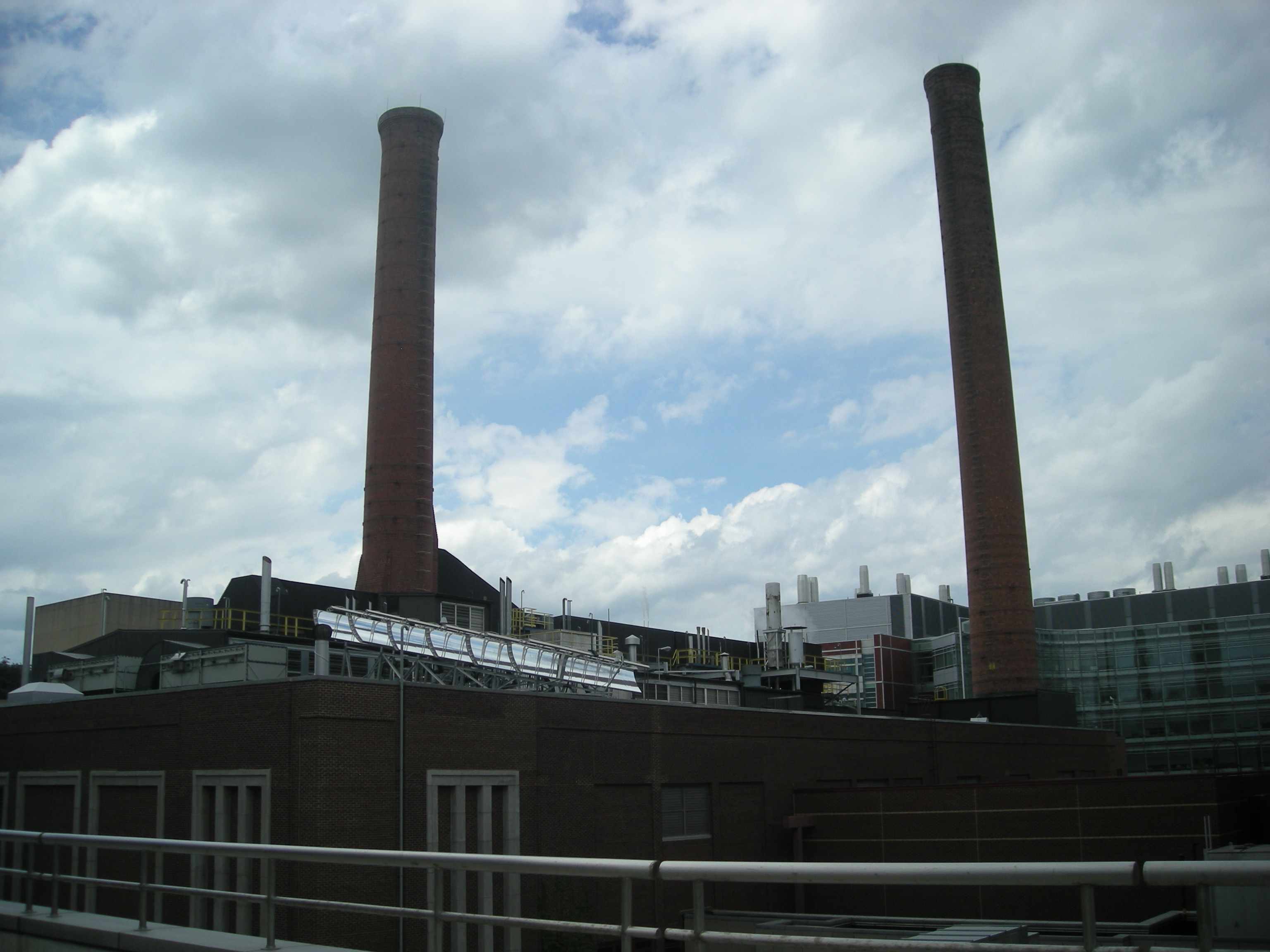
University of Michigan Central Heating Plant

The 2023 Edition of the BPVC is the current edition; though the document is divided into many sections that change quickly.
ASME Codes & Standards Electronic Tools
ASME Proposals Available For Public Review
ASME Section IV: Rules for the Construction of Heating Boilers (2019)
Public consultation on changes to the BPVC standard for power boilers closes February 3rd.
This is a fairly stable domain at the moment. We direct you elsewhere to emergent topics:
Ghost kitchens gaining steam on college campuses
College: the Next Big Frontier for Ghost Kitchens
Illinois Admin. Code tit. 77, § 890.1220 – Hot Water Supply and Distribution
Design Considerations for Hot Water Plumbing
FREE ACCESS: 2019 ASME Boiler and Pressure Code (Section VI)

Two characteristics of the ASME standards development process are noteworthy:
We unpack the ASME bibliography primarily during our Mechanical, Plumbing and Energy colloquia; and also during our coverage of large central laundry and food preparation (Kitchens 100) colloquia. See our CALENDAR for the next online meeting, open to everyone.

Issue: [12-33] [15-4] [15-161] [16-77] [18-4] [19-157]
Category: District Energy, Energy, Mechanical, Kitchens, Hot Water
Contact: Eric Albert, Richard Robben, Larry Spielvogel
More:
Standards Michigan BPVC Archive
Big Ten & Friends Energy Conference 2023
Standards Michigan Workspace (Requires access credentials from bella@standardsmichigan.com).
School Boiler Maintenance Programs: How Safe Are The Children?
Boiler Explodes at Indiana High School
Engineers at @virginia_tech are boosting heat transfer by prompting bubbles to jump from a heated plate during boiling, potentially increasing power plant efficiency with microstructures: https://t.co/W1gLvhn15q pic.twitter.com/45PNRAEmpB
— ASME.org (@ASMEdotorg) January 30, 2024

Winter weather pipe-breaking and subsequent water flooding incidents on educational campuses around the world draw attention to Underwriters Laboratory product standard UL 515 Standard for Electrical Resistance Trace Heating for Commercial Applications which was last revised in July 2015. From the home page of UL 515: the scope is as follows:
(UL 515) requirements cover electrical resistance trace heating for commercial applications as applied to piping, vessels, traced tube bundles, and mechanical equipment. Trace heating includes heating panels and associated parts. This equipment is intended for installation in ordinary locations in accordance with the following installation guidelines:
Trace heating covered by this Standard is intended for applications where it is exposed to weather, unless specific markings and instructions limit the applications.
Trace heating may be installed on metal or rigid plastic pipes. Unless specific recommendations are made for the plastic pipe material to be heated, plastic pipes are considered to have a maximum long-term thermal exposure limit of 50°C (122°F).
UL 515 is on a 5-year revision cycle; though comments on its improvement may be directed at any time to Julio Morales Julio.Morales@ul.com. A review of the Standards Technical Panel suggests that User-Interest input — quite possibly product success and failure information — would be welcomed.
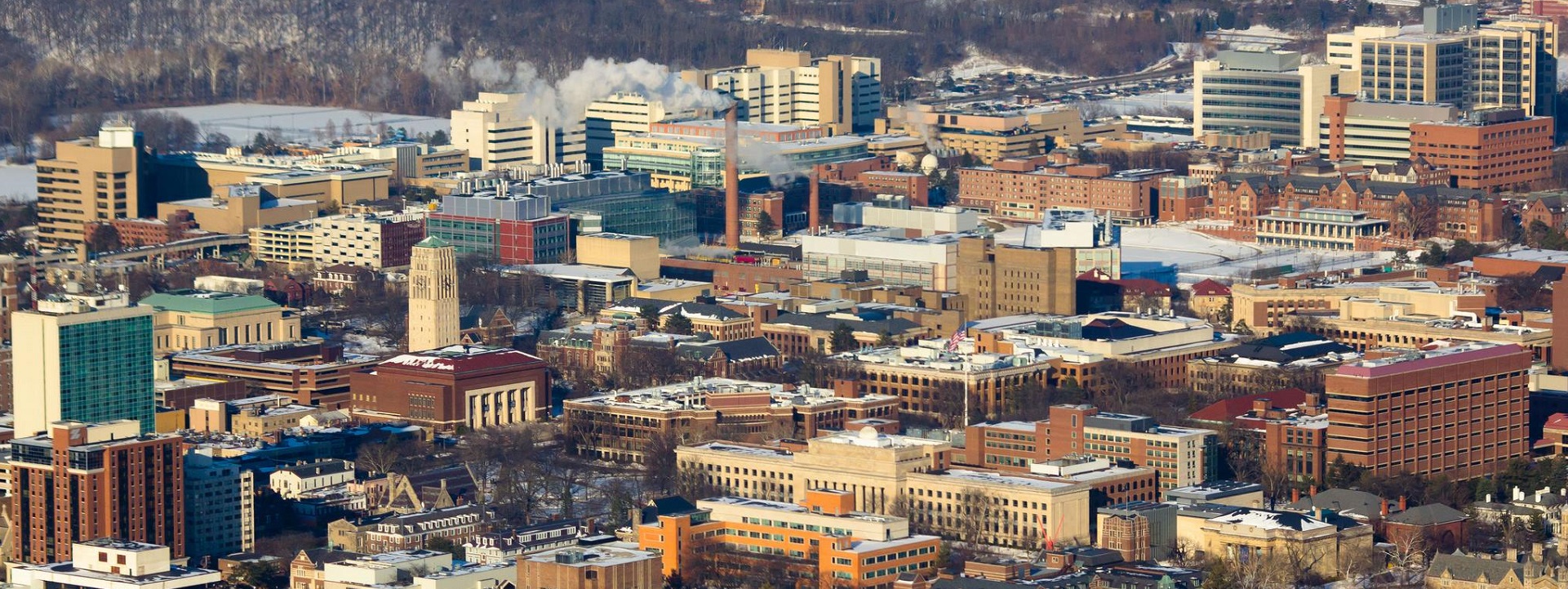

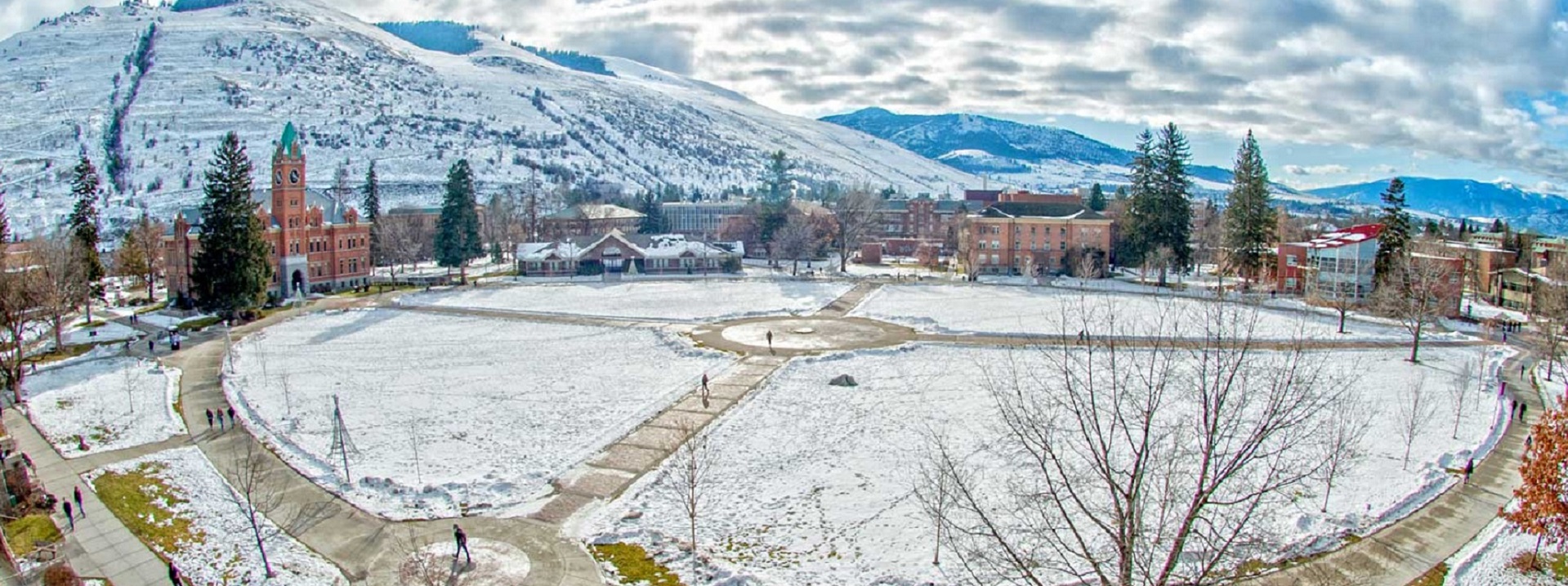
In future posts, we will sort through the interdependency of related NFPA and ASTM standards on this technology
Issue: [18-10]
Category: Architectural, Electrical, Structural, Facility Asset Managemet
Contact: Mike Anthony, Jim Harvey, Richard Robben
Estimating Daily Domestic Hot-Water Use in North American Homes
Florida Solar Energy Center | ASHRAE Conference Paper
Danny S. Parker | Philip Fairey | James D. Lutz, PE
ABSTRACT. The WVU campus in Morgantown, located in north central WV is identified to have elevated heat flows by low-temperature geothermal play fairway analysis of the Appalachian basin. Along with the elevated subsurface heat flows, WVU also has surface demand necessary to develop a deep direct-use geothermal system in the eastern United States. West Virginia University is currently using a steam-based water heating system. This study focuses on converting the current heating system to a geothermal deep-direct-use district heating system.
A comprehensive evaluation of the current heating system is being conducted to determine the university’s heating energy demand. Energy demand is calculated for the whole campus based on the equipment survey and readings from the steam meters. Based on the steam meter readings, the approximate hot water usage of the whole campus is in the range of 10,000-12,000 GPM (gallons per minute). For buildings where there are no existing data or steam meters available, the energy usage is estimated using e-Quest. The tool e-Quest (Quick Energy Simulation Tool) is available through the U.S. Department of Energy and can provide monthly building energy usage data for comparison purposes.
The study includes an in-depth analysis of existing heating and cooling equipment, such as air handling units (AHUs) and heat exchangers, to determine their compatibility with hot water systems. The potential for retrofitting these systems to enhance energy efficiency, reduce operational costs, and contribute to the university’s sustainability goals is evaluated. This retrofit requires significant infrastructure changes, including installing new pumps, pipes, and heat exchangers. A detailed study for retrofitting was conducted on one of the buildings, which includes air handling units, pumps, valves, and expansion tanks.
The total retrofitting cost was found to be approximately $130,000. A preliminary hot water distribution model using Aspen HYSYS is developed, incorporating key system components like heat pumps and geothermal plate heat exchangers with a hot water distribution temperature of 180℉. Similarly, Aspen HYSYS models are developed to study and compare the normal hot water distribution model.
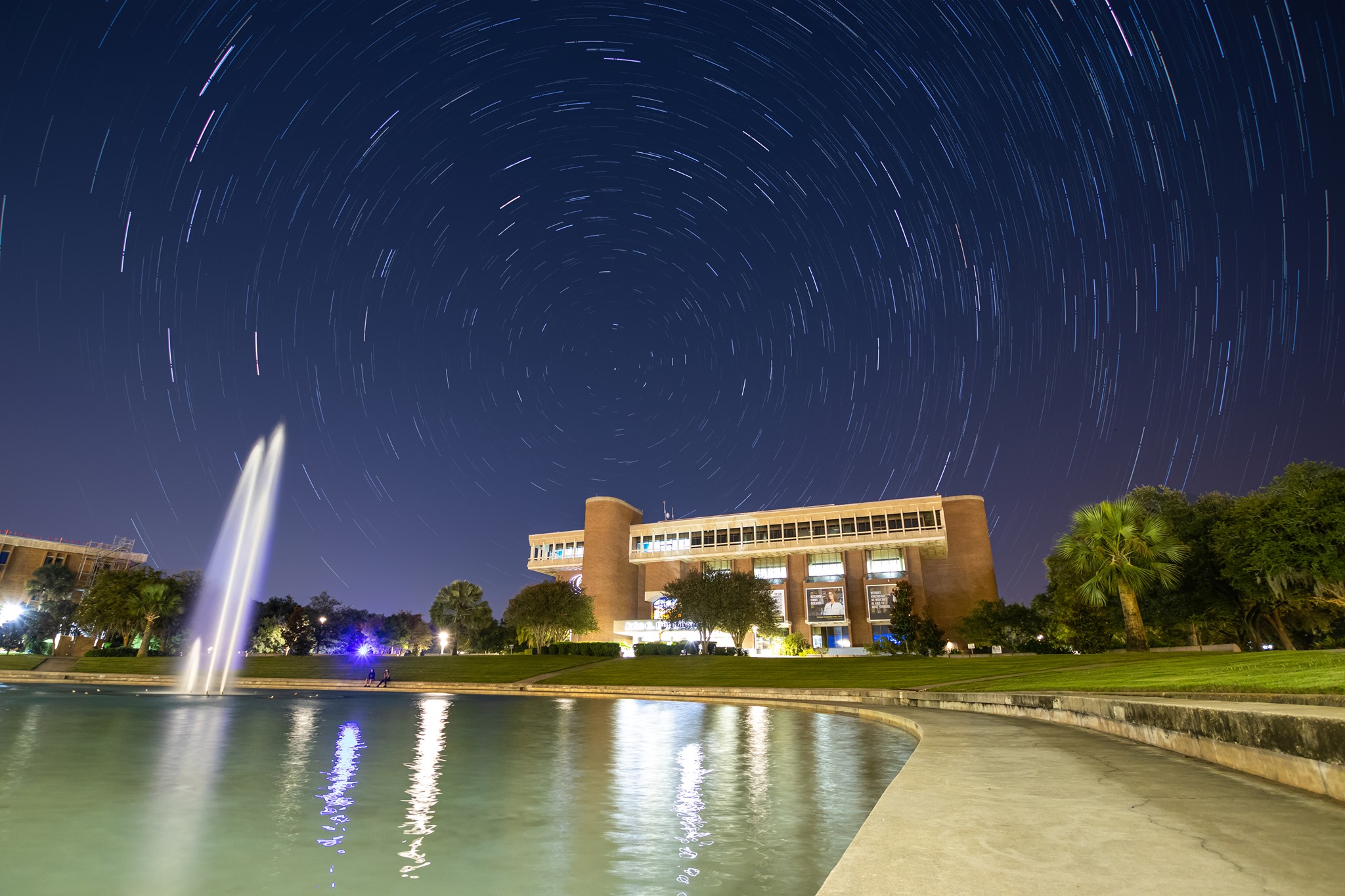
Florida’s campus coffee scene picks up influences from Gulf of America nations. Hot options are popular in winter, though iced drinks never fully disappear.
https://t.co/4MxyUiKjVw pic.twitter.com/uwvcbCWQux
— Bryan Fischer (@BryanDFischer) January 20, 2026
I can’t even describe how insane this is for any Indiana fan but especially if you’re from Bloomington and have seen the turnaround not just in the program but in the city 😭😭
Literally sobbing and soaking this up as long as I can 🥹😭 #NeverDaunted #FlippinChamps pic.twitter.com/CnnEA6SyEG
— Emily Ehman (@emilyehman) January 20, 2026
College football’s last three national champions have come from this 300-mile radius of the country. pic.twitter.com/Ky9KkShpkE
— Ross Dellenger (@RossDellenger) January 20, 2026
THIS ANGLE OF FERNANDO MENDOZA’S TOUCHDOWN IS ABSOLUTELY BONKERS.
THERE WAS NOTHING THAT WAS GOING TO DENY HIM FROM SCORING.
pic.twitter.com/T0my0S1epq https://t.co/RXGQpql9SF
— MLFootball (@MLFootball) January 20, 2026
CARSON BECK CATASTROPHE
INDIANA WINS THE NATIONAL CHAMPIONSHIP!!!
— Barstool Sports (@barstoolsports) January 20, 2026
BIG TEN. THREE IN A ROW. 🏆🏆🏆 pic.twitter.com/9uM66NSSTN
— FOX College Football (@CFBONFOX) January 20, 2026
I am completely unable to describe my feelings so here is a cute picture of me and Gianna. pic.twitter.com/M3JikWTcgq
— Jennifer A. Frey (@jennfrey) January 20, 2026
“I have no words.”@IndianaFootball WR Charlie Becker went from barely playing to star receiver making the biggest plays of the National Championship. pic.twitter.com/qlW2AHlojP
— College Sports on SiriusXM (@SXMCollege) January 20, 2026
Indiana University’s Signature Limestone Building Architecture
Indiana University’s Bloomington campus is renowned for its signature architecture featuring Indiana limestone, a high-quality, light-colored stone (geologically Salem Limestone) quarried locally in nearby Monroe and Lawrence Counties. This durable, fine-grained material has been the dominant building stone since the late 19th century, creating a unified, harmonious aesthetic that blends seamlessly with the surrounding natural landscape.
The campus’s core, particularly the historic “Old Crescent” area, showcases buildings from various eras constructed almost entirely of this limestone. Styles range from Richardsonian Romanesque and Gothic Revival in early structures like Maxwell Hall (1890s) and the iconic Sample Gates (1987, Gothic-inspired arches), to Collegiate Gothic influences, Art Deco elements in mid-20th-century designs like Woodburn Hall (1940), and Classical touches in landmarks such as the Lilly Library (1960). Even modern additions often incorporate limestone cladding to maintain visual continuity.
This extensive use of local limestone not only reflects regional heritage and fire-resistant practicality but also contributes to the campus’s reputation as one of America’s most beautiful, with its pale, timeless facades enhancing green spaces and historic charm. (148 words)
We hope your holidays are merry and bright, Hoosiers! ❄️🤍 pic.twitter.com/OjLrSiodKe
— IU Bloomington (@IUBloomington) December 23, 2025
2025 Net Position: $6.00B (Page 17)
The Indiana University satellite campus in Indianapolis, now known as Indiana University Indianapolis, traces its roots to 1891 when IU first offered classes in the city. It expanded through various extension programs, including the IU School of Medicine (1903) and other professional schools.
In 1969, Indiana University and Purdue University merged their Indianapolis operations to form Indiana University–Purdue University Indianapolis (IUPUI), prompted by then-Mayor Richard Lugar’s push for a strong urban university to boost education, economic growth, job creation, and graduate retention in Indiana.
As IUPUI, it became Indiana’s premier urban research institution, emphasizing health sciences, research, and community impact, with major assets like the nation’s largest medical school and significant economic contributions.
In 2024, following a 2022 agreement, IUPUI split: IU Indianapolis emerged as a fully independent core IU campus on July 1, 2024, focusing on health sciences, liberal arts, business, law, and more. Its goals include becoming one of the nation’s preeminent urban research universities (achieving R1 status in 2025), driving innovation, workforce development, high-end research, and leading in an innovation-led economy for central Indiana and beyond.
As of fall 2025 (the most recent official census data from September 2025) IU Indy has 20,677 total students enrolled. This reflects growth in its second year as an independent IU campus following the 2024 split from IUPUI, including 2,699 undergraduate beginner (first-year) students, up about 10.7% from the prior year. The student body draws from all 92 Indiana counties, 49 states plus D.C., and 136 countries, with 93% Indiana residents.
For staff and faculty: Specific post-split figures for IU Indianapolis alone are not as prominently detailed in recent public reports, but the campus historically (and currently) employs over 2,500 academic staff/faculty based on legacy IUPUI data and ongoing operations as a major urban research institution.
Broader IU system-wide faculty and staff exceed 21,000, but campus-level breakdowns emphasize IU Indy’s focus on health sciences and research roles. Note that exact employee counts can vary by source and include part-time/instructional roles; for the latest precise numbers, check IU Indianapolis’s institutional research or official fact sheets.
Indiana girls like this are the backbone of America pic.twitter.com/FCJu7IzcL5
— TastefulLindy (@LindyTasteful) January 1, 2026
Utilizing real-world sports industry practices, Jags in the Sports Innovation Institute capstone course pitched fan engagement ideas to executives from the Indiana Pacers, ranging from immersive arena experiences to digital enhancements. 👔🏀
🔗Learn more about this unique and… pic.twitter.com/KcJO7q7sAo
— IU Indianapolis (@IUIndianapolis) May 13, 2025
Jenna Nolot – Indiana 🇺🇸 pic.twitter.com/8zJr3yH66P
— College Beauties 🎓 (@BaddiesBae_) December 27, 2024
.jpg)
Illustration from 1913 showing Pythagoras teaching a class of women. Pythagoras believed that women should be taught philosophy as well as men and many prominent members of his school were women.Our practice is fairly structured as our Syllabus reveals. Once a month we like to break form and throw our agenda “open”. Unstructured. Completely determined by the interest of our clients, colleagues and followers. Use the login credentials at the upper right of our home page.
“Reflections on the motive power of fire: | Sadi Carnot
* Lyndon B. Johnson played a significant role in the passage of the Education Acts of 1965, which consisted of two key pieces of legislation: the Elementary and Secondary Education Act (ESEA) and the Higher Education Act (HEA).
As President of the United States, Johnson made education reform a priority of his administration and saw it as a means of addressing poverty and inequality in America. He signed the ESEA into law in April 1965, which was designed to provide funding to schools serving low-income students and aimed to close the achievement gap between disadvantaged students and their more affluent peers. The ESEA also provided funds for teacher training and other educational programs.
In November of the same year, Johnson signed the HEA into law, which provided funding for college and university education and sought to make higher education more accessible to all Americans.
Together, these Education Acts of 1965 were a significant achievement for Johnson’s administration and played a crucial role in expanding educational opportunities for millions of Americans. They marked a major shift in federal education policy and helped to establish the federal government’s role in shaping education policy in the United States.

“The Banjo Lesson” 1893 | Henry Ossawa Tanner
National Institutes of Health (Library of Medicine)
Dr. Jill Jacobs-Biden: Student Retention at the Community College: Meeting Student’s Needs
Michelle Obama: Princeton-Educated Blacks and the Black Community
Dr. Claudine Gay: Taking charge: Black electoral success and the redefinition of American politics
Hilary Clinton: There is Only the Fight…
John Kennedy: Appeasement at Munich
John Nash: Non-Cooperative Games
Proquest (formerly University of Michigan) Microfilms
A. Statement of Problem
The problem of this dissertation was to compare and evaluate the conceptions of God in the thinking of Paul Tillich and Henry Nelson Wieman.
The concept of God was chosen because of the central place which it occupies in any religion; and because of the ever-present need to interpret and clarify the God-concept. Tillich and Wieman were chosen because they represent different types of theology; and because each of them, in the last few years, has had an increasing influence upon theological and philosophical thought.
B. The Methods of Procedure
Several methods of procedure were employed in the investigation of the problem stated for this dissertation. First, the expository method was used. In this method the investigator sought to give a comprehensive and sympathetic exposition of the conceptions of God held by Wieman and Tillich. Second, the comparative method was employed. Here the thought of Wieman and Tillich was brought together with a view to determining their convergent and divergent points. Third, the critical method was employed. The investigator sought to give a critical evaluation of the conceptions of God held by Wieman and Tillich. In seeking to give this critical appraisal, two norms were employed: (i) adequacy in expressing the religious values of historic Christianity; and (ii) adequacy in meeting the requirements of consistency and coherence.
It was necessary to begin the study with a discussion of the methodologies of Tillich and Wieman, since the question of method is of such vital importance in theological and philosophical construction.
Throughout his theology Tillich undertakes the difficult task of setting forth a systematic theology which is at the same time an apologetic. The method used to effect this apologetic task is the “method of correlation.” This method shows the interdependence between the ultimate questions to which philosophy is driven and the answers given in the Christian message. In this method question and answer determine each other. Philosophy and theology are not separated, and they are not identical, but they are correlated.
The method which Wieman employs is the “scientific method.” He contends that this is the only method by which truth can be obtained, whether in the field of common sense, science, philosophy, or religion. The scientific method is defined as the method in which sensory observation, experimental behavior, and rational inference are working together. The methodologies of Tillich and Wieman are quite antithetical at many points. Wieman’s scientific method is basically naturalistic. Tillich’s method of correlation seeks to overcome the conflict between the naturalistic and supernaturalistic methods.
It was necessary to begin the exposition of Tillich’s conception of God with a discussion of his ontology as a whole, since it is his ultimate conviction that God is “being-itself.” It was also necessary to include a section on Wieman’s theory of value in the exposition of his conception of God, since he holds that God is supreme value and supreme source of value.
C. Conclusions
The following theses may be stated as conclusions drawn from this investigation of the conceptions of God in the thinking of Tillich and Wieman.
New update alert! The 2022 update to the Trademark Assignment Dataset is now available online. Find 1.29 million trademark assignments, involving 2.28 million unique trademark properties issued by the USPTO between March 1952 and January 2023: https://t.co/njrDAbSpwB pic.twitter.com/GkAXrHoQ9T
— USPTO (@uspto) July 13, 2023
Standards Michigan Group, LLC
455 East Eisenhower Parkway, Suite 300
Ann Arbor, MI 48108 USA
888-748-3670
 |
 |
|
 |
 |
|
 |
 |