Electrical Safety in the Workplace

Loading
loading...

Electrical Safety in the Workplace

February 12, 2020
mike@standardsmichigan.com
No Comments

“Telegraph Poles with Buildings” | Joseph Stella (1917)

Optimal electrical safety and reliability is strongly correlated with electrical maintenance — i.e. functional checks, servicing, repairing or replacing of necessary devices, equipment, machinery, building infrastructure, and supporting utilities in industrial, business, governmental, and residential installations.   These activities take place either before or after a failure.  In either case, normal maintenance is “likely” to expose electrical workers to hazard.  In healthcare facilities, for example, there is risk of failure of backup systems (described in Article 517 of the National Electrical Code) unless maintenance is undertaken while equipment is live.

The trade-offs are well known.  Because of optimal maintenance, we have a commercial airline industry.  Because of optimal maintenance the United States has one of the most reliable power grids in the world.  

In electrical power systems, equipment and systems that control energy are designed to work, perhaps, only once or twice dependably in 25 to 50 years; if that.  Only safety-by-design and recommended maintenance can sustain the likelihood that safety and reliability expectations can be met.  Electrical maintenance usually involves exercising breakers, testing trip settings, confirming signaling paths in controls, software and the like.   Safety by design usually involves applying methods to minimize occupational hazards early in the design process, with an emphasis on optimizing employee health and safety throughout the life cycle of materials and processes.

There are several leading practice documents in this space; one of the first among them NFPA 70E Electrical Safety in the Workplace — a trademarked document available for use by the public:

2018 NFPA 70E Free Access

You will likely find NFPA 70E incorporated by reference into federal occupational safety laws and in state-level electric utility regulations.   The technical committees writing the 2021 revision met  in August 2018 and again  in July 2019 and produced the draft results linked below:

First Draft Report 2021 NFPA 70E

Second Draft Report 2021 NFPA 70E

Note the considerable “back-and-forth” on stored energy system, interactive, direct current and multiple source safety.   There are others.

After the Second Draft Report is released for public review no later than January 22, 2020,  NITMAM comments are due February 19th.

We usually coordinate our response to NFPA electrical safety consensus products with IEEE SCC-18 and IEEE Education & Healthcare Facilities Committee which meets 4 times monthly in European and American time zones.   See our CALENDAR for the next online meeting; open to everyone.

Issue: [3-3], [18-135]

Category: Electrical

Colleagues: Mike Anthony, Tammy Gammon, Jim Harvey, Daleep Mohla, Joe Tedesco

Archive / NFPA 70E Electrical Safety in the Workplace

*OSHA develops electrical safety documents of its own; the topic of a separate post since the jurisdictional politics are sensitive.  CLICK HERE for a preview.


LEARN MORE:

 

BICSI Certification Programs

February 11, 2020
mike@standardsmichigan.com
No Comments

This content is accessible to paid subscribers. To view it please enter your password below or send mike@standardsmichigan.com a request for subscription details.

Portable Fire Extinguishers

February 10, 2020
mike@standardsmichigan.com
No Comments

This content is accessible to paid subscribers. To view it please enter your password below or send mike@standardsmichigan.com a request for subscription details.

Standing Agenda / Healthcare Facilities Monthly

February 10, 2020
mike@standardsmichigan.com
No Comments

This content is accessible to paid subscribers. To view it please enter your password below or send mike@standardsmichigan.com a request for subscription details.

Energy Monitoring Equipment

February 10, 2020
mike@standardsmichigan.com
No Comments


Underwriters Laboratories / Northbrook, Illinois

The proposed first edition of Underwriters Laboratories Standard for Safety for Energy Monitoring Equipment, ANSI/CAN/UL 2808, covers submetering equipment and open and enclosed type current sensors intended for factory or field installation within distribution and control equipment such as panelboards, switchboards, industrial control equipment, and energy monitoring/management equipment.

Installation is in accordance with the National Electrical Code, ANSI/NFPA 70 and the Canadian Electrical Code (CE Code), CSA C22.1. These requirements also cover “Service Entrance” enclosed-type current sensors intended for indoor and outdoor use.

Click here to view these changes in full / ANSI Standards Action Page 74

Send comments (with optional copy to psa@ansi.org) to: Follow the instructions in the following website to enter comments into the CSDS Work Area:

UL’s Collaborative Standards Development System


IEC Academy

February 8, 2020
mike@standardsmichigan.com
No Comments

This content is accessible to paid subscribers. To view it please enter your password below or send mike@standardsmichigan.com a request for subscription details.

Design and Maintenance of Roadway and Parking Facility Lighting

February 8, 2020
mike@standardsmichigan.com
No Comments

This content is accessible to paid subscribers. To view it please enter your password below or send mike@standardsmichigan.com a request for subscription details.

Standing Agenda / Education Industry Trade Associations

February 5, 2020
mike@standardsmichigan.com

No Comments

This content is accessible to paid subscribers. To view it please enter your password below or send mike@standardsmichigan.com a request for subscription details.

Distributed Ledger Technology Monthly

February 5, 2020
mike@standardsmichigan.com
No Comments

@DeviantArt

Today at 11 AM Eastern time we run a status check on consensus products evolving from distributed ledger technologies that contribute to the safety and sustainability agenda of the US education facility industry.   Click in with the login credentials at the upper right of our home page.

Distributed Ledger Technology

Installing and Maintaining Motor Control Centers

February 4, 2020
mike@standardsmichigan.com
No Comments

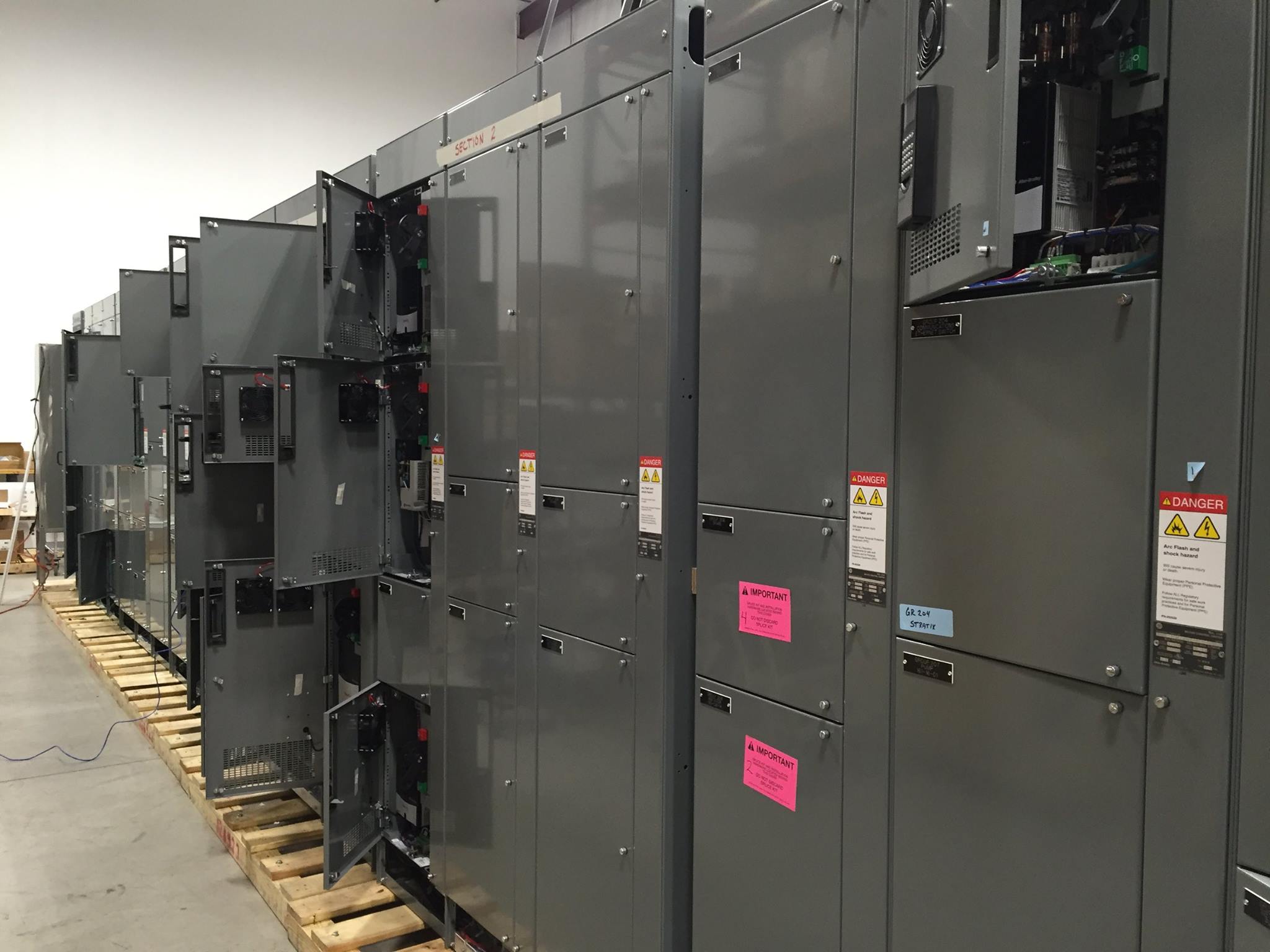
A motor control center (MCC) is an assembly to control some or all electric motors in a central location. It consists of multiple enclosed sections having a common power bus and with each section containing a combination starter, which in turn consists of motor starter, fuses or circuit breaker, and power disconnect. A motor control center can also include push buttons, indicator lights, variable-frequency drives, programmable logic controllers, and metering equipment. It may be combined with the electrical service entrance for the building.

NECA 402 Standard for Installing and Maintaining Motor Control Centers describes the installation and maintenance for low-voltage motor control centers (MMC) rated 600 VAC or less with horizontal bus rating of 2,500 amperes or less.

Comments are due February 10th

NEIS Review

Order from: Aga Golriz, (301) 215-4549, Aga.golriz@necanet.org

We usually refer this commenting opportunity to the IEEE Education & Healthcare Facilities Committee with whom we collaborate closely 4 times per month.  See our CALENDAR for the next online meeting.


Layout mode
Predefined Skins
Custom Colors
Choose your skin color
Patterns Background
Images Background
Standards Michigan
error: Content is protected !!
Skip to content