Category Archives: @ashraenews

Loading
loading...

Laboratory Fume Hood Safety

Public Review Drafts

A significant amount of research in the United States is conducted in research universities — over $70 billion annually, according to the National Science Foundation (LEARN MORE HERE).  Unlike private industry, where facilities can be located away from population centers, many campus laboratories are located in dense populated areas because researchers enjoy their work in a lively campus setting.   Keeping these facilities safe and sustainable is challenging anywhere but especially so in a setting where education and research takes place in close proximity.

One of the core documents for leading practice is  ASHRAE 110 — Method of Testing Performance of Laboratory Fume Hoods.  Keep in mind that in the emergent #SmartCampus a fume hood is part of an integrated system that not only includes environmental air systems but electrical, telecommunication, and fire safety systems.

ASHRAE 110 provides a starting point for assessing a wide variety of factors that influence the performance of laboratory fume hoods. The ability of a laboratory hood to provide protection for the user at the face of the hood is strongly influenced by the aerodynamic design of the hood, the method of operation of the hood, the stability of the exhaust ventilation system, the supply ventilation of the laboratory room, the work practices of the user, and other features of the laboratory in which it is installed. Therefore, there is a need for a test method that can be used to evaluate the performance including the influences of the laboratory arrangement and its ventilation system.

From the project prospectus:

Purpose.  This standard specifies a quantitative and qualitative test method for evaluating fume containment of laboratory fume hoods.

Scope: his method of testing applies to conventional, bypass, auxiliary-air, and VAV laboratory fume hoods.  (2) This method of testing is intended primarily for laboratory and factory testing but may also be used as an aid in evaluating installed performance.

The 2016 revision is the current version; made the following improvements to the 1995 edition:

• The test procedures now require digital collection of data rather than allowing manual data collection.
• Some modifications have been made to the test procedure.  These modifications were made based on the experience of the committee members or to clarify statements in the 1995 edition of the standard.
• Informative Appendix A, which provides explanatory information, has been expanded.
• Informative Appendix B, a new nonmandatory section, provides guidance to anyone using the standard as a diagnostic tool in investigating the cause of poor hood performance.

ASHRAE has recently upgraded its public participation platform; available in the link below:

Public Review Draft Standards / Online Comment Database

ASHRAE 110 is not a continuous maintenance document (that can change in 30 to 90 day intervals).  We encourage our colleagues involved in university-affiliated research enterprises who have an idea, data and/or anecdotes to key in their idea, data or anecdote — particularly faculty and students.  While we recognize that conformance professionals (i.e. “inspectors”) have a very informed point of view about safety; they may not place ideas for lower costs at the top of their agenda.   It is a fine line we must hew in the education industry — respecting the experience and priorities of risk managers while at the same coming up with ideas that make laboratories safer, simpler, lower-cost and longer-lasting that may reduce their billable hours.

We find that environmental air safety goals often compete with fire safety goals and both compete with sustainability goals.   Conversations about the optimal approach to converting to variable volume fume hood systems from constant flow are common:

LINK TO ASHRAE VARIABLE VOLUME FUME HOOD BIBLIOGRAPHY

As an ANSI accredited continuous-maintenance standards developer ASHRAE technical committees receive public comment at any time; though action on revising the standard must follow the accredited process.   State level adaptations  — with respect to technical specifics or compliance paths or both — are always possible.  As explained elsewhere, Standards Michigan generally advocates for scalable, site specific solutions to laboratory safety system operation and maintenance, though we understand that enforcement and compliance interests prefer bright-line, single-point solutions that are easy to enforce.

All ASHRAE standards are on the agenda of our Mechanical Engineering teleconference.  See our CALENDAR for our next conversation on this subject; open to everyone.

Mechanical Engineering Codes and Standards


Category: Mechanical

Colleagues: Richard Robben, Mark Schuefele, Larry Spielvogel


ACOUSTICAL DESIGN OF HVAC SYSTEMS

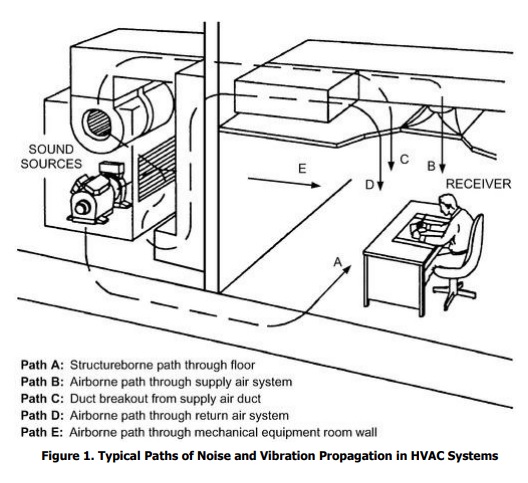
HVAC equipment for a building is one of the major sources of interior noise, and its effect on the acoustical environment is important. Further, noise from equipment located outdoors often propagates to the community. Therefore, mechanical equipment must be selected, and equipment spaces designed, with an emphasis on both the intended uses of the equipment and the goal of providing acceptable sound levels in occupied spaces of the building and in the surrounding community. Operation of HVAC equipment can also induce mechanical vibration
that propagates into occupied spaces through structureborne paths such as piping, ductwork, and mounts. Vibration can cause direct discomfort and also create secondary radiation of noise from vibrating walls, floors, piping, etc.

In this chapter, sound and noise are used interchangeably, although only unwanted sound is considered to be noise.

CLICK IMAGE

Related ASHRAE titles:

  1. ASHRAE 55 – Thermal Environmental Conditions for Human Occupancy: While this standard primarily deals with thermal comfort, it also includes guidance on acceptable indoor noise levels in occupied spaces.
  2. ASHRAE 62.1 – Ventilation for Acceptable Indoor Air Quality: This standard includes requirements for noise levels associated with ventilation systems and their components.
  3. ASHRAE 68 – Methods of Testing to Determine the Sound Power of HVAC Equipment: This standard provides procedures for testing and measuring the sound power levels of various HVAC equipment.
  4. ASHRAE 130 – Methods of Testing Air-Cleaning Devices Used in General Ventilation for Removing Particulate Matter: Though focused on air-cleaning devices, this standard also addresses the sound performance of these devices.
  5. ASHRAE 174 – Sound Measurement and Characteristics of HVAC Equipment: This standard provides guidance on sound measurement techniques and performance criteria for HVAC equipment.

These standards aim to ensure that HVAC&R systems and equipment operate efficiently and provide a comfortable indoor environment while minimizing excessive noise levels and potential acoustic issues. They play a vital role in promoting occupant comfort and overall building performance in terms of noise control and sound quality.

Acoustics

Mechanical 100

ANSI Standards Action: January 26, 2024

“Maison tournante aérienne” 1883 Albert Robida

During today’s colloquium we audit the literature that sets the standard of care for mechanical engineering design, construction operations and maintenance. Mechanical systems — which includes building service engineering* — runs upwards of 35 percent of new building construction.   After architectural disciplines that produce the building envelope, the mechanical disciplines dominate technical considerations for building and maintaining education community physical spaces.  The requirements that affect cost change on a near-daily basis and now given heightened scrutiny of building air flow patterns with the circumstances of the pandemic.

For the moment, we co-locate plumbing and mechanical system consensus products in the same group.

"I've always been interested in building systems that can understand and respond to natural language. It's one of the most challenging and fascinating problems in AI" - Stephen Wolfram"The golden rule of elevator safety states 'Its either you're in or out'" - Facilities Management

We track standards setting in the bibliographies of the following organizations:

AHRI | Air Conditioning, Heating & Refrigeration Institute

AIHA | American Industrial Hygiene Association

ASHRAE | American Society of Heating & Refrigeration Engineers

ASME | American Society of Mechanical Engineers

ASPE | American Association of Plumbing Engineers

ASTM | American Society for Testing & Materials

AWS | American Welding Society

AWWA | American Water Works Association

AHRI | Air Conditioning, Heating & Refrigeration Institute

IAPMO | International Association of Plumbing and Mechanical Officials

ICC | International Code Council

IEC | International Electrotechnical Commission

IMC | International Mechanical Code

IPC | International Plumbing Code

ISEA | International Safety Equipment Association

ISO | International Organization for Standardization

NFPA | National Fire Protection Association

SEFA | Scientific Equipment & Furniture Association

SMACNA | Sheet Metal Contractors National Association

UL | Underwriters Laboratories

(All relevant OSHA Standards)

It is a large domain.  Through 2024 we will break down our inquiries thus:

Mechanical 200: Case studies

Mechanical 330: District energy

Mechanical 400: Commissioning

* Building services engineers are responsible for the design, installation, operation and monitoring of the technical services in buildings (including mechanical, electrical and public health systems, also known as MEP or HVAC), in order to ensure the safe, comfortable and environmentally friendly operation. Building services engineers work closely with other construction professionals such as architects, structural engineers and quantity surveyors. Building services engineers influence the architectural design of building, in particular facades, in relation to energy efficiency and indoor environment, and can integrate local energy production (e.g. façade-integrated photovoltaics) or community-scale energy facilities (e.g. district heating). Building services engineers therefore play an important role in the design and operation of energy-efficient buildings (including green buildings, passive houses and zero energybuildings.  uses. With buildings accounting for about a third of all carbon emissions] and over a half of the global electricity demand, building services engineers play an important role in the move to a low-carbon society, hence mitigate global warming.


LEARN MORE:

Mechanical Engineering / DRAFT AGENDA

Legionellosis Risk Management

Image Credit: Lewis Laboratory University of Arkansas


The human mind evolved to believe in the gods.

It did not evolve to believe in biology.

— E.O. Wilson


The American Society of Heating and Refrigeration Engineers  publishes two Legionella-related standards:

ASHRAE 188: Legionellosis: Risk Management for Building Water Systems

ASHRAE 12:  Managing (Minimizing) the Risk of Legionellosis Associated With Building Water Systems  (Maintained continuously)

Legionella risk is a domain rich in possibilities for lawsuits so we should not be surprised that best practice titles in the ASHRAE suite — and other standards bibliographies — go unstable with new findings.  We encourage facility units in education communities to contribute data to technical committees and to participate directly.  you may access titles open for public comment at the link below:

ASHRAE Public Review Draft Standards

ASHRAE runs one of the best public consultation facilities in the United States.  Its titles appear in most of our daily colloquia; this one best practice titles are on the standing agendas of our Energy, Mechanical, Water 200/Water 400 and Risk colloquia.  See our CALENDAR for the next online meeting; open to everyone.


Columbia University

Issue: 12-42

Category: Mechanical Engineering, Occupational Health & Safety, Water

Colleagues: Richard Robben, Ron George, Larry Spielvogel
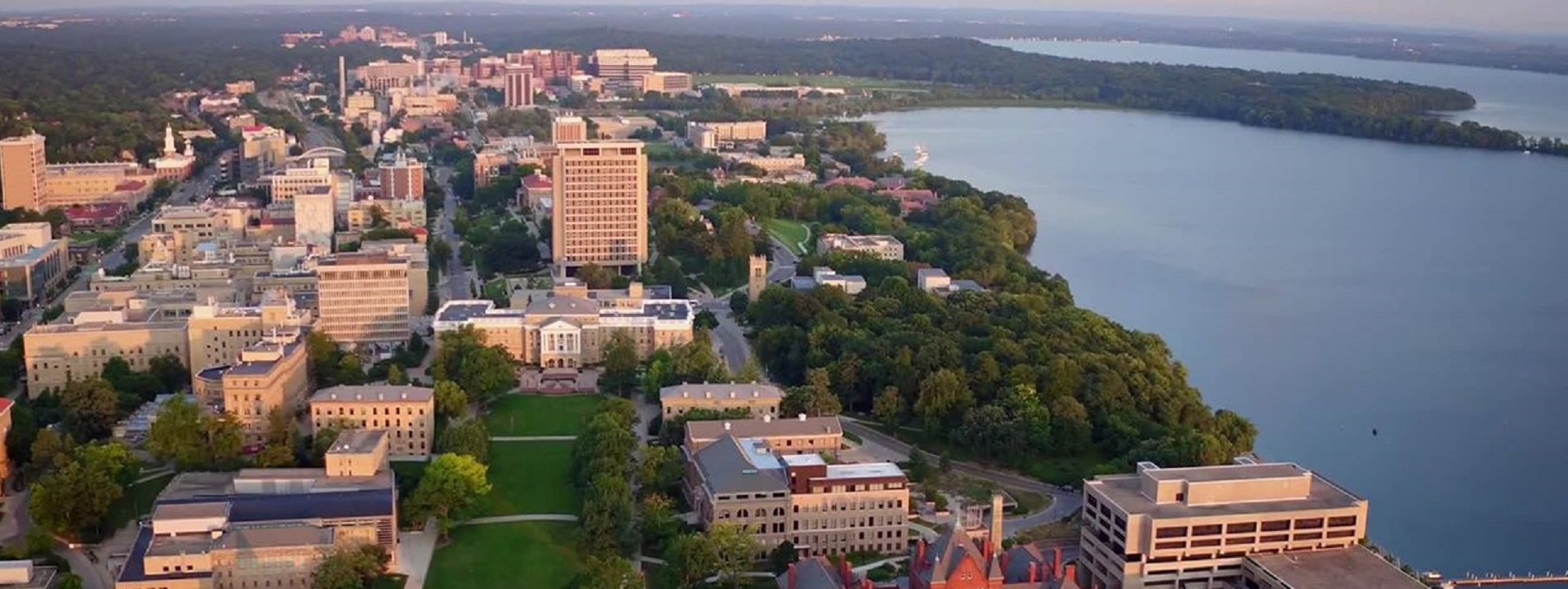
Efficient Use of Water in Buildings


ARCHIVE / ASHRAE 188 Legionella


Facility Smart Grid Information Model

“The Acropolis at Athens” 1846 Leo von Klenze

This is a significant ASHRAE achievement and we do not mind saying so.

The original University of Michigan standards advocacy enterprise began participating in ASHRAE 201 Facility Smart Grid Information Model as a user-interest from  2012 until the end of 2016.  Other US-based accredited standards developers in electrotechnology — such as the Institute of Electrical and Electronic Engineers and the National Electrical Manufacturers Association  — compete in the “smart grid” space.   We follow them too; commenting when we can, collaborating with the IEEE Education & Healthcare Facilities Committee.

As the largest non-residential building construction market in the United States, the education facility industry should contribute meaningfully (with data, insight, pilot-sites, faculty and staff support, etc.) to all standards developers to help them improve their products.

ASHRAE 201 is a solid product in a complex space noteworthy for its technical specifics); its purpose reproduced below:

“FOREWORD. The effort to substantially modernize and transform the national electric grid and create what has become known as a “smart grid” is an enormous undertaking that reflects both the size and importance of the electric grid. Viewed in its entirety, it is an international effort involving hundreds of organizations and companies, and it will impact billions of people. The standards infrastructure that will be needed to support this transformation may include over one hundred standards by the time that it is fully in place. This standard is one part of that infrastructure.

Almost all electricity is consumed in a building of some kind – homes, retail establishments, offices, schools, factories, hospitals – the list goes on. This standard attempts to capture the breadth and diversity of these consumers by using the term “facility.” A facility is any kind of building or collection of buildings, and all of the electrical loads or local generation sources contained within them or controlled by the facility owner.

Historically, electricity consumption has been viewed as a collection of dumb loads at the end of a distribution system. There has been almost no interaction between the “loads” and those responsible for electricity generations and distribution. The vision of the smart grid changes this picture radically. In a smart grid world, facilities become full partners in supporting and managing the electric grid. Facilities become generators using local renewable or other generation capacity. Facilities moderate electrical demand in response to fluctuations in the price or [availability]sp of electricity. Facilities communicate and negotiate with energy providers, sharing information about the facility’s projected electrical demand or ability to respond to the energy provider’s needs for maintaining grid stability and reliability.

In some respects all facilities have common characteristics and needs with respect to interactions with a smart grid, regardless of whether the facility is a commercial, institutional, or industrial building, or a private home. The Facility Smart Grid Information Model (FSGIM) standard attempts to capture this commonality and standardize the content of the information that a facility manager needs to have, or, in some cases, needs to exchange with the energy provider, in order to manage the facility. Energy providers benefit from the FSGIM standard because it enables interaction with all different types of facilities in a common way. Facility owners benefit because products can be designed for use in multiple facility types and products designed primarily for one type of facility, a home for example, can more easily be used in another, say a commercial building.

An information model is an abstraction, not an implementation. This abstract representation is a way to account for the reality that the technology used to manage a facility may be quite different depending on the type of facility. It is intended that the FSGIM will be used to develop or enhance other standards that define technology and communication protocol specific implementations of the model for particular markets.

The FSGIM was developed in the context of a much larger framework of smart grid standards. It builds on some of those standards in a way that is intended to maintain consistency and harmony with established and developing standards that impact the information needed to managing the facility, while at the same time capturing all of the key information needed in one place.

If the smart grid is to become a reality there must be smart facilities of all types that interact with it. The considerable time and talent that went into developing the FSGIM was invested in order to lay a solid foundation upon which to fulfill this vision.”

Campus environmental automation units — building automation and control staff — take note.   Today, we simply identify the opportunity to review the updated 837-page document whole cloth and encourage our colleagues running building environmental units to participate directly on ASHRAE Public Commenting platform, linked below:

Public Review Draft Standards / Online Comment Database

At the moment, as of this posting, this standard appears to be stabilized.

Comments are due December 16th.

All ASHRAE consensus products are on the agenda of our periodic Energy and Mechanical colloquia.  See our CALENDAR for the next online meeting; open to everyone.

“The summer night is like a perfection of thought.” — Wallace Stevens

Colleagues: David B. Anderson, David Conrad, Mike Anthony, Jim Harvey, Larry Spielvogel, Ted Weidner

Archive / ASHRAE 201 Facility Smart Grid Information Model


More

NIST Engagement with Smart Grid: A Case Study

Semantic Interoperability to Enable Smart, Grid-Interactive Efficient Buildings | University of California Lawrence Livermore Laboratory

High-Performance Green Buildings

“Hudson River Waterfront” | Colin Campbell Cooper (1913)

With about one hundred technical committees administered by accredited standards developers globally, the stream of standards action in the building energy conservation space is one of the fastest-moving; and a space that demonstrates remarkable adaption.  As the largest non-residential building construction market in the United States the education facility industry is on the receiving end of prescriptive and performance requirements produced by these technical committees that are enforced by state agencies and/or sustainability consortia.  There is market-making by incumbents  whose revenue stream runs close coupled to the US education industry’s green agenda.  We do our best to keep pace.

We find several redlines from  ASHRAE/ICC/USGBC/IES Standard 189.1 Standard for the Design of High-Performance Green Buildings Except Low-Rise Residential Buildings now open for public review at the link below:

Public Review Draft Standards / Online Comment Database

Public consultation periods run April 3 through April 23.

We maintain ASHRAE 189.1 on the standing agenda of our Mechanical Engineering, Energy 200, Health and Nota Bene teleconferences.  If you would like to pick through these mark ups see our CALENDAR for the next online meeting; open to everyone.

The Cleveland Institute of Art


Issue: [13-162, 18-3, et. al]

Category: Mechanical, Electrical, Energy

Colleagues:  Mike Anthony, Richard Robben, Larry Spielvogel
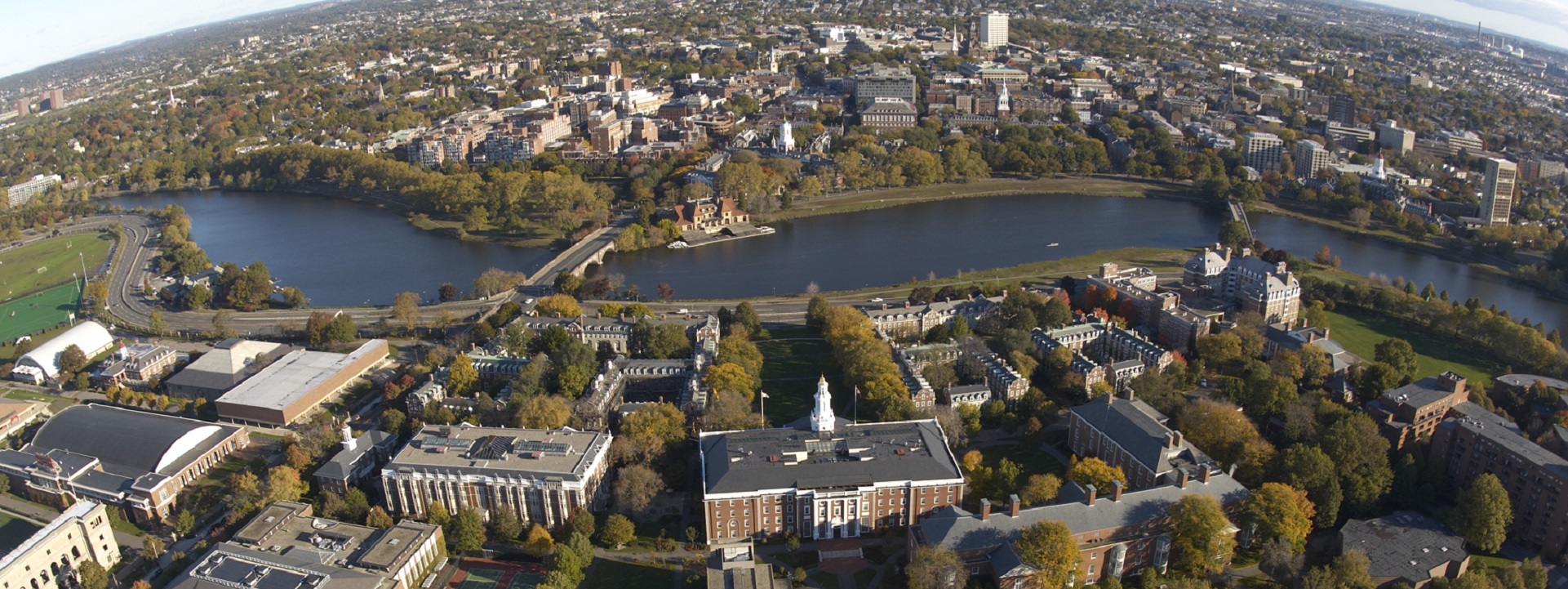
Workspace / ASHRAE


Building Automation & Control Networks

National Institute of Standards and Technology

Since 1987 the American Society of Heating and Refrigeration Engineers has lead development of the de facto standard for campus building automation systems 135 BACnet® – A Data Communication Protocol for Building Automation and Control Networks. This title supports the #WiseCampus transformation in two important ways:

  • It defines data communication services and protocols for computer equipment used for monitoring and control of HVAC&R and other building systems
  • It defines an abstract, object-oriented representation of information communicated between such equipment, thereby facilitating the application and use of digital control technology in buildings.

BACNet Committee: ASHRAE SSPC 135

Since the late 1970’s these systems have grown from single building control networks for environment air into multi-building campus-wide systems that conform to the ISO model of layered communication architecture.   Every large research university has long since installed facility management unit that monitors and controls points such as outdoor air intake, wet-bulb temperature, occupancy load, elevator action, time of day, outdoor lighting etc.    The University of Michigan, for example, monitors and controls nearly 1 million control points on its 6 square mile Ann Arbor campus.
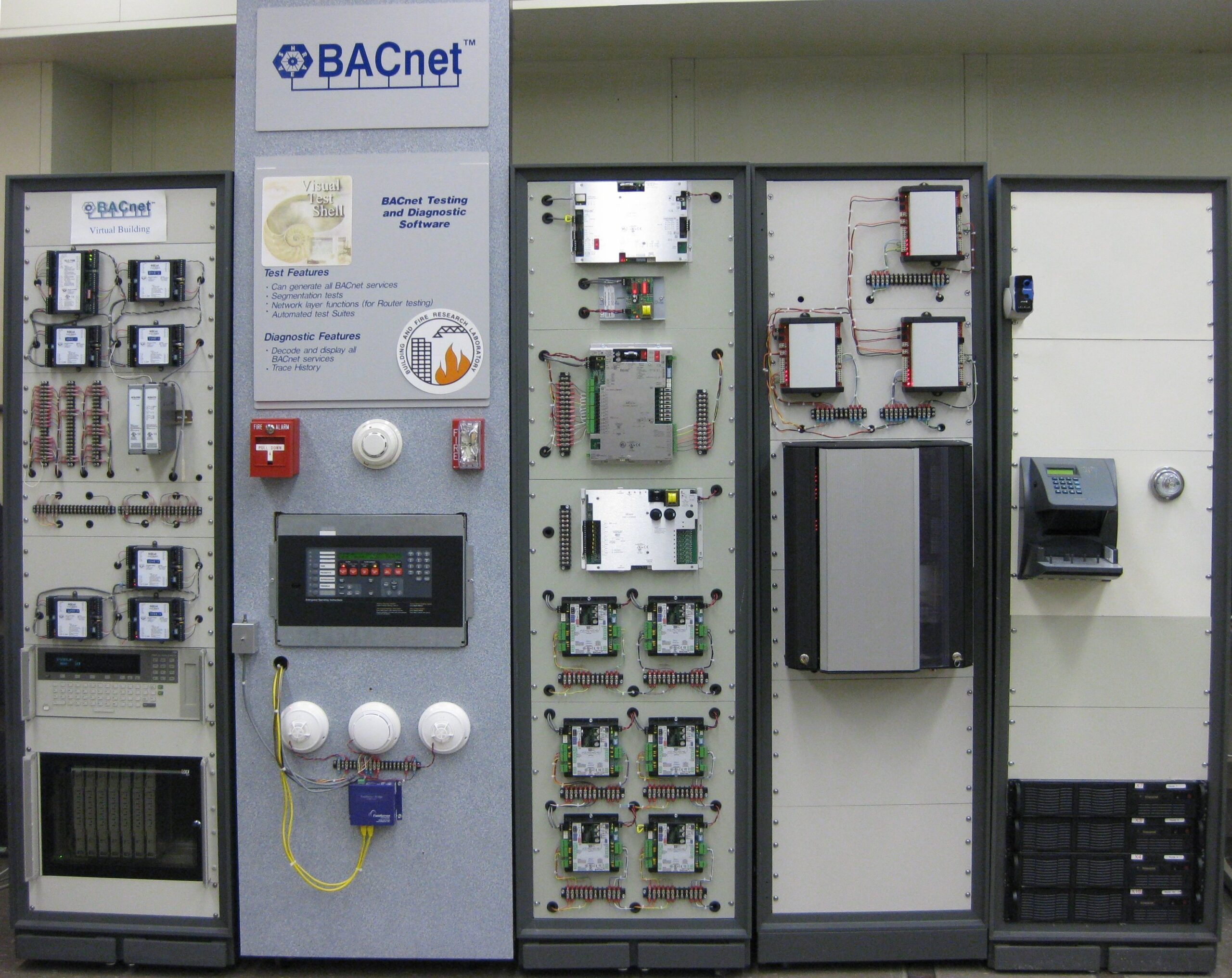

The ASHRAE 135 technical committee has released a consultation on addendum cd regarding cipher suite application security profiles.  Several redlines are now open for public consultation and may be found here:

ASHRAE Public Review Drafts Standards

Consultation on several titles is open until March 20th.

This title, and several others in the ASHRAE catalog, are on the standing agenda of our Energy 200 and Energy 400 colloquium.  See our CALENDAR for the next online meeting; open to everyone.

Workspace / ASHRAE

Issue: [17-230]

Category: #SmartCampus, Electrical, Telecommunications, Mechanical, Energy, Facility Asset Management

Colleagues: David Anderson, Larry Spielvogel, Richard Robben


More

Minutes of the First SPC 135P Meeting (June 26, 1987)


Workspace / ASHRAE

American Society of Heating and Refrigeration Engineers  (ASHRAE)

PUBLIC REVIEW DRAFT STANDARDS 


55 Thermal Environmental Conditions for Human Occupancy (November 21)
– 62.1-Ventilation for Acceptable Indoor Air Quality (May 23)

70 Method of Testing the Performance of Air Outlets and Air Inlets (December 12)

– 90.1 Energy Standard for Buildings Except Low-Rise Residential Buildings (July 10 & August 8)

100 Energy Efficiency in Existing Buildings (December 4)

41.11 Standard Methods for Power Measurement (November 7)

135 BACnet® – A Data Communication Protocol for Building Automation and Control Networks (February 3 – March 20)

– 154 Ventilation for Commercial Cooking Operations (May 15)

170 Ventilation of Health Care Facilities (July 24)

– 189.1 & 189.3 Standard for the Design of High-Performance Green Buildings Except Low-Rise Residential Buildings (December 11)

189.3 Design, Construction, and Operation of Sustainable High-Performance Health Care Facilities (August 28)

214 Standard for Determining and Expressing Building Energy Performance in a Rating Program (November 21)

224 Standard for the Application of Building Information Modeling (October 24)

– 514P Risk Management for Building Water Systems: Physical, Chemical, and Microbial Hazards (May 30)

Legacy workspace:

PUBLIC REVIEW DRAFT STANDARDSASHRAE WORKSPACE

Layout mode
Predefined Skins
Custom Colors
Choose your skin color
Patterns Background
Images Background
error: Content is protected !!
Skip to content