
History: How Kentucky Became the World’s Bourbon Capital
Code of Federal Regulations: § 5.143 Whisky (Whiskey)
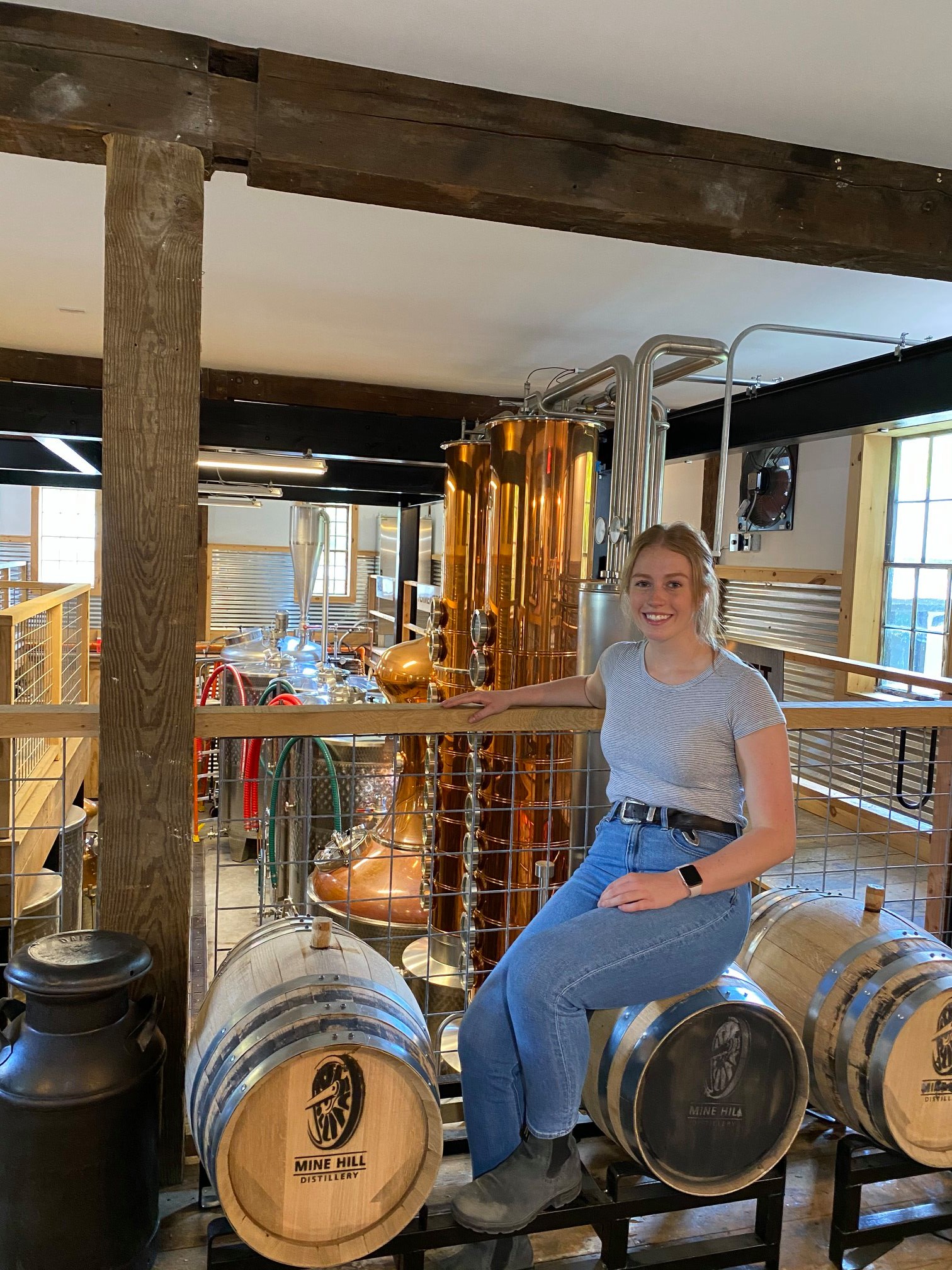
University of Kentucky College of Agriculture, Food and Environment


History: How Kentucky Became the World’s Bourbon Capital
Code of Federal Regulations: § 5.143 Whisky (Whiskey)
University of Kentucky College of Agriculture, Food and Environment

United States Food & Drug Administration | Distilled Spirits
— Dr. Maya C. Popa (@MayaCPopa) May 26, 2023
https://www.facebook.com/groups/1089237785165822/permalink/1515826392506957/
Wine consumption in the US is higher on the coasts. Source: https://t.co/iXiIdQ6kAW pic.twitter.com/eTw3KjaTxn
— Simon Kuestenmacher (@simongerman600) January 9, 2025
The Codex Alimentarius Commission regularly reviews and updates its standards and guidelines to reflect the latest scientific knowledge and technological advancements in the food industry. These standards are voluntary, but they serve as a reference for countries and international organizations when developing their own food safety and quality regulations. Compliance with Codex standards can facilitate international trade by ensuring that food products meet common criteria for safety and quality.
Some of the key areas addressed by Codex standards include:
Food safety: Codex sets standards for food contaminants, residues of pesticides and veterinary drugs, food additives, and microbiological criteria to ensure that food products are safe for consumption.
Food labeling: Codex provides guidelines on how food products should be labeled, including information on ingredients, nutrition, allergens, and more.
Food hygiene: It establishes principles and guidelines for food handling, processing, and storage to prevent foodborne illnesses.
Food quality: Codex standards also cover the quality attributes of various food products, including fruits, vegetables, and various processed foods.
Food additives: Codex regulates the use of food additives to ensure they are safe for consumption and serve a specific purpose in food production.
Residue limits: It sets maximum residue limits for various chemicals, such as pesticides and veterinary drugs, in food products to protect consumers from potential harm.

📰 | #CodexNews | National Codex Committee of Turkmenistan🇹🇲 visits Germany🇩🇪
➕ℹ️➡️ https://t.co/TixjQTUILA#FoodSafety | #Codex pic.twitter.com/1d29EQISDh
— Codex Alimentarius (@FAOWHOCodex) September 15, 2023
Check out our healthy recipes page here: https://t.co/4pu4UAA0JW pic.twitter.com/6dmxSdEUtt
— UMass Ag/Food/Env (@CAFE_UMass) June 9, 2025

Cranberry Mule: A holiday twist on the classic Moscow Mule, featuring cranberry juice, ginger beer, and vodka. Garnish with a slice of lime and fresh cranberries. Here’s a simple recipe for a “Cranberry Mule”:
2 oz vodka
4 oz ginger beer
2 oz cranberry juice
1/2 oz fresh lime juice
Ice
Cranberries and lime slices for garnish
Instructions:
Fill a copper mug (or another glass of your choice) with ice.
Pour in the vodka and cranberry juice.
Add the fresh lime juice.
Top off with ginger beer.
Stir gently to combine the ingredients.
Garnish with cranberries and a lime slice.
Product Accreditation: Testing, Inspection & Certification
AFNOR Group: Association Française de Normalisation
The release of Beaujolais Nouveau is not just about the wine itself; it’s a cultural and marketing phenomenon that brings people together to celebrate the harvest season, promotes the wine industry, and contributes to the economic and cultural vitality of the regions involved. The settlements listed below contribute significantly to wine-related research, education, and innovation. Some notable universities and research institutions in France that lead wine research include:
These institutions, along with various research centers and organizations throughout France, contribute to advancements in wine research, including topics like grape cultivation, wine production techniques, wine chemistry, and the study of wine regions and terroirs. They often collaborate with the wine industry and help maintain France’s position as a leader in the global wine industry.
Beaujolais Nouveau is produced under specific regulations and standards set by the French wine industry. However, there isn’t a specific international standard for Beaujolais Nouveau like there is for some other wines, such as those with controlled designations of origin (AOC) or protected designation of origin (PDO) status.
The production of Beaujolais Nouveau is governed by the rules and regulations of the Beaujolais AOC (Appellation d’Origine Contrôlée), which defines the geographical area where the grapes must be grown, the grape varieties allowed, and the winemaking techniques that can be used. The AOC regulations ensure a certain level of quality and authenticity for wines carrying the Beaujolais Nouveau label.
Winemakers producing Beaujolais Nouveau must follow these guidelines, including using the Gamay grape variety, employing specific vinification methods (such as carbonic maceration), and releasing the wine within a limited time frame after the harvest.
While the production standards are regulated at the national level in France, individual producers may have their own techniques and styles within the broader framework of the Beaujolais AOC regulations.
It’s important to note that the term “Beaujolais Nouveau” itself is not a specific indication of quality or adherence to particular winemaking practices; rather, it signifies a style of wine that is young, fresh, and meant to be consumed shortly after production. As a result, the characteristics of Beaujolais Nouveau can vary from producer to producer within the general guidelines set by the AOC
This content is accessible to paid subscribers. To view it please enter your password below or send mike@standardsmichigan.com a request for subscription details.
“An Army marches on its stomach”
— Napoleon Bonaparte

Compact, flameless heater allows for pre-packaged hot dinners
“Whether it’s chili with beans, barbecued beef or meatballs in marinara sauce, members of the United States military are served up a rotating menu of entrees through meals, ready to eat rations. Packed in individual pouches, these self-contained meals can be eaten during combat operations, humanitarian missions or field trainings, providing nourishment on the go. Yet while MREs were first piloted for U.S. military members during the Vietnam War, it wasn’t until the 1990s that it’s been possible for these meals to be served hot…
…We can thank a University of Cincinatti Professor of Mechanical Engineering for that.” (And transforming the civilian emergency food industry, to boot)
Related:
Defense Acquisition University: Specifications and Standards
Food and Water in an Emergency
Federal Emergency Management Agency: Food Safety: A Recipe for National Preparedness
Even though it’s almost #Fall, it’s still so warm outside! To cool down this #NationalBlueberryPopsicleDay, ASTM F2520-20 specifies requirements for the design and function of refrigerators and freezers to keep our #BlueberryPopsicles nice and chilled. @ASTMIntl pic.twitter.com/L4wkVWbcDT
— ANSI (@ansidotorg) September 2, 2022
2024 Net Position: $880,267,990 (Page 4) | Senior Administration Organization Chart
Banana Pudding Overnight Oats is a delicious and nutritious breakfast dish made by combining rolled oats, mashed bananas, milk, and other flavorings, and allowing them to sit and “soak” in the refrigerator overnight. This results in a creamy, flavorful, and satisfying bowl of oats that are ready to eat in the morning without any cooking required. It’s convenient make-ahead breakfast option that can be customized to suit individual tastes and dietary preferences. Here’s a simple recipe for Banana Pudding Overnight Oats:
Ingredients:
1 ripe banana, mashed
1/2 cup rolled oats
1/2 cup milk (any type of milk, such as dairy milk, almond milk, or coconut milk)
1 tablespoon chia seeds (optional)
1 teaspoon vanilla extract
1/2 teaspoon ground cinnamon
1/4 teaspoon salt
1 tablespoon sweetener of choice (such as honey, maple syrup, or agave nectar)
Additional banana slices, crushed cookies, or whipped cream for garnish (optional)
Instructions:
In a medium-sized bowl, mash the ripe banana with a fork until smooth. Add the rolled oats, milk, chia seeds (if using), vanilla extract, cinnamon, salt, and sweetener to the bowl with the mashed banana. Stir well to combine. Cover the bowl with plastic wrap or a lid and refrigerate overnight, or for at least 4-6 hours, to allow the oats to absorb the liquid and soften.
In the morning, give the oats a good stir and adjust the sweetness or consistency to taste by adding more sweetener or milk if desired. Serve the Banana Pudding Overnight Oats in bowls or jars, and garnish with additional banana slices, crushed cookies, or whipped cream if desired.
Enjoy your delicious and creamy Banana Pudding Overnight Oats for a nutritious and convenient breakfast!
vbvbvbvb
More:
Texas A&M University: Banana Nut Overnight Oats
Harvard University: Oats the Nutrition Source
Colorado University: Overnight Oats
US Food & Drug Administration: Gluten-Free Labeling of Foods
Standards Denmark | Danish Standards Foundation

Fancy a Friday drink… made of waste? 🍸🤔
In collaboration with a local distillery engineers at #AarhusUni are exploring the potential of producing beverages using the company’s residual products♻️https://t.co/29POcE6Qm8#AUgreen #AUengineering pic.twitter.com/CbFjYJ8ipC
— Aarhus University (@AarhusUni_int) August 13, 2021
New update alert! The 2022 update to the Trademark Assignment Dataset is now available online. Find 1.29 million trademark assignments, involving 2.28 million unique trademark properties issued by the USPTO between March 1952 and January 2023: https://t.co/njrDAbSpwB pic.twitter.com/GkAXrHoQ9T
— USPTO (@uspto) July 13, 2023
Standards Michigan Group, LLC
2723 South State Street | Suite 150
Ann Arbor, MI 48104 USA
888-746-3670
 |
 |
|
 |
 |
|
 |
 |