
IEEE English for Technical Professionals is a 14-hour online learning program designed to provide non-native English speakers with a working knowledge of English techniques and vocabulary that are essential for working in today’s technical workplace.
“It is a trite but true observation, that examples work more forcibly on the mind than precepts: and if this be just in what is odious and blameable, it is more strongly so in what is amiable and praiseworthy. Here emulation most effectually operates upon us, and inspires our imitation in an irresistible manner. A good man therefore is a standing lesson to all his acquaintance, and of far greater use in that narrow circle than a good book.
But as it often happens that the best men are but little known, and consequently cannot extend the usefulness of their examples a great way; the writer may be called in aid to spread their history farther, and to present the amiable pictures to those who have not the happiness of knowing the originals; and so, by communicating such valuable patterns to the world, he may perhaps do a more extensive service to mankind than the person whose life originally afforded the pattern…”
Because electrotechnology changes continually, definitions (vocabulary) in its best practice literature changes continually; not unlike any language on earth that adapts to the moment and place.
The changes reflect changes in technology or changes in how the technology works in practice; even how the manufacturers create adaptations to field conditions by combining functions. Any smart electrical component has a digital language embedded in it, for example.
Consider the 2023 National Electrical Code. Apart from many others the NEC will contain a major change to Article 100 (Definitions); the subject of elevated debate over the past three years.
When we refer “language” we must distinguish between formal language, informal language, colloquial language and dialect which may differ the language spoken, language written at the office and language used on the job site. “Terms of art”
Are these terms (or, “terms of art”) best understood in context (upstream articles in Chapters 4 through 8) — or should they be adjudicated by the 14 Principals of Code Making Panel 1? The answer will arrive in the fullness of time. Many changes to the National Electrical Code require more than one cycle to stabilize.
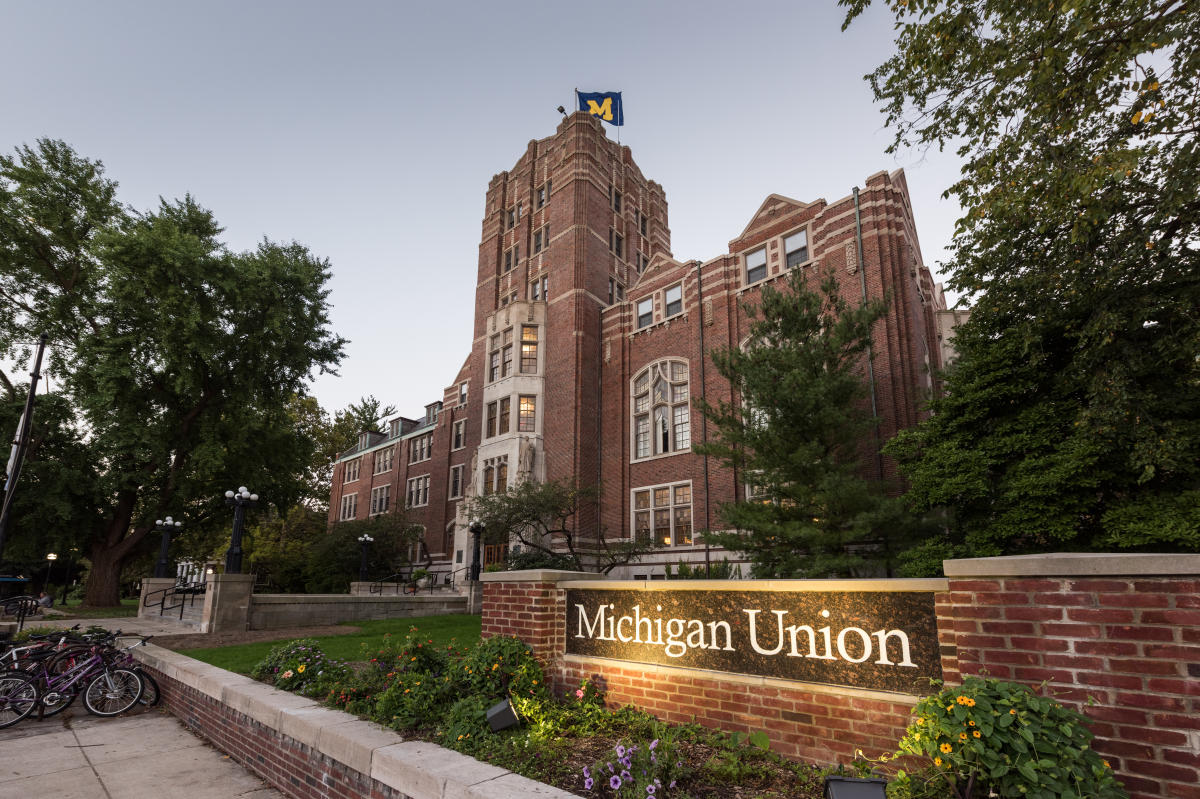
Code Making Panel 1 has always been the heaviest of all NEC panels. As explained n our ABOUT, the University of Michigan held a vote in CMP-1 for 20+ years (11 revision cycles) before moving to the healthcare facilities committee for the IEEE Education & Healthcare Facilities Committee. Standards Michigan continues its involvement on behalf of the US education facility industry — the second largest building construction market. There is no other pure user-interest voice on any technical committee; although in some cases consulting companies are retained for special purposes.
To serve the purpose of making NFPA 70 more “useable” we respect the Standards Council decision to make this change if it contributes to the viability of the NFPA business model. We get to say this because no other trade association comes close to having as enduring and as strong a voice: NFPA stands above all other US-based SDO’s in fairness and consideration of its constituency. The electrical safety community in the United States is a mighty tough crowd.
If the change does not work, or work well enough, nothing should prohibit reversing the trend toward “re-centralizing” — or “de-centralizing” the definitions.
Public comment on the First Draft of the 2026 Edition will be received until August 28, 2024.
Technical Committees meet during the last half of October to respond to public comment on the First Draft of the 2026 National Electrical Code.
The Society of College and University Planning was founded in 1965 at the University of Michigan in Ann Arbor during an informal gathering of campus planners frustrated with the lack of professional exchange in their emerging field. Rapid postwar enrollment growth and massive campus expansion projects had created urgent needs for long-range physical planning, yet few institutions had dedicated planners or shared knowledge.
A small group, led by University of Michigan planners George J. Bruha and Frederick W Mayer met in Ann Arbor to discuss common challenges facing other State of Michigan settlements; joined by Stanford, Ohio State and the University of Illinois. They decided to create a formal organization to foster collaboration, research, and professional development. In 1966, with Michigan’s support, SCUP was officially established as a nonprofit with its first office on the Ann Arbor campus. Its founding principle—integrated planning linking academics, finances, and facilities—remains central today.
Early operations benefited from administrative support (aegis) provided by the University of Michigan, including office space and resources in Ann Arbor. This arrangement persisted until a financial crisis in the late 1970s (1976–1980), during which SCUP relocated to New York.
The decoupling—marking full operational and administrative independence from the University of Michigan—occurred in 1980, when SCUP returned to Ann Arbor as a self-sustaining nonprofit headquartered at a separate location –1330 Eisenhower Place — less than a mile walk from Standards Michigan‘s front door at 455 East Eisenhower.
* Of the 220 ANSI Accredited Standards Developers, the State of Michigan ranks 3rd in the ranking of U.S. states with the most ANSI-accredited standards developers (ASDs) headquartered there; behind the Regulatory Hegemons of California and ChicagoLand and excluding the expected cluster foxtrot of non-profits domiciled in the Washington-New York Deep State Megalopolis. Much of Michigan’s presence in the private consensus standards space originates from its industrial ascendency through most of the 1900’s.
Disagree with someone and cannot persuade them? Do you need to hide your intransigence or ulterior motive? Then change the basis of discussion by changing the subject with a different definition.
This happens routinely in political discourse and rather frequently in best practice discovery and promulgation in building construction and settlement infrastructure standards[1]. Assuming all parties are negotiating in good faith resolution may lie in agreement on a common understanding of what a satisfying agreement might look like.
Admittedly, a subtle and challenging topic outside our wheelhouse[2] hence the need to improve our organization of this topic starting with today’s colloquium; with follow on sessions every month.
Starting 2025 we will organize our approach to this topic, thus:
Language 100. Survey of linguistic basics for developing codes, standards and regulations. Many vertical incumbents have developed their own style manuals
Language 200. Electrotechnical vocabulary
Language 300. Architectural and Allied trade vocabulary
Language 400. The language of government regulations; the euphemisms of politicians with influence over the built environment
Language 500. Advanced topics such as large language models or spoken dialects such as “High Michigan” — arguably, the standard American dialect where it applies to the standards listed above.
It may not be obvious how profound the choice of words and phrases have on leading practice discovery and promulgation. For example, “What is Gender” determines the number, placement and functionality of sanitary technologies in housing, hospitals and sporting. The United States has a Supreme Court justice that cannot define “woman”
As always, we will respond to public consultation opportunities wherever we can find them. Some organizations are better than this than others.
Today we limit our discussion to language changes in the catalogs of ANSI-accredited standards developers whose titles have the most influence over the interoperability of safety and sustainability technologies that create and sustain the built environment of educational settlements.
Every building construction discipline has its own parlance and terms of art.
This is enough for a one-hour session and, depending upon interest, we will schedule a breakout session outside of our normal “daily” office hours. Use the login credentials at the upper right of our home page.
ΒΙΒΛΙΟΘΗΚΕΣ
Starting 2024 and running into 2025 we will break down this topic further, starting with construction contract language — Lingua Franca 300:
Asset management applies to any organization. As such, understanding its terminology, principles, and outcomes is key to an organization’s success. ISO 55000:2024 provides an overview of #AssetManagement and its expected benefits. @isostandardshttps://t.co/XZsWvJJ8r4
(1) The United States government defines a “Green Building” as a building that has been designed, constructed, and operated in a way that reduces or eliminates negative impacts on the environment and occupants. The government has established various standards and certifications that buildings can achieve to be considered “green.”
The most widely recognized green building certification in the United States is the Leadership in Energy and Environmental Design (LEED) certification, which is administered by the U.S. Green Building Council (USGBC). To achieve LEED certification, a building must meet certain standards related to sustainable site development, water efficiency, energy efficiency, materials selection, and indoor environmental quality.
In addition to the LEED certification, there are other programs and standards that can be used to measure and certify the sustainability of buildings, such as the Green Globes rating system and the Living Building Challenge.
Overall, the goal of green building is to create buildings that are not only environmentally sustainable but also healthier, more comfortable, and more efficient for occupants, while reducing energy consumption and greenhouse gas emissions. By promoting green building practices, the U.S. government aims to reduce the environmental impact of the built environment and move towards a more sustainable future.
(2) The U.S. Green Building Council is a conformance organization. See the discussion our ABOUT for background on incumbent stakeholders.
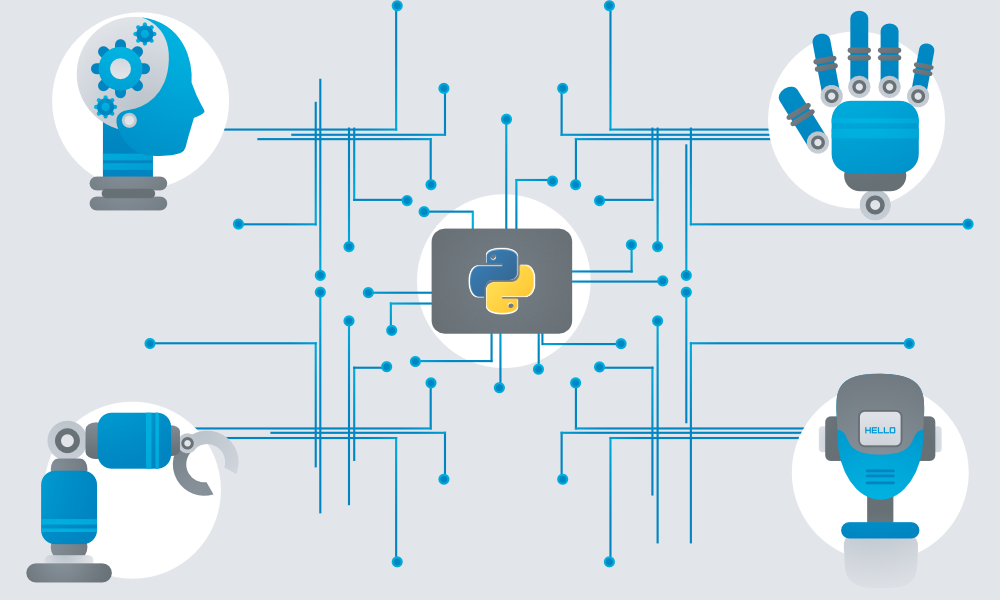
Open source standards development is characterized by very open exchange, collaborative participation, rapid prototyping, transparency and meritocracy. The Python programming language is a high-level, interpreted language that is widely used for general-purpose programming. Python is known for its readability, simplicity, and ease of use, making it a popular choice for beginners and experienced developers alike. Python has a large and active community of developers, which has led to the creation of a vast ecosystem of libraries, frameworks, and tools that can be used for a wide range of applications. These include web development, scientific computing, data analysis, machine learning, and more.
Another important aspect of Python is its versatility. It can be used on a wide range of platforms, including Windows, macOS, Linux, and even mobile devices. Python is also compatible with many other programming languages and can be integrated with other tools and technologies, making it a powerful tool for software development. Overall, the simplicity, readability, versatility, and large community support of Python make it a valuable programming language to learn for anyone interested in software development including building automation.
As open source software, anyone may suggest an improvement to Python(3.X) starting at the link below:
Python can be used to control building automation systems. Building automation systems are typically used to control various systems within a building, such as heating, ventilation, air conditioning, lighting, security, and more. Python can be used to control these systems by interacting with the control systems through the building’s network or other interfaces.
There are several Python libraries available that can be used for building automation, including PyVISA, which is used to communicate with instrumentation and control systems, and PyModbus, which is used to communicate with Modbus devices commonly used in building automation systems. Python can also be used to develop custom applications and scripts to automate building systems, such as scheduling temperature setpoints, turning on and off lights, and adjusting ventilation systems based on occupancy or other variables. Overall, Python’s flexibility and versatility make it well-suited for use in building automation systems.
.@PyCon US 2025 is a wrap, and our hearts are full with #Python community love! Thanks to every single one of you who organized, volunteered, attended, & sponsored 🐍🫶 #PyConUS
The PSF office will be closed May 26-28 so our staff can rest & recover. See you back online soon! pic.twitter.com/Sy1hiRmvw4
— Python Software Foundation (@ThePSF) May 27, 2025
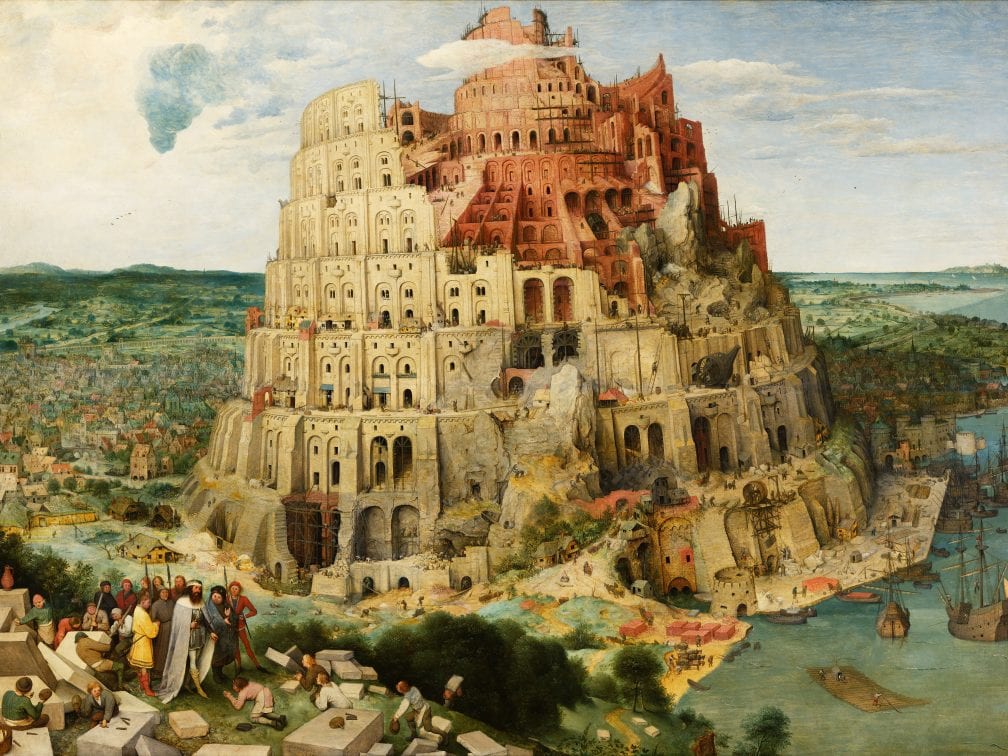
“The Tower of Babel” 1563 | Pieter Bruegel the Elder
Widely accepted definitions (sometimes “terms of art”) are critical in building codes because they ensure clarity, consistency, and precision in communication among architects, engineers, contractors, and regulators. Ambiguity or misinterpretation of terms like “load-bearing capacity,” “fire resistance,” “egress” or “grounding and bonding” could lead to design flaws, construction errors, or inadequate safety measures, risking lives and property.
“Standardized” definitions — by nature unstable — create a shared language that transcends local practices or jargon, enabling uniform application and enforcement across jurisdictions. Today at the usual hour we explore the nature and the status of the operational language that supports our raison d’êtreof making educational settlements safer, simpler, lower-cost and longer-lasting.
NIST continues its Standards Curriculum program through the Standards Coordination Office Curricula Development Cooperative Agreement Program (SCO CD CAP), formerly known as the Standards Services Curricula Development Cooperative Agreement Program. This ongoing initiative, started in 2012 (initially as Education Challenge Grants), funds U.S. colleges and universities to develop and integrate undergraduate and/or graduate-level curricula on documentary standards, standards development, and standardization into courses, modules, seminars, and learning resources. The University of Michigan is a past recipient of a standards education award through this program.
The most recent funding round was for Fiscal Year 2025 (FY25):
The Notice of Federal Funding Opportunity (NOFO) was released on January 14, 2025.
Applications were due by April 14, 2025.
NIST anticipated awarding up to 8 grants, each up to $100,000, with project periods of up to 3 years (potentially extending into 2027–2028).
Projects funded under FY25 involve curriculum development and implementation that may continue into 2026 and beyond, including required workshops.
As of early 2026, no new Notice of Federal Funding Opportunity (NOFO) has been announced for FY2026. The program has historically issued funding rounds annually or near-annually, with recent awards in prior years (e.g., 2024 awards totaling over $1.1 million to 8 universities). However, due to proposed budget reductions for NIST in FY2026, future rounds may be impacted or delayed.
The Standards Coordination Office of the National Institute of Standards and Technology conducts standards-related programs, and provides knowledge and services that strengthen the U.S. economy and improve the quality of life. Its goal is to equip U.S. industry with the standards-related tools and information necessary to effectively compete in the global marketplace.
Every year it awards grants to colleges and universities through its Standards Services Curricula Cooperative Agreement Program to provide financial assistance to support curriculum development for the undergraduate and/or graduate level. These cooperative agreements support the integration of standards and standardization information and content into seminars, courses, and learning resources. The recipients will work with NIST to strengthen education and learning about standards and standardization.
The 2019 grant cycle will require application submissions beforeApril 30, 2019 (contingent upon normal operation of the Department of Commerce). Specifics about the deadline will be posted on the NIST and ANSI websites. We will pass on those specifics as soon as they are known.
The winners of the 2018 grant cycle are Bowling Green State University, Michigan State University, Oklahoma State University, and Texas A&M University. (Click here)
The University of Michigan received an award during last year’s grant cycle (2017). An overview of the curriculum — human factors in automotive standards — is linked below:
Information about applying for the next grant cycle is available at this link (Click here) and also by communicating with Ms. Mary Jo DiBernardo (301-975-5503; maryjo.dibernardo@nist.gov)
LEARN MORE:
Click here for link to the previous year announcement.
Conan O’Brien on comics who just say “fuck Trump” all the time:
“You’re being co-opted because you’re so angry. You’ve been lulled. It’s like a siren leading you into the rocks. You’ve been lulled into just saying ‘F Trump. F Trump. F Trump. Screw this guy.’ And I think you’ve…
1. 🇺🇸 Harvard University
=2. 🇺🇸 MIT
=2. 🇬🇧 University of Oxford
=4. 🇺🇸 Stanford University
=4. 🇬🇧 University of Cambridge
6. 🇺🇸 University of California, Berkeley
7. 🇺🇸 Princeton University
8. 🇨🇳 Tsinghua University
9. 🇺🇸 Yale… pic.twitter.com/9FSPPrQzNr
New update alert! The 2022 update to the Trademark Assignment Dataset is now available online. Find 1.29 million trademark assignments, involving 2.28 million unique trademark properties issued by the USPTO between March 1952 and January 2023: https://t.co/njrDAbSpwBpic.twitter.com/GkAXrHoQ9T